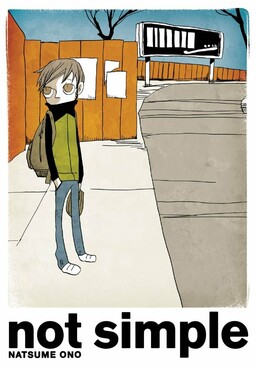
Not Simple Review: A Man's Entire Life Told in Reverse, and What It Meant to Someone Who Loved Him
by Natsume Ono
Read the first volume. If it doesn't hook you, put it down. It'll hook you.
Buy not simple on Amazon →*Affiliate link — I earn a small commission at no extra cost to you.
Quick Take
- One of the most formally ambitious manga published in English — the non-linear structure is not a stylistic choice but the only honest way to tell this story
- Natsume Ono's art style is immediately distinctive: spare, European-influenced, unlike anything else in manga
- Single volume; stands alone; among the most emotionally devastating manga in English translation
Who Is This Manga For?
- Readers who want literary manga that prioritizes formal ambition over accessibility
- Anyone who wants to see what manga can do with narrative structure
- Fans of emotionally serious standalone works
- Readers who want Natsume Ono's most personal and accomplished work
Content Warnings & Age Rating
Age Rating: M (Mature) Content Warnings: Child abuse; parental neglect; complex family trauma; violence; adult themes throughout; emotionally devastating content
M rating — mature readers only; the content is serious and the emotional impact is significant.
Yu's Rating
| Category | Score |
|---|---|
| Story Depth | ★★★★★ |
| Art Style | ★★★★★ |
| Character Development | ★★★★★ |
| Accessibility for Non-Japanese Readers | ★★★★★ |
| Reread Value | ★★★★★ |
Story Overview
Ian is a young English man whose life has been almost entirely loss. His mother abandoned him. His father was absent. His sister — his primary connection to something worth surviving for — is somewhere he cannot reach. He travels across England and eventually America in search of something that keeps moving away from him.
The story is told through Jim, a journalist who meets Ian and recognizes something in him — the specific quality of a person whose suffering has not made them bitter, whose goodness persists against everything that should have extinguished it. Jim writes a novel about Ian's life, and the manga alternates between Ian's story and the frame of Jim's writing.
The non-linear structure is not disorienting — it is the only structure that makes the ending possible. Ono builds toward a final revelation that recontextualizes everything before it.
Characters
Ian — A protagonist whose defining quality — warmth, openness, the persistent belief that people are basically good — is inseparable from his tragedy. He is the most affecting character in Ono's work.
Jim — The witness; his role is to record Ian's life and to ask what it means to turn suffering into narrative.
Art Style
Ono's art is distinctive in the manga landscape — influenced by European comics traditions, with looser line work and less conventional character design than most manga. The spare visual language suits the material: there is no excess decoration in how Ian's story is drawn.
Cultural Context
not simple ran in IKKI, Shogakukan's experimental manga magazine that published literary and unconventional manga until its closure in 2014. IKKI was also the venue for House of Five Leaves and other Ono works — the magazine specifically supported the kind of formal ambition that not simple requires.
What I Love About It
The ending. I will not describe it here, but the final pages of not simple are among the most precisely constructed endings in manga — everything the structure has been building toward, delivered with restraint rather than sentimentality. The formal choice that seemed arbitrary becomes the only possible way to tell this story.
What English-Speaking Fans Say
Western readers describe not simple as one of the most emotionally affecting manga in English translation — specifically noted for the ending being devastating in the best sense, for Ono's art being unlike anything else, and for the single-volume format making the experience complete and contained. Consistently cited as underread and essential.
Memorable Scene ⚠️ Spoiler Warning
The final revelation about Ian's relationship to the person who loved him most — and what that person did with that love — is the manga's purpose. Everything before it is preparation for understanding why this ending is the only possible ending.
Similar Manga
- House of Five Leaves — Ono's other major work; same art style, different register
- Ristorante Paradiso — Ono's gentler work with similar character attention
- A Silent Voice — Different style but similar emotional impact and formal care
- Flowers of Evil — Literary manga with similar willingness to be difficult
Reading Order / Where to Start
Single volume — begin at page one. No prerequisites.
Official English Translation Status
Viz Media published the English translation. Single volume, complete.
Pros & Cons
Pros
- Among the most formally accomplished manga in English
- Ending is devastating and earned
- Art style is unique and distinctive
- Complete in one volume
Cons
- M-rated difficult content throughout
- Non-linear structure requires engagement
- Emotionally demanding
- Art style is not conventionally manga — may alienate readers expecting standard style
Format Comparison
| Format | Notes |
|---|---|
| Single Volume | Viz Media; complete |
| Digital | Available |
Where to Buy
Read the first volume. If it doesn't hook you, put it down. It'll hook you.
This post contains affiliate links. If you purchase through these links, I may earn a small commission at no extra cost to you. As an Amazon Associate, I earn from qualifying purchases.
*Affiliate link — I earn a small commission at no extra cost to you.
More Manga You Might Like
Slice of Life
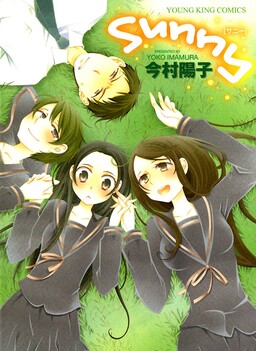
Sunny
Yu's review of Sunny — at a group home for children whose families cannot take care of them, a broken-down old car called Sunny becomes a private space where the children go to be alone; Taiyo Matsumoto's meditation on childhood longing, on what it means to be left, and on how children find ways to survive what adults do to them.
Slice of Life
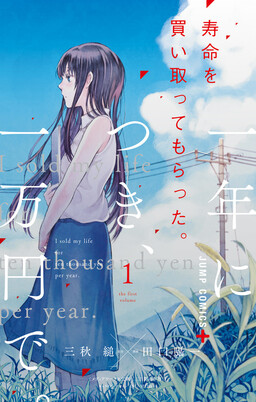
Three Days of Happiness
Yu's review of Three Days of Happiness — in a world where you can sell your remaining lifespan for money, Kusunoki sells most of his and discovers he has only three months left; manga adaptation of Sugaru Miaki's novel about what matters when time is finite.
Slice of Life
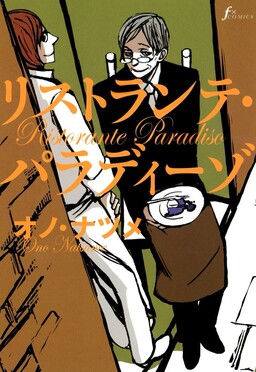
Ristorante Paradiso
Yu's review of Ristorante Paradiso — Nicoletta travels from her hometown to Rome to confront her mother, who left her as a child; her mother's husband doesn't know she exists; the restaurant Casetta dell'Orso, staffed entirely by older bespectacled gentlemen, becomes the setting for Nicoletta's unexpected new life.
Slice of Life / Drama
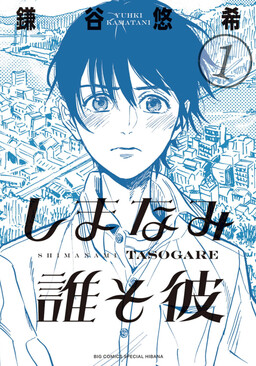
Our Dreams at Dusk: Shimanami Tasogare
Yu's review of Our Dreams at Dusk — Tasuku Kaname is outed to his classmates; he goes to a building to jump; a woman in white tells him to come to a drop-in center; the center is a community of people across the LGBTQ spectrum who have found a way to be in the world; Tasuku begins to find his own way through them.
Slice of Life
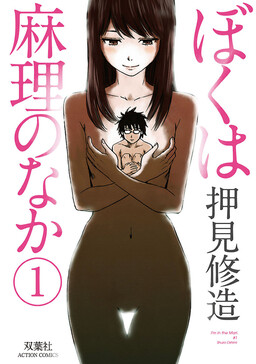
Inside Mari
Yu's review of Inside Mari — Isao Komori, a hikikomori who watches a high school girl from his window, wakes up one morning inside her body. But the body-swap mystery he thinks he's living turns out to be something far stranger and sadder.
Comedy / Slice of Life
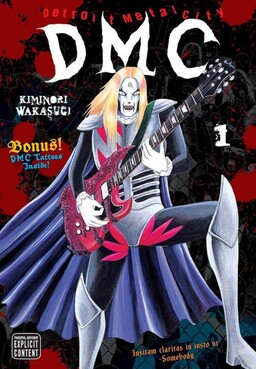
Detroit Metal City
Yu's review of Detroit Metal City — Soichi Negishi moved to Tokyo to write gentle acoustic pop about kisses and raspberries, and ended up as Johannes Krauser II, the demonic frontman of a death metal band the fans believe murdered his own parents. He hates it. He is incredibly good at it. That gap is the whole joke, and it never stops being funny.
Written by
Yu
Manga Enthusiast from Japan
I grew up in Japan and manga literally saved me during a tough time in elementary school. My English isn't perfect, but my love for manga is real — and I want to share it with you.
Disclosure: This post contains affiliate links. As an Amazon Associate, I earn from qualifying purchases at no extra cost to you.