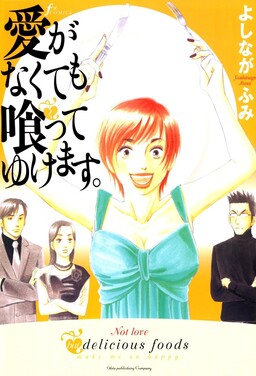
Not Love But Delicious Foods Make Me So Happy! Review: A Manga Artist Eats Her Way Through Tokyo
by Fumi Yoshinaga
Read the first volume. If it doesn't hook you, put it down. It'll hook you.
Buy Not Love But Delicious Foods Make Me So Happy! on Amazon →*Affiliate link — I earn a small commission at no extra cost to you.
Quick Take
- Yoshinaga's food writing is specific and enthusiastic — real Tokyo restaurants depicted with reverence
- The "won't date but will eat anything" protagonist premise generates reliable warm comedy
- Single volume complete; excellent gateway to Yoshinaga's work
Who Is This Manga For?
- Readers who enjoy food manga with genuine restaurant knowledge
- Fans of Fumi Yoshinaga's other work who want something lighter and more personal
- Anyone interested in Tokyo food culture and the culture of eating out
- Readers looking for short complete food/life manga
Content Warnings & Age Rating
Age Rating: T (Teen) Content Warnings: Food and restaurant content throughout; adult characters with social and work lives; very mild alcohol (wine with food)
T rating — appropriate for most readers.
Yu's Rating
| Category | Score |
|---|---|
| Story Depth | ★★★☆☆ |
| Art Style | ★★★★☆ |
| Character Development | ★★★★☆ |
| Accessibility for Non-Japanese Readers | ★★★★☆ |
| Reread Value | ★★★★★ |
Story Overview
The protagonist — based on Yoshinaga herself — is a manga artist who is not in a romantic relationship and has no immediate plans to be. She has, however, extremely strong feelings about food.
She eats with editors, assistants, friends, and colleagues at specific Tokyo restaurants. Each episode is organized around a meal: where they went, what they ordered, what was good and what could be better.
The comedy comes from the protagonist's passion for food being more intense than any of her companions expect, and from the gentle revelation that she organizes her emotional and social life around eating rather than romance.
Characters
The protagonist (based on Yoshinaga) — Her priority hierarchy — food above relationships — makes her simultaneously funny and specific; her knowledge of restaurants reveals more about her character than her statements.
The supporting cast — Editors, assistants, and friends who mostly get dragged to restaurants they might not have chosen.
Art Style
Yoshinaga's art is clean and precise — the food is drawn with the kind of detail that makes the reader feel the texture, and the restaurant environments are rendered with appropriate atmospheric care.
Cultural Context
Not Love But Delicious Foods is semi-autobiographical — Yoshinaga based the protagonist on herself and the restaurants on places she actually ate. Published in Casual magazine (a cooking-focused manga magazine), it doubles as a genuine Tokyo restaurant guide.
What I Love About It
The restaurant descriptions. Yoshinaga treats food with the same seriousness that other manga treat professional advancement or romance. The specific wines, the order of courses, the opinion on whether a particular dish was the right choice — it's love writing, just directed at food.
What English-Speaking Fans Say
Western readers describe Not Love But Delicious Foods as one of the warmest Yoshinaga works — specifically noted for working both as food guide and as character comedy, for the protagonist's personality being more fully developed than the light premise suggests, and for being a perfect single-volume read.
Memorable Scene ⚠️ Spoiler Warning
The episode where the protagonist explains her food philosophy directly — when her relationship to eating is articulated rather than just demonstrated — is the volume's most revealing moment.
Similar Manga
- What Did You Eat Yesterday? — Yoshinaga's longer food manga with relationship focus
- Ms. Koizumi Loves Ramen Noodles — Food manga with similar single-minded passion
- Drops of God — Food knowledge manga in serious register
- Silver Spoon — Food and agriculture in different format
Reading Order / Where to Start
Single volume — start anywhere, read in order.
Official English Translation Status
Yen Press published the English edition.
Pros & Cons
Pros
- Yoshinaga's food writing is excellent
- Restaurant guide and character comedy in one
- Single volume — perfect length
- Semi-autobiographical specificity
Cons
- Tokyo restaurant focus — some locations may be unknown to non-Japanese readers
- Single volume — readers who want more won't find it
- Very light narrative
Format Comparison
| Format | Notes |
|---|---|
| Single Volume | Yen Press; complete |
| Digital | Available |
Where to Buy
Read the first volume. If it doesn't hook you, put it down. It'll hook you.
This post contains affiliate links. If you purchase through these links, I may earn a small commission at no extra cost to you. As an Amazon Associate, I earn from qualifying purchases.
*Affiliate link — I earn a small commission at no extra cost to you.
More Manga You Might Like
Slice of Life
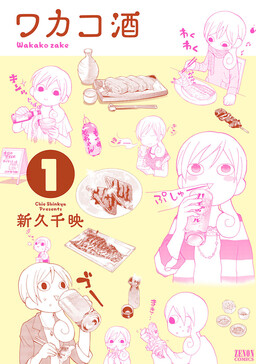
Wakakozake
Yu's review of Wakakozake — Murasaki Wakako, a young office worker, spends her evenings alone at izakayas, carefully selecting food and sake pairings; each short chapter follows one evening, one food, one drink, and her quiet appreciation; the series is a celebration of eating alone as a specific pleasure.
Slice of Life / Drama
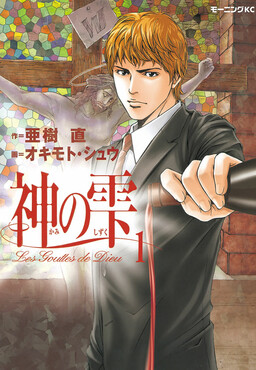
Drops of God
Yu's review of Drops of God — Shizuku Kanzaki, a young beer-company salesman who hates wine, has to identify the twelve 'Apostles' and a final wine called the Drops of God from his late father's will to inherit a legendary cellar, racing the adopted wine prodigy Issei Tomine. Written by Tadashi Agi, drawn by Shu Okimoto, complete in English from Kodansha.
Slice of Life / Fantasy
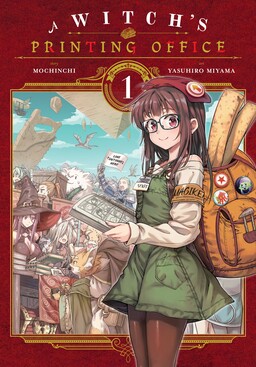
A Witch's Printing Office
Yu's review of A Witch's Printing Office — Mika is a modern Japanese woman who worked at Comiket (the giant doujinshi convention) and wakes up in a fantasy world where magical festivals share printed pamphlets; using her knowledge of convention organization and printing logistics, she builds a business that transforms how the fantasy world shares information.
Slice of Life / Comedy
Minami-ke
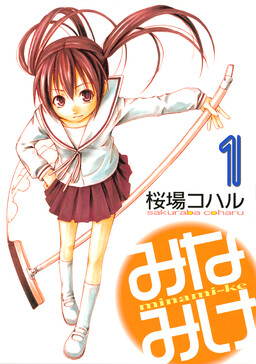
Yu's review of Minami-ke — three sisters at different schools (eldest Haruka in high school, middle Kana in middle school, youngest Chiaki in elementary) share an apartment and their daily life generates endless comedy from their completely different personalities and the rotating cast of friends, admirers, and chaos that follows them home.

Slice of Life / Comedy
Dagashi Kashi
Yu's review of Dagashi Kashi by Kotoyama — Kokonotsu Shikada wants to draw manga, but his father runs a rural dagashi (cheap candy) shop and wants him to inherit it. Then Hotaru Shidare, the candy-obsessed heiress of a confectionery company, shows up to recruit his father and turns each cheap snack into a passionate lecture. A slice-of-life comedy about Japanese childhood candy culture.
Slice of Life
Handa-kun
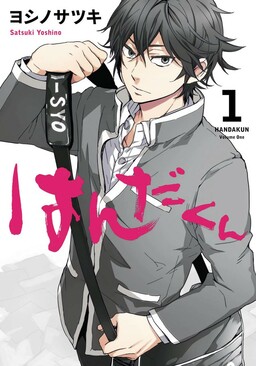
Yu's review of Handa-kun — Sei Handa is a high school calligraphy prodigy worshipped by the entire school, but a single bad joke from his only friend convinced him everyone hates him. This Barakamon prequel runs on the gap between adoration and his paranoia.
Written by
Yu
Manga Enthusiast from Japan
I grew up in Japan and manga literally saved me during a tough time in elementary school. My English isn't perfect, but my love for manga is real — and I want to share it with you.
Disclosure: This post contains affiliate links. As an Amazon Associate, I earn from qualifying purchases at no extra cost to you.