New Game! Review: A Game Developer Fresh Out of High School Learns What Making Games Actually Looks Like
by Shotaro Tokuno
Read the first volume. If it doesn't hook you, put it down. It'll hook you.
Buy New Game! on Amazon →*Affiliate link — I earn a small commission at no extra cost to you.
Quick Take
- A workplace slice-of-life about game development that actually depicts what making games looks like — the debug cycles, the crunch, the asset approvals, the testing stages — rather than using game development as an exotic backdrop for character interactions
- The all-female team at Eagle Jump creates a workplace drama without typical gender dynamics, which allows the series to focus on professional development and interpersonal creativity
- 13 volumes complete; one of the more substantive entries in the Kirara workplace comedy genre
Who Is This Manga For?
- Readers interested in game development as a subject, not just as a setting
- Anyone who wants workplace slice-of-life with actual professional content
- Fans of all-female ensemble manga with distinct individual characterization
- Readers who want complete manga with a satisfying character-arc conclusion
Content Warnings & Age Rating
Age Rating: T (Teen) Content Warnings: Mild fanservice in some character designs; workplace situations including crunch periods; mild adult themes appropriate for T rating
The T rating is accurate and appropriate.
Yu's Rating
| Category | Score |
|---|---|
| Story Depth | ★★★★☆ |
| Art Style | ★★★☆☆ |
| Character Development | ★★★★★ |
| Accessibility for Non-Japanese Readers | ★★★★☆ |
| Reread Value | ★★★★☆ |
Story Overview
Aoba Suzukaze's childhood favorite video game was made by Eagle Jump. When she finishes high school, she joins Eagle Jump as a new character designer — beginning in the department where her professional hero, art director Yagami Ko, works.
The series follows Aoba across several game development cycles: asset creation, debug periods, milestone submissions, approval processes, and the crunch toward shipping dates. Each development phase introduces different professional challenges and develops different aspects of her relationship with her colleagues.
The professional content is balanced with personal character development — Aoba's growth from overwhelmed newcomer to developing professional is tracked alongside the human relationships that make the workplace something more than a workplace.
Characters
Aoba Suzukaze — The entry-level character designer whose earnestness and genuine talent create the series' central arc. Her development from someone who admires the game she loved into someone who participates in making new ones is the series' most satisfying progression.
Yagami Ko — The art director who was where Aoba is now when she first joined. Her mentorship of Aoba is the series' professional center and its emotional anchor.
The team — Each Eagle Jump employee has a distinct professional specialty and personality. The ensemble is developed across 13 volumes with consistent individual attention.
Art Style
Tokuno's art is Kirara-standard — clean, expressive, with distinctive character designs. The in-series game art (shown as assets being created) is rendered separately in a different visual style that distinguishes the fictional game aesthetics from the manga's own art. This detail reflects the series' genuine interest in what game art actually looks like.
Cultural Context
Japanese game development culture — including the development studio social dynamics, the milestone and crunch culture, the relationship between different departments — is depicted with authenticity. Western readers in game development will recognize dynamics even where the specific cultural framing differs.
The industry detail includes things that might surprise general readers: the scale of approval processes for individual assets, the scale of the quality assurance period, and the collaborative nature of character design within art direction.
What I Love About It
The series treats game development as something that takes genuine skill and produces genuine emotional investment from the people doing it. When Aoba cares about whether her character designs are approved, the series validates that caring as real professional engagement — not as cute decoration on a character interaction.
What English-Speaking Fans Say
Western readers in game development describe New Game! as unusually accurate about what game studio life looks like. General readers describe it as a workplace manga where the work content is interesting rather than merely plausible. The anime adaptation is popular; the manga provides more professional detail.
Memorable Scene ⚠️ Spoiler Warning
The sequence where Aoba's character designs are approved for the final game — not as a student's attempt but as professional work — is the series' most quietly satisfying professional achievement. The people around her know what it means. So does she, now.
Similar Manga
- Shirobako (anime) — Anime production workplace drama, similar structure
- Monthly Girls' Nozaki-kun — Creative workplace comedy, different industry
- Wagnaria!! — Workplace ensemble comedy, different setting
- Barakamon — Creative professional finding their work again, different context
Reading Order / Where to Start
Volume 1 — Aoba's first day establishes the setting immediately. The series rewards reading in order as the development cycles build context.
Official English Translation Status
Seven Seas Entertainment published all 13 volumes. Complete and available.
Pros & Cons
Pros
- Game development depicted with genuine procedural authenticity
- Character development across a full career progression
- Complete 13-volume run with resolved character arcs
- Ensemble is well-developed individually
Cons
- Mild fanservice is present
- The professional detail may slow pacing for readers who prefer faster character interaction
- Game development culture has Japanese-specific elements that require some adjustment
Format Comparison
| Format | Notes |
|---|---|
| Individual Volumes | Seven Seas; complete |
| Digital | Available |
Where to Buy
Read the first volume. If it doesn't hook you, put it down. It'll hook you.
This post contains affiliate links. If you purchase through these links, I may earn a small commission at no extra cost to you. As an Amazon Associate, I earn from qualifying purchases.
*Affiliate link — I earn a small commission at no extra cost to you.
More Manga You Might Like

Slice of Life / Comedy
Himouto! Umaru-chan
Yu's review of Himouto! Umaru-chan — Umaru Doma is the school's flawless honor student, but the moment she's home she shrinks into a chibi gremlin in a hamster hoodie demanding chips, cola, and games from her tired brother Taihei. Twelve complete volumes from Seven Seas, and the warmth under the gags is what kept me reading.

Comedy / Slice of Life
Sabagebu! —Survival Game Club!—
Yu's review of Sabagebu! — Momoka Sonokawa joins the Survival Game Club at her new school after being rescued by its president Miou; she discovers she has immediate talent for mock combat and a personality that is significantly less heroic than her appearance suggests; the series follows the club's survival game activities with absurdist comedy.
Slice of Life / Memoir
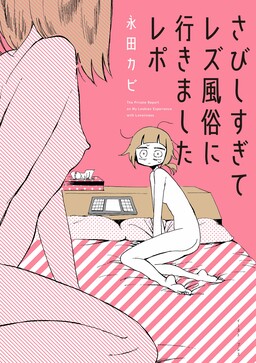
My Lesbian Experience with Loneliness
Yu's review of My Lesbian Experience with Loneliness — Nagata Kabi's autobiographical manga about her experiences with depression, an eating disorder, her difficult relationship with her parents, and her gradual understanding of her own sexuality and loneliness; one of the most honest mental health memoirs in manga form.
Slice of Life / Drama
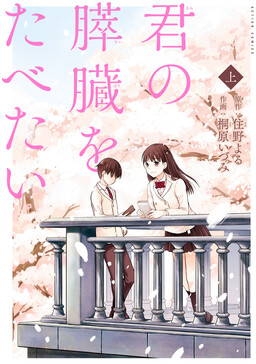
I Want to Eat Your Pancreas
Yu's review of the I Want to Eat Your Pancreas manga — Idumi Kirihara's adaptation of Yoru Sumino's novel. A withdrawn boy finds classmate Sakura Yamauchi's secret diary and learns she's dying of a pancreatic illness. She chooses him precisely because he won't treat her like a dying girl. Seven Seas collected the two Japanese volumes into one English omnibus.
Slice of Life / Music
Blue Giant
Yu's review of Blue Giant — Dai Miyamoto, a Sendai high schooler with no talent and no friends in jazz, decides he will become the greatest jazz saxophonist in the world, moves to Tokyo, and forms the trio JASS with a cocky pianist and a total drumming beginner.
Slice of Life / Memoir
Blank Canvas: My So-Called Artist's Journey
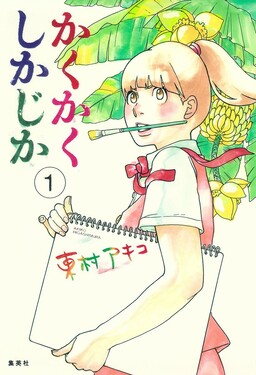
Yu's review of Blank Canvas (Kakukaku Shikajika) — Akiko Higashimura's autobiographical manga about Hidaka-sensei, the bamboo-sword-wielding art teacher in rural Miyazaki who screamed 'Draw!' until she became the artist she is. A memoir, a comedy, and a eulogy all at once.
Written by
Yu
Manga Enthusiast from Japan
I grew up in Japan and manga literally saved me during a tough time in elementary school. My English isn't perfect, but my love for manga is real — and I want to share it with you.
Disclosure: This post contains affiliate links. As an Amazon Associate, I earn from qualifying purchases at no extra cost to you.