Nasu Review: The Short Stories That Made Vegetables Feel Like Life
by Iou Kuroda
Read the first volume. If it doesn't hook you, put it down. It'll hook you.
Buy Nasu on Amazon →*Affiliate link — I earn a small commission at no extra cost to you.
What if a manga about eggplant was actually about everything you left behind?
Quick Take
- Iou Kuroda's short story collection — quiet, precise, and more affecting than its premise suggests
- "The Eggplant and the Assassin's Bullet" became the basis for a celebrated Madhouse anime film
- Available in English — one of the few chances to experience Kuroda's particular sensibility directly
Who Is This Manga For?
- Readers of short story manga in the tradition of Taniguchi or Adachi's short work
- Food manga fans who want something more contemplative than competitive
- Fans of the Nasu anime films who want the source material
- Anyone who has felt homesick for a place, a person, or a version of themselves
Content Warnings & Age Rating
Age Rating: T (Teen) Content Warnings: Mild adult themes in some stories. Nostalgic melancholy throughout. No graphic content.
Suitable for most readers.
Yu's Rating
| Category | Score |
|---|---|
| Story Depth | ★★★★★ |
| Art Style | ★★★★★ |
| Character Development | ★★★★☆ |
| Accessibility for Non-Japanese Readers | ★★★★★ |
| Reread Value | ★★★★★ |
Story Overview
Nasu is a collection rather than a single story. Each chapter is complete — a different character, a different setting, a different relationship between a person and the food that means something to them.
The most famous story: a professional cyclist racing in Spain who stops in a village where the local eggplant is prepared in a way he recognizes from his childhood. The dish is from home. His brother married the woman he loved. The race continues tomorrow. The eggplant is on the plate in front of him.
Kuroda's subject is not food as nourishment or cuisine as culture. Food as memory. Food as the thing that means the place you came from and the people you were and the choices that can't be unmade. Each story uses a specific food as the key to a specific emotional reality.
The precision of the work is what makes it extraordinary. Nothing is over-explained. The stories trust the reader to do the last piece of work.
Characters
Each story has its own protagonist. No recurring characters across the collection. What they share is the situation: an ordinary person in an ordinary moment that turns out not to be ordinary, because of what a taste or smell opens up.
Art Style
Kuroda's art is distinctive — clean, slightly rough-edged, with an eye for the visual texture of places. His food is drawn with the care of someone who takes food seriously. His faces communicate what they need to communicate without excess. The cycling sequences in the most famous story are rendered with real athletic accuracy.
Cultural Context
Nasu was published in Monthly Afternoon — Kodansha's seinen magazine — in the early 2000s. The anime film adaptation directed by Kitarō Kōsaka was released in 2003 and won the Kinema Junpo Award. The second film, Nasu: Andalusia and the Summer Solstice, followed in 2006.
The English translation of the manga was published by Dark Horse.
What I Love About It
I love the eggplant story.
Not because eggplant is special, but because Kuroda chose the most ordinary vegetable — not a luxury food, not a romantic food, just a vegetable that tastes like home when it's prepared the way your childhood tasted — and built one of the most precise stories about loss and time and the impossibility of going back. The choice of eggplant is the whole point. It could only be eggplant.
What English-Speaking Fans Say
The Dark Horse English edition has been received warmly — particularly the eggplant story, which consistently generates responses of recognition from readers who have never been to Spain or eaten eggplant in a village. Kuroda's subject matter turns out to be more universal than its regional specificity suggests.
Memorable Scene ⚠️ Spoiler Warning
The cycling protagonist finishes his eggplant, pays, and returns to his hotel room. He does not call anyone. He does not make any decisions about his brother or the woman. He eats the eggplant and he goes. The story ends there. The reader supplies the rest — and the rest is exactly right.
Similar Manga
- Oishinbo: Food manga with more depth — longer, more comprehensive
- Mushishi: Similar episodic structure, supernatural rather than mundane
- Short Program: Adachi's short stories — similar emotional precision, different subject matter
Reading Order / Where to Start
Any order. The stories are independent. Start with the eggplant story.
Official English Translation Status
Nasu is available in English from Dark Horse.
Pros & Cons
Pros
- Available in English
- One of manga's finest short story collections
- The eggplant story is a masterpiece of its form
- Complete in 3 volumes
Cons
- Very short — leaves readers wanting more
- The quiet register may disappoint readers expecting plot
- Some stories are more effective than others
Format Comparison
| Format | Notes |
|---|---|
| Physical | Dark Horse edition (English) |
| Digital | Available in English |
| Omnibus | Collected volumes |
Where to Buy
Read the first volume. If it doesn't hook you, put it down. It'll hook you.
*Affiliate link — I earn a small commission at no extra cost to you.
More Manga You Might Like
Slice of Life
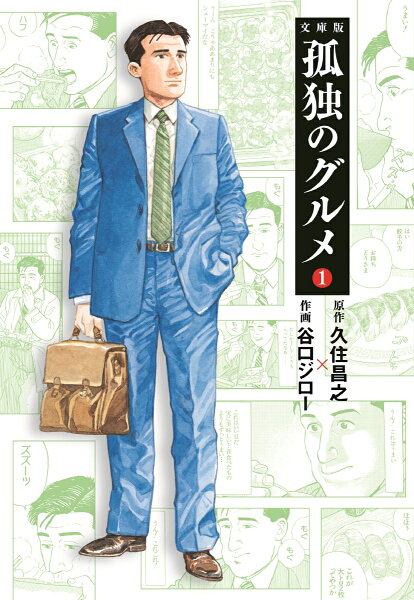
The Solitary Gourmet
The Solitary Gourmet follows Goro Inogashira, a self-employed import goods dealer, as he eats lunch alone in various restaurants across Tokyo — a simple premise that becomes a meditation on solitude, pleasure, and the small dignities of everyday life.
Slice of Life / Drama
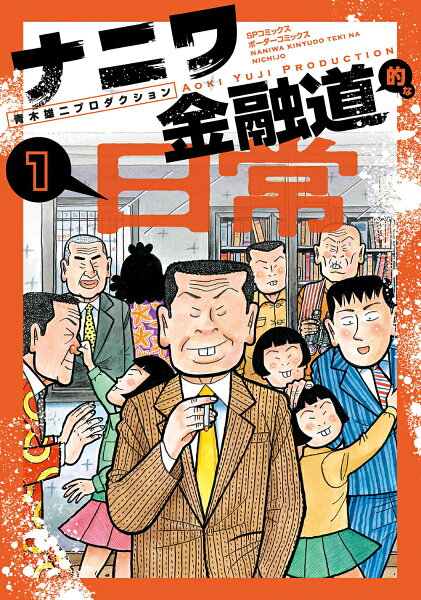
Naniwa Kinyuudo
Naniwa Kinyuudo follows new employee Ginji Mita at a small-loan finance company in Osaka — a manga that uses the world of moneylending and debt collection to create one of manga's most honest portraits of Japanese economic life.
Slice of Life / Comedy
Tensai Bakabon
Tensai Bakabon is Fujio Akatsuka's landmark gag manga about the Bakabon family — a household where the father's complete detachment from logic is presented as wisdom, and the world's attempts to impose reason are the actual problem.
Slice of Life / Comedy
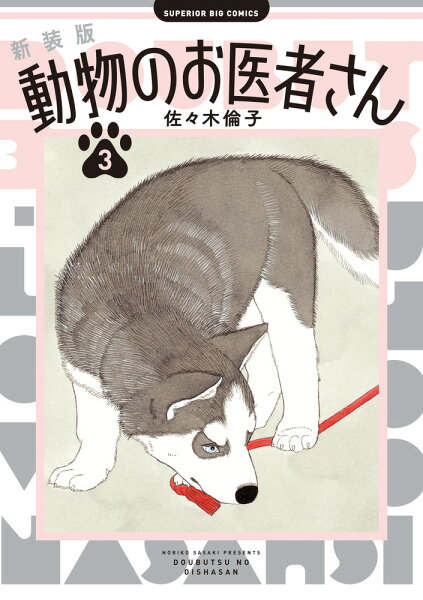
Doubutsu no Oisha-san
Doubutsu no Oisha-san follows Hamutaro, a quiet veterinary student in Hokkaido, his deadpan husky Chobi, and the warm chaos of vet-school life — a 12-volume Hana to Yume comedy so popular it set off a real Siberian Husky boom across Japan.
Slice of Life / Drama
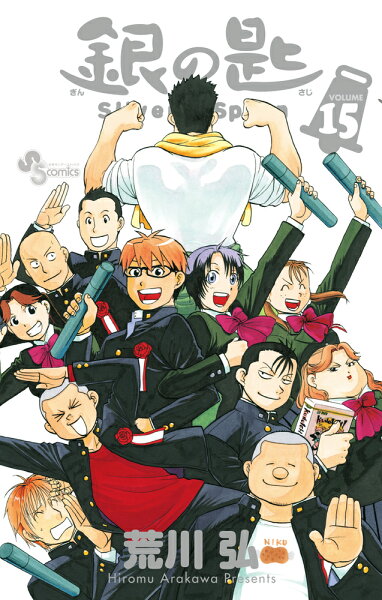
Silver Spoon
Yu's review of Silver Spoon — a city kid escapes to an agricultural high school to avoid his family, and discovers that farming, animal husbandry, and the people who feed the country have lessons no classroom ever taught him.
Slice of Life / Drama
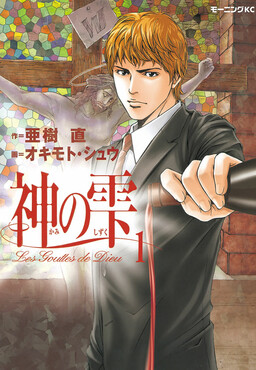
Drops of God
Yu's review of Drops of God — Shizuku Kanzaki, a young beer-company salesman who hates wine, has to identify the twelve 'Apostles' and a final wine called the Drops of God from his late father's will to inherit a legendary cellar, racing the adopted wine prodigy Issei Tomine. Written by Tadashi Agi, drawn by Shu Okimoto, complete in English from Kodansha.
Written by
Yu
Manga Enthusiast from Japan
I grew up in Japan and manga literally saved me during a tough time in elementary school. My English isn't perfect, but my love for manga is real — and I want to share it with you.