
Nagi's Long Vacation Review — A 28-Year-Old Office Worker Quits Everything and Learns Who She Is When No One Is Watching
by Konari Misato
Read the first volume. If it doesn't hook you, put it down. It'll hook you.
Buy Nagi's Long Vacation on Amazon →*Affiliate link — I earn a small commission at no extra cost to you.
I worked at a Tokyo trading company in my mid-twenties. I was good at being the person other people needed me to be. I was good at smiling at the right time, ordering food everyone liked, agreeing with the loudest opinion in the room. I was very tired. I did not know why I was very tired.
I read Nagi's Long Vacation the year after I quit that job. The manga is about a woman whose specific exhaustion I recognized in the first ten pages.
Quick Take
- Konari Misato's 12-volume josei manga (2016–2025) about an office worker who burns out and rebuilds her life
- Nagi's specific Japanese exhaustion — the burnout of someone too good at reading the air — is the manga's whole subject
- Unlicensed in English; the 2019 TBS drama adaptation is a strong alternative entry point for non-Japanese readers
What Is Nagi's Long Vacation About? (Plot Summary)
Nagi Oshima (大島 凪) is twenty-eight. She works in a Tokyo office. She has a boyfriend, Shinji Gamon (我聞 慎二) — a charismatic, conventionally attractive salaryman at the same company. She has coworkers who treat her like a useful tool. She has a mother she calls weekly out of duty. She lives in a moderately priced Tokyo apartment that she has decorated to look like an apartment a person like her should have.
Nagi has spent her life reading the air (空気を読む, kuuki wo yomu) — the deeply Japanese skill of understanding what is expected in a social situation without being told. She is exceptional at it. She smiles at the right times. She defers at the right times. She predicts what people want from her and provides it before they have to ask.
She has also, without realizing it, completely disappeared into the performance.
The manga opens with Nagi at her breaking point. She overhears, in a women's restroom at work, what her coworkers actually think of her. She also overhears something Shinji has said about her — something he would never say to her face but which he apparently believes. The combination is too much. Nagi has a panic attack at the office. She wakes up in the hospital.
Nagi does not go back to work. Instead:
- She quits her job
- She breaks up with Shinji (he does not accept the breakup)
- She gives up her apartment
- She cuts all ties with her old social circle
- She moves to a tiny 6-tatami apartment in Tachikawa — a working-class suburb of Tokyo
- She stops chemically straightening her hair, which has been a daily ritual since middle school, and lets it return to its natural curly state
- She calls this her "oitoma" (お暇) — a Japanese word meaning a respectful "taking leave," a vacation, a withdrawal
The next 12 volumes follow Nagi's slow rebuilding of a self. She:
- Learns to cook simple meals she actually likes (rather than dishes that signal middle-class taste)
- Becomes friends with her elderly neighbor
- Meets Gon Arashiro (安良城 ゴン) — an attractive, easygoing neighbor who is the opposite of Shinji in every way
- Picks up part-time work that matches her actual interests rather than her career trajectory
- Slowly relearns how to want things
- Has to navigate Shinji's repeated attempts to reinsert himself into her life
- Has to navigate her mother's specific kind of emotional pressure
The series concluded in February 2025 with volume 12. Sales of 5.8+ million copies in Japan as of late 2025.
What Does "Nagi's Long Vacation" Mean?
The Japanese title is 凪のお暇 (Nagi no Oitoma). Each word does work:
- 凪 (Nagi) is the protagonist's name. It also means "calm" — specifically the meteorological term for the period of windlessness at sea, the dead calm between weather systems. The character's name is the manga's thesis: a person who has built her life around being the calm everyone else needs, and who needs to find out what her own weather actually is
- お暇 (oitoma) is a respectful word for "taking leave" — the kind of word a guest uses to politely depart from a host. It means "vacation" only secondarily. The primary meaning is "respectfully withdrawing"
The English title "Nagi's Long Vacation" loses some of this. A more literal translation might be "Nagi's Time Off" or "Nagi Takes Her Leave" — but neither has the same English-language warmth that "vacation" carries.
The manga is, in this sense, not about a vacation. It is about Nagi politely excusing herself from a life that was killing her.
Who Is This Manga For?
- Adults who have experienced burnout — the depiction is uncomfortably accurate
- Josei manga fans who like character-driven drama
- Drama (live-action) viewers who watched the 2019 TBS adaptation and want the source
- Readers of Japanese literature about social exhaustion — Mieko Kawakami, Sayaka Murata adjacent
- Anyone in their late 20s / early 30s specifically; the manga lands hardest for readers in Nagi's age range
Content Warnings & Age Rating
Age Rating: T (Teen) — 13+ Content Warnings: Emotional manipulation (particularly by Shinji); workplace harassment and bullying (depicted in flashback); codependency dynamics; panic attacks and mental health crisis depicted with care; some adult relationship complications (no explicit content)
The T rating is generous; the manga is essentially All Ages content with adult thematic weight. No graphic content.
Story Overview (Light Spoilers)
The manga is structurally non-linear character study more than plot-driven narrative. The major emotional arcs:
Volumes 1–3: The escape and the new apartment. Establishing the Tachikawa setting. Meeting Gon. The first attempts by Shinji to find Nagi. The first attempts by Nagi to figure out what she wants for dinner without consulting anyone.
Volumes 4–6: The deepening. Nagi's relationships with neighbors. Her part-time work attempts. The Gon-Nagi-Shinji triangle takes shape (though "triangle" is misleading — Misato is more interested in what Nagi is figuring out about herself than in romantic resolution). Some of Nagi's backstory emerges: her mother, her hair, her middle-school decisions.
Volumes 7–9: The complications. Old patterns reassert themselves. Nagi backslides in specific recognizable ways. Misato refuses to make the recovery linear; the manga's honesty is in showing that Nagi gets better and worse, sometimes in the same week.
Volumes 10–12 (the final arc): The series concludes. Without spoiling: Nagi reaches an endpoint that is neither a romantic resolution with a specific man nor a return to the old life. The ending is on her own terms. Misato earned the ending across 9 years of serialization.
Characters
Nagi Oshima — The protagonist whose specific character is built around her exceptional skill at kuuki wo yomu. Nagi is not stupid or naive. She is extraordinarily observant — she notices things about people that other people miss. The problem is that she has converted that observation into a tool for self-erasure rather than for self-understanding. The manga is her slowly redirecting the observation toward herself.
Nagi's hair is one of the manga's most important character details. Her natural hair is curly. From middle school onward she chemically straightened it because curly hair marked her as "different" and her mother had opinions. The hair coming back — the slow process across the early volumes of her abandoning the straightening ritual — is the manga's clearest visual metaphor for what she is doing emotionally.
Shinji Gamon — Nagi's ex-boyfriend. Konari Misato writes him as the manga's most carefully observed character. He is genuinely charismatic, intelligent, and (in his own framing) caring. He is also controlling, contemptuous, and incapable of seeing Nagi as a person separate from her function in his life. The manga refuses to make Shinji either a villain or a redeemable character; he is a recognizable Japanese type — the salaryman who has never had to be considered seriously challenged on his self-perception — written with rare honesty.
Shinji's continued presence in the series is the manga's primary source of discomfort. He keeps showing up. He keeps having reasons to be there. He keeps almost making sense. Nagi keeps having to figure out, again, what she actually wants from him versus what he has trained her to want.
Gon Arashiro — Nagi's neighbor. Easygoing, attractive, kind in a casual way. The manga's primary "Shinji opposite." Gon is genuinely uncomplicated in some ways, genuinely complicated in others — he is comfortable in himself but not necessarily good at long-term relationships. The Gon-Nagi material is some of the manga's quietest and warmest.
Nagi's mother — A recurring presence, mostly through phone calls. Her specific way of weaponizing parental concern against Nagi's autonomy is some of the manga's most uncomfortable material. Her arc across the series is one of Misato's more careful character developments.
The Tachikawa neighbors — Including the elderly woman next door, the other tenants in Nagi's building, the local shopkeepers. The neighborhood is a character in itself. Tachikawa is depicted with documentary specificity that Japanese readers familiar with the area can verify.
Art Style
Konari Misato's art is warm, observational, and built for emotional clarity. Character faces carry significant information; Nagi's expressions across the series — the carefully performed smile of the early volumes vs. the genuine smile of the later volumes — are differentiated with subtle linework changes.
Nagi's curly hair is drawn with care; the texture is visible and specific. The Tachikawa setting is rendered with realistic detail. Food scenes (which are frequent and important) are drawn with affection.
Misato's panel composition slows for emotional moments. Some of the manga's most affecting beats are single panels held longer than expected. The reader is given time to sit with what is happening.
Cultural Context
Burnout culture in contemporary Japan is the manga's primary subject. The specific Japanese social pattern of kuuki wo yomu combined with workplace expectations of female office workers (お茶汲み, ochakumi, the historical expectation that female employees serve tea and perform emotional labor for male coworkers; the related contemporary patterns of social labor and uncompensated emotional work) produces a recognizable kind of exhaustion that the manga depicts unflinchingly.
Tachikawa is a real Tokyo suburb. In the Japanese class geography it occupies a specific position: outside central Tokyo, working-class, multi-ethnic in places, with a different texture than the Setagaya/Shibuya world Nagi escaped from. Nagi's choice to live there is a class statement that Japanese readers register immediately.
The 2019 TBS drama adaptation starring Hana Kuroki (黒木 華) as Nagi, Issei Takahashi as Shinji, and Yutaro Watanabe as Gon ran 10 episodes. It won the Television Drama Academy Award for Best Work and is widely considered one of the best Japanese live-action manga adaptations of the late 2010s. The drama is available with English subtitles on streaming platforms.
Konari Misato is a respected josei manga creator. Her previous works include Tonari no Kaibutsu-kun-adjacent material and shorter josei series. Nagi's Long Vacation is her career-defining work.
What I Love About It
The cooking scenes.
Across the manga, Nagi cooks for herself. Not elaborate meals — simple ones. Rice. Miso soup. Pickled vegetables. A piece of fish she grilled herself. The cooking scenes are deliberately quiet. Misato draws them in small panels, often without dialogue, sometimes across a full page of just Nagi preparing food in her tiny Tachikawa kitchen.
What makes these scenes affecting is what they replace. Earlier in Nagi's life, food was a performance. She ordered what the table ordered. She cooked what Shinji wanted. She ate what her coworkers were eating. The food itself was incidental; what mattered was the social signal the food sent.
In Tachikawa, the food becomes the food. Nagi makes choices based on what she wants. The first time she cooks something that her old self would have considered "boring" or "embarrassingly cheap" — and finds that she enjoys eating it — is one of the manga's quietest revelations. The reader, by that point in the series, knows exactly how much that small choice cost her.
I think about these scenes when I make my own meals now. I lived for several years cooking what I thought was impressive — what would make a good food photo, what would seem like the right thing for an adult woman to make. I do not remember enjoying any of those meals. The Nagi who has learned to eat plain rice with pleasure is the version of myself I have been gradually trying to find. The manga gave me a model for how that recovery might look — not as a transformation but as small accumulating choices about what I actually want for dinner tonight.
That gift is what made Nagi's Long Vacation important to me. It is also, I think, what makes it important to so many other Japanese readers in their late twenties and early thirties. The manga shows you what it looks like to start preferring your own company. That is a rare gift in any medium.
What English-Speaking Fans Say
Nagi's Long Vacation has been gaining English-language attention slowly. The 2019 drama brought significant international visibility — the drama is well-regarded among non-Japanese viewers of Japanese television. The manga itself, being unlicensed in English, is accessed primarily through fan translations.
Reviews from English readers who have completed the manga consistently rate it as one of the best josei works of the 2010s/2020s. The realism of the burnout depiction is universally cited.
The most common request: license this manga in English. As of 2026, no English publisher has announced acquisition.
Memorable Scene ⚠️ Light Spoiler
The scene where Nagi first calls Gon by his given name.
I won't spoil specifics. Across the early volumes, Nagi has been calling her neighbor "Gon-san" — keeping the polite distance that Japanese social convention requires between unmarried adults who are not close. Somewhere in the middle volumes, in a small moment that Konari Misato builds without fanfare, Nagi calls him just "Gon."
Gon notices. He does not make a big deal of it. He smiles slightly and continues the conversation.
What makes the scene work is how much Misato has done to earn it. The dropping of the honorific is, in Japanese social terms, a major moment — it indicates a specific shift in intimacy. The manga has been preparing the reader to register this shift since volume 1. When it arrives, the reader feels it the way Gon feels it: as the small careful step it actually is.
That scene is the manga's whole project in one moment. Recovery from chronic self-erasure does not happen in dramatic confessions. It happens in small choices. Nagi choosing to call Gon by his given name is one of those small choices. The manga is the accumulation of them.
Similar Manga
| Title | Its Approach | How Nagi's Long Vacation Differs |
|---|---|---|
| What Did You Eat Yesterday? | Adult slice of life through cooking | What Did You Eat is more domestic stable; Nagi is about rebuilding from collapse |
| Wotakoi | Adult workplace josei | Wotakoi is more comedic; Nagi is more interior |
| Metamorphose no Engawa | Intergenerational friendship josei | Same craft of finding the important thing in small moments |
| Sweat and Soap | Adult workplace josei with romance | Sweat and Soap is more conventional romance; Nagi is more self-discovery |
Reading Order / Where to Start
Volume 1. The character work builds from the beginning.
For English readers without Japanese: watch the 2019 TBS drama first. It is an excellent adaptation and covers approximately the first 5 volumes of the manga with high fidelity. After the drama, you'll have enough context to follow fan translations or attempt the Japanese.
Official English Translation Status
Nagi's Long Vacation has no official English manga release. Akita Shoten and Shogakukan have not licensed the manga to any English publisher. The Japanese edition is available in 12 volumes (in print in Japan). The 2019 TBS drama adaptation is available with English subtitles on various streaming platforms.
Fan translations of the manga circulate online but are not officially sanctioned.
Pros & Cons
Pros
- One of the most emotionally honest manga about burnout in any language
- Konari Misato's character work — particularly Shinji — is rare and careful
- 12 volumes complete with a real ending
- Nagi's recovery is depicted as non-linear and realistic
- The 2019 drama is an excellent companion
Cons
- No English manga license
- Slow-paced even by josei standards
- Some readers find the Shinji material genuinely uncomfortable
- The "quiet character study" register is an acquired taste. It won't land for everyone, especially readers wanting more plot momentum.
Is Nagi's Long Vacation Worth Reading?
For readers who can access it (Japanese ability, fan translation, or the drama as a substitute): yes, unconditionally. One of the great josei manga of recent years.
For English-only readers without fan translation: watch the 2019 TBS drama. It is the best available English-language access to Nagi's story.
Format Comparison
| Format | Notes |
|---|---|
| Physical (Japanese) | All 12 volumes available in Japan |
| Digital (Japanese) | Available via Japanese ebook services |
| English Manga | None — unlicensed |
| Drama (TBS, 2019) | 10 episodes with English subtitles; widely considered excellent adaptation |
Where to Buy
No English release yet. That just means you find it before everyone else does.
*Affiliate link — I earn a small commission at no extra cost to you.
More Manga You Might Like
Slice of Life / Historical Drama
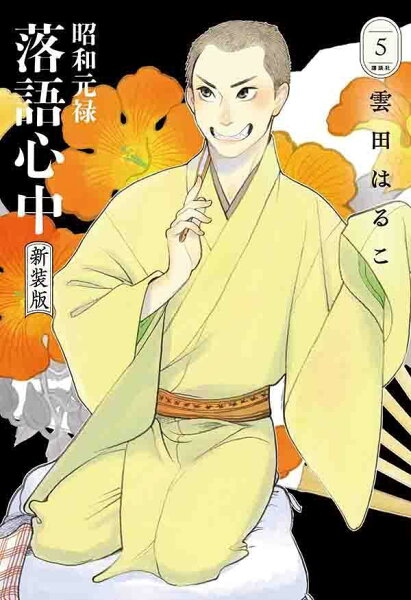
Shouwa Genroku Rakugo Shinjuu
Shouwa Genroku Rakugo Shinjuu follows the world of rakugo — traditional Japanese comic storytelling — through two performers across two generations: the transcendent and self-destructive Yakumo, and the student Yotaro who inherits what Yakumo cannot save.
Slice of Life / Drama
Umimachi Diary
Umimachi Diary follows three adult sisters in Kamakura who invite their half-sister — whom they barely know — to live with them after their estranged father's death, and the slow process of becoming a family.
Slice of Life / Drama
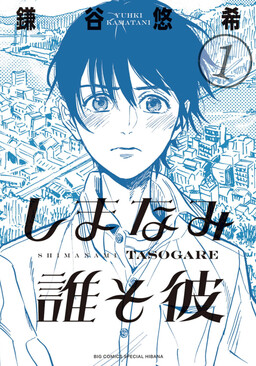
Our Dreams at Dusk: Shimanami Tasogare
Yu's review of Our Dreams at Dusk — Tasuku Kaname is outed to his classmates; he goes to a building to jump; a woman in white tells him to come to a drop-in center; the center is a community of people across the LGBTQ spectrum who have found a way to be in the world; Tasuku begins to find his own way through them.

Slice of Life / Drama
Kageki Shojo!!
Yu's review of Kageki Shojo!! — Sarasa Watanabe, a tall girl pushed out of kabuki as a child, enters the Kouka School of Musical and Theatrical Arts dreaming of playing Oscar from The Rose of Versailles. Her roommate is Ai Narata, a former JPX48 idol who fled an abusive past into all-female spaces. A Takarazuka-inspired drama about what performance costs the people who carry damage onto the stage.
Slice of Life / Drama
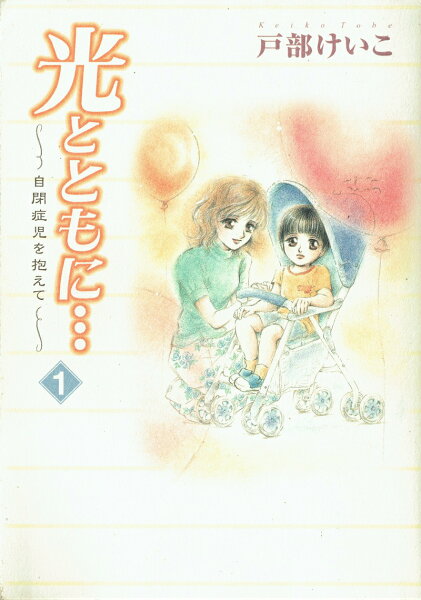
With the Light: Raising an Autistic Child
A review of With the Light: Raising an Autistic Child, Keiko Tobe's landmark manga about a mother raising an autistic son — honest, educational, and deeply human.

Slice of Life / Drama
My Boy
My Boy follows Mashuu Hayami, a 32-year-old office worker adrift in her life after a painful breakup, who meets Satoru Kaga, a 12-year-old boy playing hockey alone in the park. Their unlikely friendship — and the questions it raises — unfolds across seven thoughtful volumes.
Written by
Yu
Manga Enthusiast from Japan
I grew up in Japan and manga literally saved me during a tough time in elementary school. My English isn't perfect, but my love for manga is real — and I want to share it with you.
Disclosure: This post contains affiliate links. As an Amazon Associate, I earn from qualifying purchases at no extra cost to you.