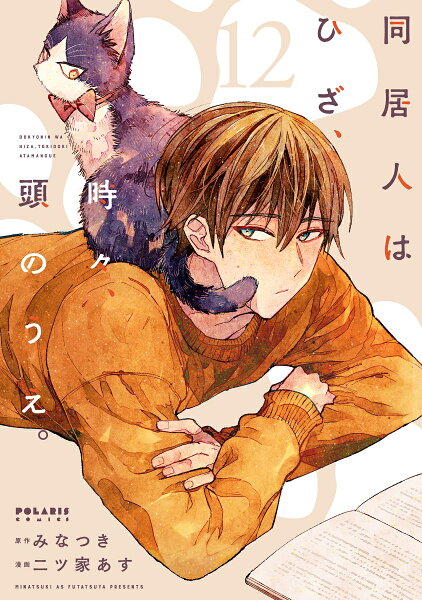
My Roommate Is a Cat Review — A Recluse Mystery Writer and a Stray Cat Tell the Same Story From Both Sides
by Minatsuki / As Futatsuya (art)
Read the first volume. If it doesn't hook you, put it down. It'll hook you.
Buy My Roommate Is a Cat on Amazon →*Affiliate link — I earn a small commission at no extra cost to you.
I lived alone in a one-room apartment in Suginami for three years after university. I didn't have a cat. I almost got one, twice — went to the shelter, looked at them, decided I wasn't ready to be responsible for another life.
I read this manga the year I left that apartment. It made me realize what I had actually been not-ready-for. It wasn't the cat. It was being seen.
Quick Take
- A grieving recluse and a stray cat tell the same story from both perspectives — and the gap between their two readings of every scene is the whole point
- Haru is one of fiction's most accurately written cats; readers who live with cats will recognize her immediately
- Age rating: All Ages — gentle throughout. Grief is present but handled with care
What Is the Age Rating for My Roommate Is a Cat?
Seven Seas rates the English release All Ages. The rating is accurate.
What's in the manga:
- Grief: Subaru's parents died recently in an accident. This is the backdrop of his isolation. The grief is treated honestly but never graphically. It's a presence, not a sequence
- Social isolation: Subaru's withdrawal is depicted realistically. The manga treats it as something to grow through, not romantically
- No sexual content, no violence, no profanity, no scary content
If you're considering this for a younger reader: middle-schoolers (10+) can handle it without issue. The themes around death of parents may prompt conversations for sensitive younger readers, but nothing in the manga is age-inappropriate.
It is one of the gentlest seinen manga in circulation. The "seinen" classification refers to its adult protagonist and emotional maturity, not to content.
What Does the Japanese Title Mean?
The Japanese title is 同居人はひざ、時々、頭のうえ。 (Doukyonin wa Hiza, Tokidoki, Atama no Ue), which translates more literally as:
"My Roommate Is on My Lap, Sometimes on My Head."
The Seven Seas English title — "My Roommate Is a Cat" — is shorter and more legible to English bookstore browsers, but it loses what the Japanese title is doing. The original title is itself written from Subaru's perspective: he describes Haru not by what she is (a cat) but by where she physically is in his life (on his lap, occasionally on his head). The title is doing the same thing the manga does: refusing to describe Haru from the outside.
The original title is also very Japanese in its mid-sentence comma usage and softness. The English title sacrifices flavor for clarity. Both are defensible choices.
What Is the Manga About?
Subaru Mikazuki is a young mystery novelist in his twenties. Recently — within the past year — both of his parents died in a car accident. Subaru already had social difficulties; the loss has confirmed his withdrawal. He lives alone in his parents' house. He rarely goes outside. His editor, Kawase, is the only person who regularly enters his life.
On the way back from his parents' grave, Subaru sees a stray cat eating food someone has left at a grave. The cat is small, dirty, and clearly fending for herself. Subaru, in a moment that surprises him, decides to take her home — telling himself it's because cats might appear in his next novel and he needs research.
He brings her home. He cleans her. He calls her Haru.
The manga then proceeds, chapter by chapter, with the same structure:
- First half of each chapter: Subaru's perspective. He observes Haru. He fails to understand things. He writes
- Second half of each chapter: Haru's perspective on the same events. She has internal monologue. She has reasons. She is paying close attention to her human, who she calls Goshujin (Master)
The gap between what Subaru thinks Haru is doing and what Haru is actually doing is where the manga lives.
Who Is This Manga For?
- Cat people who want a manga that gets cats right
- Readers who want quiet, character-driven manga that doesn't need conflict to be compelling
- Anyone who enjoyed the 2019 anime and wants the source material
- Readers processing grief or social isolation who can use gentle, hopeful material
- People who like the dual-perspective premise — this manga executes it better than any of its peers
Content Warnings & Age Rating
Age Rating: All Ages Content Warnings: Subaru's parents died before the manga begins; grief is a recurring theme; social isolation is depicted; one mid-series arc involves Haru's health and may upset readers attached to pets
The grief content is handled with care — never gratuitous, never weaponized. The hardest emotional moments are processed by both characters and the manga gives them weight without dwelling.
Story Overview
The manga is structurally episodic but emotionally cumulative. Each volume covers about six to eight chapters; each chapter is a small story (Haru gets sick, Subaru meets a new neighbor, Subaru tries to take Haru somewhere, Subaru's editor stays over) told twice from both perspectives.
Volumes 1–3 establish the dynamic. Subaru adopts Haru. Haru figures out the apartment. Both of them feel each other out. The supporting cast (Kawase the editor, the veterinarian, the high-school neighbor Hiroto) is introduced.
Volumes 4–6 widen the world. Subaru begins, slowly, to leave the house more often. He goes to a cat café. He meets other cat owners. Haru meets the cats of friends. The manga's larger thesis emerges: that Subaru is using Haru as the bridge to a world he had been refusing to participate in.
Volumes 7–9 are where the deeper grief work happens. Subaru's relationship with his parents — particularly his mother — surfaces in specific chapters that connect Haru to Subaru's childhood pets. These are some of the manga's most affecting volumes.
Volumes 10–11 bring the series to a complete, gentle close. There is no shocking turn. The manga ends with Subaru in a different place than it began.
Characters
Subaru Mikazuki — A young man whose specific shape of grief and social anxiety is rendered with rare honesty. He's not depressed in a dramatic way. He's just unable to do the basic transactions of being a person — leaving the house, talking to strangers, accepting help. The manga shows him relearning these slowly, by way of having to relearn them on a cat's behalf.
Haru — A small calico cat with internal monologue in the second half of each chapter. What makes Haru work is that the manga writes her as unmistakably a cat. She's motivated by food, warmth, safety, territory, and her bond with her Goshujin. She's not a human in a cat suit. She's a cat who has thoughts, and the thoughts are recognizable to anyone who has lived with cats. Her backstory — that she was the largest of her littermates, that she remembers protecting her siblings, that she has reasons for trusting Subaru — is the manga's biggest emotional engine.
Kawase — Subaru's editor. Older than him, professional, increasingly invested in Subaru as a person rather than just as a writer. Her arc — her growing fondness for Haru, her concern for Subaru — is the manga's best human supporting relationship.
Hiroto Yasaka — A high-school student who lives in the neighborhood and becomes Haru's friend and Subaru's unexpected mentor in cat ownership. The manga uses him to show that Subaru's social repair will require people younger and braver than him.
Art Style
Minatsuki and Futatsuya's art is clean and warm. The cat work is the standout — Haru's expressions and movements are observational, not stylized. Anyone who has lived with a cat can identify specific behaviors from single panels: the loaf position, the kneading paws, the half-closed contented eyes, the tail flick of mild irritation. The art's accuracy is the foundation of the dual-perspective conceit; you trust Haru's interiority because her exterior is so right.
Subaru's character art evolves visibly across the series. Early-volume Subaru is hunched, shadowed, and has tired eyes. Late-volume Subaru is none of these things, and the visual change is not pointed out by the manga. It's just there.
Cultural Context
The manga reflects a specific Japanese reality: urban single-occupancy apartments, the difficulty of maintaining adult friendships in Tokyo, and the way pet ownership has become a major emotional infrastructure for Japanese adults living alone. Subaru's situation — late twenties, living alone, working from home, isolated — is recognizable to a significant percentage of Japanese millennials.
The manga also engages with Japanese grief culture: the relationship between living people and the dead, visits to graves, the way memorial dates are observed. Haru is named after Subaru's mother's favorite season. This is the kind of detail Western readers can miss but Japanese readers immediately register.
What I Love About It
The chapter where Haru tells the reader why she chose Subaru.
I won't say which chapter. What I'll say is that the Haru perspective half-chapters generally show her processing events with cat logic — food, safety, the human's mood. But there's one chapter, somewhere in the middle of the series, where Haru's internal monologue stops being about that day's events and becomes about the moment she first saw Subaru.
She tells the reader, in her cat voice, that she had been watching humans her whole short life. She had seen many of them. She had not approached any. When Subaru appeared at the grave, she watched him too. She saw something specific in him — and her internal monologue articulates exactly what, in language that is recognizably hers — and she decided to let him see her.
He thought he was the one who chose her. She knows he was the one she chose.
That chapter is the manga's entire thesis. It's about the asymmetry of being chosen by something that can't tell you it's choosing you. It's about how Subaru spent months thinking he was generously taking in a stray, when from Haru's side the entire situation was reversed. The grace of the manga is that it shows you both sides without making one wrong. They both chose each other. Neither knew.
That's why I cried when I read this on the floor of my Suginami apartment. Because I had spent three years thinking nobody had chosen me. The manga showed me that I had probably been wrong about that, several times, without noticing.
What English-Speaking Fans Say
The English fan response is consistently the same: this is the manga people give to friends going through hard times. Reddit threads about "wholesome manga for difficult periods" feature My Roommate Is a Cat in almost every comment chain. Cat owners specifically cite the Haru chapters as the most accurate cat interiority they've encountered in fiction.
The 2019 anime adaptation by Zero-G is well-regarded and has brought significant English readership. The anime covers approximately the first half of the manga.
Memorable Scene ⚠️ Spoiler Warning
The mid-series chapter where Haru becomes seriously ill. Subaru, who has been growing as a person across the volumes but who still has trouble with confrontation, urgency, and asking for help, has to handle a cat emergency. He has to get her to a vet. He has to make decisions he doesn't feel qualified to make.
The chapter splits the way every chapter splits: Subaru's side, then Haru's side. Subaru's side is panic, self-doubt, and the specific terror of being responsible for a life that can't tell you what's wrong. Haru's side is something different: she is not panicking. She is sick, and tired, and watching her Goshujin be afraid for her, and what she narrates is her own resolve to keep being alive, for him.
The scene where Haru, on the vet table, looks at Subaru and thinks (in her cat voice) that she will not let him be alone again is one of the cleanest emotional moments in any slice of life manga I've read.
Similar Manga
| Title | Its Approach | How This Manga Differs |
|---|---|---|
| A Man and His Cat | Older man and his cat — gentle, episodic | A Man and His Cat is more single-perspective; My Roommate uses dual-POV more rigorously |
| Chi's Sweet Home | Cat's perspective on a family | Chi is broader and more comedic; My Roommate is quieter and adult |
| Barakamon | Recluse calligrapher relocates and reconnects through children | Same recovery arc; My Roommate uses an animal instead of a community |
| March Comes In Like a Lion | Young man working through grief and isolation | March is much heavier and longer; My Roommate is the gentle cousin |
Reading Order / Where to Start
Volume 1. The dual-perspective structure is established in the first chapter and the cumulative impact relies on reading from the beginning.
Official English Translation Status
Seven Seas Entertainment published the complete 11-volume series in English in print and digital. The series is complete. The 2019 anime adaptation is available with subs and dubs through standard streaming services.
Pros & Cons
Pros
- Dual-perspective structure is one of the cleanest creative conceits in manga
- Haru is one of the best-written cats in any medium
- Subaru's grief and recovery are handled with rare honesty
- Complete with a satisfying ending
- All-ages content with adult emotional depth — a rare combination
Cons
- Very low stakes — readers who want plot will find it slow
- The episodic structure means individual chapters are similar in shape
- The grief content is present and may be heavy for recently-bereaved readers
- This kind of quiet character work is an acquired taste. If you need narrative tension, this isn't your manga.
Is My Roommate Is a Cat Worth Reading?
Yes — unconditionally, if you have any patience for quiet manga. The dual-perspective structure alone makes it worth the read. The fact that it executes that structure with this much warmth and emotional precision makes it one of the better slice of life manga of the past decade.
Format Comparison
| Format | Notes |
|---|---|
| Physical (Seven Seas) | All 11 volumes available in English |
| Digital | Available via Seven Seas digital, Kindle, Comixology |
| Omnibus | Not available |
Where to Buy
Read the first volume. If it doesn't hook you, put it down. It'll hook you.
This post contains affiliate links. If you purchase through these links, I may earn a small commission at no extra cost to you. As an Amazon Associate, I earn from qualifying purchases.
*Affiliate link — I earn a small commission at no extra cost to you.
More Manga You Might Like
Slice of Life / Drama
Baby and Me
Baby and Me follows Takuya Enoki, a grade-schooler who becomes a mother and a brother at the same time, raising his toddler brother Minoru after their mother dies and their father works to keep the family going.

Slice of Life / Drama
Black Jack Sousaku Hiwa
Black Jack Sousaku Hiwa is a documentary manga about how Osamu Tezuka created Black Jack — told through the editors and assistants who worked beside him, capturing both the genius and the human cost of his impossible work ethic.
Slice of Life / Romance
Teasing Master Takagi-san
Yu's review of Teasing Master Takagi-san — Takagi teases her desk neighbor Nishikata every single day; he keeps making plans to get back at her; she always wins; the series is about two middle school students who are clearly in love with each other before either of them knows how to say it.
Slice of Life / Heartwarming
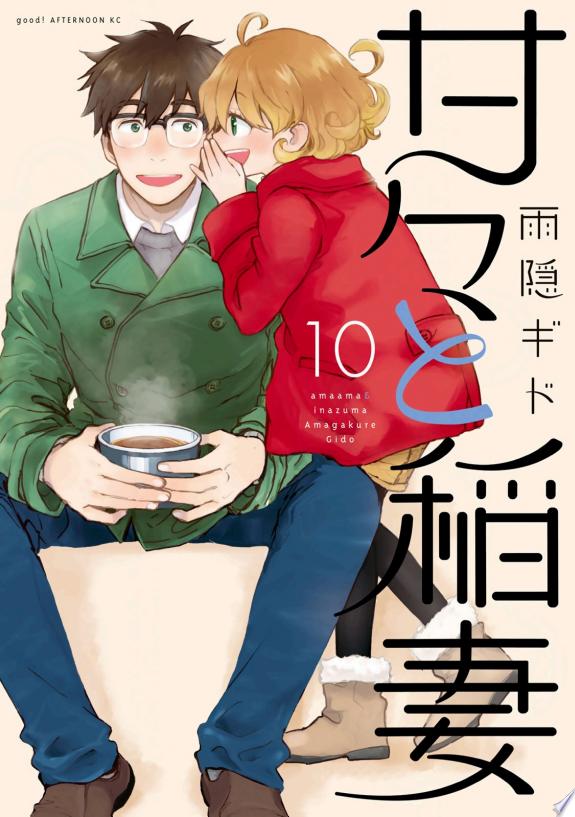
Sweetness and Lightning
Yu's review of Sweetness and Lightning — Kouhei Inuzuka is a teacher and single father whose wife recently died; he cannot cook and his daughter Tsumugi eats convenience store food; a student named Kotori invites them to her family's empty restaurant and teaches him to cook for his daughter.
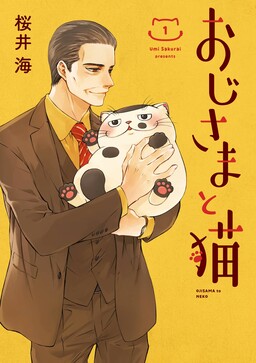
Slice of Life
An Old Man and His Cat
Yu's review of An Old Man and His Cat — a widower named Fuku-san adopts Mofu-chan, a large flat-faced cat that nobody wanted; the series follows their daily life together; Nekomaki's manga about loneliness, companionship, and what a cat can give to someone who needs them.
Slice of Life
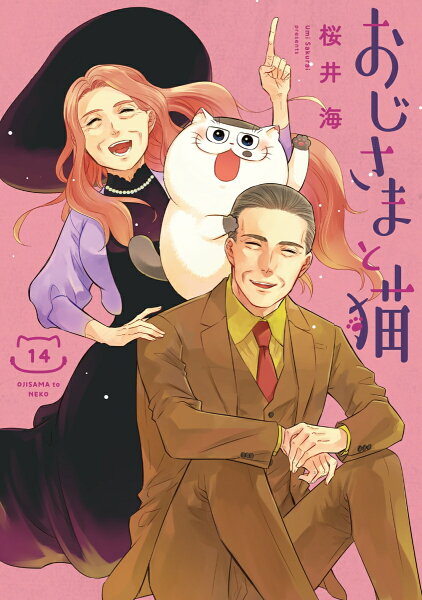
A Man and His Cat
Yu's review of A Man and His Cat — a gentle, tear-jerking manga about a lonely widower who adopts an exotic shorthair cat that nobody else would buy, and the quiet, mutual healing the two find in each other.
Written by
Yu
Manga Enthusiast from Japan
I grew up in Japan and manga literally saved me during a tough time in elementary school. My English isn't perfect, but my love for manga is real — and I want to share it with you.
Disclosure: This post contains affiliate links. As an Amazon Associate, I earn from qualifying purchases at no extra cost to you.