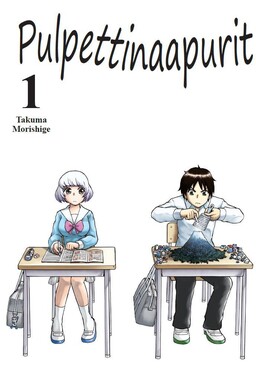
My Neighbor Seki Review: The Boy Next to Her in Class Is Always Doing Something Incredible
by Takuma Morishige
Read the first volume. If it doesn't hook you, put it down. It'll hook you.
Buy My Neighbor Seki on Amazon →*Affiliate link — I earn a small commission at no extra cost to you.
Quick Take
- The one-joke manga where the single joke is executed with enough variation and escalation to sustain 11 volumes without wearing out
- The joke: Seki does something ridiculous at his desk; Rumi gets distracted trying not to get distracted; Rumi suffers the consequences of having been distracted despite her best intentions
- Consistently funny; consistently gentle; one of manga's most reliable comedic premises
Who Is This Manga For?
- Readers who want comedy manga with a single premise executed to its limit
- Anyone who has ever been next to a distraction and become the distraction's victim
- Fans of school slice of life with a comedic rather than dramatic focus
- Readers of any age — genuinely all-ages
Content Warnings & Age Rating
Age Rating: All Ages Content Warnings: None
Appropriate for all readers.
Yu's Rating
| Category | Score |
|---|---|
| Story Depth | ★★☆☆☆ |
| Art Style | ★★★★☆ |
| Character Development | ★★★☆☆ |
| Accessibility for Non-Japanese Readers | ★★★★★ |
| Reread Value | ★★★☆☆ |
Story Overview
Rumi Yokoi sits next to Toshinari Seki in class. Seki does not pay attention to lessons. Instead, he plays games at his desk — games of increasing complexity and ambition, from elaborate domino constructions to robot family dramas with eraser-pieces to miniature golf courses to full chess games with invented rules. He is extraordinarily dedicated to not doing schoolwork.
Rumi is trying to pay attention. She keeps failing. Each chapter presents a new Seki activity, Rumi's escalating involvement despite her best intentions, and the inevitable consequence — which falls on Rumi rather than Seki, who is inscrutable and apparently immune to consequences.
Characters
Rumi Yokoi — Her inner commentary on Seki's activities — the increasingly elaborate emotional investment she develops in his desk-game narratives despite actively trying not to — is the comedy's primary vehicle. She is reactive but specific.
Seki — He barely speaks. His dedication to his activities is total. He never explains himself. His inscrutability is the premise's engine.
Art Style
Morishige's art handles the desk-game activities with the care they require — Seki's constructions are elaborate and need to be visually legible to the reader to work as comedy. The character expressions, especially Rumi's, are the art's comedic primary tool.
Cultural Context
My Neighbor Seki operates in the Japanese school setting with particular specificity — the classroom arrangement, the teacher relationships, the specific social stakes of being caught not paying attention. The comedy's structure depends on understanding that these stakes are real for Rumi even when they aren't for Seki.
What I Love About It
The chapters where Rumi becomes so invested in the drama of Seki's desk-game (the eraser-piece robot family's internal conflict, the domino structure's architectural ambition) that she genuinely forgets she wasn't supposed to be watching — and then is caught watching — are the series' most consistent and dependable comedy.
What English-Speaking Fans Say
Western readers describe My Neighbor Seki as reliable comfort comedy — the premise is transparent and the execution is consistent. The series is often cited as ideal for introducing people who don't read manga to the medium — the universal experience of classroom distraction makes it immediately comprehensible.
Memorable Scene ⚠️ Spoiler Warning
The chapter where Seki constructs a miniature golf course at his desk and Rumi, having followed the course play in her imagination, realizes she has missed an entire class period, is the series' high point of escalation comedy.
Similar Manga
- Nichijou — School comedy with escalating absurdity
- Komi Can't Communicate — School slice of life with communication premise
- Daily Lives of High School Boys — School comedy anthology
- Don't Toy with Me, Miss Nagatoro — School teasing comedy
Reading Order / Where to Start
Volume 1 — the first Seki activities and the establishment of the premise.
Official English Translation Status
Vertical published all 11 volumes. Complete and available.
Pros & Cons
Pros
- The single premise is executed with genuine inventiveness across 11 volumes
- Rumi's reactive commentary is consistently funny
- Genuinely all-ages
- 11 volumes; complete
Cons
- The premise's limits are the series' limits — readers wanting depth won't find it
- The comedy is consistent rather than escalating in ambition
- No narrative development beyond the comedic premise
Format Comparison
| Format | Notes |
|---|---|
| Individual Volumes | Vertical; complete |
| Digital | Available |
Where to Buy
Read the first volume. If it doesn't hook you, put it down. It'll hook you.
This post contains affiliate links. If you purchase through these links, I may earn a small commission at no extra cost to you. As an Amazon Associate, I earn from qualifying purchases.
*Affiliate link — I earn a small commission at no extra cost to you.
More Manga You Might Like
Slice of Life / Comedy
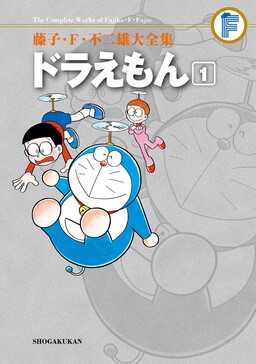
Doraemon
Yu's review of Doraemon — a robot cat from the 22nd century, sent back to help a hopeless boy named Nobita with gadgets from his four-dimensional pocket. Fujiko F. Fujio's most beloved work, and the manga every Japanese kid grows up inside.

Slice of Life / Comedy
Squid Girl
Yu's review of Squid Girl — Ika Musume (Squid Girl) emerges from the sea to conquer humanity as revenge for ocean pollution; she is immediately defeated by the Aizawa sisters who run a beach house and ends up working there to pay for property damage; world conquest is repeatedly delayed.

Slice of Life / Comedy
Shirokuma Cafe
Yu's review of Shirokuma Cafe — a polar bear named Shirokuma runs a café near the zoo; Panda works part-time there (poorly), Penguin is a regular customer, and the humor comes from animal characters behaving with human social conventions while remaining animals.
Slice of Life / Comedy
Non Non Biyori
Yu's review of Non Non Biyori — five students in a tiny rural school (total enrollment: five) experience the small, seasonal rhythms of countryside life in a mountain village far from anything.
Slice of Life / Comedy
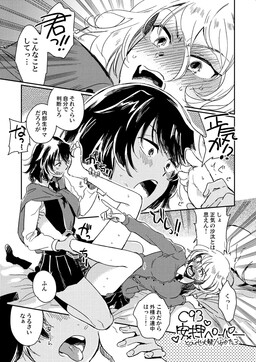
Comic Girls
Yu's review of Comic Girls (こみっくがーるず) by Kaori Hanzawa — Kaoruko 'Kaos' Moeta is a shy four-panel manga artist who ranks dead last in a reader survey and gets sent to a dormitory full of other young female manga creators. A gentle Manga Time Kirara comedy about making things while terrified you aren't good enough.
Slice of Life / Comedy
Cat + Gamer
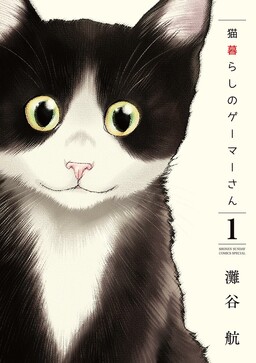
Yu's review of Cat + Gamer — Riko Kozakura is a 29-year-old office worker who spends every free hour on video games, until a stray kitten named Musubi turns up in her office parking lot and she starts running her whole life like a game she's trying to clear.
Written by
Yu
Manga Enthusiast from Japan
I grew up in Japan and manga literally saved me during a tough time in elementary school. My English isn't perfect, but my love for manga is real — and I want to share it with you.
Disclosure: This post contains affiliate links. As an Amazon Associate, I earn from qualifying purchases at no extra cost to you.