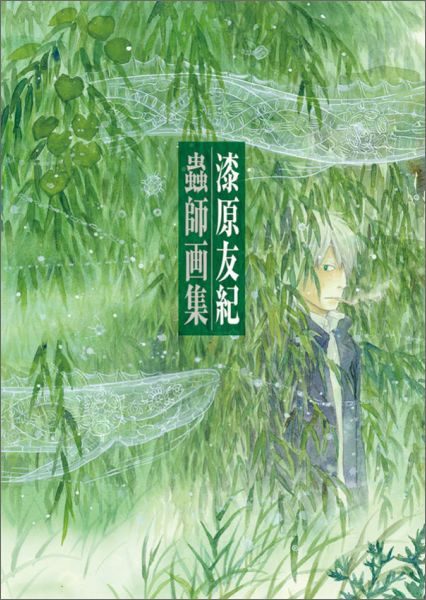
Mushishi Review: The Man Who Walks Between the Living World and Something Older
by Yuki Urushibara
Read the first volume. If it doesn't hook you, put it down. It'll hook you.
Buy Mushishi on Amazon →*Affiliate link — I earn a small commission at no extra cost to you.
Quick Take
- A wandering specialist in ancient lifeforms called Mushi travels Japan, helping people afflicted by encounters with things that exist at the boundary of perception
- The most meditative, most beautiful, and most unusual manga I have ever read
- Ten volumes, complete, episodic — each chapter is a self-contained story, perfect and complete
Who Is This Manga For?
- Readers who want something completely unlike standard manga — no action, no romance, no escalation
- Anyone who wants manga that feels like quiet rain and old forests
- Fans of folklore and mythology who want a Japanese perspective on the living world
- Readers who will accept "beautiful and strange" as a complete description
Content Warnings & Age Rating
Age Rating: T (Teen) Content Warnings: Death (some stories end in death, handled with stillness rather than drama), themes of illness and disability as Mushi-caused conditions, mild supernatural body horror in some chapters
The darkness here is quiet rather than graphic.
Yu's Rating
| Category | Score |
|---|---|
| Story Depth | ★★★★★ |
| Art Style | ★★★★★ |
| Character Development | ★★★☆☆ |
| Accessibility for Non-Japanese Readers | ★★★★★ |
| Reread Value | ★★★★★ |
Story Overview
Mushi are ancient lifeforms — older than plants, older than animals, barely perceptible to most people. They exist in a different relationship to time and the world than anything else that lives. Some are harmless. Some, through no malice, cause harm when they intersect with human lives.
Ginko is a Mushishi — a specialist who travels Japan treating Mushi-related afflictions. He carries medicine, knows remedies, and understands things about the boundary between the living and the more-than-living that most people will never need to know.
Each chapter of Mushishi is a complete story — a person afflicted by something, Ginko's investigation, his treatment and its outcome. Sometimes the outcome is a cure. Sometimes it is not. The manga does not promise resolution. It promises that the situation will be understood.
There is no overarching plot. Ginko walks. He encounters. He treats. He leaves. The world continues. This structure, sustained across 10 volumes, creates something that reads less like a manga and more like a collection of folk tales.
Characters
Ginko — A traveling specialist with white hair and green eyes — both unusual in his world, the result of a childhood Mushi encounter. He is calm without being cold, skilled without being arrogant, and carries a loneliness that is part of what he is. He cannot stay anywhere too long or the Mushi follow.
The people he encounters — Each chapter's human characters are complete in themselves. A blind musician. A boy who grows light from his body. A woman who dreams the future and cannot stop. A man whose shadow moves independently. Each is real for the duration of their story.
Art Style
Urushibara's art is the most distinctive in the slice-of-life genre — detailed natural environments that feel ancient, characters who exist within those environments rather than in front of them, and a visual language for the Mushi themselves (usually rendered as flowing, barely-there shapes) that requires you to look carefully. The light in her pages is extraordinary — the way she renders dawn, mist, firelight, and the specific quality of light in old forests.
Cultural Context
Mushishi is deeply embedded in Japanese animist tradition — the idea that the world is inhabited by countless forms of life and spirit that most people cannot see, that the natural world has its own logic and agenda, that human beings are guests in a world older than they are. Shinto, Buddhism, and older folk traditions all contribute to the worldview Urushibara is building. The manga communicates this completely to non-Japanese readers through the beauty of the stories themselves.
What I Love About It
The story about the boy who grows light from his body — the Mushi that lives in him, what it wants, and what Ginko must do about it — is the most beautiful single chapter I have read in manga. It is not the saddest or the most dramatic. It is the most purely itself. The light that the boy produces, drawn by Urushibara as something between science and magic, is the image I return to when I try to explain what this manga does.
Mushishi has made me more attentive to the natural world. I look at moss now and think about the scale of time it represents. That is what great art does — it changes the way you see things.
What English-Speaking Fans Say
Mushishi is one of the most critically acclaimed manga among Western readers who have read it, and one of the least known outside that group. It is not easy to explain what it is ("episodic fantasy slice-of-life folk tale collection" does not generate excitement) and it delivers nothing that standard manga marketing promises. Western readers who discover it usually describe it as a revelation. The anime adaptation is equally acclaimed.
Memorable Scene
(No spoiler warning needed — each story ends and is complete; knowing the ending does not diminish the experience.)
The final chapter of the manga — what Ginko's own origin story finally reveals, and the stillness with which it is resolved — is the appropriate ending for a manga about things that have always existed and will continue after we are gone.
Similar Manga
- Yotsuba&! — Pure joy, different kind of attention to ordinary experience
- Barakamon — Nature and discovery; more conventional character development
- Laid-Back Camp — Natural world with similar meditative quality
- Dungeon Meshi — Also attentive to ecology and biology; very different in tone
Reading Order / Where to Start
Volume 1, first chapter. The episodic format means you can start anywhere, but starting at the beginning gives you Ginko's introduction and the manga's world-building.
This is a manga best read slowly — one chapter at a time, with time between chapters to sit with each story.
Official English Translation Status
Kodansha USA published the complete 10-volume series in English. All volumes available. (Del Rey published earlier volumes; the Kodansha USA editions are the current ones.)
Pros & Cons
Pros
- The most meditative, beautiful manga I have read
- Ten volumes, complete, perfect in its form
- Each chapter is self-contained — you can read one and return weeks later
- Art that has never been surpassed for this kind of natural world rendering
Cons
- No plot, no escalation, no romance — readers who need these will not find them
- Ginko remains somewhat opaque despite 10 volumes (his mystery is intentional)
- Not for readers in a hurry
Format Comparison
| Format | Notes |
|---|---|
| Individual Volumes | Kodansha USA editions; well-produced |
| Digital | Available; the art is better in print |
| Physical | Highly recommended — the detailed natural environments need the space |
Where to Buy
Read the first volume. If it doesn't hook you, put it down. It'll hook you.
This post contains affiliate links. If you purchase through these links, I may earn a small commission at no extra cost to you. As an Amazon Associate, I earn from qualifying purchases.
*Affiliate link — I earn a small commission at no extra cost to you.
More Manga You Might Like
Slice of Life
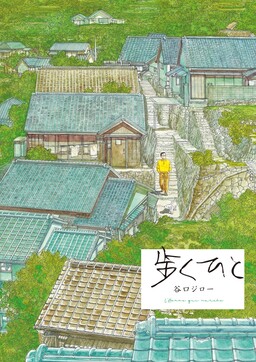
The Walking Man
Yu's review of The Walking Man — a man takes walks through his neighborhood and surrounding areas; Jiro Taniguchi's single-volume manga about the specific quality of attention paid to ordinary things, rendered with exceptional visual detail; perhaps the most peaceful manga in existence.
Slice of Life / Fantasy
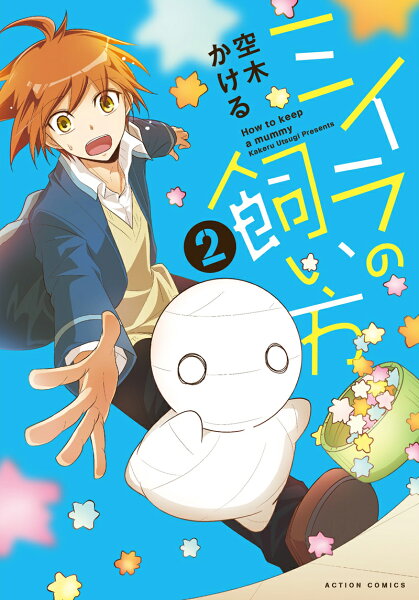
How to Keep a Mummy
A review of Kakeru Utsugi's How to Keep a Mummy (ミイラの飼い方) — 14 volumes on ComicWalker. High schooler Sora receives a tiny adorable mummy from his globe-trotting father. The manga is about caring for small things that trust you. Seven Seas Entertainment's English edition is complete.
Slice of Life / Fantasy
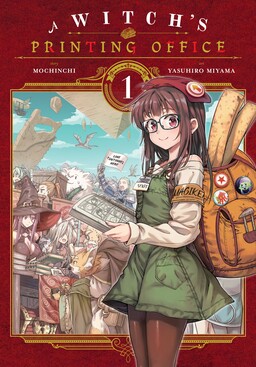
A Witch's Printing Office
Yu's review of A Witch's Printing Office — Mika is a modern Japanese woman who worked at Comiket (the giant doujinshi convention) and wakes up in a fantasy world where magical festivals share printed pamphlets; using her knowledge of convention organization and printing logistics, she builds a business that transforms how the fantasy world shares information.
Slice of Life / Fantasy
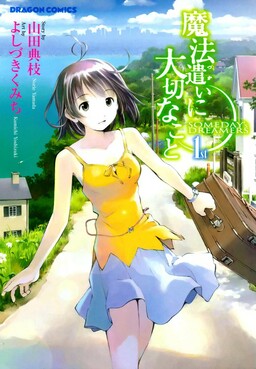
Someday's Dreamers
Yu's review of Someday's Dreamers — Yume Kikuchi comes to Tokyo from her small hometown to become a licensed mage under the guidance of Masami Oyamada; the series follows her apprenticeship and her growing understanding that granting wishes is not simple, that magic cannot solve everything, and that some things people want cannot be given.
Slice of Life / Fantasy
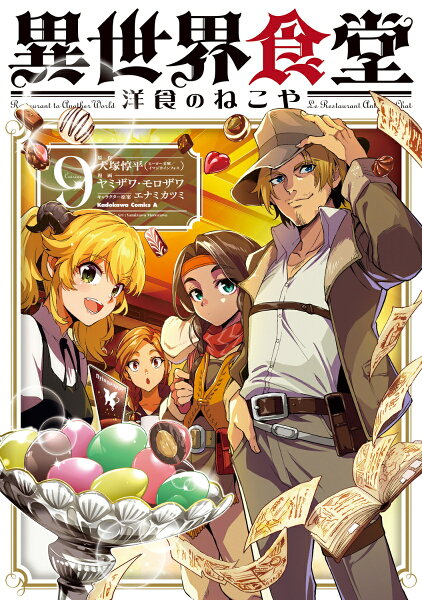
Restaurant to Another World
Yu's review of Restaurant to Another World — Western Restaurant Nekoya is a small Tokyo restaurant that, every Saturday, has a door that opens from various locations in a fantasy world; fantasy world inhabitants enter and encounter Japanese Western food for the first time; each chapter follows a different customer and the dish that changes them.

Slice of Life / Comedy
Interviews With Monster Girls
Yu's review of Interviews With Monster Girls (Demi-chan wa Kataritai) — biology teacher Tetsuo Takahashi interviews four demi-human students and colleagues about their daily lives. A vampire, a dullahan, a snow woman, and a succubus teacher turn a monster-girl premise into one of the gentlest, most thoughtful slice-of-life manga out there. Complete at 11 volumes from Kodansha USA.
Written by
Yu
Manga Enthusiast from Japan
I grew up in Japan and manga literally saved me during a tough time in elementary school. My English isn't perfect, but my love for manga is real — and I want to share it with you.
Disclosure: This post contains affiliate links. As an Amazon Associate, I earn from qualifying purchases at no extra cost to you.