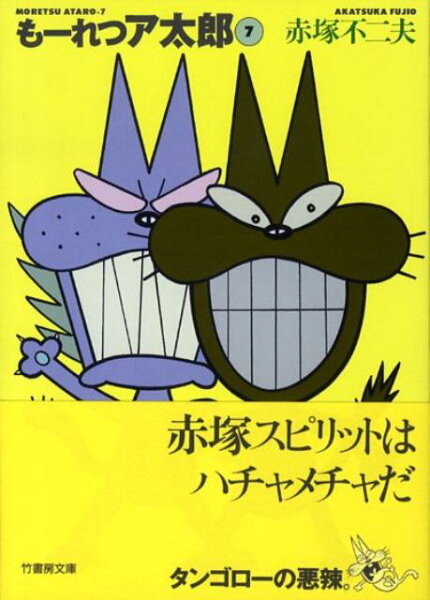
Moretsu Ataro Review: The Showa Comedy That Made Anarchy Look Like Friendship
by Fujio Akatsuka
Read the first volume. If it doesn't hook you, put it down. It'll hook you.
Buy Moretsu Ataro on Amazon →*Affiliate link — I earn a small commission at no extra cost to you.
Akatsuka could put a frog in a suit and the joke would land. He did, repeatedly, and it did, repeatedly.
Quick Take
- Fujio Akatsuka's 1967-1970 gag manga from Weekly Shonen Sunday — Ataro running his father's vegetable shop with anarchic friends
- A foundational work of Japanese gag comedy alongside Tensai Bakabon and Osomatsu-kun
- The era's culture-shaping comedy from one of the genre's defining masters
Who Is This Manga For?
- Gag manga readers who want one of the genre's foundational masterworks
- Akatsuka fans who want his catalog beyond Bakabon and Osomatsu
- Showa-era comedy enthusiasts who want the tradition that shaped subsequent gag manga
- Anyone interested in how Japanese comedy manga developed its distinctive register
Content Warnings & Age Rating
Age Rating: All Ages Content Warnings: Slapstick violence, absurd situations, period attitudes. Generally innocent.
Suitable for all readers.
Yu's Rating
| Category | Score |
|---|---|
| Story Depth | ★★★☆☆ |
| Art Style | ★★★★☆ |
| Character Development | ★★★☆☆ |
| Accessibility for Non-Japanese Readers | ★★★☆☆ |
| Reread Value | ★★★★☆ |
Story Overview
Ataro is a young boy whose father has died, leaving him to run the family vegetable shop. He is earnest, hardworking, and surrounded by characters who guarantee that earnestness will not be enough. There's Dekoppachi, the talking frog with attitude. There's Nyarome, the cat whose presence reliably escalates any situation. There's the cast of neighborhood eccentrics whose appearance in any chapter signals comic chaos.
The structure is gag-format — short stories within volumes, each delivering its premise, its escalation, and its punchline within tight space. The recurring characters create the comic logic; readers know what to expect from each, and Akatsuka subverts those expectations exactly often enough to keep the format fresh across 16 volumes.
The series sits in Akatsuka's broader catalog as one of his major Showa-era works. Where Tensai Bakabon foregrounds the absurd father, Moretsu Ataro foregrounds the earnest child surrounded by absurdity — a different comic vector that produces a different mood, but with the same authorial signature.
Characters
Ataro: The earnest center around which absurdity orbits — his straightforwardness makes his friends' chaos register as chaos.
Dekoppachi: A talking frog whose presence is the series' purest gag-character — his combination of self-importance and amphibian smallness is reliably funny.
Nyarome: A cat whose chaotic energy escalates any situation he enters.
The neighborhood cast: Each defined by a single comic trait that Akatsuka exploits with virtuosic timing.
Art Style
Akatsuka's art has the distinctive Showa-era gag-manga style — round, expressive faces, exaggerated reactions, dynamic cartoon physics. The visual language is established immediately and applied with unwavering consistency. The drawings tell jokes by themselves; the dialogue is often secondary.
Cultural Context
Moretsu Ataro ran from 1967 to 1970 (with a revival in the 1990s) and was adapted to anime, becoming a cultural touchstone for the late-Showa generation. The series sits with Tensai Bakabon and Osomatsu-kun as one of Akatsuka's three defining gag works, each of which shaped how subsequent gag manga and anime developed.
The phrases and characters from this manga — particularly Nyarome — entered Japanese pop culture vocabulary and remained recognizable for decades.
What I Love About It
I love how dense Akatsuka's pages are.
A modern gag manga would space its jokes out. Akatsuka packed every panel with movement, every expression with comic register, every transition with another beat. Reading him is exhausting in the best way — there's no respite from the comedy because Akatsuka had no respite to give. Every page works. The discipline behind that volume of comic invention is staggering.
What English-Speaking Fans Say
Limited general awareness outside Japan, but among readers familiar with Akatsuka's catalog, regarded with the same affection his other major works receive. Recognized as essential to understanding Showa-era manga comedy.
Memorable Scene ⚠️ Spoiler Warning
A chapter where Nyarome's escalation reaches a peak that no rational story-logic would justify, but that Akatsuka's comic logic makes feel inevitable. The scene exemplifies the series' commitment to its own absurd architecture.
Similar Manga
| Title | Its Approach | How Moretsu Ataro Differs |
|---|---|---|
| Tensai Bakabon | Akatsuka's absurd-father gag manga | Moretsu Ataro foregrounds the earnest child instead of the absurd parent |
| Osomatsu-kun | Akatsuka's six-brothers gag manga | Different ensemble structure but same authorial signature |
| Gaki Deka | Showa-era kid comedy | Moretsu Ataro is gentler and more communal |
Reading Order / Where to Start
Volume 1. The cast and gag-logic establish quickly.
Official English Translation Status
Moretsu Ataro has no official English translation.
Pros & Cons
Pros
- One of the foundational works of Japanese gag manga
- Akatsuka's comedic density is among the highest in the medium
- Recurring cast generates reliable comedy across 16 volumes
- Important to Showa-era cultural history
Cons
- No English translation
- Showa-era comic conventions feel dated to modern readers
- Episodic format limits continuous engagement
- Cultural references require period familiarity
Is Moretsu Ataro Worth Reading?
For gag manga fans, Akatsuka enthusiasts, and readers interested in Showa-era comedy, yes — this is one of the works that built the genre. For readers wanting modern pacing or unfamiliar with the period, the dated conventions and cultural specificity may be barriers. As foundational gag manga, it's essential.
Format Comparison
| Format | Notes |
|---|---|
| Physical | Japanese editions available |
| Digital | Available in Japanese |
| Omnibus | Collected editions available |
Where to Buy
No English release yet. That just means you find it before everyone else does.
*Affiliate link — I earn a small commission at no extra cost to you.
More Manga You Might Like
Slice of Life / Comedy
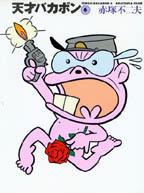
Tensai Bakabon
Tensai Bakabon is Fujio Akatsuka's landmark gag manga about the Bakabon family — a household where the father's complete detachment from logic is presented as wisdom, and the world's attempts to impose reason are the actual problem.
Slice of Life / Comedy
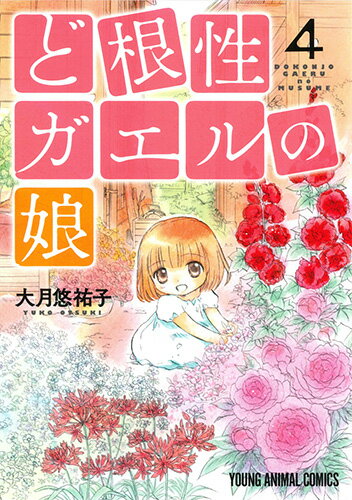
Dokonjo Gaeru
Dokonjo Gaeru is Yasumi Yoshizawa's classic 1970-1976 Weekly Shonen Jump comedy about Hiroshi Kaizuka, a middle-school boy whose flattened-but-alive frog Pyonkichi lives on the front of his shirt — 27 volumes of one of Jump's defining early gag manga.
Slice of Life / Comedy
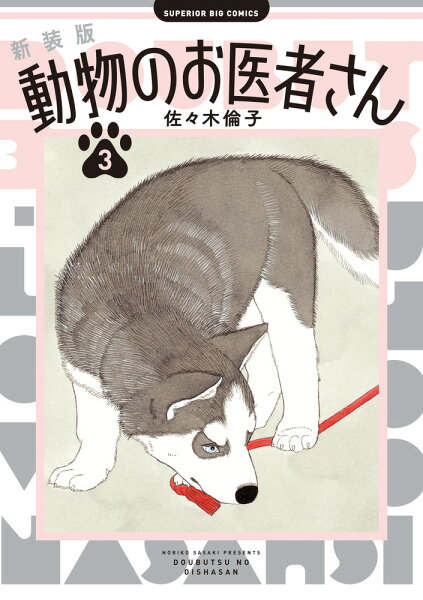
Doubutsu no Oisha-san
Doubutsu no Oisha-san follows Hamutaro, a quiet veterinary student in Hokkaido, his deadpan husky Chobi, and the warm chaos of vet-school life — a 12-volume Hana to Yume comedy so popular it set off a real Siberian Husky boom across Japan.
Slice of Life / Comedy
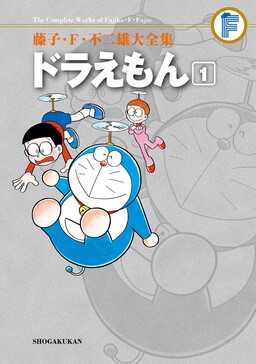
Doraemon
Yu's review of Doraemon — a robot cat from the 22nd century, sent back to help a hopeless boy named Nobita with gadgets from his four-dimensional pocket. Fujiko F. Fujio's most beloved work, and the manga every Japanese kid grows up inside.
Slice of Life / Comedy
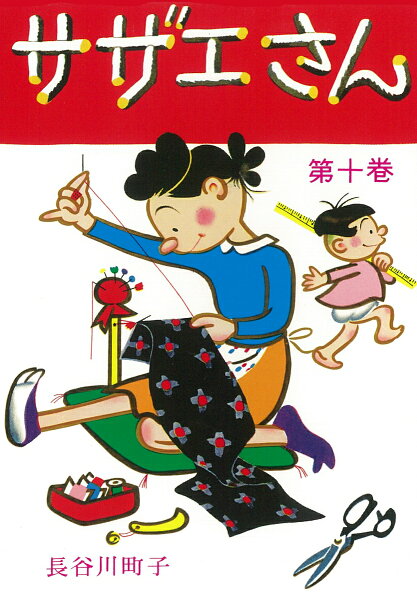
Sazae-san
Sazae-san is Japan's most enduring manga — a newspaper 4-koma that began in 1946 and ran for 28 years, following a cheerful, impulsive young woman named Sazae and her extended family through postwar Japan's transformation from devastation to prosperity.
Slice of Life / Comedy
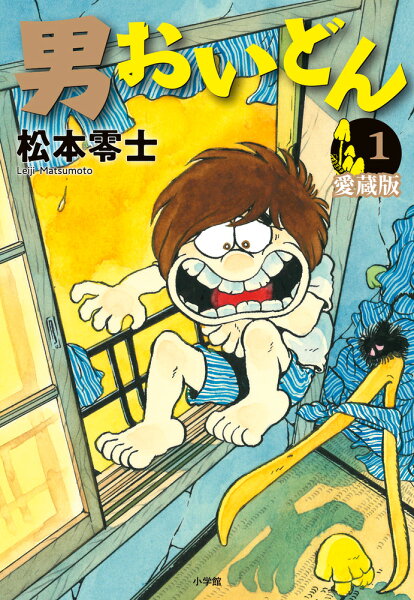
Otoko Oidon
Otoko Oidon follows Saburo Oyama, a young man from Kyushu trying to make it in Tokyo — living in a tiny boarding house, perpetually broke, hopelessly unlucky in love, and stubbornly determined to become someone despite all evidence suggesting otherwise.
Written by
Yu
Manga Enthusiast from Japan
I grew up in Japan and manga literally saved me during a tough time in elementary school. My English isn't perfect, but my love for manga is real — and I want to share it with you.