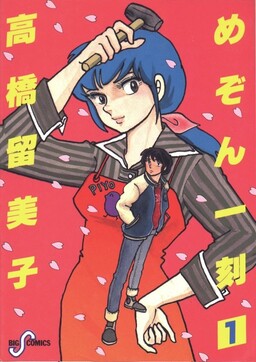
Maison Ikkoku Review: A Failing Student Falls in Love With His Building Manager and Spends 96 Volumes Figuring Out What to Do About It
by Rumiko Takahashi
Read the first volume. If it doesn't hook you, put it down. It'll hook you.
Buy Maison Ikkoku on Amazon →*Affiliate link — I earn a small commission at no extra cost to you.
Quick Take
- The definitive will-they-won't-they romance manga and still the best — Takahashi understood that the obstacle must be internal and consistent rather than contrived, and Godai and Kyoko's failures to connect are always psychologically true
- The slice-of-life elements — the boarding house neighbors, the comedy of daily life, the passage of time — make the romance feel embedded in actual existence rather than genre mechanism
- 15 volumes complete; the classic of romantic comedy manga and one of the most satisfying endings in manga history
Who Is This Manga For?
- Readers who want romance manga where the delay is earned rather than artificial
- Anyone interested in classic manga by a master author
- Fans of comedy with genuine emotional weight
- Readers who want complete manga with a fully satisfying ending
Content Warnings & Age Rating
Age Rating: T (Teen) Content Warnings: Mild romantic content; adult characters drink alcohol as part of the boarding house life; comedic situations including some romantic slapstick
The T rating is accurate.
Yu's Rating
| Category | Score |
|---|---|
| Story Depth | ★★★★★ |
| Art Style | ★★★★☆ |
| Character Development | ★★★★★ |
| Accessibility for Non-Japanese Readers | ★★★★★ |
| Reread Value | ★★★★★ |
Story Overview
Maison Ikkoku is a boarding house in 1980s Tokyo. Its residents include an alcoholic housewife, a party-hosting playboy, and a teenage girl — all of whom create chaos in the life of their fellow resident Yusaku Godai, a ronin student (a student who failed his university entrance exams and is studying to retake them) with no money, no direction, and a persistent optimism about both his studies and his love life.
Kyoko Otonashi arrives as the new building manager. She is a young widow whose husband died soon after their marriage. Godai falls immediately and completely in love. She is aware of this and does not encourage it — but also does not end it.
The series is about the years that follow: Godai's slow development into someone more capable, Kyoko's slow movement away from grief, and the specific misunderstandings and bad timing that separate people who want the same thing.
Characters
Yusaku Godai — His quality is an earnestness that survives his own repeated failures. He is not impressive, which makes his determination to become someone worthy of Kyoko the series' central character project. His development over 15 volumes is genuine.
Kyoko Otonashi — Her widowhood is not a quirk but a psychological fact — she loved her husband, his death was sudden, and she is not ready to replace him. Her movement toward Godai is slow and requires her to process something real. This makes the romance feel earned.
The boarding house residents — The chaos they create is the series' comedy. They love Godai in the specific way of people who live with someone's hopelessness long enough to root for him.
Art Style
Takahashi's art is the classic shojo style of the 1980s — expressive, warm, capable of conveying emotion through facial expression with remarkable economy. The boarding house is a lived-in space that becomes familiar over the series. Her art for Maison Ikkoku is more grounded than Ranma 1/2 or Inuyasha — the comedy is quieter and the emotional moments more sustained.
Cultural Context
Maison Ikkoku depicts 1980s Japan with specific cultural detail — the ronin student experience, the boarding house life that was common before Japan's economic development made private apartments more accessible, the specific social pressures around marriage and career. These details make the series a portrait of a specific moment in Japanese social life.
What I Love About It
The ending. After 15 volumes of watching two people fail to reach each other, Takahashi delivers an ending that is both inevitable and deeply satisfying. I have never read a romantic comedy that earned its ending more completely. I cried in a way I was not expecting from a manga I started for its comedy.
What English-Speaking Fans Say
Western readers describe Maison Ikkoku as the manga that changed what they expected from romance — the patience of the storytelling, the absence of artificial obstacles, and the genuine development of both main characters set a standard that most romance manga doesn't reach. The ending is universally described as satisfying.
Memorable Scene ⚠️ Spoiler Warning
The final chapters, where Godai and Kyoko finally communicate what they have spent 15 volumes failing to say — and what it costs them to say it, and what they are willing to do — are the series' most complete scene and the destination of every earlier volume.
Similar Manga
- Ranma 1/2 — Takahashi's other classic, more comedy-focused
- His and Her Circumstances — Romance with genuine development, different register
- Kimi ni Todoke — Will-they-won't-they, similar patience
- March Comes in Like a Lion — Similar attention to time and development
Reading Order / Where to Start
Volume 1 — Godai's situation and Kyoko's arrival.
Official English Translation Status
VIZ Media published all 15 volumes. Complete and available.
Pros & Cons
Pros
- One of the best romance endings in manga
- Both protagonists develop genuinely across 15 volumes
- The comedy and the emotion coexist without undermining each other
- Complete and fully satisfying
Cons
- 15 volumes is a significant commitment before the payoff
- The 1980s setting dates some elements
- The will-they-won't-they structure requires patience
Format Comparison
| Format | Notes |
|---|---|
| Individual Volumes | VIZ Media; complete |
| Digital | Available |
Where to Buy
Read the first volume. If it doesn't hook you, put it down. It'll hook you.
This post contains affiliate links. If you purchase through these links, I may earn a small commission at no extra cost to you. As an Amazon Associate, I earn from qualifying purchases.
*Affiliate link — I earn a small commission at no extra cost to you.
More Manga You Might Like
Slice of Life
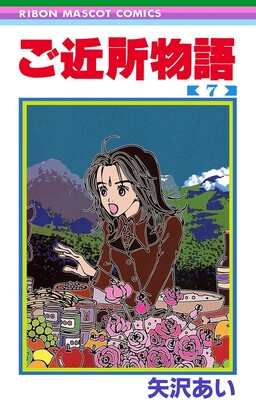
Gokinjo Monogatari
Yu's review of Gokinjo Monogatari (Neighborhood Story) — Ai Yazawa's 1995 Ribon manga about Mikako Kouda, a fashion student building her Happy Berry brand, and her childhood-friend neighbor Tsutomu. The early-Yazawa series that sits one universe over from Paradise Kiss, finally complete in English from VIZ.
Slice of Life
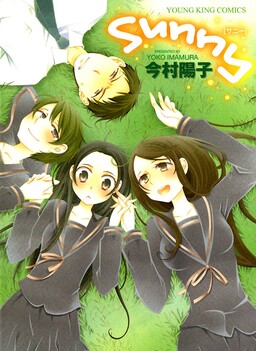
Sunny
Yu's review of Sunny — at a group home for children whose families cannot take care of them, a broken-down old car called Sunny becomes a private space where the children go to be alone; Taiyo Matsumoto's meditation on childhood longing, on what it means to be left, and on how children find ways to survive what adults do to them.
Slice of Life
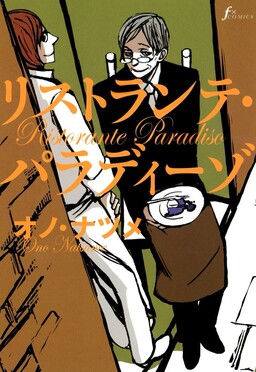
Ristorante Paradiso
Yu's review of Ristorante Paradiso — Nicoletta travels from her hometown to Rome to confront her mother, who left her as a child; her mother's husband doesn't know she exists; the restaurant Casetta dell'Orso, staffed entirely by older bespectacled gentlemen, becomes the setting for Nicoletta's unexpected new life.
Slice of Life / Drama
I Want to Eat Your Pancreas
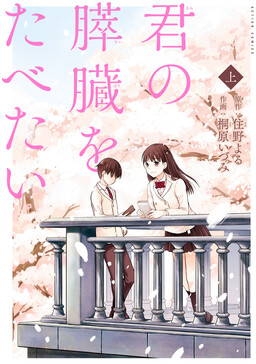
Yu's review of the I Want to Eat Your Pancreas manga — Idumi Kirihara's adaptation of Yoru Sumino's novel. A withdrawn boy finds classmate Sakura Yamauchi's secret diary and learns she's dying of a pancreatic illness. She chooses him precisely because he won't treat her like a dying girl. Seven Seas collected the two Japanese volumes into one English omnibus.

Slice of Life
Hi Score Girl
Yu's review of Hi Score Girl — Haruo Yaguchi lives for 1990s arcade fighting games, until silent rich-girl prodigy Akira Ono beats him 30 times in a row at Street Fighter II. Ten volumes, complete in English, and the most quietly devastating love story I know that never needs its heroine to say a word.

Slice of Life / Romance
Tsurezure Children
Yu's review of Tsurezure Children — a romantic anthology following multiple high school couples in short-form episodes; each chapter follows a different couple in a different stage of confession or early relationship; a warm comedy anthology about the specific awkwardness of telling someone you love them.
Written by
Yu
Manga Enthusiast from Japan
I grew up in Japan and manga literally saved me during a tough time in elementary school. My English isn't perfect, but my love for manga is real — and I want to share it with you.
Disclosure: This post contains affiliate links. As an Amazon Associate, I earn from qualifying purchases at no extra cost to you.