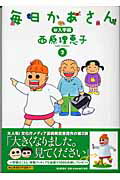
Mainichi Kaasan Review: The Newspaper Comic That Made Motherhood Look True
by Rieko Saito
Read the first volume. If it doesn't hook you, put it down. It'll hook you.
Buy Mainichi Kaasan on Amazon →*Affiliate link — I earn a small commission at no extra cost to you.
Quick Take
- Newspaper 4-koma at its finest — the Mainichi Shimbun's most beloved comic for over a decade
- Autobiographical strips that balance genuine comedy with genuine emotion about family life
- The series' later volumes deal with loss in a way that makes everything that came before richer
Who Is This Manga For?
- Parents who want to see their own experience reflected honestly — not idealized, not dramatized
- Readers of autobiographical manga who want the form at its warmest
- 4-koma fans who want the format's constraints used with complete mastery
- Anyone who has had complicated feelings about someone they love — the series has a specific answer for that
Content Warnings & Age Rating
Age Rating: All Ages Content Warnings: Some strips deal with illness and loss — the author's husband's alcoholism and eventual death are addressed directly in the later volumes
Appropriate for all readers; the difficult content is handled with honesty rather than darkness.
Yu's Rating
| Category | Score |
|---|---|
| Story Depth | ★★★★★ |
| Art Style | ★★★★☆ |
| Character Development | ★★★★★ |
| Accessibility for Non-Japanese Readers | ★★★★☆ |
| Reread Value | ★★★★★ |
Story Overview
The strips follow Rieko — the author, using herself as protagonist — through the daily life of a woman who is also a manga artist: managing children who are funny and maddening, dealing with the specific chaos of creative work alongside domestic work, navigating her marriage with a husband (named "Yoshio" in the strips, based on the author's actual husband) whose relationship with alcohol becomes increasingly central to the story.
What begins as pure domestic comedy accumulates, over 15 volumes, into something more complex: a portrait of a marriage that was both ordinary and difficult, a portrait of motherhood that refuses easy sentimentality, and eventually, a portrait of grief.
Characters
Rieko (the author as protagonist): A narrator whose honesty about her own contradictions — her exhaustion, her love, her frustration, her dark humor — is the series' emotional anchor.
The children: Drawn as recognizably themselves — funny, exhausting, surprising. The strips about them avoid both sentimentality and cruelty.
Yoshio: The husband whose alcoholism is addressed with the same honesty as everything else — not vilified, not excused, depicted as the complication he was in a life that contained both love and difficulty.
Art Style
Saito's style is loose and expressive — the newspaper comic strip aesthetic, with panels that communicate emotion through minimal line work and maximum expressiveness. The 4-koma constraint produces clarity: each strip has to work in four beats, which means every beat has to earn its place.
Cultural Context
Mainichi Kaasan ran in the Mainichi Shimbun from 2002 to 2015. Newspaper comics in Japan have a distinct tradition — lighter in tone than magazine manga, read by general audiences across age groups. A strip that runs in a national newspaper for 13 years has earned its place in the cultural conversation.
The series was also adapted into an animated film and a live-action drama, evidence of how broadly it resonated.
What I Love About It
I love the series' refusal to make motherhood beautiful.
Not that it makes it ugly — but it refuses the version of motherhood that manga sometimes gives us, where children are adorable and parents are infinitely patient. Rieko is tired. She is sometimes unfair. She loves her children in a way that is real rather than decorative.
And the strips about her husband — his drinking, her complicated feelings, the way love and frustration can coexist for decades — are some of the most honest domestic portrait work I have read in manga.
What English-Speaking Fans Say
Not known in English-speaking markets. Among Japanese readers, particularly women readers and parents, the series is beloved for exactly the honesty described above. It was one of the most discussed comics in Japan during its run.
Memorable Scene
The volume that addresses Yoshio's death — drawn in the same 4-koma format as the comedy that preceded it — includes a strip where Rieko depicts her own feelings about his absence in four panels that are funnier and more heartbreaking than either emotion alone.
Similar Manga
- With the Light: Japanese parenting manga with similar emotional seriousness
- Yotsuba&!: Adjacent subject matter, completely different emotional register
- Genshiken: Different subject, similar naturalistic comedy approach
Reading Order / Where to Start
Volume 1. The emotional accumulation across the series is part of the point.
Official English Translation Status
Mainichi Kaasan has no official English translation.
Pros & Cons
Pros
- Exceptional autobiographical 4-koma across an unusual range of emotion
- Complete at 15 volumes
- Among the most honest depictions of domestic life in manga
- The later volumes are among the finest grief comics anywhere
Cons
- No English translation
- The later volumes are emotionally demanding
- Newspaper strip format may feel episodic for readers wanting sustained narrative
Format Comparison
| Format | Notes |
|---|---|
| Physical | Japanese editions available |
| Digital | Available in Japanese |
| Omnibus | Not available |
Where to Buy
No English release yet. That just means you find it before everyone else does.
*Affiliate link — I earn a small commission at no extra cost to you.
More Manga You Might Like
Slice of Life / Comedy
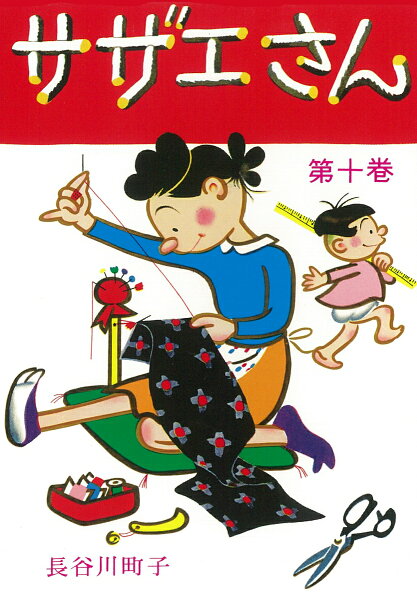
Sazae-san
Sazae-san is Japan's most enduring manga — a newspaper 4-koma that began in 1946 and ran for 28 years, following a cheerful, impulsive young woman named Sazae and her extended family through postwar Japan's transformation from devastation to prosperity.
Comedy / Slice of Life
Chibi Maruko-chan
A review of Chibi Maruko-chan, Momoko Sakura's semi-autobiographical comedy about a lazy, scheming third-grade girl in 1970s Shimizu — and why the original manga is sharper than the gentle anime everyone knows.
Comedy / Slice of Life
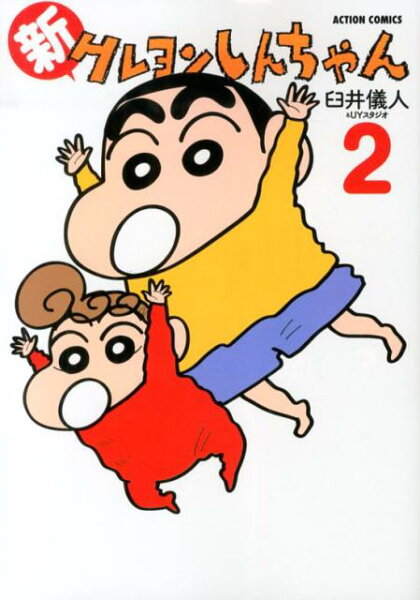
Crayon Shin-chan
A review of Crayon Shin-chan, Yoshito Usui's gag manga about a shameless five-year-old in suburban Saitama who says every embarrassing thing adults are too polite to say out loud.
Comedy / Slice of Life
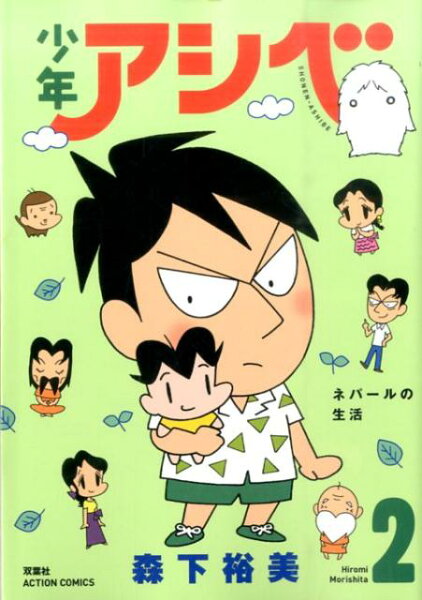
Shonen Ashibe
Shonen Ashibe follows Ashibe, an energetic young boy, and his pet baby seal Goma-chan — a white, round, extremely photogenic animal that causes chaos wherever it goes and is beloved by everyone who encounters it, to the exhausted amusement of Ashibe's father.
Slice of Life / Comedy
Azumanga Daioh
Yu's review of Azumanga Daioh — Kiyohiko Azuma's four-panel comedy that follows six high school girls across three years of ordinary school life, from Chiyo the child prodigy to Osaka the daydreamer.
Slice of Life / Comedy
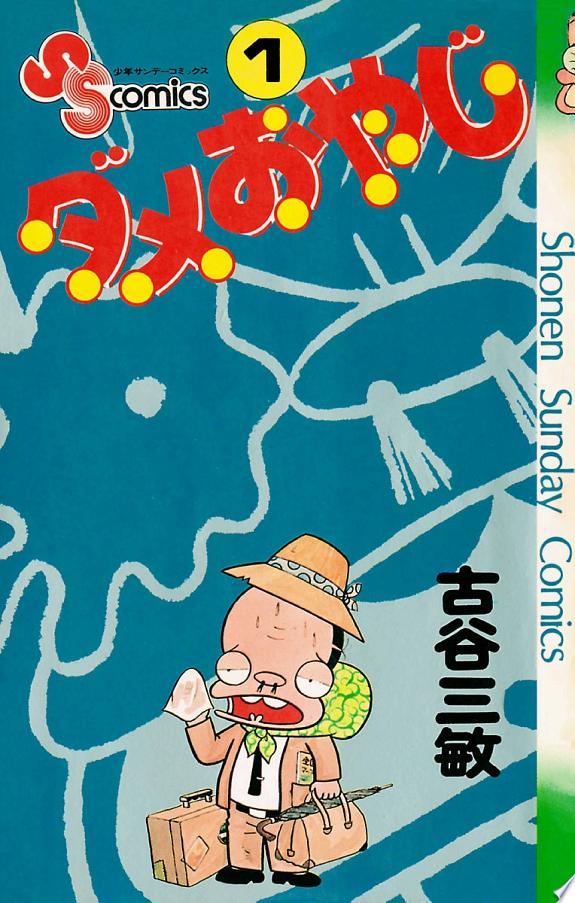
Dame Oyaji
A review of Mitsutoshi Furuya's Dame Oyaji — 39 volumes in Weekly Shōnen Sunday from 1970 to 1982. A dark gag manga about a salaryman father with no power at home, winner of the 1979 Shogakukan Manga Award.
Written by
Yu
Manga Enthusiast from Japan
I grew up in Japan and manga literally saved me during a tough time in elementary school. My English isn't perfect, but my love for manga is real — and I want to share it with you.