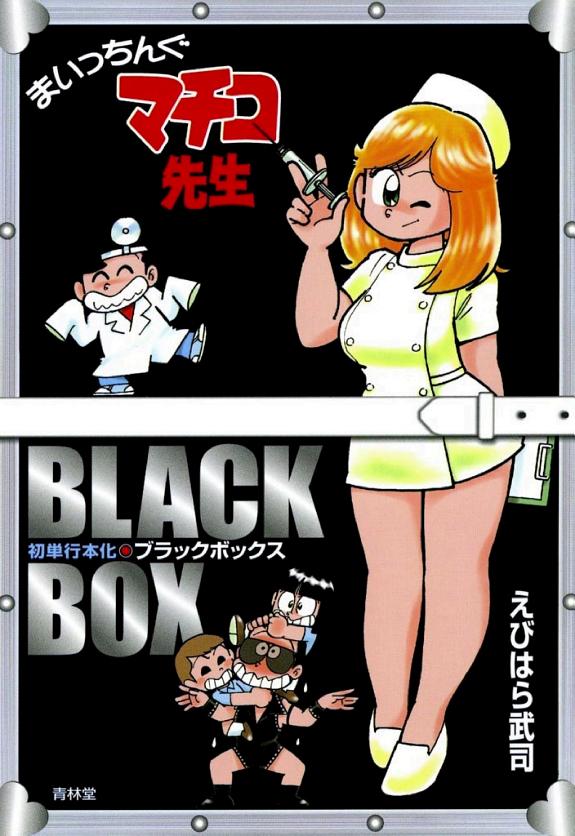
Maicchingu Machiko-sensei Review — The 1980 Ecchi School Comedy That Was the Anime Phenomenon of Its Era
by Takeshi Ebihara
Read the first volume. If it doesn't hook you, put it down. It'll hook you.
Buy Maicchingu Machiko-sensei on Amazon →*Affiliate link — I earn a small commission at no extra cost to you.
I want to be honest at the start: I read Maicchingu Machiko-sensei only because I was curious about an era of Japanese manga my parents' generation knew well. My father (born 1960) recognized the title instantly when I mentioned reading it. He had watched the anime when it aired during his college years. He laughed about it without exactly defending it. I read a few volumes. I understand why my father laughed. I am not sure I would recommend the manga to anyone outside that specific historical curiosity.
Quick Take
- Takeshi Ebihara's 1980 ecchi comedy manga (Gakken's Shonen Challenge, 8 volumes)
- Became massively famous through the 1981–1983 Studio Pierrot anime (95 episodes on TV Tokyo)
- The catchphrase "maicching!" entered Japanese popular vocabulary in the early 1980s
- Age rating: M (Mature) — 1980s-era ecchi comedy; significantly dated content
What Is Maicchingu Machiko-sensei About?
Machiko Mai (麻衣 マチコ) is a young, beautiful elementary school teacher at the fictional Arama Gakuen (あらま学園), a private school. She is gentle, patient, and conventionally attractive in the manga's specific 1980s shoujo-adjacent visual style.
Her male students — depicted as universally obsessed with seeing or touching her in compromising ways — execute increasingly elaborate schemes to embarrass her across each chapter. Machiko-sensei's response is consistent: an expression of exasperation, sometimes a small physical reaction, and the catchphrase "maicching!" (まいっちんぐ — a portmanteau of matchi + maitta, roughly "you got me!" / "I'm done!").
The series is strictly episodic. There is no continuing plot. There is no character development. The formula is the point: each chapter repeats the structure with slight variation. The total volume count is 8.
Cultural Impact: The Anime and the Catchphrase
The manga itself is moderately successful as a serialized work. The cultural impact came from the 1981–1983 anime adaptation:
- Studio Pierrot animated 95 episodes across two years on TV Tokyo
- The series became one of the defining "ecchi-comedy" anime of the early 1980s
- The catchphrase "maicching!" entered Japanese popular vocabulary; older Japanese people still recognize the reference
- Machiko-sensei became one of the recognizable character types of early-1980s Japanese pop culture
- Multiple OVA continuations and remakes have appeared sporadically across the decades
For Japanese readers/viewers of a certain generation, Maicchingu Machiko-sensei is one of the touchstones of late-Showa pop culture — recognized by virtually everyone over 50, irrespective of whether they actually watched it.
For international readers: the manga is essentially unknown. The anime had limited international distribution. The cultural impact is specific to Japan.
Who Is This Manga For?
- Manga historians interested in the 1980s ecchi comedy tradition
- Japanese pop culture researchers examining late-Showa media
- Studio Pierrot completionists
- Not for: general readers; the content does not age uniformly well
Content Warnings & Age Rating
Age Rating: M (Mature) — 18+ Content Warnings: 1980s-era ecchi comedy centered on grade-school students attempting to embarrass/grope a young female teacher; recurring fanservice; gender humor that does not translate to modern sensibilities; some scenarios involving sexual harassment played as comedy
The M rating is the floor. Modern readers should approach this as a historical document with significant content concerns rather than as light entertainment.
Story Overview
There is no story overview in the conventional sense. The manga is structurally episodic without continuity or development. Each chapter is approximately the same length, follows approximately the same structure, and resolves approximately the same way.
Some recurring character types exist:
- The male students at Arama Gakuen (collectively, with individual designations)
- The principal and other faculty (occasional appearances)
- The students' parents and siblings (rare cameos)
The most consistent element is Machiko-sensei herself — gentle, patient, persistently encountering the same comedic situations, never developing as a character because the format does not permit development.
Characters
Machiko Mai (Machiko-sensei) — The protagonist. Defined by her professional role, her appearance, and her catchphrase. She has no significant backstory, no interior life the manga is interested in exploring, no goals outside of teaching. The manga does not consider her a character so much as a comedy fixed point.
The students — Effectively interchangeable ecchi-comedy archetypes representing different angles of attack on the central premise. The "Yamagata-kun" character is somewhat individualized, but the others are largely undifferentiated.
Art Style
Takeshi Ebihara's art is clean, simple, and efficient for its purpose. Character designs are minimal but consistent. The visual humor relies on standard ecchi-comedy conventions of the era — the dynamic close-up reaction shot, the elaborate physical gag, the recurring visual setup of Machiko-sensei's posture being interrupted.
The art does not aspire to artistic ambition. It serves the genre conventions effectively. By modern standards, the visuals appear dated rather than charming.
Cultural Context
Shonen Challenge (少年チャレンジ) — the Gakken-published shounen magazine where Maicchingu Machiko-sensei serialized — was a competitor to the major shounen magazines of the era (Shonen Jump, Shonen Magazine, Shonen Sunday, Shonen Champion). Gakken's publishing line was educational-adjacent, but Shonen Challenge included entertainment manga alongside more conventional shounen content. Maicchingu Machiko-sensei was one of the magazine's signature ecchi comedy works.
The early 1980s in Japanese manga publishing was a period when ecchi comedy in shounen magazines was mainstream. The PTA-driven moral panic against ecchi manga (which had peaked around Harenchi Gakuen in the early 1970s) had passed; ecchi comedy was a recognized commercial genre with established conventions.
Takeshi Ebihara is a Japanese manga author with a long career mostly in the comedy and slice-of-life genres. His work includes various ecchi-comedy series across the 1980s and 90s. Maicchingu Machiko-sensei is his most famous work; his other series include various less-remembered comedy manga.
The 1981–1983 anime adaptation by Studio Pierrot is what made the franchise culturally iconic. The anime ran 95 episodes — a substantial run by 1980s standards — and reached audiences far beyond the manga's readership. Multiple sequel OVAs and remakes appeared sporadically across the 1990s and 2000s.
What I Make of It (Not "Love")
Honesty requires me to say: I don't love this manga. The content is, by current standards, deeply uncomfortable in places. The premise — adult male teacher? no, the antagonists are her students — produces scenarios where children pursue an adult woman across hundreds of pages, played as comedy. There are valid reasons to find this material disqualifying regardless of historical context.
What I can say is that reading it helped me understand my parents' generation slightly better. Japan in the early 1980s was a specific place. The cultural products of that place reflect what was funny then. Some of what was funny then has aged poorly; some has aged catastrophically. Maicchingu Machiko-sensei is in the second category for most modern readers.
For the right reader — a manga historian, a researcher of late-Showa popular culture, a person interested in the genealogy of ecchi comedy — the manga has documentary value. For general readers, I cannot recommend it.
What English-Speaking Fans Say
Maicchingu Machiko-sensei is essentially unknown in English-speaking markets. The anime had limited international distribution; the manga has never been licensed in English. References to the franchise in English manga history books are typically brief and contextual.
Memorable Scene
Not in the conventional sense. The manga is too formulaic for any particular scene to stand out. What is memorable is the catchphrase — "maicching!" — which has outlived the manga as a recognizable piece of 1980s Japanese popular culture.
Similar Manga
| Title | Its Approach | How Maicchingu Machiko-sensei Differs |
|---|---|---|
| Harenchi Gakuen (Go Nagai) | 1968 ecchi school comedy | Harenchi is more confrontational and earned its moral panic; Machiko is its commercialized sibling |
| Urusei Yatsura (Rumiko Takahashi) | Contemporary ecchi comedy | Urusei Yatsura is significantly more narratively ambitious; Machiko is purely formulaic |
| City Hunter (Hojo) | Adult ecchi-comedy with action | City Hunter has plot; Machiko does not |
| To Love-Ru | Modern ecchi school comedy | To Love-Ru's later evolution of the genre |
Reading Order / Where to Start
Any volume — the episodic structure means no particular starting point matters.
Official English Translation Status
Maicchingu Machiko-sensei has no official English manga release and has never had one. The 1981–1983 anime had limited international distribution; some episodes circulated with fan subtitles but no major licensed English release exists.
Pros & Cons
Pros
- Historically significant document of early-1980s Japanese popular culture
- The anime version was one of the defining ecchi anime of its era
- Catchphrase entered Japanese vocabulary
- Complete at 8 volumes
Cons
- No English translation; effectively inaccessible to non-Japanese readers
- Content is significantly dated by modern standards
- No meaningful narrative or character development
- Premise involves elementary school students pursuing an adult teacher — modern readers may find this seriously uncomfortable
- The 1980s ecchi-comedy style is an acquired taste. It won't land for most modern readers.
Is Maicchingu Machiko-sensei Worth Reading?
For most modern readers: skip without guilt.
For manga historians or Japanese pop culture researchers: the manga has documentary value. Approach as a historical document with significant content concerns.
Format Comparison
| Format | Notes |
|---|---|
| Physical (Japanese) | All 8 volumes available in Japan, mostly via secondhand and electronic reissues |
| Digital (Japanese) | Available via Japanese ebook services (BookLive, etc.) |
| English | None — unlicensed |
| Anime (Studio Pierrot, 1981–1983) | 95 episodes; limited English availability |
Where to Buy
No English release yet. That just means you find it before everyone else does.
*Affiliate link — I earn a small commission at no extra cost to you.
More Manga You Might Like
Slice of Life / Comedy
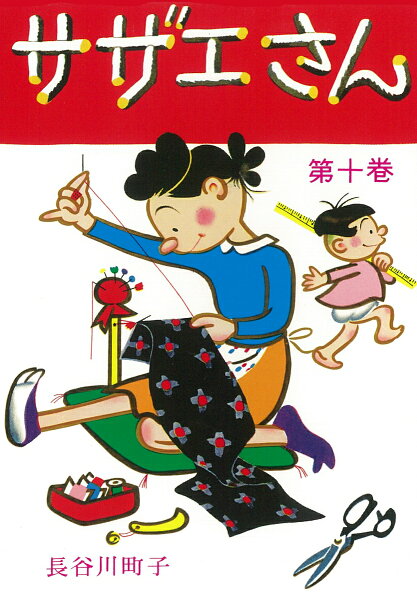
Sazae-san
Sazae-san is Japan's most enduring manga — a newspaper 4-koma that began in 1946 and ran for 28 years, following a cheerful, impulsive young woman named Sazae and her extended family through postwar Japan's transformation from devastation to prosperity.
Slice of Life / Comedy
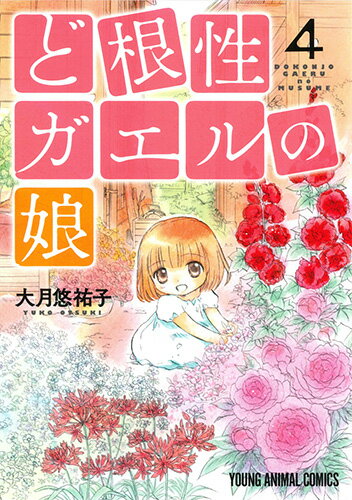
Dokonjo Gaeru
Dokonjo Gaeru is Yasumi Yoshizawa's classic 1970-1976 Weekly Shonen Jump comedy about Hiroshi Kaizuka, a middle-school boy whose flattened-but-alive frog Pyonkichi lives on the front of his shirt — 27 volumes of one of Jump's defining early gag manga.
Slice of Life / Comedy
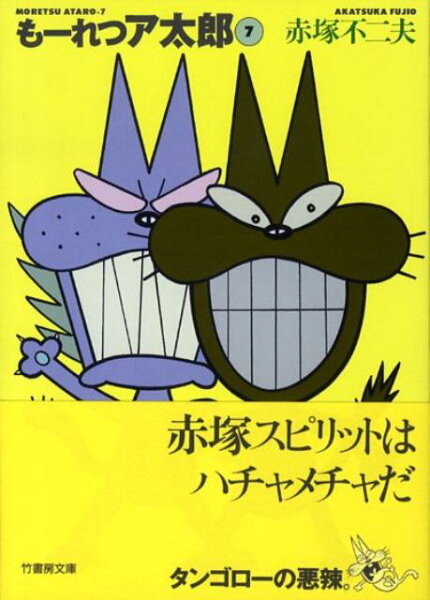
Moretsu Ataro
Moretsu Ataro is Fujio Akatsuka's late-1960s gag manga following Ataro, a young boy who runs his late father's vegetable shop while surrounded by an outlandish cast of friends and neighbors — a foundational work of Japanese gag comedy from one of its greatest masters.

Comedy / Slice of Life
Golden Boy
A review of Golden Boy, Tatsuya Egawa's cult comedy about Kintaro Oe — a Tokyo University law dropout who bicycles across Japan, working menial jobs and writing down what each one teaches him.
Slice of Life / Comedy
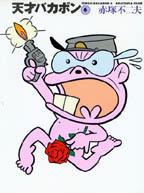
Tensai Bakabon
Tensai Bakabon is Fujio Akatsuka's landmark gag manga about the Bakabon family — a household where the father's complete detachment from logic is presented as wisdom, and the world's attempts to impose reason are the actual problem.
Slice of Life / Comedy
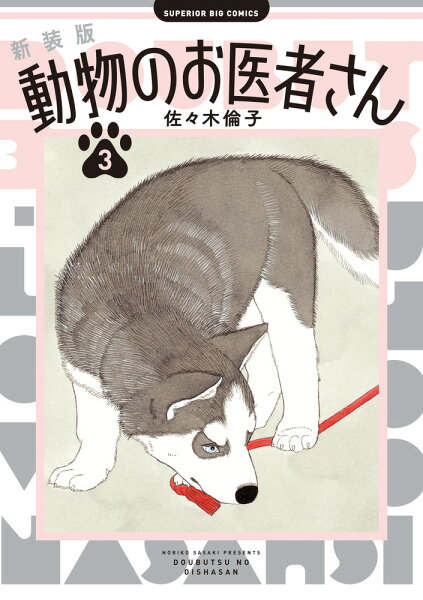
Doubutsu no Oisha-san
Doubutsu no Oisha-san follows Hamutaro, a quiet veterinary student in Hokkaido, his deadpan husky Chobi, and the warm chaos of vet-school life — a 12-volume Hana to Yume comedy so popular it set off a real Siberian Husky boom across Japan.
Written by
Yu
Manga Enthusiast from Japan
I grew up in Japan and manga literally saved me during a tough time in elementary school. My English isn't perfect, but my love for manga is real — and I want to share it with you.