
Long Riders! Review: The Cycling Manga Where the Bike Is Cuter Than the Race
by Taishi Miyake
Read the first volume. If it doesn't hook you, put it down. It'll hook you.
Buy Long Riders! on Amazon →*Affiliate link — I earn a small commission at no extra cost to you.
When I was a student in Japan, I bought a cheap folding bike because I couldn't afford the train pass anymore. I expected to hate it. Instead I started taking the long way home on purpose, riding along the river just to feel the wind. I never became a real cyclist — my knees gave up before my heart did — but I never forgot how a bicycle can quietly turn a boring afternoon into something that feels like a small adventure. So when I picked up Long Riders! and the very first thing that happens is a girl falling in love with a folding bike, I felt like the manga had reached into my own memory and pulled out a page.
This is one of those gentle "cute girls do a hobby" series, the cycling cousin of Laid-Back Camp. It is not flashy and it is not dramatic. But it understands exactly why people fall for bicycles, and that made me very happy.
Quick Take
- A clumsy college freshman named Ami Kurata buys a folding bike on impulse and slowly discovers the joy — and pain — of road cycling
- Author Taishi Miyake mixes accurate bike-and-gear detail with warm all-girl friendship and pretty scenery
- All Ages: gentle, wholesome, no violence or fanservice worth warning about
Who Is This Manga For?
- People who love the "soft hobby discovery" subgenre (Laid-Back Camp, Yama no Susume)
- Anyone who has ever bought a bicycle and felt their world get a little bigger
- Readers who like real gear talk — derailleurs, brevets, lightweight road bikes
- People who want a low-stakes, no-villain comfort read
Story Overview
Ami Kurata is a first-year college student with, by her own admission, nothing special about her. One day she sees someone riding a small folding bicycle and is completely smitten — not with the person, with the bike. She spends all her savings on a red folding bike she nicknames "Ponta-kun," and ropes her best friend Aoi Niigaki into riding with her.
The turning point comes when Ami meets a trio of experienced cyclists — Hinako Saijō, Yayoi Ichinose, and Saki Takamiya — who ride real road bikes and treat cycling as a serious, joyful pursuit. Watching them, Ami realizes her cute folding bike has limits, and she eventually graduates to a proper road bike. The girls form a cycling team called Fortuna and set themselves bigger and bigger goals: first the Azumi Autumn Ride, a cycling event of over 100 kilometers, then the dream of someday riding the famous Paris–Brest–Paris brevet, one of the great long-distance events in the world.
The series isn't built around winning races. It's built around distance — each new ride is a little farther than the last, and the "ending" of any given arc is just the team arriving somewhere they weren't sure they could reach. The manga ran nine volumes and follows Ami from total beginner to a rider who can hang with people far stronger than the girl who once couldn't make it up a single hill.
Characters
Ami Kurata is the heart of it — enthusiastic, a bit clumsy, and easily overwhelmed, but stubborn in the way beginners have to be. Her arc is the whole point of the series: she starts unable to climb a modest slope on her beloved Ponta-kun, and over many volumes earns her way onto a road bike and into rides she'd have found impossible at the start. Her love for that first folding bike never disappears, which I found genuinely sweet.
Aoi Niigaki is Ami's best friend and her first riding partner, the one who gets dragged along and ends up hooked too. She grounds Ami — they discover the hobby side by side rather than Ami being mentored alone.
Hinako Saijō is an experienced cyclist whose family runs a Chinese restaurant, which means post-ride food is never far away. She's part of the more advanced trio who pull Ami into serious road cycling and act as patient mentors rather than rivals.
Saki Takamiya rounds out the experienced riders — the kind of cyclist who would rather pedal somewhere than take the train. Alongside Yayoi Ichinose, she represents the version of cycling Ami is reaching toward: people for whom distance is just a normal part of life.
What I Love About It
The thing Long Riders! does better than almost any sports manga I've read is respect how hard the beginning is. Early on, Ami can't make it up a hill that the experienced girls wouldn't even notice. The manga doesn't skip past that humiliation or fix it with a training montage. It sits in it. She has to get off and push. She's embarrassed. And the gear talk around her — the weight of her folding bike versus a real road bike, the gearing, the difference a few kilograms makes — is presented not as dry trivia but as the actual reason the hill is so cruel to her. The manga lets the equipment matter, and that makes Ami's eventual move to a road bike feel earned instead of like a shopping upgrade.
What got me personally is that this mirrors exactly what I felt on my own cheap folding bike all those years ago — the gap between the romantic idea of cycling and the burning-thighs reality of it. Long Riders! never pretends the romance and the pain are separate things. The wind on the river and the agony of the climb are the same hobby, and Ami chooses it anyway, again and again. Reading her decide that the suffering is worth the view at the top, I felt seen in a way comfort manga rarely manages. It's not that the manga made me want to cycle again. It's that it reminded me why I ever did.
Memorable Scene ⚠️ Spoiler Warning
For me the scene that defines the series is Team Fortuna taking on the Azumi Autumn Ride — the 100-plus-kilometer event the girls set as their group goal. It's the first time their casual friendship-on-wheels has to become something more disciplined: a distance none of them can talk their way through, only pedal through. The point isn't whether they place well. The point is the shape of the day — the early nerves, the long grind through the middle, the team holding together when individual riders flag.
What stays with me is that the manga treats simply finishing as the victory. There's no rival to beat at the line. When they complete the ride, the reward is the exhausted, shared pride of having gone farther together than any of them could have alone, plus — this being Hinako's world — food at the end. That combination of physical accomplishment and unglamorous, warm friendship is the whole series compressed into one event, and it's the part I think about when I think about Long Riders!.
Pros & Cons
Pros
- Honest about how hard cycling is for a beginner — the climbs actually hurt
- Gear and brevet detail is accurate and woven into the story, not dumped
- Ami's progression from folding bike to road bike feels genuinely earned
- Warm, no-villain, all-girl friendship that develops at a natural pace
Cons
- Very gentle — there's almost no dramatic tension or conflict
- The dense cycling and gear talk can lose readers with zero interest in bikes
- It's a slow, low-stakes comfort read, and that pace won't work for everyone
Is Long Riders! Worth Reading?
Yes, if you want the cycling version of a cozy hobby manga — accurate bike detail, gentle friendships, and a beginner who earns every kilometer. It's slow and conflict-free by design, so action fans should look elsewhere. But if "girls slowly fall in love with a sport and ride farther each time" sounds lovely to you, this delivers exactly that.
Where to Buy
No English release yet. That just means you find it before everyone else does.
The Japanese volumes are the only legitimate way to read it right now — you can find them on Amazon Japan.
This post contains affiliate links. If you purchase through these links, I may earn a small commission at no extra cost to you. As an Amazon Associate, I earn from qualifying purchases.
*Affiliate link — I earn a small commission at no extra cost to you.
More Manga You Might Like

Slice of Life / Sci-Fi
ARIA The Masterpiece
Yu's review of ARIA The Masterpiece — the deluxe omnibus edition collecting all of Aqua and ARIA, Kozue Amano's masterpiece slice-of-life set on a terraformed Mars where Akari trains to be a gondolier in Neo-Venezia. The definition of healing manga.

Slice of Life
One Fine Day
A review of One Fine Day — the Korean manhwa iyashikei about a young wizard and his animal companions living peacefully in the countryside, with no particular goal beyond the specific pleasures of daily life.
Slice of Life / Fantasy
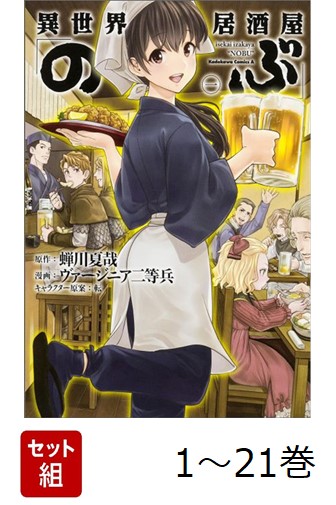
Otherworldly Izakaya Nobu
A review of Otherworldly Izakaya Nobu (Isekai Izakaya 'Nobu') — the iyashikei food manga where a Japanese pub's back alley opens onto a medieval fantasy city, and knights, tax collectors, and guards discover izakaya cooking for the first time.

Slice of Life
The Ryuo's Work Is Never Done!
A review of The Ryuo's Work Is Never Done! — the manga about a teenage shogi champion who ends up coaching a precocious elementary school girl, becoming entangled with a cast of passionate junior players.

Slice of Life
The Demon Girl Next Door (Machikado Mazoku)
Yu's review of The Demon Girl Next Door — Yuko Yoshida wakes up one day with horns and a tail, awakened as a descendant of a demon clan; her clan's curse can only be lifted by defeating a magical girl; she confronts her school's magical girl, Momo Chiyoda; the magical girl turns out to be friendly, competent, and far stronger; Izumo Ito's comedy manga about the most gentle rivalry.

Slice of Life / Comedy
Hidamari Sketch
Yu's review of Hidamari Sketch — Yuno moves into the Hidamari Apartments across from her art high school and finds a found family in Miyako, Hiro, and Sae. A four-panel slice-of-life about ordinary days that quietly turn out to matter.
Written by
Yu
Manga Enthusiast from Japan
I grew up in Japan and manga literally saved me during a tough time in elementary school. My English isn't perfect, but my love for manga is real — and I want to share it with you.
Disclosure: This post contains affiliate links. As an Amazon Associate, I earn from qualifying purchases at no extra cost to you.