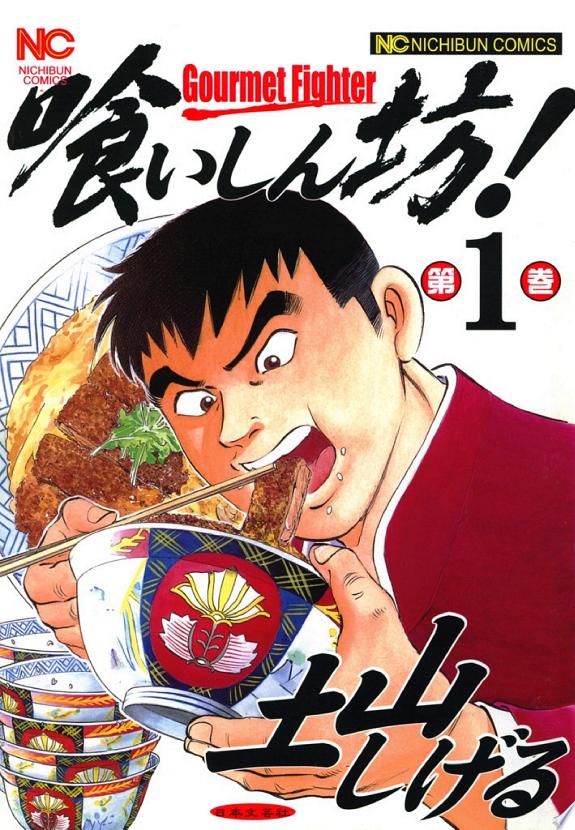
Kuishinbo! Review: When Eating Becomes a Sport Worth Fighting For
by Shigeru Tsuchiyama
Read the first volume. If it doesn't hook you, put it down. It'll hook you.
Buy Kuishinbo! on Amazon →*Affiliate link — I earn a small commission at no extra cost to you.
The first time I saw a televised competitive-eating contest in Japan, I was a kid eating instant ramen alone, and I remember thinking how strange it was that grown adults treated stuffing their faces like an Olympic event. Years later I picked up Tsuchiyama's "Kuishinbo!" half expecting a joke. By the second volume I had stopped laughing and started taking notes on chopstick technique like a fool. That switch — from "this is silly" to "wait, I actually care who wins this katsudon match" — is the whole magic of this manga, and it caught me completely off guard.
Quick Take
- Shigeru Tsuchiyama's 24-volume competitive-eating manga, serialized in Weekly Manga Goraku (2004–2009), following salaryman Mantaro Ohara through Japan's pro food-fighting circuit
- It plays eating dead straight — strategy, mentors, rival federations, a moral code — the way a boxing manga plays boxing
- Rated T (Teen): no graphic violence, but the sheer scale of the eating sequences can be intense for some readers
Story Overview
Mantaro Ohara is an ordinary salaryman whose only real talent is that he genuinely loves to eat. Short on money, he wanders into a restaurant challenge — finish ten bowls of katsudon inside the time limit for a cash prize — and clears it without much trouble. Watching from the side is Hunter Joji, a cowboy-styled professional "food fighter" who recognizes raw talent when he sees it and pulls Mantaro into a world he never knew existed: organized competitive eating treated as a real sport.
The turning point is that Mantaro learns eating fast is not the same as eating well. Joji drills him on actual strategy — pacing yourself, never cramming too much in at once, matching your method to the food in front of you, whether it is ramen, pork buns, rolled sushi, hamburgers, or oden. The story then frames itself as a rivalry between two federations: the TFF (Tange Food Fighters) on one side and the OKFF (Osaka Kuidaore Food Fighters) on the other. The OKFF fights dirty — "jadō-gui," cheap and disrespectful eating tricks — and that conflict between proper eating and shortcuts becomes the spine of the series.
It ends big. The final arc is the Kuirin Cup, an international eating championship held in Taiwan with competitors from around the world. Mantaro reaches the climactic final against the Taiwanese powerhouse Lin Birei, where the deciding match is a brutal multi-course marathon totaling roughly 15 kilograms of food, won on total consumption. Mantaro comes out on top — the salaryman who started with ten bowls of pork-cutlet rice ends as a world champion.
Characters
Mantaro Ohara — The everyman protagonist. He starts as a nobody with a big appetite and no idea the food-fighting world exists. His arc is the slow climb from accidental challenger to disciplined competitor who eventually quits his job to commit to eating full-time, ending as Kuirin Cup champion.
Hunter Joji — The cowboy-hatted veteran who scouts Mantaro and becomes his mentor. He is also his greatest measuring stick. His signature is the "nichō-gui" (two-chopstick technique): holding chopsticks in both hands so he can eat with one while cooling the next mouthful of noodles with the other, never breaking rhythm.
The OKFF fighters — The Osaka Kuidaore Food Fighters are the antagonist federation, led by Kyoko Toyama. Members like Yasuo Yokokawa use unorthodox methods, and the mysterious Kiyoshi Nishiyama leans on psychological pressure. They embody "jadō-gui," the disrespectful eating that the series sets up as the thing Mantaro must defeat.
What I Love About It
What I love is that Tsuchiyama refused to write it as a comedy, and the early katsudon challenge is where that choice locked me in. On paper, a man eating ten bowls of fried-pork-cutlet rice for cash is a gag. But the manga slows down and treats it as a contest of method, not just stomach. Joji watches Mantaro and immediately reads him the way a coach reads an athlete — and the lesson Joji gives, that you must not shove too much in your mouth at once and instead keep eating at a steady, unbroken pace, is delivered with total sincerity. The first time I read that, I laughed, and then I realized I was nodding along like it was real sports advice.
That sincerity is why the series works. The note running through it is respect for the food itself — the manga openly condemns the "jadō-gui" style as an unforgivable insult to the ingredients, which is a wild thing to feel strongly about in a story where the whole point is eating absurd quantities. But Tsuchiyama means it, and because he means it, I started meaning it too. By the time Joji demonstrates the two-chopstick technique, I wasn't reading a parody of sports manga anymore. I was reading a sports manga that happens to be about eating, and rooting for a salaryman to do it the right way.
Memorable Scene ⚠️ Spoiler Warning
The Kuirin Cup final is the one that stuck with me. After 24 volumes of regional challenges and federation grudges, it all funnels into an international championship in Taiwan, and Mantaro ends up facing Lin Birei in a deciding marathon — multiple courses, roughly 15 kilograms of food total, with the winner decided purely on how much each can consume. Tsuchiyama draws it with the impact and speed of a battle manga, so the page doesn't read like a meal; it reads like the last round of a title fight, every swallow framed like a punch landing. Watching the guy who started with a ten-bowl katsudon bet finish as a world champion, eating the proper way against everything the dirty style threw at him, is exactly the payoff the whole series was building toward. It is ridiculous and it is earned at the same time, and I have never been able to shake it.
Pros & Cons
Pros
- Plays competitive eating with full sincerity — strategy, mentorship, and a genuine moral code
- Eating sequences have real battle-manga speed and impact
- A complete 24-volume arc with a satisfying world-championship payoff
- Won the 36th Japan Cartoonists Association Award Excellence Prize (2007), so it's not just a curiosity
Cons
- No official English release
- The tournament-after-tournament structure can feel repetitive across two dozen volumes
- The sheer scale of the eating depictions is a lot, and the "this is serious sport" framing only lands if you buy into it
- An eating manga that asks you to take eating seriously won't work for everyone.
Is Kuishinbo! Worth Reading?
Yes, if you want a food manga that breaks from the cooking tradition and treats eating itself as a sport played for keeps. Tsuchiyama's refusal to wink, plus a clean rise-to-world-champion arc, makes it more than a novelty. If you want culinary appreciation, or if huge eating sequences put you off, it's not your entry point — but as earnest genre fiction it absolutely earns its 24 volumes.
Where to Buy
No English release yet. That just means you find it before everyone else does.
The Japanese print and digital editions are the only legitimate way to read it right now.
Search for Kuishinbo! on Amazon.co.jp →
This post contains affiliate links. If you purchase through these links, I may earn a small commission at no extra cost to you. As an Amazon Associate, I earn from qualifying purchases.
*Affiliate link — I earn a small commission at no extra cost to you.
More Manga You Might Like

Slice of Life / Comedy
Dagashi Kashi
Yu's review of Dagashi Kashi by Kotoyama — Kokonotsu Shikada wants to draw manga, but his father runs a rural dagashi (cheap candy) shop and wants him to inherit it. Then Hotaru Shidare, the candy-obsessed heiress of a confectionery company, shows up to recruit his father and turns each cheap snack into a passionate lecture. A slice-of-life comedy about Japanese childhood candy culture.
Slice of Life
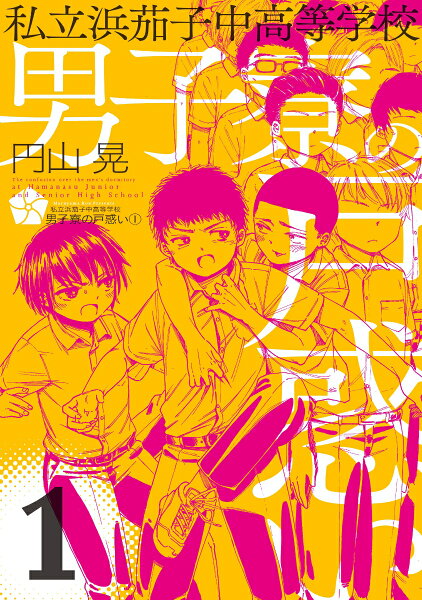
Nasu
Nasu collects Iou Kuroda's short manga stories — quiet, precise vignettes centered on food, travel, and the moments when ordinary life opens briefly into something larger, then closes again.
Slice of Life / Comedy
Tensai Bakabon
Tensai Bakabon is Fujio Akatsuka's landmark gag manga about the Bakabon family — a household where the father's complete detachment from logic is presented as wisdom, and the world's attempts to impose reason are the actual problem.
Slice of Life / Comedy
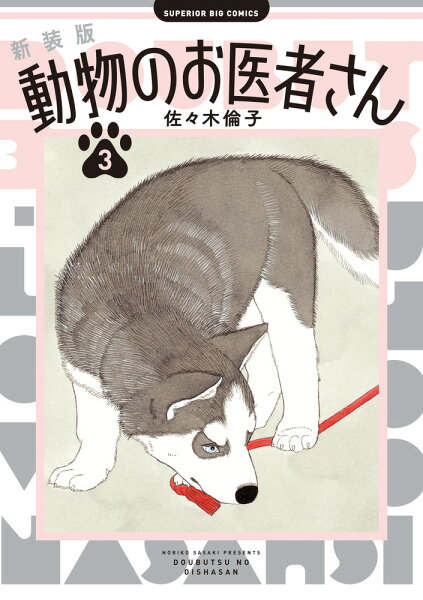
Doubutsu no Oisha-san
Doubutsu no Oisha-san follows Hamutaro, a quiet veterinary student in Hokkaido, his deadpan husky Chobi, and the warm chaos of vet-school life — a 12-volume Hana to Yume comedy so popular it set off a real Siberian Husky boom across Japan.
Slice of Life / Comedy
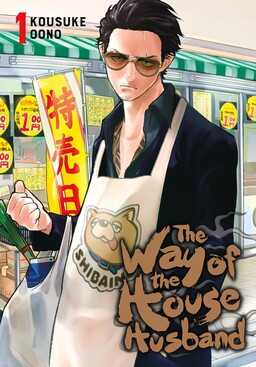
The Way of the Househusband
Yu's review of The Way of the Househusband — Tatsu, once the most feared yakuza boss in Japan, has retired to become a stay-at-home husband for his career-focused wife Miku; he applies the intensity, dedication, and specific vocabulary of organized crime to grocery shopping, cooking, and housework.
Slice of Life / Drama
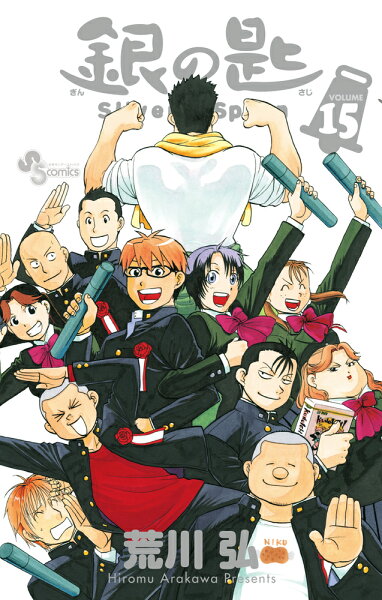
Silver Spoon
Yu's review of Silver Spoon — a city kid escapes to an agricultural high school to avoid his family, and discovers that farming, animal husbandry, and the people who feed the country have lessons no classroom ever taught him.
Written by
Yu
Manga Enthusiast from Japan
I grew up in Japan and manga literally saved me during a tough time in elementary school. My English isn't perfect, but my love for manga is real — and I want to share it with you.