
Kubo Won't Let Me Be Invisible Review: The Girl Who Refuses to Look Away
by Nene Yukimori
Read the first volume. If it doesn't hook you, put it down. It'll hook you.
Buy Kubo Won't Let Me Be Invisible on Amazon →*Affiliate link — I earn a small commission at no extra cost to you.
When I was a kid, I used to practice being invisible. I'm not joking. After the bullying got bad, I figured out that if I sat very still in the back of the classroom and never raised my hand, the day went easier. Nobody called on the boy they couldn't see. I told myself I preferred it that way. So when I first opened Kubo Won't Let Me Be Invisible and met Junta Shiraishi — a high schooler whose presence is so faint that automatic doors literally don't open for him — I felt a little jolt of recognition. I knew that boy. And I knew, with a small ache, how badly that boy actually wants someone to notice him.
Quick Take
- A high school romcom about Junta Shiraishi, a boy with such low presence that people genuinely forget he's there, and Nagisa Kubo, the one classmate who refuses to let him fade away.
- A slow, warm, gag-driven romance built on tiny daily teases rather than big drama — it earns its sweetness one panel at a time.
- Rated T (Teen): clean and gentle, with mild teasing humor and no graphic content; safe for most readers.
Story Overview
Junta Shiraishi has a quiet superpower that is really a quiet curse. He is so unremarkable that most people simply cannot register he exists. Clerks skip over him in line. Friends forget he was in the room. Doors with motion sensors stay shut when he walks up. He has more or less made peace with disappearing.
Then Nagisa Kubo — pretty, popular, and sitting right next to him — turns out to be the one person who always sees him. The turning point of the early chapters is that she doesn't just notice him; she decides to play with it. She starts teasing him to test the limits of his invisibility: getting him to stand up in the middle of class, daring him to do things that would draw eyes, watching with delight to see whether anyone reacts. What looks like a game is really her crush, channeled into the only language she's comfortable using.
Over the series' twelve volumes, those little experiments slowly turn into something neither of them can keep calling a game. The story runs to its end in the final "Confession" arc: after a school field trip, Shiraishi spends days psyching himself up, and in the very last chapter the two meet in their classroom and finally tell each other how they feel. He confesses, Kubo answers him, and the boy nobody could see ends the story as someone's whole world. A short epilogue in the final volume closes the book on them.
Characters
Junta Shiraishi starts the series as someone who has accepted being overlooked as a fact of life — not bitter, just resigned. His arc is small and real: through Kubo's relentless attention he slowly stops bracing for invisibility and starts reaching outward. By the end he's the one who decides to confess, which for this particular boy is enormous.
Nagisa Kubo is the engine of the whole thing. On the surface she's confident and a little mischievous, treating Shiraishi's low presence as a fun puzzle. But the teasing is a mask — she likes him, and poking at him is how she keeps him close without admitting it. She has noticeably more emotional depth than she first lets on, and watching her own feelings catch up to her is half the pleasure of the series.
Akina Kubo, Nagisa's older sister, works at a bookstore and shares the family talent for both seeing Shiraishi and teasing him. She's a source of comedy and of accidental matchmaking, since she keeps stumbling into Shiraishi's life and reporting back to her sister.
Saki Kubo is the younger cousin who can also perceive Shiraishi. She looks up to Nagisa and gives the story another set of eyes on the central pair, rounding out the small Kubo-family orbit that the romance lives inside.
What I Love About It
There's a recurring gag that I cannot stop thinking about: the automatic doors that won't open for Shiraishi. He walks up to a convenience store or a station entrance, the sensor is supposed to detect a human being, and nothing happens. He just stands there, waiting, until somebody with a stronger presence walks up and the door finally slides open for them. It's played for laughs, and it is funny. But the first time I read it I had to put the book down for a second.
Because that joke is the entire emotional thesis of the manga compressed into one panel. A machine built to register that a person exists fails to register him. That's not a magic curse so much as a perfect metaphor for how it feels to be the kid nobody calls on, the friend nobody texts back, the person who could leave a room and have it take ten minutes for anyone to notice. Yukimori never sermonizes about it. She just lets the door stay shut and trusts you to feel it. And then she gives him Kubo — the one girl who would have noticed him standing at that door, who would have walked over and waited with him. That contrast, the dead sensor versus the girl who always sees him, is why this silly romcom kept getting me right in the chest.
Memorable Scene ⚠️ Spoiler Warning
Spoiler Warning for an early volume.
One of the scenes that stuck with me is the bookstore mix-up. Shiraishi goes to buy a copy of Weekly Young Jump and the whole errand goes sideways — he doesn't even end up reading the adult magazine he gets accused of eyeing, but he gets flustered and caught anyway, and on top of it he drops his student ID at the store. The person who picks it up is, of all people, Akina Kubo, Nagisa's older sister, who works there.
What makes it land is the fallout. Akina passes along just one small fact about Shiraishi to Nagisa, and it's enough to leave Nagisa quietly distraught — a flash of jealousy and worry that reveals, way before either of them is ready to say it out loud, how much she actually cares. It's a comedy-of-errors setup that quietly does heavy lifting for the romance, and it's a great early example of how this series hides real feeling inside its gags.
Pros & Cons
Pros:
- A genuinely clever, emotionally resonant premise that the art uses well.
- Strong chemistry — Kubo's teasing and Shiraishi's fluster are fun every chapter.
- Warm and low-stress; the gags about his invisibility are consistently good.
- Now complete in English, all twelve volumes, so you can binge the whole arc.
Cons:
- The romance is slow by design — feelings inch forward across many short chapters.
- It's light on plot and high on vignettes; there's no big external conflict.
- If you want momentum and stakes rather than a gentle daily-life slow burn, this one won't work for everyone.
Is Kubo Won't Let Me Be Invisible Worth Reading?
Yes, if you want a warm, funny, low-drama school romance that takes its time. It's a slow burn built from small teases and quiet character moments rather than big plot turns, so readers craving stakes may get restless. But for anyone who has ever felt unseen and wished one person would just keep looking their way, it's a complete, satisfying twelve-volume read with real heart under the comedy.
Where to Buy
Read the first volume. If it doesn't hook you, put it down. It'll hook you.
This post contains affiliate links. If you purchase through these links, I may earn a small commission at no extra cost to you. As an Amazon Associate, I earn from qualifying purchases.
*Affiliate link — I earn a small commission at no extra cost to you.
More Manga You Might Like
Slice of Life / Romance
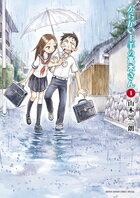
Teasing Master Takagi-san
Yu's review of Teasing Master Takagi-san — Takagi teases her desk neighbor Nishikata every single day; he keeps making plans to get back at her; she always wins; the series is about two middle school students who are clearly in love with each other before either of them knows how to say it.
Slice of Life / Romance
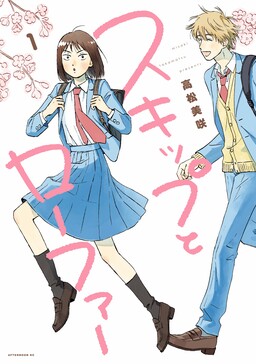
Skip and Loafer
A comprehensive review of Skip and Loafer — plot, characters, art style, and whether it's worth reading.
Slice of Life / Mystery
Hyouka
Yu's review of the Hyouka manga — Hotaro Oreki lives by the motto 'if I don't have to do it, I won't; if I do have to do it, make it quick,' but Eru Chitanda's 'I'm curious!' keeps dragging him into the small mysteries of the Classic Literature Club. Adapted by Task Ohna from Honobu Yonezawa's novels.
Slice of Life / Drama
Blue Period
Yu's review of Blue Period — Yatora Yaguchi is a popular but empty high schooler who sees one painting at dawn and decides he wants into Geidai, Japan's hardest art school, with no training and no safety net.

Slice of Life / Romance
Dasei 67%
Dasei 67% follows art-school student Minami Yoshizawa and the three friends who never leave her tiny apartment, drifting through a college life that runs on about 67% effort and 100% dumb, lovable inertia.
Slice of Life / Romance
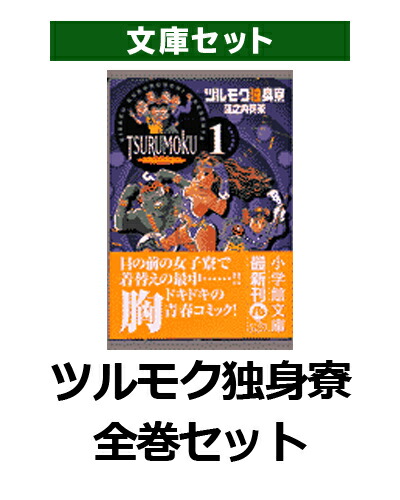
Tsurumoku Dokusin-ryo
Tsurumoku Dokusin-ryo follows young workers living in their company's bachelor dormitory — a comedy of closeness, romantic complications, and the specific texture of young adult working life in Japan when everyone you know also lives where you work.
Written by
Yu
Manga Enthusiast from Japan
I grew up in Japan and manga literally saved me during a tough time in elementary school. My English isn't perfect, but my love for manga is real — and I want to share it with you.
Disclosure: This post contains affiliate links. As an Amazon Associate, I earn from qualifying purchases at no extra cost to you.