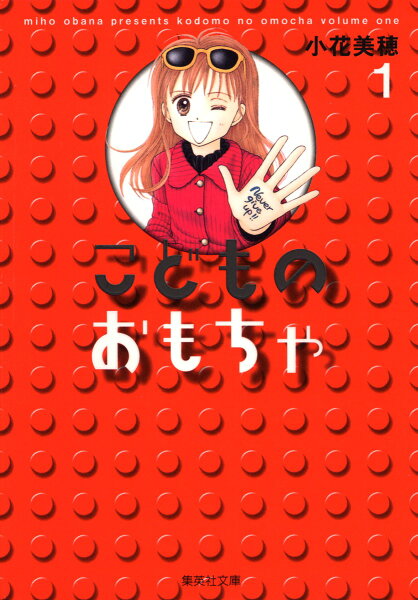
Kodocha Review: The Loudest Girl in Class Was the Only One Who Could Reach Him
by Miho Obana
Read the first volume. If it doesn't hook you, put it down. It'll hook you.
Buy Kodocha on Amazon →*Affiliate link — I earn a small commission at no extra cost to you.
I read Kodocha much later than I should have. I grew up knowing the anime — it ran on TV here and the theme song is one of those things every Japanese kid of a certain age can still hum without thinking. But I came to the manga as an adult, expecting a loud kids' comedy, something I would smile at for an afternoon and forget. I was wrong about it in a way that still bothers me a little. I picked up volume one for the jokes and stayed for a boy who had quietly decided he was the reason his mother was dead.
That is the strange magic of Miho Obana's series. It is genuinely one of the most exhausting, hyperactive comedies I have ever read — and underneath all that screaming there is a story about a child who reaches another child no adult could.
Quick Take
- A 1990s Ribon classic that is far darker and more tender than its motormouth comedy lets on.
- Sana Kurata is the blueprint for every hyperactive shoujo heroine who came after her.
- Rated T (Teen): comedy-driven and not graphic, but it deals honestly with family trauma, abandonment, and grief.
Story Overview
Sana Kurata is a successful child actress — bright, theatrical, talks a mile a minute, raps her own monologues. Her sixth-grade class has been thrown into chaos by Akito Hayama, a sullen boy who has cowed the teacher and turned the room into his territory. Sana decides, in her loud overconfident way, to fix him.
The turning point comes when she actually finds out why he is like this. Akito's mother, Koharu, died giving birth to him; his older sister Natsumi grew up blaming him for it, and told him their father hated him too. So Akito shut his whole family out and stopped expecting anyone to want him around. Once Sana understands this, the war between them turns into something else — she barges into his home and his life and refuses to let him stay alone in it.
From there the series follows them into middle school, through Sana's own family mysteries (she was adopted as a baby by her single mother Misako, and later searches out her birth mother, Keiko), through Akito slowly learning how to say what he feels, and into the awkward, real territory of two kids falling in love before they have any idea how to handle it. It runs ten volumes and actually finishes its story, which I appreciate.
Characters
Sana Kurata is the engine of the whole thing. She is a working child actress with an apparently bottomless supply of energy, and the easy read is "annoying genki girl." But Obana built her smarter than that — Sana's loudness is partly a performance, and her instinct to fix other people comes from a kid who was abandoned on a park bench as a baby and adopted by Misako. She knows what it is to not be wanted, even if she covers it in noise.
Akito Hayama is the heart of the series for me. He starts as a near-mute delinquent and is slowly revealed as a boy carrying guilt no child should carry — convinced on some level that his existence killed his mother. His arc is about being pulled, against his own resistance, back into being part of a family and eventually into loving someone out loud.
Natsumi Hayama, Akito's older sister, is the one who poisoned that household. As a small child she mistreated him and lied that their father hated him too. What makes her interesting is that she gets a real turn — after seeing Sana's film and hearing how Sana defends Akito, she realizes what she has done and starts trying to be a sister again.
Misako Kurata, Sana's mother, deserves a mention because she is gloriously odd — an eccentric novelist with a tiny squirrel-like creature perched on her head — and yet she is the steady, loving parent Akito never had. The contrast between the two households is a lot of the book's quiet argument about what makes a family.
What I Love About It
What I love is the scene where Sana shows up at the Hayama house and lets them have it. She has figured out the family's secret, and instead of treating it delicately, she marches in and tells Akito's father and sister, to their faces, that they are stupid morons who have treated this boy horribly and made him the way he is. Then she more or less orders them to go watch the movie she is in, and storms back out to find Akito. They are left sitting there with nothing to say.
I love it because it is exactly the kind of thing only a kid like Sana could do. An adult would soften it, hedge it, find a sensitive way in. Sana just kicks the door open and says the true thing as loudly as possible — and it works, because nobody in that family had ever said it. The genius of the writing is that her usual obnoxious bulldozer energy, the trait that makes her exhausting in the comedy chapters, turns out to be the precise tool the situation needed. After her film, Natsumi finally sees herself and starts to change. That is when I understood the series was never really about a quirky child star at all. It was about how a loud, fearless kid can break a silence that has frozen a whole family for years.
Memorable Scene ⚠️ Spoiler Warning
The one that stays with me is Akito's Christmas Eve confession — because it is both the funniest and the most painfully honest thing in the book. At the party, prodded by his friend Tsuyoshi that Sana will never know how he feels unless he actually says it, Akito tries to confess under the tree. And he completely chokes. He stutters, stalls, can't get a single clear word out while Sana stands there utterly baffled about what he's trying to do. Finally, with nothing else in his toolbox, he just kisses her and bolts.
What makes it land is that Sana — who can improvise rap monologues on a TV set — has no idea what just happened. The adults around them understood instantly; she didn't. It is such a perfect inversion of who these two are: the boy who can never speak finally acts, and the girl who never stops speaking is left speechless. Later he does say it plainly, that he loves her, and she says it back before immediately backpedaling out of embarrassment. It is clumsy and real in a way a lot of polished romance manga never manages, and it is the moment the series stopped being a comedy I liked and became one I loved.
Pros & Cons
Pros:
- A complete ten-volume story that fully earns its emotional payoffs.
- Sana is one of the great shoujo protagonists — funny, loud, and quietly carrying her own wound.
- The darkness under the comedy (family trauma, abandonment, grief) is handled with real care.
Cons:
- The 1990s art and rapid-fire comedic pacing take adjustment for modern readers.
- The whiplash between slapstick and heavy drama is intense — that tonal swing is either the whole charm or a dealbreaker, and it won't work for everyone.
Is Kodocha Worth Reading?
Yes — especially if you want to see where the modern "hyperactive shoujo heroine" actually came from. It is a loud, messy, very 90s comedy hiding a genuinely moving story about two kids saving each other from the silences in their families. Come for Sana's chaos, stay for Akito.
Where to Buy
No English release yet. That just means you find it before everyone else does.
The Tokyopop edition (Kodocha: Sana's Stage) went out of print after the license lapsed, so the Japanese volumes are the most reliable way to read it today.
Find the Japanese edition on Amazon.co.jp →
This post contains affiliate links. If you purchase through these links, I may earn a small commission at no extra cost to you. As an Amazon Associate, I earn from qualifying purchases.
*Affiliate link — I earn a small commission at no extra cost to you.
More Manga You Might Like
Slice of Life / Comedy
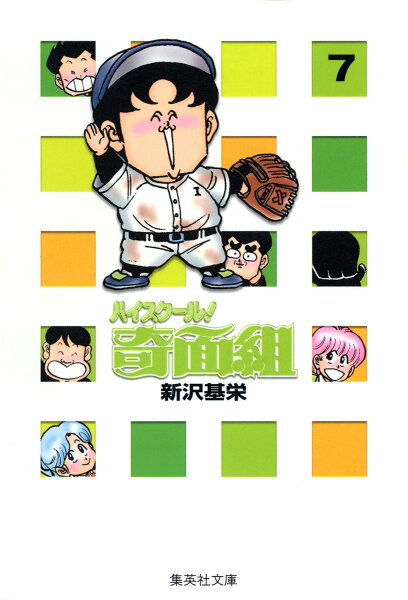
High School! Kimengumi
High School! Kimengumi follows five boys who turn their strange faces into a way of life, building one of the loudest, weirdest gag manga of 1980s Shonen Jump.
Slice of Life / Comedy
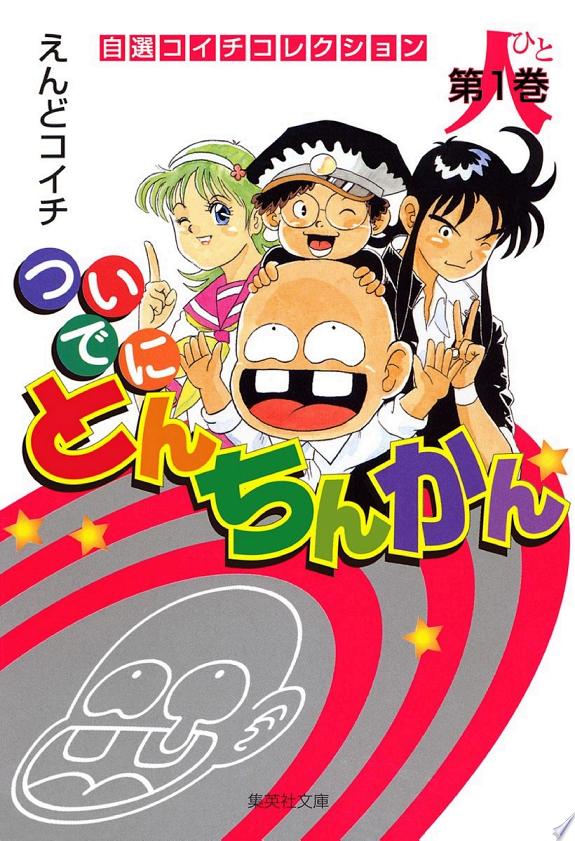
Tondemo-kun
Tondemo-kun follows a trio of delinquent students whose plans to cause trouble consistently backfire in ways that are so spectacularly wrong they accidentally create good outcomes — a comedy built entirely on the gap between intention and result.
Comedy / Slice of Life
Macaroni Houren-sou
Macaroni Houren-sou follows three high school students living together in a boarding house — Toshio Shingami, the energetic straight man; Kinoshita, the eccentric wildcard; and Trapp, the cool foreigner — in a surreal comedy that uses the school-life setting as a launching pad for increasingly unhinged humor.
Slice of Life / Comedy
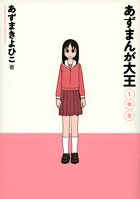
Azumanga Daioh
Yu's review of Azumanga Daioh — Kiyohiko Azuma's four-panel comedy that follows six high school girls across three years of ordinary school life, from Chiyo the child prodigy to Osaka the daydreamer.
Slice of Life / Comedy
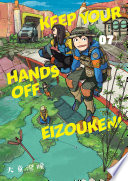
Keep Your Hands Off Eizouken!
A review of Keep Your Hands Off Eizouken! by Sumito Oowara — three high school girls form an anime-making club, and the manga keeps stepping inside their imaginations to show you what making something actually feels like.
Slice of Life / Historical Drama
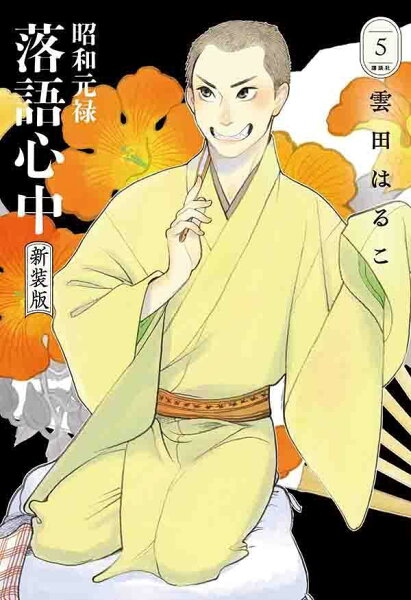
Shouwa Genroku Rakugo Shinjuu
Shouwa Genroku Rakugo Shinjuu follows the world of rakugo — traditional Japanese comic storytelling — through two performers across two generations: the transcendent and self-destructive Yakumo, and the student Yotaro who inherits what Yakumo cannot save.
Written by
Yu
Manga Enthusiast from Japan
I grew up in Japan and manga literally saved me during a tough time in elementary school. My English isn't perfect, but my love for manga is real — and I want to share it with you.
Disclosure: This post contains affiliate links. As an Amazon Associate, I earn from qualifying purchases at no extra cost to you.