
Kochikame Review — 40 Years and 200 Volumes of a Cop in Katsushika Who Would Rather Be Gambling
by Osamu Akimoto
Read the first volume. If it doesn't hook you, put it down. It'll hook you.
Buy Kochira Katsushika-ku Kameari Kouenmae Hashutsujo on Amazon →*Affiliate link — I earn a small commission at no extra cost to you.
I grew up in Tokyo with Kochikame around me the way most Japanese kids did. The anime was on TV throughout the late 1990s and 2000s. The manga was in convenience stores in long runs of paperback volumes that nobody bought all at once but everyone bought one or two of. My grandfather had volumes from the 1980s. My father had volumes from the 1990s. I read whichever volume I could find when I was bored at family functions.
The manga is meant to be sampled.
Quick Take
- Osamu Akimoto's 40-year Weekly Shonen Jump comedy series (1976–2016)
- 200 volumes serialized + 1 standalone post-conclusion volume = 201 total
- Once held the Guinness World Record for most-published volumes by a single manga author
- Age rating: T (Teen) — mild comedy throughout
What Is Kochikame About?
The full Japanese title is こちら葛飾区亀有公園前派出所 (Kochira Katsushika-ku Kameari Kouenmae Hashutsujo) — "Here at the Katsushika Ward Kameari Park Front Police Box." Mercifully, everyone calls it Kochikame (こち亀).
Ryotsu Kankichi (両津 勘吉) is the Tokyo Metropolitan Police officer assigned to the small police box (koban) in front of Kameari Park in Tokyo's Katsushika Ward. Ryotsu is supposedly responsible for policing the immediate neighborhood. In practice, he spends almost all of his energy on:
- Get-rich-quick schemes (which always fail)
- Gambling (he loses, frequently)
- Constructing elaborate inventions to make money (which become disasters)
- Avoiding work when possible
- Eating at every opportunity
He is also genuinely good at his job when he chooses to be — possessing superhuman physical abilities and a deep knowledge of his Katsushika neighborhood. He just rarely chooses to be good at his job.
The recurring koban cast includes:
- Keiichi Nakagawa — Ryotsu's wealthy younger colleague; a rich kid working at the police box because he believes in police work
- Reiko Akimiya — Female officer; from a wealthy family
- The chief (Daijiro Ohara) — Ryotsu's long-suffering superior
The manga is strictly episodic. Each chapter is approximately one self-contained Ryotsu adventure. No continuing arc, no character development across volumes, no escalating plot. The format is the appeal.
Across 200 volumes and approximately 1,960 chapters, Akimoto sustained this format with consistent quality.
Why Did Kochikame Run for 40 Years?
This is one of the most discussed questions about the manga in Japanese manga criticism. Several factors:
- Episodic structure — no overarching plot to resolve; the manga could continue indefinitely
- Akimoto's discipline — he hit weekly deadlines for 40 years without significant hiatuses
- Cultural specificity — the Katsushika neighborhood is a real place; the manga documented changes to that neighborhood across four decades
- Cross-generational appeal — kids who started reading in 1976 became parents whose kids read in 2006
- Akimoto's flexibility — he periodically adjusted the manga's content to match cultural shifts (smartphones, internet, social media all eventually appeared)
The manga's conclusion in 2016 was a deliberate authorial choice by Akimoto. The final chapter ran in Weekly Shonen Jump's 42nd issue of 2016 — exactly 40 years after the first chapter in the 42nd issue of 1976.
Who Is This Manga For?
- Japanese pop culture enthusiasts — Kochikame is essential context for understanding postwar Japan
- Readers who like to dip into a manga without committing to plot
- Comedy readers in the dad-joke and physical-comedy registers
- Showa nostalgia readers
- Japanese-language readers (unlicensed in English)
- Not for: readers seeking plot continuity, character development, or modern visual conventions
Content Warnings & Age Rating
Age Rating: T (Teen) — 13+ Content Warnings: Mostly mild family-comedy; occasional adult humor (gambling, money themes); some 1970s–1980s social attitudes in early volumes; no graphic content
Art Style
Osamu Akimoto's art is consistent across 40 years in a way that is its own achievement. Character designs barely evolve; Ryotsu's face in volume 200 is recognizably the Ryotsu of volume 1.
The art is functional rather than ambitious. Akimoto is a craftsman. The comedy is conveyed through panel timing, facial expression, and physical exaggeration. The manga is easy to read at high speed.
Cultural Context
Kochikame is one of the most culturally significant manga in Japanese pop culture history:
- Longest-running Weekly Shonen Jump series in the magazine's history
- Once held Guinness World Record for most volumes by a single manga author (surpassed by Golgo 13 in 2021)
- Total circulation exceeds 156 million copies as of 2016
- 40-year cultural document — the manga's incidental details record what Tokyo looked like across four decades
The 1996–2004 anime adaptation (Fuji TV, 344 episodes) was a major cross-generational hit. Multiple anime films and specials followed.
What I Love About It
Akimoto's commitment.
40 years. Weekly deadlines. No major hiatuses. The same character. The same neighborhood. The same fundamental joke (Ryotsu has a scheme; the scheme fails; Ryotsu is back at work the next chapter; the cycle continues forever).
What I love is that Akimoto could have stopped at any point. The manga's popularity was massive throughout its run. He could have ended in 1990 or 2000 or 2010 and been remembered as a major manga creator. He did not stop. He kept writing Kochikame, week after week, for 2,000 chapters, because the manga had become a thing he did with his life.
That is its own kind of achievement. Not the kind that produces a single masterpiece. The kind that produces a 40-year career of consistent, reliable, modest excellence — a manga that does not change but accumulates depth through duration. The Katsushika neighborhood Akimoto drew in 1976 is a different physical place than the one he drew in 2016, but the manga documented every change. Ryotsu is in some real sense an inhabitant of Tokyo across four decades.
There is something powerful about a creative project that does not seek the lightning of greatness but instead achieves the steady glow of presence. Kochikame is the steady glow.
What English-Speaking Fans Say
Kochikame has very limited English-language presence because the manga has never been licensed. Among English-language manga critics, Kochikame is occasionally referenced as the answer to "what is the longest-running Jump manga" but is rarely discussed substantively.
Memorable Scene
The format does not produce "memorable scenes" in the conventional sense. What is memorable is the formula itself — Ryotsu's recurring schemes — and specific recurring jokes that long-term readers grew fond of.
The final chapter (2016) is the closest the manga gets to a culminating moment. Ryotsu is still Ryotsu. The Katsushika koban is still operating. The world has continued. Akimoto chose to step back from a project he had defined his career with. The ending is a quiet farewell rather than a dramatic conclusion. It is the right ending for the manga.
Similar Manga
| Title | Its Approach | How Kochikame Differs |
|---|---|---|
| Sazae-san | Multi-decade Japanese family comedy | Sazae-san is family-strip format; Kochikame is chapter-based |
| Crayon Shin-chan | Long-running family comedy | Shin-chan is more child-focused |
| Golgo 13 | The other major long-running Japanese manga | Golgo is action-thriller; Kochikame is comedy |
| Doraemon | Long-running family-children comedy | Doraemon has SF premise; Kochikame is grounded |
Reading Order / Where to Start
Any volume. The episodic structure means readers can pick up any volume without context.
Official English Translation Status
Kochikame has no official English release. Shueisha has never licensed the manga — likely a combination of length, cultural specificity, and the difficulty of translating its specific Japanese comedy.
Pros & Cons
Pros
- Cultural document of postwar Japan across four decades
- 200 volumes of consistent quality
- Akimoto's discipline is its own achievement
- Each volume is self-contained
- Ryotsu is one of Japanese comedy's most iconic characters
Cons
- No English translation, ever
- Cultural specificity creates significant translation barriers
- Repetitive format is the genre, not a flaw
- The slow-burn comedic format is an acquired taste. It won't land for everyone.
Is Kochikame Worth Reading?
If you read Japanese and have access to the volumes: yes, particularly for the cultural insight and as a sustainable casual read.
For English-only readers: you cannot read it. The cultural significance is worth knowing about but the manga itself remains inaccessible.
Format Comparison
| Format | Notes |
|---|---|
| Physical (Japanese) | All 200 + 1 volumes available in Japan |
| Digital (Japanese) | Available via Japanese ebook services |
| English | None — unlicensed |
| Anime (Fuji TV, 1996–2004) | 344 episodes; limited English availability |
Where to Buy
No English release yet. That just means you find it before everyone else does.
*Affiliate link — I earn a small commission at no extra cost to you.
More Manga You Might Like
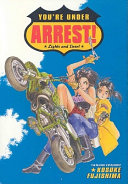
Slice of Life / Comedy
You're Under Arrest!
A review of You're Under Arrest! by Kosuke Fujishima — a slice-of-life police comedy about two traffic cops whose friendship, professionalism, and occasional high-speed bicycle chases make them the heart of their precinct.
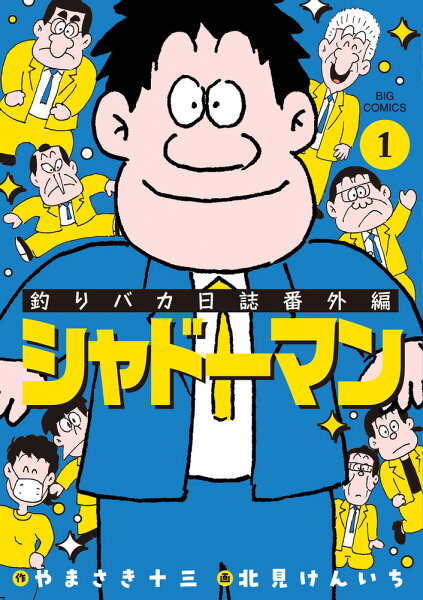
Slice of Life / Comedy
Tsuribaka Nisshi
Tsuribaka Nisshi follows Densuke 'Hama-chan' Hamasaki — a dead-average salaryman obsessed with fishing — who unknowingly befriends Ichinosuke 'Su-san' Suzuki, the president of the construction company he works for, after the two meet over a leftover grilled fish.
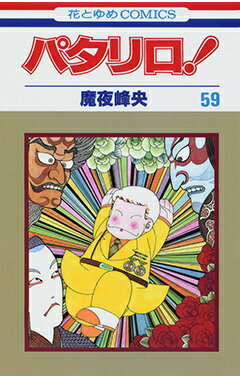
Slice of Life / Comedy
Patalliro!
Patalliro! follows the eccentric boy-king of the fictional island nation Marinera — a comedy that has been running in Hana to Yume since 1978, blending spy parody, historical lampoon, supernatural gags, and the relationship between the king and his bodyguard.
Slice of Life / Comedy
Tensai Bakabon
Tensai Bakabon is Fujio Akatsuka's landmark gag manga about the Bakabon family — a household where the father's complete detachment from logic is presented as wisdom, and the world's attempts to impose reason are the actual problem.
Slice of Life / Comedy
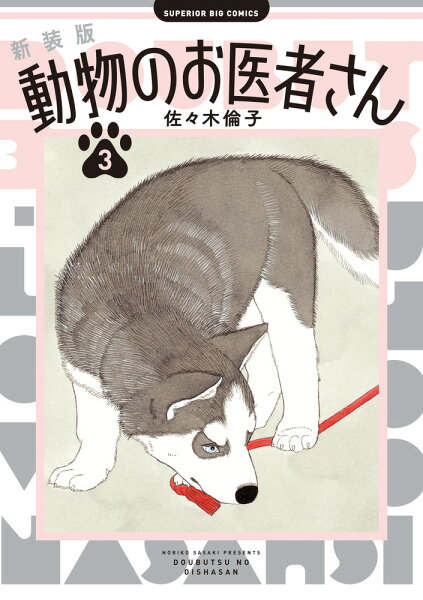
Doubutsu no Oisha-san
Doubutsu no Oisha-san follows Hamutaro, a quiet veterinary student in Hokkaido, his deadpan husky Chobi, and the warm chaos of vet-school life — a 12-volume Hana to Yume comedy so popular it set off a real Siberian Husky boom across Japan.
Slice of Life / Comedy
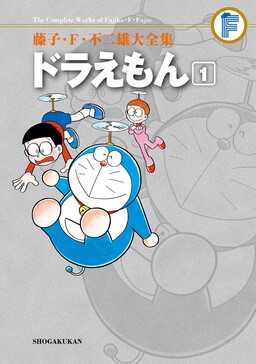
Doraemon
Yu's review of Doraemon — a robot cat from the 22nd century, sent back to help a hopeless boy named Nobita with gadgets from his four-dimensional pocket. Fujiko F. Fujio's most beloved work, and the manga every Japanese kid grows up inside.
Written by
Yu
Manga Enthusiast from Japan
I grew up in Japan and manga literally saved me during a tough time in elementary school. My English isn't perfect, but my love for manga is real — and I want to share it with you.