
Kiniro Mosaic Review: The Manga That Made Me Homesick for a Country I'd Never Visited
by Yui Hara
Read the first volume. If it doesn't hook you, put it down. It'll hook you.
Buy Kiniro Mosaic on Amazon →*Affiliate link — I earn a small commission at no extra cost to you.
I have never been to England. But there is a small drawer in my heart where I keep a version of it — green hills, old houses, golden hair catching the light — and most of that drawer was filled by manga before I was ever old enough to buy a plane ticket. When I first read Kiniro Mosaic, I recognized that feeling immediately. Shinobu, the Japanese girl at the center of it, is in love with an England she has only visited once as a child. I am in love with the same kind of imaginary place. Reading her felt a little like looking in a mirror.
I picked this one up expecting a light, forgettable "cute girls" comedy. It is light, and it is cute. But it stayed with me longer than I expected, because under the gags it is quietly about how two kids became friends without sharing a single word.
Quick Take
- A four-panel (4-koma) slice-of-life comedy about Shinobu, a Japanese girl obsessed with England, and Alice, the English girl she befriended on a homestay who later moves to Japan to be with her
- The humor comes from both directions — England as Shinobu imagines it, Japan as Alice and Karen experience it — and it is warm rather than mocking
- 11 volumes, complete in English from Yen Press, and rated All Ages — there is nothing here a child couldn't read
Story Overview
The series opens with a flashback. A young Shinobu Omiya does a homestay in England and is placed with the Cartelet family, whose daughter Alice is the same age. Alice is shy and frightened at first, and neither girl can speak the other's language. They become close anyway, through gestures and patience and time — and that wordless friendship is the emotional foundation the whole rest of the manga is built on.
The turning point comes years later, in Japan. Shinobu receives a letter: Alice is coming to live in Japan and has enrolled at Shinobu's high school. Alice, it turns out, spent those years studying Japanese until she was nearly fluent, all to be near her friend, and she moves in with the Omiya family. Soon Alice's energetic, much-less-fluent friend from England, Karen Kujo, follows her over, and together with Shinobu's Japanese classmates Aya and Yoko, the five settle into ordinary school life.
From there it is episodic — short comic situations built around culture shock, daily school routine, and the gap between the idealized version of a country and the real one. The series runs all the way through to their final year. Volume 11 closes the story on entrance-exam season and graduation, with a graduation trip — fittingly, to England — and a quiet promise that the group will stay friends for good.
Characters
Shinobu Omiya — The heart of the series and, honestly, the character I saw myself in. She is hopelessly in love with everything Western, especially golden hair, despite barely speaking a word of English. Her arc is gentle: the homestay child who clung to a foreign friend grows into a high schooler who gets to live alongside that friend every day, and who dreams of one day becoming an interpreter so the language barrier that defined her first friendship never holds her back again.
Alice Cartelet — The English girl from the homestay. She was timid and scared as a small child, but she crosses an ocean and learns a whole language to be near Shinobu — which tells you everything about how much that early friendship meant to her. In Japan she is intelligent and nearly fluent, and her attachment to Shinobu is the most consistent emotional thread in the book.
Karen Kujo — Half-British, half-Japanese, Alice's friend from England, and the chaos engine of the cast. Her Japanese is far rougher than Alice's and her energy is endless, so most of the loudest culture-shock comedy comes from her colliding cheerfully with Japanese school decorum.
Aya Komichi and Yoko Inokuma — Shinobu's Japanese friends, who anchor the group with the local point of view. Aya is reserved and easily flustered, and the series quietly plays on her feelings for the more boisterous Yoko.
What I Love About It
The thing I keep coming back to is the opening flashback in England — the homestay where Shinobu and Alice first meet as kids who cannot understand each other. Alice is shy and a little scared, Shinobu can't say anything to reassure her, and there is no clever language trick that fixes it. They just spend time together until, somehow, they are friends. The manga presents this without any big speech about the power of friendship. It simply shows two children figuring each other out.
That landed hard for me, because it is the most honest thing in the whole series. I think a lot of slice-of-life manga would have rushed past this to get to the school gags. Hara lingers on it instead, and it pays off through the entire run: every joke about Shinobu mangling English or Alice missing Japan is funnier and warmer because you remember that these two became inseparable before they could even talk. Shinobu's dream of becoming an interpreter, which sounds like a throwaway gag at first, suddenly reads like the natural wish of a girl whose defining memory is loving someone she couldn't speak to. For a comedy about cute girls drinking tea, that is a surprisingly real foundation.
Memorable Scene ⚠️ Spoiler Warning
The moment that stuck with me is the letter. After the England flashback, the present-day story is kicked off by Alice writing to Shinobu to announce she is moving to Japan and enrolling at her school. It is such a small thing — a letter — but it reframes everything that came before. The shy English girl from the homestay didn't just remember Shinobu; she spent years learning Japanese well enough to live in a foreign country, all to close the distance between them. The gap that defined their first meeting, the one neither of them could bridge as kids, Alice quietly went and erased herself. The series never makes a big tearful deal of it, which is exactly why it works on me. It just lets you do the math.
Pros & Cons
Pros
- The cross-cultural comedy is genuinely warm and runs in both directions, never punching down at either country
- The wordless-friendship origin gives the whole gentle series a real emotional spine
- Fully complete in English — 11 volumes, no dangling threads
- Truly all-ages; kind to every character in the cast
Cons
- The stakes are essentially zero; there is no plot engine beyond daily life
- As a 4-koma the rhythm is gag-gag-gag, which can feel repetitive over 11 volumes
- It teases the Shinobu–Alice closeness but never resolves it into anything, which will frustrate some readers — this is a quiet, low-stakes comfort read, and that won't work for everyone
Is Kiniro Mosaic Worth Reading?
If you want a gentle, complete, all-ages comedy with a friendship at its core that is more touching than the cute-girls packaging suggests, yes. If you need plot, conflict, or a payoff to the romantic teasing, this is not the manga for you. I read it for the homestay and the letter, and those alone were worth it.
Where to Buy
Read the first volume. If it doesn't hook you, put it down. It'll hook you.
This post contains affiliate links. If you purchase through these links, I may earn a small commission at no extra cost to you. As an Amazon Associate, I earn from qualifying purchases.
*Affiliate link — I earn a small commission at no extra cost to you.
More Manga You Might Like
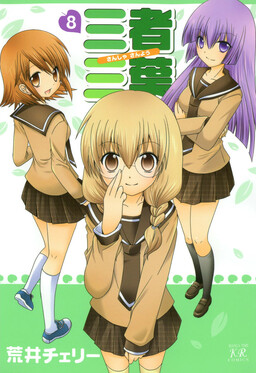
Slice of Life
Sansha Sanyou
Yu's review of Sansha Sanyou — Youko Nishikawa (formerly wealthy), Futaba Odagiri (enthusiastic eater), and Teru Hayama (smiling sadist) are three incompatible high school girls who end up eating lunch together and become friends; Cherry Arai's gentle comedy about the friendships that form despite personality differences.
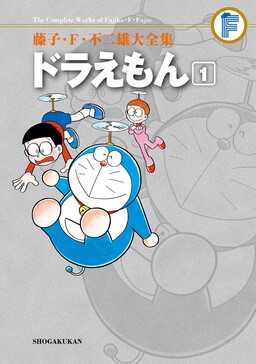
Slice of Life / Comedy
Doraemon
Yu's review of Doraemon — a robot cat from the 22nd century, sent back to help a hopeless boy named Nobita with gadgets from his four-dimensional pocket. Fujiko F. Fujio's most beloved work, and the manga every Japanese kid grows up inside.
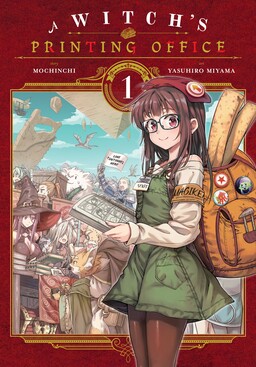
Slice of Life / Fantasy
A Witch's Printing Office
Yu's review of A Witch's Printing Office — Mika is a modern Japanese woman who worked at Comiket (the giant doujinshi convention) and wakes up in a fantasy world where magical festivals share printed pamphlets; using her knowledge of convention organization and printing logistics, she builds a business that transforms how the fantasy world shares information.

Slice of Life / Comedy
Squid Girl
Yu's review of Squid Girl — Ika Musume (Squid Girl) emerges from the sea to conquer humanity as revenge for ocean pollution; she is immediately defeated by the Aizawa sisters who run a beach house and ends up working there to pay for property damage; world conquest is repeatedly delayed.

Slice of Life / Comedy
Shirokuma Cafe
Yu's review of Shirokuma Cafe — a polar bear named Shirokuma runs a café near the zoo; Panda works part-time there (poorly), Penguin is a regular customer, and the humor comes from animal characters behaving with human social conventions while remaining animals.
Slice of Life / Comedy
Non Non Biyori
Yu's review of Non Non Biyori — five students in a tiny rural school (total enrollment: five) experience the small, seasonal rhythms of countryside life in a mountain village far from anything.
Written by
Yu
Manga Enthusiast from Japan
I grew up in Japan and manga literally saved me during a tough time in elementary school. My English isn't perfect, but my love for manga is real — and I want to share it with you.
Disclosure: This post contains affiliate links. As an Amazon Associate, I earn from qualifying purchases at no extra cost to you.