Kill Me Baby Review: An Assassin and Her Ditzy Friend Navigate School Life with Very Different Skill Sets
by Kaduho
Read the first volume. If it doesn't hook you, put it down. It'll hook you.
Buy Kill Me Baby on Amazon →*Affiliate link — I earn a small commission at no extra cost to you.
I have read a lot of 4-koma comedy manga. Kill Me Baby is the one where the single premise — school assassin, terminally unfazed best friend — has been running since 2008 and still hasn't gotten old to me. Kaduho found the exact right characters for this joke and committed to them completely.
I'm Yu. This is the manga I recommend when someone wants something low-stakes, funny, and complete in short sessions.
Quick Take
- Kaduho's Kill Me Baby (キルミーベイベー) has been running in Houbunsha's Manga Time Kirara Carat since July 2008 — 16 volumes in Japan as of late 2025.
- Yen Press publishes the English edition; 9 volumes released.
- Rated T (Teen) — slapstick cartoon violence, dark premise played entirely for laughs.
Story Overview
Sonya is a professional assassin. Yasuna is her school friend who has decided, without any evidence, that they are best friends. The sketches follow from this premise: Yasuna does something innocuous that activates Sonya's combat training, Sonya responds with professional violence, Yasuna is unfazed.
This is the entire manga. There is no escalating plot, no character development of consequence, no change in the fundamental dynamic. The comedy comes from the consistency and timing of the joke, and from occasional variations where a third character — a ninja who also attends the school — adds a second incompetent-in-normal-life dynamic.
Characters
Sonya — A professional whose professional skills are entirely useless in the context she keeps finding herself in; her frustration is the series' most consistent source of humor.
Yasuna — A protagonist whose density — she never reads the room, never registers that Sonya's attacks are meant to hurt — is either genuine or a specific adaptation strategy; the manga does not explain which.
Art Style
Kaduho's art is simple and clean — the 4-koma format requires clear, legible panels, and the character designs are distinctive enough to carry the comedy without visual complexity.
Cultural Context
Kill Me Baby runs in Houbunsha's Manga Time Kirara Carat — the same stable as K-On! and Is the Order a Rabbit?. The 4-koma format is a traditional vehicle for this kind of episodic character comedy — the short-form structure suits a series that is deliberately not trying to build toward anything. Kirara Carat specializes in exactly this kind of comfortable, consistent slice-of-life comedy.
What I Love About It
Yasuna's inability to take a hint. She has been attacked, judo-thrown, and physically restrained more times than the reader can count, and her assessment of Sonya's friendliness has not changed one bit. The consistency of this character trait is funnier than it has any right to be.
What English-Speaking Fans Say
Western readers describe Kill Me Baby as exactly what it is — reliable, low-stakes comedy manga that delivers its one joke consistently and well. Specifically noted for being ideal short-read entertainment, for the character dynamic being genuinely funny despite its simplicity, and for the anime adaptation being a good companion to the manga.
Memorable Scene ⚠️ Spoiler Warning
Any sketch where Sonya's professional training produces a completely disproportionate response to Yasuna's innocent provocation — where the gap between threat level and response is maximized — is the series at its best.
Similar Manga
- Aho-Girl — Single-premise character comedy with similar escalation structure
- Miss Kobayashi's Dragon Maid — Powerful being failing at normal life with similar energy
- Gabriel DropOut — Competent entity failing at normal context
- Nichijou — School slice-of-life comedy with similar episodic structure
Reading Order / Where to Start
Volume 1 — the premise is established in the first chapter and maintained throughout.
Pros & Cons
Pros:
- The premise is consistent and reliably funny — sixteen volumes in Japan without wearing out the joke.
- 4-koma format ideal for short reading sessions; easy to pick up and put down.
- Highly accessible for new manga readers.
- The anime adaptation (2012) is a good companion if you want more of the same energy.
Cons:
- No plot or character development — what you see in volume 1 is what you get in volume 16.
- Single premise can be limiting for readers who want narrative progression.
- Yen Press is currently 9 volumes; the Japanese series is ongoing at 16+.
Is Kill Me Baby Worth Reading?
Yes, with expectations set. This is reliable, low-stakes comedy manga with one joke, executed consistently for a very long time. It is exactly what it is and makes no apologies for it.
Who Is This Manga For?
- Readers who want 4-koma Kirara-style comedy — comfortable, episodic, no stakes.
- Fans of the anime who want to read the source material.
- Anyone looking for short-read entertainment without narrative investment.
Official English Translation Status
Yen Press has published 9 volumes in English. The Japanese series is ongoing at 16+ volumes (as of late 2025); new Yen Press volumes continue to release.
Where to Buy
Yen Press's English volumes are available in print and digital.
Browse Kill Me Baby on Amazon →
This post contains affiliate links. If you purchase through these links, I may earn a small commission at no extra cost to you. As an Amazon Associate, I earn from qualifying purchases.
*Affiliate link — I earn a small commission at no extra cost to you.
More Manga You Might Like

Slice of Life / Comedy
Slow Start
Yu's review of Slow Start — Hana Ichinose started high school a year late due to illness, making her a year older than her classmates; the series follows her trying to fit in with her new friends while carrying the secret that she is different, in Tokumi Yuiko's characteristic warm and gentle 4-koma style.

Slice of Life / Comedy
Gabriel DropOut
Yu's review of Gabriel DropOut — Gabriel White Tenma graduates top of her angel class, gets sent to Earth to guide humans toward happiness, discovers online games, and rots into a slovenly NEET. Her demon classmate Vignette is the responsible one; demon Satania keeps losing her melon bread to a dog; angel Raphiel just enjoys watching everyone suffer.

Slice of Life / Comedy
Monthly Girls' Nozaki-kun
Yu's review of Monthly Girls' Nozaki-kun — Chiyo Sakura confesses to her crush Umetaro Nozaki and he hands her his autograph; she discovers he is the author of a popular shojo manga and accidentally becomes his assistant; the series is a comedy about manga creation that uses the genre conventions of shojo manga as its comedic material.
Slice of Life / Comedy
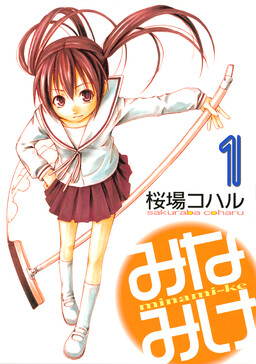
Minami-ke
Yu's review of Minami-ke — three sisters at different schools (eldest Haruka in high school, middle Kana in middle school, youngest Chiaki in elementary) share an apartment and their daily life generates endless comedy from their completely different personalities and the rotating cast of friends, admirers, and chaos that follows them home.

Slice of Life / Comedy
Lucky Star
Yu's review of Lucky Star — Konata Izumi, an anime-obsessed high schooler, and her friends Kagami, Tsukasa, and Miyuki talk their way through school life in Kagami Yoshimizu's 4-koma comedy. It starts with a debate about how to eat a chocolate cornet and somehow never needs more plot than that.
Slice of Life
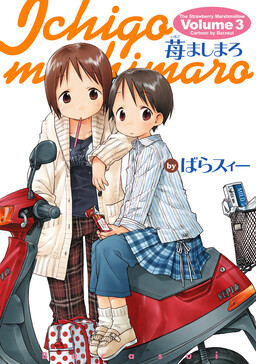
Ichigo Mashimaro
Yu's review of Ichigo Mashimaro — Nobue Itoh and the four grade-schoolers around her (her sister Chika, the chaotic Miu, the timid Matsuri, and British transplant Ana Coppola) drift through ordinary days in suburban Hamamatsu. Barasui's long-running deadpan comedy is built on Miu's relentless schemes and the cruel running joke of Ana forgetting her own English.
Written by
Yu
Manga Enthusiast from Japan
I grew up in Japan and manga literally saved me during a tough time in elementary school. My English isn't perfect, but my love for manga is real — and I want to share it with you.
Disclosure: This post contains affiliate links. As an Amazon Associate, I earn from qualifying purchases at no extra cost to you.