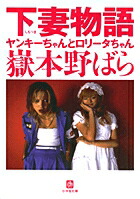
Kamikaze Girls Review: A Lolita and a Biker Girl Who Make No Sense Together and Somehow All the Sense
by Novala Takemoto (story), Yukio Kanesada (art)
Read the first volume. If it doesn't hook you, put it down. It'll hook you.
Buy Kamikaze Girls on Amazon →*Affiliate link — I earn a small commission at no extra cost to you.
I have a soft spot for stories about people who refuse to blend in. When I was a kid I was the opposite — I made myself small, I tried to disappear, I read manga in corners so nobody would notice me. So when I finally read Kamikaze Girls, the manga that Yukio Kanesada drew from Novala Takemoto's novel, I felt something I didn't expect: a little jealous. Momoko walks around rural Ibaraki dressed in full Sweet Lolita frills, and she does not care that the whole town stares. Ichigo rides a motorcycle and picks fights and spits when she talks. Neither of them shrinks. I wish I'd had even a fraction of that when I was their age.
This is a short book — one volume, and the actual Kamikaze Girls story only fills about half of it. But it stuck with me more than plenty of long series have.
Quick Take
- Yukio Kanesada's one-volume manga of Novala Takemoto's cult novel: a Lolita-fashion devotee and a yankii biker girl become unlikely best friends in the Japanese countryside
- The manga condenses the novel into roughly half the volume, then gives you a bonus story in the back half — so it reads fast and you get extra
- Age rating is T (Teen) — mild language, delinquent subculture, and some comedic fight scenes, nothing graphic
Story Overview
Momoko Ryugasaki is a Sweet Lolita living in Shimotsuma, rural Ibaraki — about as far from her beloved imaginary Versailles as a girl can get. She ends up there after her father, a former small-time yakuza type, gets into trouble selling counterfeit Versace clothes. To make money, Momoko starts selling off her father's leftover bootleg gear.
That's how she meets Ichigo Shirayuri. Ichigo is a member of an all-girl biker gang called the Ponytails, and once she discovers Momoko's stash, she keeps coming back to buy bootleg outfits for the gang. The visits turn into something neither girl planned: a friendship between two people who could not look more different and who, underneath, are doing the exact same thing — committing totally to who they are in a town that wishes they'd just calm down.
The turning point is a trip to Tokyo. Momoko goes to visit the real Lolita-fashion brand BABY, THE STARS SHINE BRIGHT, and Ichigo tags along because she wants to get her tokkofuku (the gang's embroidered coat) decorated to honor Akimi, an older member who's getting married and leaving the Ponytails. Momoko's own embroidery skill ends up catching the eye of Akinori Isobe, the brand's founder — a real turning point for her dreams.
The ending pulls the two threads together. Ichigo decides to quit the gang, and the Ponytails, under new leadership, challenge her to a fight as punishment for deserting. Momoko overhears Ichigo accept the challenge and shows up. She's not a fighter — but she scares the gang off anyway, and Ichigo is saved. The book closes with the two of them riding home together on Ichigo's motorbike. The manga's back half is a separate bonus story in which Ichigo falls for the twin brother of a boy from the original novel.
Characters
Momoko Ryugasaki — A Sweet Lolita who would rather live in 18th-century Versailles than 21st-century Ibaraki, and dresses every day like she's decided to. Cool, sarcastic, and a loner by choice. Her arc is about discovering that her one rule — that she needs no one and lives only for beauty — is a lie. By the end she runs toward a friend in danger, which is the most un-Momoko thing she could do, and that's exactly the point.
Ichigo Shirayuri — A loud, blunt, fist-first yankii who believes in loyalty above everything. She rides with the Ponytails and worships the older members. Her arc is the mirror of Momoko's: she has to learn that loyalty to a gang isn't the same as loyalty to herself, and quitting the Ponytails for her own path is the bravest thing she does.
Akimi — The respected senior Ponytail whose marriage and retirement set the Tokyo trip in motion. Her departure is the spark that makes Ichigo question what the gang even means to her.
Akinori Isobe — The founder of BABY, THE STARS SHINE BRIGHT (a real brand woven into the fiction). His recognition of Momoko's embroidery gives Momoko's private obsession a future outside her own head.
What I Love About It
The Tokyo trip is the heart of it for me. Momoko goes for herself — for BABY, THE STARS SHINE BRIGHT, for the fashion she's built her whole identity around. Ichigo only comes along for one reason: she wants her gang coat embroidered as a goodbye gift for Akimi. Two girls on a train to Tokyo, each chasing something the other doesn't fully understand, and neither of them admitting that the real reason the trip is fun is that they're doing it together.
What got me is that the manga doesn't make either girl give up who she is to be friends. Momoko stays a snob about beauty. Ichigo stays loud and rough. The friendship isn't built on one of them changing for the other — it's built on each of them quietly deciding the other is worth the trouble. Coming from a story that could so easily have been a "opposites learn a lesson" cartoon, that restraint is what made it land for me. I grew up thinking I had to become someone else to be liked. Kamikaze Girls says the opposite: the right person likes you because of the thing everyone else finds weird, not in spite of it.
Memorable Scene ⚠️ Spoiler Warning
The climax. Ichigo has quit the Ponytails, and the gang challenges her to a fight to punish her for deserting. Momoko — who has spent the entire book insisting she needs no one and would never lower herself to something as crude as a brawl — overhears Ichigo accepting the challenge on the phone, and she goes.
She can't fight. That's the joke and the gut-punch at the same time. So she does the only thing a girl in head-to-toe frills can do: she causes chaos, scaring the gang badly enough that they scatter, and Ichigo is saved. She "wins" without throwing a real punch. What I keep coming back to is the gap between everything Momoko says she is — a self-sufficient aesthete above human attachments — and what she actually does the second a friend is in danger. The whole book has been building a wall around her, and in one scene she walks straight through it. Then they just ride home on the bike, laughing. No big speech about friendship. They don't need one.
Pros & Cons
Pros
- The friendship is written with real specificity — neither girl is softened or "fixed" to make it work
- One volume, condensed from the novel, with a bonus story in the back — fast and rewarding
- Genuine affection for both subcultures (Lolita fashion and yankii biker culture), drawn with care by Kanesada
- Momoko and Ichigo are funny and distinct enough to remember long after
Cons
- It's a condensed adaptation — the Kamikaze Girls story itself is only about half the book, so it moves quick and loses some of the novel's voice
- Readers who don't know Lolita fashion or yankii culture may miss some of the jokes and texture
- It's comedy-forward and light on heavy drama — if you want a long, tearful emotional arc, the brisk one-volume pace won't work for everyone
Is Kamikaze Girls Worth Reading?
Yes — especially if you loved the film or the novel and want the manga version of these two. It's a fast, warm, funny one-volume story about two girls who refuse to blend in and become each other's whole world. Just go in knowing it's a condensed adaptation, not the full novel.
Where to Buy
Read the first volume. If it doesn't hook you, put it down. It'll hook you.
This post contains affiliate links. If you purchase through these links, I may earn a small commission at no extra cost to you. As an Amazon Associate, I earn from qualifying purchases.
*Affiliate link — I earn a small commission at no extra cost to you.
More Manga You Might Like
Slice of Life / Comedy
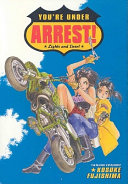
You're Under Arrest!
A review of You're Under Arrest! by Kosuke Fujishima — a slice-of-life police comedy about two traffic cops whose friendship, professionalism, and occasional high-speed bicycle chases make them the heart of their precinct.
Slice of Life / Comedy
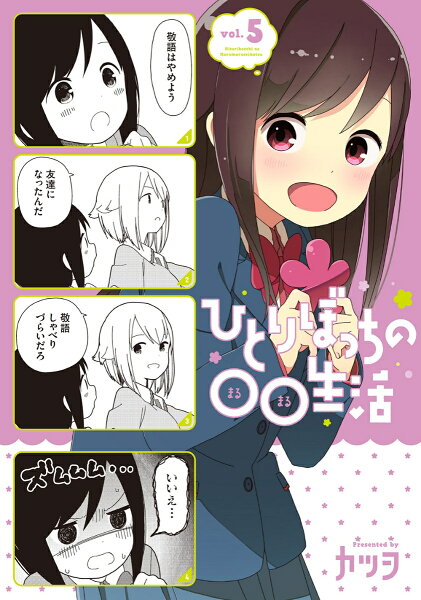
Hitoribocchi no Marumaru Seikatsu
A review of Katsuwo's Hitoribocchi no Marumaru Seikatsu — 9 volumes in Monthly Comic Alive. Bocchi Hitori starts middle school with a mission to make friends with everyone in her class; she is so socially anxious that she faints, vomits, and freezes up at the slightest interpersonal challenge. Yen Press's English edition is complete.
Slice of Life / Comedy
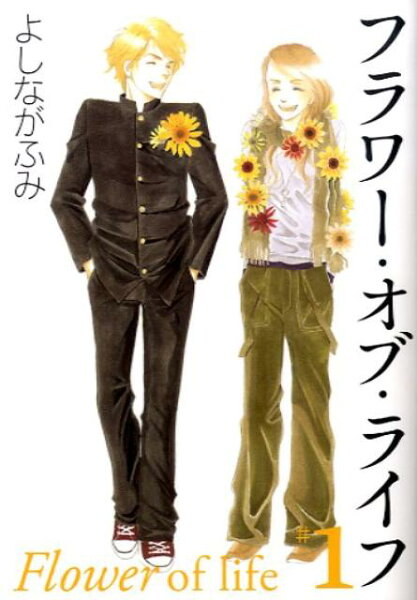
Flower of Life
A review of Flower of Life, Fumi Yoshinaga's warm and funny slice-of-life manga about a boy who returns to high school after surviving leukemia and the chaotic, manga-obsessed class he falls into.
Slice of Life
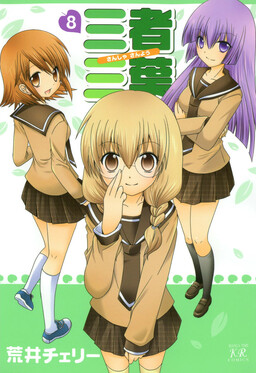
Sansha Sanyou
Yu's review of Sansha Sanyou — Youko Nishikawa (formerly wealthy), Futaba Odagiri (enthusiastic eater), and Teru Hayama (smiling sadist) are three incompatible high school girls who end up eating lunch together and become friends; Cherry Arai's gentle comedy about the friendships that form despite personality differences.
Slice of Life / Comedy
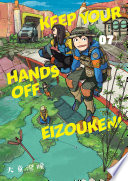
Keep Your Hands Off Eizouken!
A review of Keep Your Hands Off Eizouken! by Sumito Oowara — three high school girls form an anime-making club, and the manga keeps stepping inside their imaginations to show you what making something actually feels like.
Slice of Life / Comedy
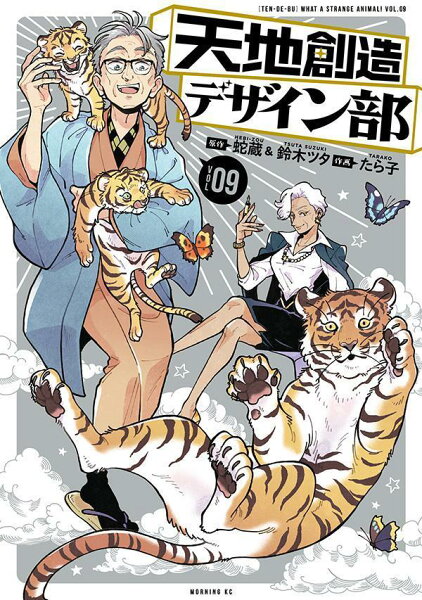
Heaven's Design Team
Heaven's Design Team imagines that God outsourced the creation of Earth's animals to a design firm of demigods. Each chapter is a new brief — 'I want a creature that does X' — and the team argues, prototypes, and engineers its way to an animal that actually exists, with real biology notes at the end.
Written by
Yu
Manga Enthusiast from Japan
I grew up in Japan and manga literally saved me during a tough time in elementary school. My English isn't perfect, but my love for manga is real — and I want to share it with you.
Disclosure: This post contains affiliate links. As an Amazon Associate, I earn from qualifying purchases at no extra cost to you.