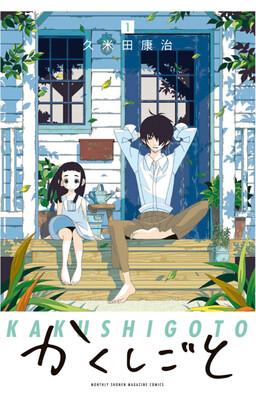
Kakushigoto Review: The Gag Manga That Quietly Becomes a Love Letter
by Koji Kumeta
Read the first volume. If it doesn't hook you, put it down. It'll hook you.
Buy Kakushigoto on Amazon →*Affiliate link — I earn a small commission at no extra cost to you.
I read Kakushigoto during a stretch when I was feeling a little embarrassed about my own work — about running a manga site, about whether the thing I loved was something I could say out loud without flinching. And here is this manga about a man whose entire life is built around the fear that his daughter will find out what he does for a living. I laughed at almost every chapter. Then somewhere near the end I had to put the book down and just sit there for a minute. Koji Kumeta got me. He builds a gag machine, runs it for eleven volumes, and then shows you that the whole time it was a love letter.
Quick Take
- A daily gag comedy about an ecchi manga artist hiding his job from his young daughter — and it's genuinely, consistently funny
- Underneath the jokes is a father-daughter story that spans ten years and lands harder than the comedy ever prepares you for
- 12 volumes, complete in English; rated T (Teen) — the "adult manga" premise stays as a joke, never shown
Story Overview
Kakushi Goto draws ecchi manga for a living. He runs a studio called G-PRO, he's good at his job, and he is absolutely terrified that his daughter Hime will discover what kind of manga her father makes. So he builds a double life. Every morning he leaves home in a black suit and tie with a briefcase, like a salaryman heading to a normal office. He's basically a Clark Kent who's hiding the embarrassing identity instead of the heroic one. His assistants stash the manuscripts in a separate place. The studio gets decorated to look respectable. Every chapter is a new scheme, a new near-miss, a new worst-case scenario spinning out of Goto's anxious imagination.
The title itself is the joke and the heart at once. Kakushigoto (かくしごと) reads as both "hidden things" (kakushi-goto, secret) and "the work of drawing" (kaku-shigoto) — and it's literally the protagonist's name. Kumeta loads almost every character name with a pun. It's a comedy of language as much as situation.
The turning point isn't a single event — it's the framing device that runs underneath everything. From the very start, the series flashes forward to an 18-year-old Hime who returns to an abandoned house full of her father's old manuscripts. You watch the daily comedy of ten-year-old Hime knowing that something has happened in the future, and slowly the series fills in what. The ending lives almost entirely in that future: Goto has been in a coma after an accident involving — of all things — falling manga publications, and when he wakes he has amnesia, convinced Hime is still ten and his series is still running. Hime has to decide whether to give him back eight years of memory, knowing it means giving back the grief inside them too.
Characters
Kakushi Goto — A single father and successful manga artist whose love for his daughter is so total that he reorganizes his entire existence around protecting her from embarrassment. The comedy comes from his catastrophizing — Kumeta builds whole chapters out of Goto imagining the absolute worst outcome of any small thing. But his actual happiness, the manga makes clear, isn't fame or sales; it's just wanting to watch Hime grow up happy. He'd give up manga entirely for her, and by the end that's exactly what's at stake.
Hime Goto — Goto's daughter, eight years old when the series begins, eighteen in the future frame. Her name is a pun on himegoto, another word for "secret." She's warm, perceptive, and far more considerate than a kid her age should have to be — at one point she talks herself out of wanting a dog because she doesn't want to add to her father's burden. By the end she's an award-winning painter following her late grandfather's path, and she's carrying a secret of her own.
Hime's mother — Absent for nearly the whole series; she disappeared in an accident at sea. But she left Hime a set of boxes to be opened on future birthdays, each holding something she'll need at that age — a recipe book at ten, and so on. It's one of the quietest, most devastating recurring threads.
The G-PRO assistants — Goto's studio staff, also given pun names, who are complicit in the cover-up and form a found-family that reunites in the finale. They're the engine of a lot of the workplace-comedy material about the absurd reality of making manga on deadline.
What I Love About It
The disguise. Every morning Goto puts on the suit. He becomes, for the walk out the door and the commute, an imaginary office worker — a costume worn not for the world but for one little girl. I think about that small daily ritual constantly. It's funny the first time. By the tenth time it's something else. This is a man performing respectability with total dedication, and the joke is that the thing he's hiding isn't shameful at all — drawing manga for a living is what he loves, it's the truest thing about him. He's hiding his real self from the person he loves most because he's afraid that self isn't good enough for her.
That landed on me hard, because it's the exact anxiety I had about my own work when I read it. The genius of Kumeta's structure is that he never lectures you about this. He just runs the gag — suit, briefcase, fake office, hidden manuscripts — over and over until the repetition stops being a joke and becomes a portrait of how much effort love asks of you, and how much of that effort goes completely unseen. Hime never knows what her dad is protecting her from. That's the whole point. The biggest things parents do for their kids are the ones the kids will never find out about.
Memorable Scene ⚠️ Spoiler Warning
The finale. Goto wakes from his coma with eight years missing — he thinks Hime is still ten, thinks his manga is still in print, wants to get straight back to work. And Hime realizes that giving him his memories back doesn't just return the good years; it returns the heartbreak inside them too. She hesitates. Then Goto tells her, plainly, that her health and happiness matter more to him than manga ever could — and she decides to help him remember.
So she brings his manuscripts to the hospital room. Eight years of pages he drew. And as he reads through his own work, page by page, the memories come back attached to each one — because every chapter he drew is tied to a moment in Hime's life. He literally re-watches his daughter grow from ten into the eighteen-year-old sitting in front of him, through the manga he made while she did. The secret he spent the entire series hiding turns out to be the exact thing that gives her back to him. The framing device finally clicks shut and you understand the whole book was always about this. I've never seen a gag manga earn an ending like that.
Pros & Cons
Pros
- The comedy is reliable and sharp — Kumeta is a master of the gag-per-page rhythm
- The manga-industry humor is specific and affectionate without needing footnotes to land
- The father-daughter warmth is genuine, never syrupy
- The time-skip ending recontextualizes everything and pays off completely
- Complete at 12 volumes — no dangling threads
Cons
- The concealment premise is repetitive by design; if the loop tires you in volume two, it won't stop looping
- A lot of the wordplay-based humor loses something in translation no matter how good the localization
- The tonal turn from gag comedy to emotional drama surprises some readers — that whiplash won't work for everyone.
Is Kakushigoto Worth Reading?
Yes — if you can sit through a repeating comic premise and trust that it's building to something. It's one of the best father-daughter stories in manga disguised, fittingly, as a silly gag series about a guy who draws dirty comics. The jokes are good on their own. The ending makes you reread the jokes differently. That's a rare trick, and Kumeta pulls it off.
Where to Buy
Read the first volume. If it doesn't hook you, put it down. It'll hook you.
This post contains affiliate links. If you purchase through these links, I may earn a small commission at no extra cost to you. As an Amazon Associate, I earn from qualifying purchases.
*Affiliate link — I earn a small commission at no extra cost to you.
More Manga You Might Like
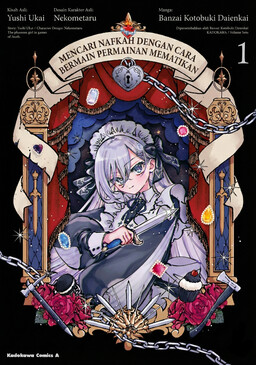
Slice of Life / Comedy
Phantom of the Idol
Yu's review of Phantom of the Idol — Yuuya Niyodo is an idol who hates performing and tries to be fired; Asahi Mogami is the ghost of an idol who died before she could reach her dreams; when she possesses Yuuya during a performance, they strike a deal — she performs through his body, he reaps the rewards.
Slice of Life / Comedy
Cells at Work!
Yu's review of Cells at Work! — the cells of a human body are personified as workers in a city. Red Blood Cell AE3803 delivers oxygen, White Blood Cell U-1146 kills pathogens, and a cancer cell asks why he has to die. Educational comedy that quietly breaks your heart.
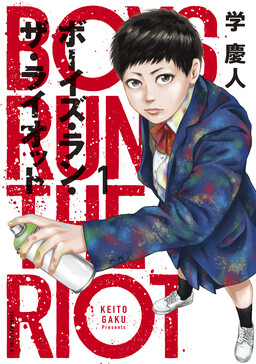
Slice of Life / Drama
Boys Run the Riot
Yu's review of Boys Run the Riot — Ryo Watari is a transgender high schooler who can't tell anyone who he is, until he meets Jin, a loud transfer student who pulls him into starting a streetwear brand. A four-volume manga, drawn by a trans creator, about fashion as the language you use when words won't come.
Slice of Life
Magical Sempai
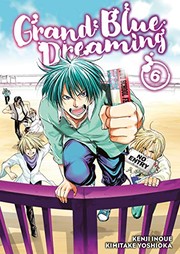
Yu's review of Magical Sempai — the assistant joins the magic club to fill a club requirement and meets his sempai: a girl who loves magic with genuine passion but suffers from stage fright severe enough that every public performance goes catastrophically wrong.
Slice of Life / Drama
Black Jack Sousaku Hiwa
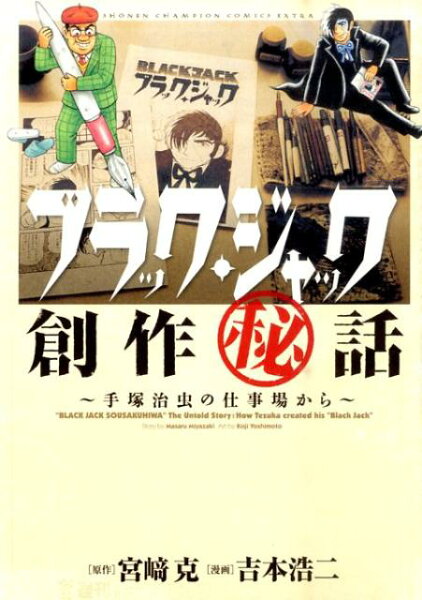
Black Jack Sousaku Hiwa is a documentary manga about how Osamu Tezuka created Black Jack — told through the editors and assistants who worked beside him, capturing both the genius and the human cost of his impossible work ethic.
Slice of Life / Drama
Wandering Son
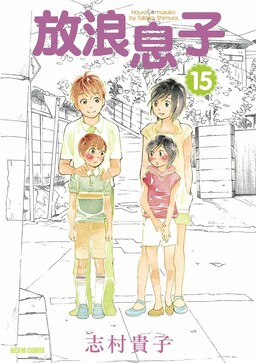
Yu's review of Wandering Son — Shuichi Nitori is a boy who wants to be a girl; his new friend Yoshino Takatsuki is a girl who wants to be a boy; the manga follows both of them from elementary school through adolescence as they navigate gender identity, friendship, and growing up; a gentle, serious work about transgender experience.
Written by
Yu
Manga Enthusiast from Japan
I grew up in Japan and manga literally saved me during a tough time in elementary school. My English isn't perfect, but my love for manga is real — and I want to share it with you.
Disclosure: This post contains affiliate links. As an Amazon Associate, I earn from qualifying purchases at no extra cost to you.