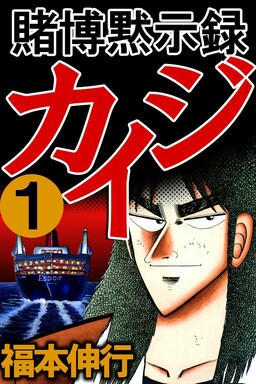
Kaiji Review: The Gambling Manga Where the Real Enemy Is Your Own Hope
by Nobuyuki Fukumoto
Read the first volume. If it doesn't hook you, put it down. It'll hook you.
Buy Gambling Apocalypse Kaiji on Amazon →*Affiliate link — I earn a small commission at no extra cost to you.
The first time I read Kaiji, I was in my early twenties, broke, and avoiding a phone call from a place I owed money to. I remember sitting on the floor of my apartment with the light off, reading the part where Kaiji is standing on the deck of the Espoir realizing he just signed his life away for cards and three plastic stars. I felt sick in a way I didn't expect from a manga. Because I recognized him. Not the gambling — the part where a normal, lazy, unlucky guy convinces himself that one more bet will finally fix everything. I have made that exact deal with myself. Most of us have. That's what Fukumoto's art keeps poking at, with those ugly pointed noses and the trembling "ZAWA… ZAWA…" sound vibrating in the panel gutters. Kaiji isn't a power fantasy. It's a manga about hope being the most expensive thing a desperate man can own.
Quick Take
- The gold standard of gambling manga — Fukumoto turns card games and a steel beam into pure psychological warfare, where the tension comes from logic under pressure, not punches
- Kaiji Itou is the opposite of a cool protagonist: he's smart, weak-willed, prone to crying and panic, and he keeps betting everything one more time — which is exactly why he feels real
- Rated M (Mature) for gambling, organized-crime cruelty, on-page death, and one famous act of self-harm — this is not a gentle read
Story Overview
Kaiji Itou is a directionless young man who cosigned a loan for a coworker who then vanished. The debt — ballooned by interest into something monstrous — lands on Kaiji. A loan shark named Endou shows up with an offer dressed as mercy: board a ship called the Espoir for one night, gamble, and you can wipe the whole debt out. Lose, and you owe far more, payable as years of forced underground labor.
The turning point comes the moment Kaiji steps aboard. The "game" is Restricted Rock-Paper-Scissors: each player gets twelve cards (four rock, four paper, four scissors) and three star tokens. You play out all your cards in one-on-one matches, betting a star each round, and you must end the night with all cards gone and at least three stars to walk free. It sounds simple. It is a meat grinder built on betrayal, alliances, and stolen stars. Kaiji nearly loses everything to people he trusted, and only survives by reading the leftover supply of cards in the room.
From there the series escalates relentlessly: the brutal Human Derby and the electrified steel beam crossing high above the city at the Starside Hotel, and finally a private one-on-one game of E-Card against Yukio Tonegawa, lieutenant of the loan empire's president, Kazutaka Hyodo. The English edition collects the complete first series — and Kaiji's confrontation with the men who designed his suffering reaches a real, earned conclusion.
Characters
Kaiji Itou — Our protagonist, and one of manga's most honest portraits of a weak man. He's genuinely clever — he cracks rigged games faster than anyone — but his fatal flaw is that he can't stop. He finds the safe winning line, then his greed or his pride or his hope pushes him to bet it all on one more round. He weeps, he panics, he hallucinates relief, he grovels and then he rises. Watching him is exhausting and intimate because his self-destruction is so recognizable.
Yukio Tonegawa — The cold, immaculate executive who runs the games for the Teiai Group. He delivers the franchise's most quoted speeches about how the rich grind the poor and call it the poor's own fault. In the E-Card arc he goes from untouchable puppet-master to a man sweating under the same despair he inflicts on others — his arc from contempt to fear is the spine of the first series' back half.
Kazutaka Hyodo — The grotesque, ancient president of the Teiai loan empire who treats human lives as entertainment to bet on. He never needs to do much; his presence is the rot at the center of the whole system Fukumoto is dissecting.
Endou — The loan shark who first lures Kaiji onto the Espoir. Slimy, smiling, always profiting off Kaiji's desperation — the human face of the trap.
What I Love About It
The electrified steel beam crossing is the sequence I think about most. After the Human Derby, the survivors are offered a chance at a fortune: walk across two narrow steel beams suspended between two skyscrapers, 22 stories up, in the rain, with a low-voltage current running through the metal. It's not a card game. There's no clever trick to find. It is just a man, a beam, the wind, and the longest drop imaginable.
What gets me is how Fukumoto draws fear as a physical, dragging weight. Kaiji starts crawling across, and the men ahead of him fall — not dramatically, just silently slipping off into the dark — and you feel the math of it: every meter forward is a meter you can't take back. Then the current is switched on. The pain locks Kaiji's muscles, his hands smoke against the steel, and there's this unbearable stretch where he's frozen, one wrong twitch from death, deciding whether the money is worth becoming. It hit me because it strips away all the cleverness of the earlier games and asks the rawest version of the question the whole manga is built on: how much of yourself will you destroy for the promise of being saved? I read that whole sequence holding my breath, and when Kaiji finally drags himself to the far side, screaming and ruined, I felt like I'd crossed it with him.
Memorable Scene ⚠️ Spoiler Warning
The E-Card game against Tonegawa is where Kaiji becomes unforgettable. E-Card is a deliberately unfair game — one side plays the Emperor deck (which beats Citizens), the other plays the Slave deck (the lone Slave card beats the Emperor, but loses to everything else) — and the payouts scale up to betting body parts. Kaiji starts losing in ways that don't make sense, and he slowly works out the horror: Tonegawa is cheating. There's a hidden monitoring device reading Kaiji's vitals — his pulse, his tells — and feeding them to a watch on Tonegawa's wrist, so every bluff Kaiji makes is transparent.
So Kaiji does the thing I still flinch remembering. To level the table, he takes a drill — and cuts off his own ear, where the device is, on-page, in close-up. It is grotesque and it is the most heroic thing in the book, because it's the one moment his self-destructive streak gets pointed outward, weaponized into defiance instead of ruin. With the cheat gone and the playing field finally fair, he bets his life twice and wins twenty million yen off the man who thought poor people were too weak to do anything but lose. The "ZAWA ZAWA" goes quiet. That panel of Kaiji, bleeding and grinning, is burned into my memory.
Pros & Cons
Pros
- The best psychological gambling manga ever made — every game is a fully-engineered puzzle you solve alongside Kaiji
- Kaiji's weakness and self-sabotage make him painfully, movingly human
- Fukumoto's class commentary (the rich designing despair for the poor) is sharp and explicit
- The first series is fully complete in English via Denpa's omnibus
Cons
- Fukumoto's art — pointed faces, exaggerated noses, sweat everywhere — is an acquired taste
- The pacing is famously slow; a single hand of cards can stretch across many chapters of internal monologue
- Kaiji's repeated bad decisions are infuriating by design — that slow, agonizing tension is either the entire appeal or a dealbreaker, and it won't work for everyone
Is Kaiji Worth Reading?
If you want a thriller where thinking is the action and the stakes are a desperate man's body and soul, Kaiji is essential and complete in English. If you need a cool, competent hero and fast pacing, the deliberate slow burn and Kaiji's endless self-sabotage will frustrate you. For me it's a five-star masterpiece that understood my worst impulses better than I did.
Similar Manga
| Title | Its Approach | How Kaiji Differs |
|---|---|---|
| Liar Game | Tournament of psychological money games with a kind, naive heroine and a genius con artist | Kaiji's protagonist is the desperate everyman himself, and the cruelty is far more visceral and class-focused |
| Akagi | Fukumoto's own mahjong manga about a fearless prodigy who plays without attachment to life | Akagi is ice; Kaiji is raw nerve — Kaiji wants to live and keeps gambling that desire away |
| Usogui | High-stakes underground gambles refereed by a shadowy bureau, more action-heavy | Usogui is flashier and more violent; Kaiji stays grounded in poverty and pure psychological dread |
Content Warnings & Age Rating
Age Rating: M (Mature) Content Warnings: Gambling and debt-driven desperation; organized crime coercion; psychological manipulation; on-page death and fatal falls; a graphic act of self-harm (the ear-cutting in the E-Card arc).
This is a dark, adult psychological thriller. The violence is less about gore and more about dread and degradation, but the self-harm scene in particular is intense.
Where to Buy
Read the first volume. If it doesn't hook you, put it down. It'll hook you.
This post contains affiliate links. If you purchase through these links, I may earn a small commission at no extra cost to you. As an Amazon Associate, I earn from qualifying purchases.
*Affiliate link — I earn a small commission at no extra cost to you.
More Manga You Might Like
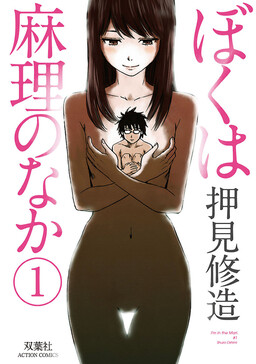
Slice of Life
Inside Mari
Yu's review of Inside Mari — Isao Komori, a hikikomori who watches a high school girl from his window, wakes up one morning inside her body. But the body-swap mystery he thinks he's living turns out to be something far stranger and sadder.

Drama / Thriller
Ningen Konchuki
Ningen Konchuki (The Book of Human Insects) follows Toshiko Tomura, a beautiful and ruthless woman who absorbs the talents of creative people around her — becoming a novelist, then a designer, then an architect — by living with them, learning from them, and discarding them when she's taken everything they have.
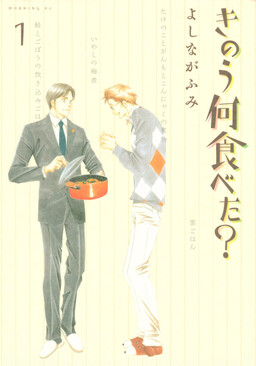
Slice of Life
What Did You Eat Yesterday?
Yu's review of What Did You Eat Yesterday? — Shiro and Kenji are a gay couple in Tokyo; Shiro is a lawyer who cooks dinner every night; the manga follows their domestic life through the meals Shiro prepares, with complete recipes; a quiet, adult slice of life about partnership and food.

Slice of Life / Comedy
Wave, Listen to Me!
Yu's review of Wave, Listen to Me! — Minare Koda is a restaurant worker in Sapporo who rants to a radio producer at a bar about her ex-boyfriend; the producer records it and airs it; instead of suing, she agrees to do a radio show; a fast-talking adult comedy about a woman who is genuinely funny and genuinely a mess.
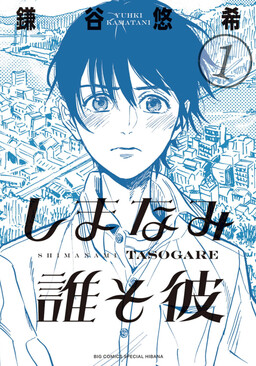
Slice of Life / Drama
Our Dreams at Dusk: Shimanami Tasogare
Yu's review of Our Dreams at Dusk — Tasuku Kaname is outed to his classmates; he goes to a building to jump; a woman in white tells him to come to a drop-in center; the center is a community of people across the LGBTQ spectrum who have found a way to be in the world; Tasuku begins to find his own way through them.
Slice of Life
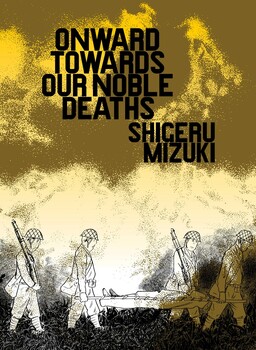
Onward Towards Our Noble Deaths
Yu's review of Onward Towards Our Noble Deaths — Shigeru Mizuki's autobiographical war manga, depicting the Japanese Imperial Army unit that survived a suicidal charge order through the Pacific Theater; the survivors were punished for failing to die; Mizuki survived; most of his unit did not.
Written by
Yu
Manga Enthusiast from Japan
I grew up in Japan and manga literally saved me during a tough time in elementary school. My English isn't perfect, but my love for manga is real — and I want to share it with you.
Disclosure: This post contains affiliate links. As an Amazon Associate, I earn from qualifying purchases at no extra cost to you.