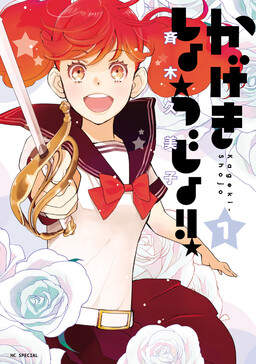
Kageki Shojo!! Review: A Performing Arts Manga Where the Stage Is the Easy Part
by Kumiko Saiki
Read the first volume. If it doesn't hook you, put it down. It'll hook you.
Buy Kageki Shojo!! on Amazon →*Affiliate link — I earn a small commission at no extra cost to you.
I almost skipped this one. The cover looked like a sparkly theater-girl manga, and I assumed I knew the shape of it — bright newcomer, strict school, big audition, tears, triumph. I read the first chapter expecting that and instead got two girls standing under a cherry tree at a school that takes more from them than it gives back. I kept reading because of Ai. By the time I understood why she flinches the way she does, I had stopped treating this as a "performing arts manga" and started treating it as one of the most careful stories about trauma I have ever read in any genre.
It still has the sparkle. The performances are gorgeous. But Kumiko Saiki understands that the stage is the easy part — the hard part is being a person who walks onto it.
Quick Take
- A Takarazuka-inspired drama about the Kouka School, where the real subject is the histories the students drag onto the stage with them.
- Sarasa is one of the most genuinely joyful protagonists in manga; Ai is one of the most carefully written survivors. Their friendship is the spine of the whole thing.
- Ongoing, M (Mature) — Ai's backstory involves childhood sexual abuse, handled with care but directly. This is adult drama, not a cute school story.
Story Overview
The Kouka School of Musical and Theatrical Arts is a thinly fictionalized version of the real Takarazuka Music School — the institution that feeds Japan's all-female Takarazuka Revue, where women play both the male roles (otokoyaku) and female roles (musumeyaku). Admission is brutal, the training is two years long, and the school reshapes nearly everything about a student's body, voice, and bearing.
Sarasa Watanabe arrives tall, blonde-pigtailed, loud, and absolutely certain. Her dream is specific: to play Oscar from The Rose of Versailles, the famous otokoyaku role. What she does not advertise is where her confidence comes from — she was raised around kabuki, trained at the Shirakawa household as a child, and was quietly pushed out of that world. The boy she trained alongside, Akiya, inherited the kabuki future that was closed to her. Sarasa carries that loss as fuel.
Her assigned roommate is Ai Narata — once "Naracchi" of the massive idol group JPX48, who left under a cloud. Ai is technically flawless, beautiful, and completely closed off. She does not trust men, and the reason is not a quirk: she was sexually abused as a child by a man her mother brought into the home, and when she tried to tell her mother, the abuse was minimized rather than stopped. Her idol career was a first attempt to hide inside an all-female world; Kouka, whose audience is overwhelmingly women, is her second, better-planned escape.
The series follows their first year — the auditions, the cruel ranking systems, the senpai hierarchy, a Sports Day, and a class-wide Romeo and Juliet audition — while peeling back the histories that each girl carries. It is structured so that the "performance" arcs and the "trauma" arcs are the same arc.
Characters
Sarasa Watanabe — Her joy is real, and that is rare. She isn't performing enthusiasm; she actually has it, and Saiki draws it without irony. But underneath is a child who was told she would never get to play Sukeroku on the kabuki stage because of who she is. Her warmth toward Ai is patient and non-intrusive — she keeps offering, never forces — and that restraint is exactly what makes the friendship work.
Ai Narata — Her arc is not "she gets healed." It's "she learns to keep living next to what happened." The story refuses the comforting lie that one heroic gesture fixes a survivor. When her past resurfaces, the narrative leaves her panic unresolved rather than tidying it up. Watching her slowly start using Sarasa's first name lands harder than any big speech, because you understand what that small trust cost her.
Akiya — Sarasa's childhood friend and the boy who got the kabuki life she wanted. He's not a villain. He's the gentle, painful reminder of the door that closed on her, and her feelings toward him — affection tangled with envy — drive one of her most important performances.
The cohort — Saiki builds the rest of the class as distinct people: Sawa, a devoted Kouka superfan; Ayako, timid but gifted; the Sawada twins; and others, each with their own ambition and damage. The insider detail of the Kouka ranking system reads like it came from someone who actually studied the institution.
What I Love About It
The aquarium scene. Sarasa goes to an aquarium with Akiya, and instead of small talk she starts mapping the fish onto the theater she loves — the little shiny schooling fish are the ensemble, the big slow fish are the leads, and the stingray, with its huge fluttering wings, is the top star wearing her feathers. There's a moment where a fish is reflected in Sarasa's eye as she says it, and the image quietly tells you which one she identifies with: the ensemble, not yet the star.
What I love is what Saiki does with that memory later. At the Romeo and Juliet audition, Sarasa is reading for Tybalt, and she reaches back into the aquarium afternoon — into her tangled feelings about Akiya, who inherited the role she wanted — and pours that real, unresolved resentment into the performance. The judges see something they didn't expect from the goofy tall girl. That's the series' whole thesis in one beat: the best performance isn't technique, it's a person putting something true and painful on the stage. Saiki shows you the wound and the moment it becomes art.
Memorable Scene ⚠️ Spoiler Warning
The arc where Ai's stalker resurfaces is the moment Kageki Shojo!! proves it means what it says about trauma. When the man from her past appears and Ai panics, Sarasa does the obvious thing — she tries to step in and be the hero, to protect her friend. And it doesn't work. Sarasa's good intentions are not enough, and the story refuses to pretend they are. There is no clean rescue, no cathartic punch that makes the fear go away.
It stays with me because most stories would have used that scene as a triumph beat — friendship conquers all. Saiki instead shows that you cannot brave-gesture someone out of a wound this deep, and that loving someone means sitting with their fear instead of solving it. Pairing that with the slow, hard-won progress of Ai simply choosing to stay at Kouka, to keep showing up, is the most honest thing in the book.
Pros & Cons
Pros
- One of the most psychologically honest performing arts manga, full stop.
- Sarasa and Ai are both extraordinary, and their friendship is the real story.
- The Takarazuka world is rendered with obvious research and love.
- Trauma is handled with care and patience, never as spectacle.
Cons
- The M rating is earned — Ai's backstory is heavy and explicit in discussion.
- Ongoing, with major arcs still unresolved.
- The Takarazuka context rewards a little outside reading.
- If you came for a light, sparkly theater-kid comedy, the darkness underneath may not be what you wanted — that weight is either the point or a dealbreaker depending on you.
Is Kageki Shojo!! Worth Reading?
Yes — if you want a performing arts story that treats its characters' inner lives as seriously as their stagecraft. It's a beautiful, joyful, sometimes genuinely difficult book carried by two unforgettable leads. Go in knowing the M rating is real, and you'll find one of the best ongoing dramas available in English.
Similar Manga
| Title | Its Approach | How Kageki Shojo!! Differs |
|---|---|---|
| Skip Beat! | A girl pursues showbiz with total commitment, comedic and bright | Kageki Shojo!! keeps the drive but anchors it in trauma and a real-world theater institution |
| Blue Period | The cost of getting serious about making art | Swaps painting for the stage, and centers a survivor's relationship to performance |
| March Comes in Like a Lion | Competition as a frame for psychological recovery | Same emotional honesty, but built around a found friendship between two girls |
Where to Buy
Read the first volume. If it doesn't hook you, put it down. It'll hook you.
There's also an omnibus, Kageki Shojo!! The Curtain Rises, which collects Saiki's original prequel arc — worth grabbing once you're invested.
This post contains affiliate links. If you purchase through these links, I may earn a small commission at no extra cost to you. As an Amazon Associate, I earn from qualifying purchases.
*Affiliate link — I earn a small commission at no extra cost to you.
More Manga You Might Like
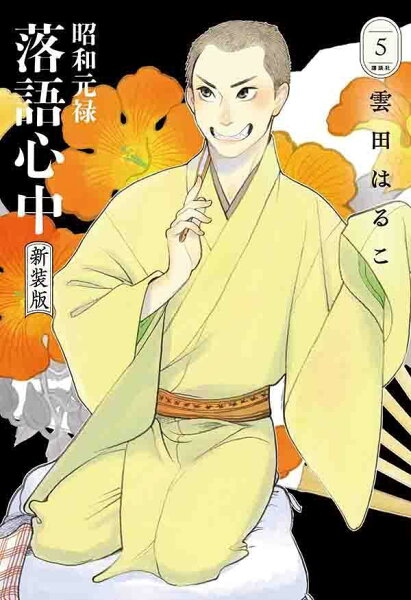
Slice of Life / Historical Drama
Shouwa Genroku Rakugo Shinjuu
Shouwa Genroku Rakugo Shinjuu follows the world of rakugo — traditional Japanese comic storytelling — through two performers across two generations: the transcendent and self-destructive Yakumo, and the student Yotaro who inherits what Yakumo cannot save.
Slice of Life / Drama
Umimachi Diary
Umimachi Diary follows three adult sisters in Kamakura who invite their half-sister — whom they barely know — to live with them after their estranged father's death, and the slow process of becoming a family.
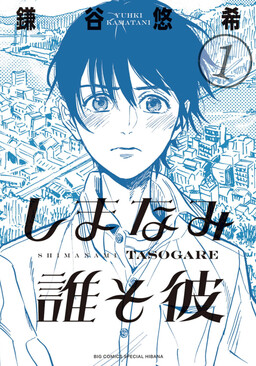
Slice of Life / Drama
Our Dreams at Dusk: Shimanami Tasogare
Yu's review of Our Dreams at Dusk — Tasuku Kaname is outed to his classmates; he goes to a building to jump; a woman in white tells him to come to a drop-in center; the center is a community of people across the LGBTQ spectrum who have found a way to be in the world; Tasuku begins to find his own way through them.
Slice of Life / Drama
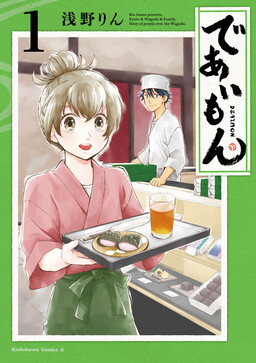
Deaimon
Yu's review of Deaimon (であいもん) by Rin Asano — Nagomu Irino comes home to his family's Kyoto wagashi shop after ten failed years chasing music, and finds a ten-year-old girl named Itsuka already living there, already learning the craft, already named his rival for the shop he walked out on.
Slice of Life / Drama
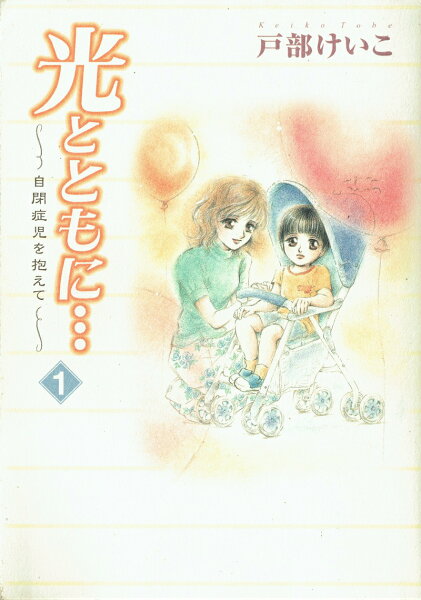
With the Light: Raising an Autistic Child
A review of With the Light: Raising an Autistic Child, Keiko Tobe's landmark manga about a mother raising an autistic son — honest, educational, and deeply human.

Slice of Life / Drama
My Boy
My Boy follows Mashuu Hayami, a 32-year-old office worker adrift in her life after a painful breakup, who meets Satoru Kaga, a 12-year-old boy playing hockey alone in the park. Their unlikely friendship — and the questions it raises — unfolds across seven thoughtful volumes.
Written by
Yu
Manga Enthusiast from Japan
I grew up in Japan and manga literally saved me during a tough time in elementary school. My English isn't perfect, but my love for manga is real — and I want to share it with you.
Disclosure: This post contains affiliate links. As an Amazon Associate, I earn from qualifying purchases at no extra cost to you.