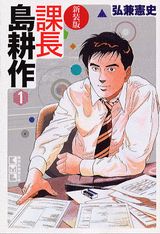
Kachou Shima Kosaku Review: The Salaryman Manga Where Refusing a Faction Gets You Fired
by Kenshi Hirokane
Read the first volume. If it doesn't hook you, put it down. It'll hook you.
Buy Kachou Shima Kosaku on Amazon →*Affiliate link — I earn a small commission at no extra cost to you.
The first time I held down a job in a Japanese company, an older coworker took me drinking and told me, very seriously, that the work I did mattered less than which department head liked me. I thought he was being cynical. He was just describing how the building worked. Years later I read Kachou Shima Kosaku, and there is a scene where the president looks Shima in the eye and says "You're fired" — not because Shima failed at anything, but because he refused to pick a side in a power struggle between two executives. I sat there thinking: someone drew this. Someone put on paper the exact thing my coworker tried to warn me about.
That's the strange power of this manga. It isn't a fantasy of office life. It's a documentary that happens to be drawn.
Quick Take
- Kenshi Hirokane's landmark salaryman manga — Shima Kosaku, a section chief at the electronics giant Hatsushiba, navigating faction politics, sudden firings, and complicated romances in 1980s Japan
- The first arc of a saga that follows Shima from section chief (Kachou) all the way up to chairman across decades of serialization
- Adult and frank about both corporate machinery and personal life — M (Mature), with depicted infidelity and workplace affairs
Who Is This Manga For?
- Adults curious about Japanese corporate culture — this is the canonical text on it
- Business-manga readers who want human messiness alongside boardroom strategy
- People who have survived a large organization and recognized its quiet politics
- Readers interested in bubble-era Japan — the world here is historically specific, not generic
Content Warnings & Age Rating
Age Rating: M (Mature) Content Warnings: Depicted infidelity and workplace affairs, frank adult relationships, alcohol, and the adult workplace lifestyle of 1980s Japan.
This is a manga for adult readers. The romance is not incidental — affairs and their fallout are a recurring part of the story.
Story Overview
Kachou Shima Kosaku ran in Kodansha's Morning from 1983 to 1992, across 17 volumes. It opens with Shima Kosaku as a section chief at Hatsushiba Electric — a fictional electronics conglomerate openly modeled on Matsushita (today's Panasonic), the very company where Hirokane himself once worked. The setting tracks real history: Japan's mid-growth period of the early '80s sliding into the bubble of the late '80s and the start of its collapse in the early '90s.
Shima starts out, by Hirokane's own framing, as a fairly small, self-protective ordinary salaryman — a guy whose early chapters lean on office romance and personal entanglements as much as business. The transformation is the point. Over the arc he hardens into someone who acts on his own convictions rather than his department's, and that conviction is exactly what makes the corporate world treat him as a problem.
The engine of the story is faction warfare inside Hatsushiba. Shima refuses to formally join a faction, and the price comes due: President Tomabechi abruptly hands him a firing — "You're fired" — as a direct consequence of the escalating power struggle with Vice President Ōizumi and Shima's refusal to align. The series doesn't treat this as melodrama. It treats it as how the building works.
Underneath the politics runs Shima's relationship with his subordinate Kumiko Ohmachi, which becomes one of the arc's emotional spines and pulls in her family, her mother's schemes, and an arranged-marriage proposal designed to break the two of them apart.
Characters
Shima Kosaku — The section chief at the center. What makes him work is that he isn't a born hero; he begins cautious and self-interested and becomes principled over the arc. His competence is real and shown through actual work, but his defining trait is that he won't trade his convictions for a faction's protection — which is both why readers admire him and why his superiors keep trying to break him.
Kiichi Nakazawa — The man who made Shima a section chief, creating a new Advertising Section inside Hatsushiba and installing Shima to run it. Nakazawa is the rare executive who belongs to no faction — a lone wolf whose way of surviving the company on his own terms visibly shapes how Shima decides to live his own corporate life.
Kumiko Ohmachi — A new recruit who becomes Shima's subordinate; he's drawn to her sharpness and nerve before things turn personal. Her arc is a real arc: when her mother Aiko engineers an arranged marriage to pry her away from Shima, Kumiko makes a choice — she chooses a life with Shima rather than the safe match her mother arranged.
President Tomabechi & VP Ōizumi — The two poles of the faction war. They aren't cartoon villains; they're the institutional pressure made human, and Shima's refusal to pick between them is what nearly ends his career.
What I Love About It
I love that the firing isn't a betrayal — it's a policy.
In most workplace dramas, a good employee getting fired is framed as injustice: someone lied, someone schemed, the truth will out. Hirokane refuses that comfort. Shima gets fired correctly, by the internal logic of Hatsushiba. He didn't fail. He didn't get framed. He simply declined to belong to a faction in a company where belonging to a faction is the actual job, and the system did what the system does. The president saying "You're fired" isn't a twist — it's the manga finally stating out loud the rule that's been running underneath every meeting.
That honesty is what got under my skin. I've watched competent people sidelined for exactly this reason and watched everyone agree it was "just how things are." Hirokane draws that shrug and then refuses to shrug with it. He lets Shima keep his convictions and makes you watch what they cost. The manga admires Shima without pretending his integrity is free — and that tension, between what the company rewards and what a person can live with, is the whole reason this thing has outlasted the era it documents.
Memorable Scene ⚠️ Spoiler Warning
The scene I keep returning to is Kumiko's decision.
Her mother, Aiko, doesn't fight Shima head-on. She does something colder and more recognizable: she arranges a respectable marriage proposal, a clean exit, the kind of "good match" that a family is supposed to want — and she sets it as a trap to split her daughter from a man she's already involved with at the office. Everything about the setup is socially correct. The arranged match is the safe, approved path, and Shima is the complication.
And Kumiko walks away from the safe path. She chooses Shima. What makes it stay with me isn't romance for its own sake — it's that the manga has spent so many pages showing how Japanese institutions reward people for taking the approved option, whether that's joining a faction or accepting a suitable marriage. Then it lets one character refuse, the same way Shima refuses his faction. The two refusals rhyme. That's the moment the personal and the professional stop being separate stories and become the same story about whether a person gets to choose their own life inside systems built to choose for them.
Pros & Cons
Pros
- The most detailed, convincing portrait of 1980s Japanese corporate life in manga
- Shima is a genuine arc, not a fixed archetype — he grows from cautious to principled
- Faction politics are specific and plausible, not generic boardroom drama
- The first chapter of an enormous, rewarding career saga
Cons
- No official English edition of this arc (only later arcs got bilingual releases)
- The corporate and cultural context rewards readers who already know some of it
- The affair-driven romance and bubble-era attitudes will not sit well with every reader
- Some of its 1980s assumptions are very much of their time — that's either fascinating or alienating depending on you
Is Kachou Shima Kosaku Worth Reading?
If you want a clear-eyed, adult portrait of how a Japanese corporation actually pressures the people inside it, yes — this is essential. Shima is one of manga's most carefully observed salarymen, and the world he navigates is real history lightly fictionalized. If you're after action or fantasy, this isn't your register. As a document of work, ambition, and the cost of having convictions inside a system that punishes them, it's hard to beat.
Official English Translation Status
The Section Chief (Kachou) arc has no official English edition. Kodansha released a handful of bilingual (Japanese-English) volumes drawn from later arcs — Division Chief Kosaku Shima and President Kosaku Shima — but these are language-learning editions, not a release of this first arc. To read Kachou Shima Kosaku itself, the Japanese edition is currently the only legitimate route.
Similar Manga
| Title | Its Approach | How Kachou Shima Kosaku Differs |
|---|---|---|
| Tsuri Baka Nisshi | A salaryman who escapes corporate life into fishing | Shima engages the corporate machine head-on instead of escaping it |
| Hataraki Man | A modern media-industry workplace with a female lead | Male lead, 1980s manufacturing-era corporate Japan rather than contemporary media |
| Golgo 13 | Cold professional competence in the world of contract killing | Same gekiga-realism register, but office politics instead of covert ops |
Where to Buy
There's no licensed English edition of this arc — the Japanese print and digital releases are the only legitimate way to read it.
This post contains affiliate links. If you purchase through these links, I may earn a small commission at no extra cost to you. As an Amazon Associate, I earn from qualifying purchases.
*Affiliate link — I earn a small commission at no extra cost to you.
More Manga You Might Like
Slice of Life / Drama
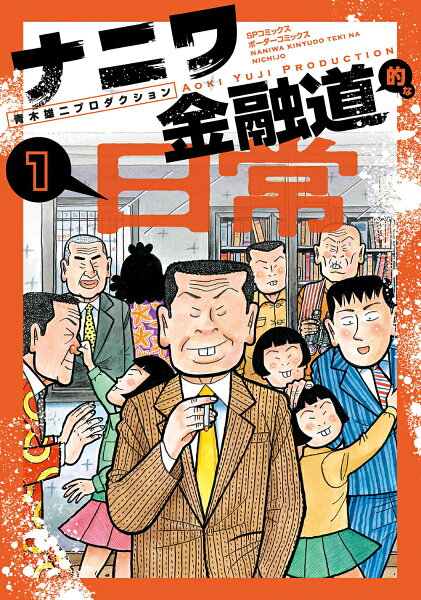
Naniwa Kinyuudo
Naniwa Kinyuudo follows new employee Ginji Mita at a small-loan finance company in Osaka — a manga that uses the world of moneylending and debt collection to create one of manga's most honest portraits of Japanese economic life.
Slice of Life
Nasu
Nasu collects Iou Kuroda's short manga stories — quiet, precise vignettes centered on food, travel, and the moments when ordinary life opens briefly into something larger, then closes again.
Slice of Life / Comedy
Tensai Bakabon
Tensai Bakabon is Fujio Akatsuka's landmark gag manga about the Bakabon family — a household where the father's complete detachment from logic is presented as wisdom, and the world's attempts to impose reason are the actual problem.
Slice of Life / Comedy
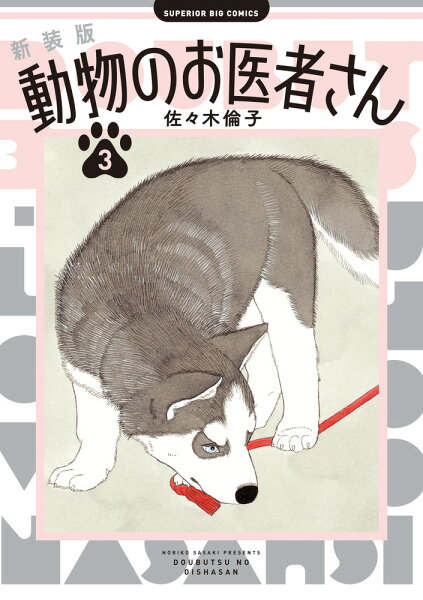
Doubutsu no Oisha-san
Doubutsu no Oisha-san follows Hamutaro, a quiet veterinary student in Hokkaido, his deadpan husky Chobi, and the warm chaos of vet-school life — a 12-volume Hana to Yume comedy so popular it set off a real Siberian Husky boom across Japan.
Slice of Life / Comedy
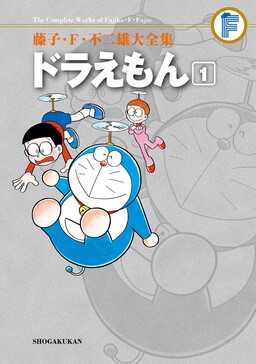
Doraemon
Yu's review of Doraemon — a robot cat from the 22nd century, sent back to help a hopeless boy named Nobita with gadgets from his four-dimensional pocket. Fujiko F. Fujio's most beloved work, and the manga every Japanese kid grows up inside.
Slice of Life / Comedy
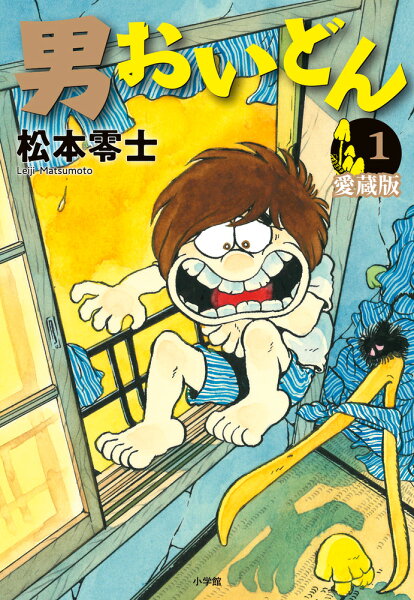
Otoko Oidon
Otoko Oidon follows Saburo Oyama, a young man from Kyushu trying to make it in Tokyo — living in a tiny boarding house, perpetually broke, hopelessly unlucky in love, and stubbornly determined to become someone despite all evidence suggesting otherwise.
Written by
Yu
Manga Enthusiast from Japan
I grew up in Japan and manga literally saved me during a tough time in elementary school. My English isn't perfect, but my love for manga is real — and I want to share it with you.