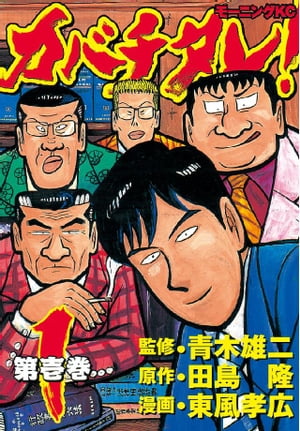
Kabachitare! Review: The Legal Manga Where Paperwork Beats the Powerful
by Takashi Tajima (story), Takahiro Kochi (art)
Read the first volume. If it doesn't hook you, put it down. It'll hook you.
Buy Kabachitare! on Amazon →*Affiliate link — I earn a small commission at no extra cost to you.
The first time I got cheated out of money, I was a college student doing a part-time cleaning job, and the company "forgot" my last month of pay when I quit. I didn't fight it. I didn't know I was allowed to. I just assumed that's how the world works — the people with power keep it, and people like me eat the loss quietly.
Years later I read the opening of Kabachitare!, where a young man named Katsuhiro Tamura goes through almost exactly that — fired from a building-maintenance company, owed wages he'll never see — and then a scruffy administrative scrivener named Isamu Oono gets it all back for him with nothing but a single document. I remember sitting up. That was an option the whole time? This is a manga about the thing nobody taught me: that the law isn't only for lawyers and criminals. It's a tool, and ordinary people are allowed to pick it up.
Quick Take
- Takashi Tajima (story) and Takahiro Kochi (art) — a 20-volume Morning legal drama (1999–2005) supervised by Naniwa Kinyudo's Yuji Aoki
- Built around the gyoseishoshi (administrative scrivener), a real Japanese legal profession that fights with paperwork instead of courtrooms
- Age rating: T (Teen) — heavy themes (debt, loan sharks, unfair dismissal, family conflict) but nothing graphic
Who Is This Manga For?
- Readers who like competence porn — watching an expert dismantle a problem step by step
- Legal-fiction fans who are tired of courtroom spectacle and want the paperwork-level reality
- People who've felt powerless against a landlord, a boss, or a lender and want to see that flipped
- Anyone curious about how everyday legal disputes in Japan actually get resolved before they ever reach a judge
Story Overview
Katsuhiro Tamura is the kind of guy I recognized immediately — earnest, not especially clever, working a building-maintenance job and getting walked on. When his company fires him on an unfair pretext and stiffs him on his severance and back pay, he's ready to do what people like us do: swallow it and move on.
Then he crosses paths with Isamu Oono, an administrative scrivener (gyoseishoshi) running a small office in Hiroshima. Oono recovers Tamura's unpaid wages and severance using paperwork alone — no lawsuit, no lawyer, just the right document applied at the right pressure point. Tamura is stunned that the law could do that for someone like him, and he asks to join Oono's office as an assistant, aiming to become a scrivener himself.
From there the series settles into a case-driven rhythm, but it never feels like a tidy "case of the week." The clients who come through Oono's door are the people the system usually grinds down: ordinary citizens being fleeced by predatory businesses, small-business owners pushed to attempted suicide by debt, families turning vicious over inheritance, single mothers left destitute after escaping domestic violence. Tamura grows from a clueless assistant who barely understands the documents he's filing into someone who can read a situation, find the legal mechanism that fits, and use it — while Oono keeps teaching him the harder lesson underneath: the law is only as good as the person wielding it.
Characters
Katsuhiro Tamura — The heart of the series and our entry point. He starts as a man who's been beaten down enough to accept losing, and the whole arc of Kabachitare! is him learning that he doesn't have to. His growth isn't about getting smarter so much as getting braver — willing to stand between a desperate client and the people exploiting them.
Isamu Oono — The veteran scrivener who runs the office, and the most interesting figure in the book. He came up the hard way (junior-high education, dock labor, a long climb before apprenticing under another scrivener and going independent), and he knows every back-alley of how the world actually works. He's cunning and unsentimental about methods, but the work itself is driven by genuine feeling for the people he helps. He's the one who reframes the law from "rules that constrain you" to "a tool you can use."
Chiharu Sakaeda — Tamura's senior at the office and effectively his teacher on the job. She's sharp and not at all soft-spoken, the person who keeps Tamura honest about what he doesn't yet know.
The clients — Functionally a rotating cast, but the series treats each one as a complete person rather than a case file. The recurring honesty of the book is that the "villains" — the loan sharks, the slumlords, the relatives circling an estate — are rarely cartoonish. They're just people who've learned to use the same system Tamura is learning, only for themselves.
What I Love About It
I love that the weapon is a piece of paper.
So much legal fiction needs a courtroom and a dramatic verdict to feel like it matters. Kabachitare! finds its drama somewhere quieter and, to me, more thrilling: a correctly drafted document, a clause cited at the right moment, a procedural right that the powerful side assumed nobody would know about. The opening case sets the whole tone — Tamura's stolen wages recovered not by emotion or by a sympathetic judge, but by Oono knowing exactly which lever to pull. The power doesn't come from being righteous; it comes from being informed. That's a fantasy I find genuinely moving, because it's one that's actually true.
What keeps it from feeling like a dry civics lesson is that the manga never lets the procedure exist in a vacuum. Behind every document is a person at the end of their rope — the florist drowning in a business loan, the mother with nothing left after fleeing an abusive home. The law in Kabachitare! is cold and technical, and the people it's used for are warm and breakable, and the friction between those two things is exactly where the series lives. It taught me, more than any lawyer ever did, that "I didn't know I was allowed to" is the most expensive sentence a powerless person can say.
Memorable Scene ⚠️ Spoiler Warning
The one that stuck with me is the one that started it all: Tamura's unpaid wages.
He's been fired on a flimsy excuse and cheated out of money he earned, and he's already done the math that people like us do — it's gone, let it go. Then Oono, this rumpled scrivener Tamura barely knows, simply handles it. A single document, the right legal pressure, and the back pay and severance Tamura had written off come back to him. There's no gavel, no shouting, no dramatic confrontation — just the quiet, almost insulting ease with which a problem that felt enormous and immovable gets solved by someone who knows the rules.
What makes the scene land isn't the win. It's Tamura's face afterward — the dawning realization that the wall he thought was concrete was a door the whole time, and he simply never had the key. That single beat is the engine of the entire 20-volume series, and it's why he asks to become a scrivener at all. I've never forgotten it, because I've been the guy who let the money go.
Cultural Context
"Kabachi" is Hiroshima dialect for sophistry or quibbling — a kabachitare is someone who talks back with clever arguments, which is exactly what a good scrivener does on a client's behalf. The series is steeped in that regional, working-class texture; Oono's office is in Hiroshima, and the world it depicts is decidedly ordinary-Japan rather than glossy Tokyo.
It also carries real legal DNA: story writer Takashi Tajima trained in this field, and the series was supervised by Yuji Aoki, creator of the legendary money-and-law manga Naniwa Kinyudo. That lineage shows — the legal mechanics are treated as something to be respected and gotten right, not hand-waved.
The manga was popular enough to spawn a 2001 Fuji TV drama (a "Thursday Theater" series co-starring Takako Tokiwa and Eri Fukatsu) that averaged a strong 19.3% viewership, plus two long-running sequel series, Tokujō Kabachi!! and Kabachi!!!, that carried the franchise well into the 2020s.
Pros & Cons
Pros
- The "ordinary person fights back with the law" premise is genuinely empowering
- Tamura's growth from doormat to advocate is satisfying across the full run
- Real legal substance, supervised by a master of the genre
- Each client is written as a person, not a plot device
Cons
- No official English release — Japanese-only
- The legal mechanics are very Japan-specific and assume some cultural familiarity
- The case-driven structure means low-stakes courtroom-style payoffs; readers wanting big dramatic spikes may find it even-keeled
- The art is solid-functional rather than flashy — this won't work for everyone, especially if you read primarily for spectacle
Is Kabachitare! Worth Reading?
For readers who love watching a competent underdog turn knowledge into power — yes, absolutely. Kabachitare! takes a profession most people have never heard of and makes its quiet, document-level victories feel genuinely heroic, all anchored by Tamura's growth from someone the world cheated into someone who fights for the cheated. If you need courtroom fireworks or you're put off by Japan-specific legal detail, the appeal narrows. But as a manga about ordinary people learning they're allowed to push back, it's a strong recommendation.
Similar Manga
| Title | Its Approach | How Kabachitare! Differs |
|---|---|---|
| Naniwa Kinyudo | Yuji Aoki's brutal world of consumer loans and debt collection | Same supervisor's DNA, but Kabachitare! is gentler and centers helping clients rather than the lender's side |
| Gyakuten Saiban (Ace Attorney) | High-drama courtroom showdowns with twists | Kabachitare! lives in paperwork and pre-trial resolution, not theatrical trials |
| Saiki no Migi to Hidari (and pro-drama seinen) | Profession-focused workplace realism | Kabachitare! puts the law itself, not just the workplace, in the protagonist's hands |
Official English Translation Status
Kabachitare! has no official English release. There's no licensed English edition, so the Japanese print and digital release is the only legitimate way to read it. (It has seen Taiwanese and Korean releases, but not an English one.)
Where to Buy
No English release yet. That just means you find it before everyone else does.
If you read Japanese, the original is available in print and digital from Kodansha.
Find the Japanese edition on Amazon.co.jp →
This post contains affiliate links. If you purchase through these links, I may earn a small commission at no extra cost to you. As an Amazon Associate, I earn from qualifying purchases.
*Affiliate link — I earn a small commission at no extra cost to you.
More Manga You Might Like
Slice of Life / Drama
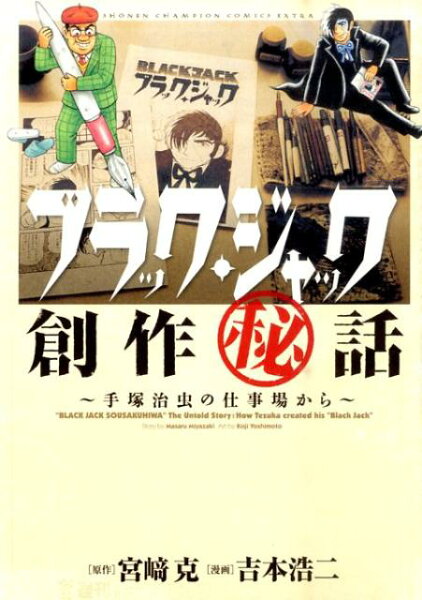
Black Jack Sousaku Hiwa
Black Jack Sousaku Hiwa is a documentary manga about how Osamu Tezuka created Black Jack — told through the editors and assistants who worked beside him, capturing both the genius and the human cost of his impossible work ethic.
Slice of Life / Drama
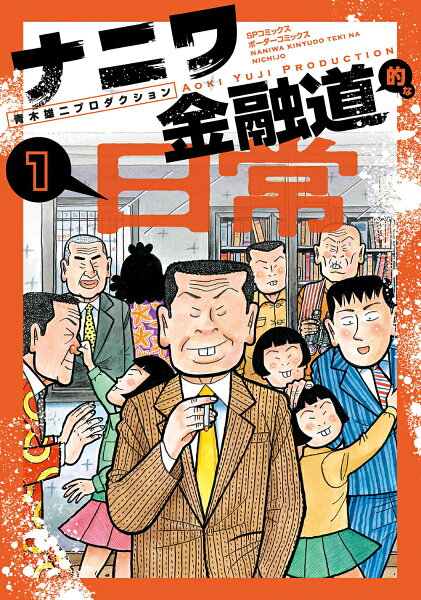
Naniwa Kinyuudo
Naniwa Kinyuudo follows new employee Ginji Mita at a small-loan finance company in Osaka — a manga that uses the world of moneylending and debt collection to create one of manga's most honest portraits of Japanese economic life.
Slice of Life / Drama
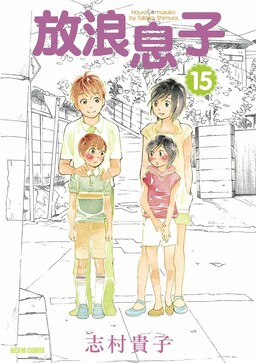
Wandering Son
Yu's review of Wandering Son — Shuichi Nitori is a boy who wants to be a girl; his new friend Yoshino Takatsuki is a girl who wants to be a boy; the manga follows both of them from elementary school through adolescence as they navigate gender identity, friendship, and growing up; a gentle, serious work about transgender experience.
Slice of Life
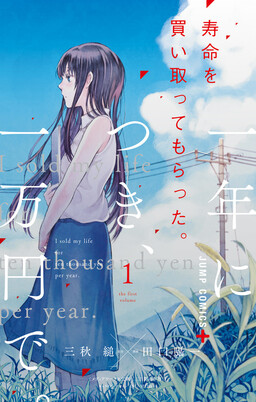
Three Days of Happiness
Yu's review of Three Days of Happiness — in a world where you can sell your remaining lifespan for money, Kusunoki sells most of his and discovers he has only three months left; manga adaptation of Sugaru Miaki's novel about what matters when time is finite.
Slice of Life
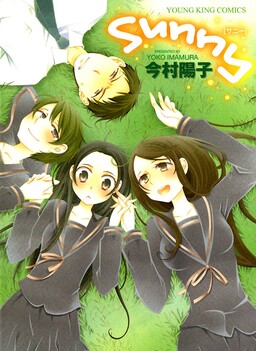
Sunny
Yu's review of Sunny — at a group home for children whose families cannot take care of them, a broken-down old car called Sunny becomes a private space where the children go to be alone; Taiyo Matsumoto's meditation on childhood longing, on what it means to be left, and on how children find ways to survive what adults do to them.
Slice of Life
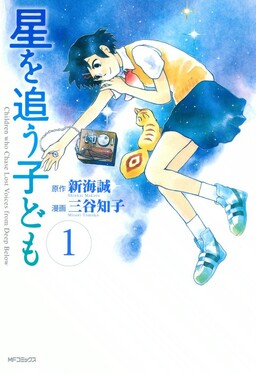
Stargazing Dog
Yu's review of Stargazing Dog — Daddy adopts a puppy named Happie; the manga follows Happie's life with Daddy through family happiness, family collapse, and the road journey that is their final chapter together; narrated from Happie's perspective, the story is exactly as emotionally devastating as its premise suggests.
Written by
Yu
Manga Enthusiast from Japan
I grew up in Japan and manga literally saved me during a tough time in elementary school. My English isn't perfect, but my love for manga is real — and I want to share it with you.
Disclosure: This post contains affiliate links. As an Amazon Associate, I earn from qualifying purchases at no extra cost to you.