
K-On! Review: A Band Manga Where the Practice Almost Never Happens — and That's the Point
by Kakifly
Read the first volume. If it doesn't hook you, put it down. It'll hook you.
Buy K-On! on Amazon →*Affiliate link — I earn a small commission at no extra cost to you.
When I was a kid with no friends, I used to imagine what it would feel like to have a room where people were waiting for me. Not a dramatic place. Just a room. Somewhere I could open the door and four heads would turn and nobody would be surprised I came.
I read K-On! as an adult and it gave me that room in four small volumes. It's a manga about a band that almost never practices, told in four-panel strips, and I expected it to be empty calories. Instead the last chapter made my chest hurt. This is my honest review of why a manga where "nothing happens" is one I keep going back to.
Quick Take
- Four high school girls join the light music club to keep it from being disbanded, then spend most of their time drinking tea and eating cake instead of rehearsing — and somehow it still becomes the thing that matters most to all of them
- A yonkoma (four-panel) comedy by Kakifly, complete in four volumes, with two short sequel books (College and High School) that follow the cast after graduation
- All Ages — no violence, no fanservice that goes anywhere dark, nothing to warn you about; this is one of the gentlest manga in print
Story Overview
Yui Hirasawa joins the light music club ("keion-bu") because the flyer makes it sound like castanets and easy fun. She cannot play an instrument at all. The club has exactly three other members — Mio on bass, Ritsu on drums, and Tsumugi on keyboard — and it's one body short of being shut down, so they agree to keep Yui if she learns guitar. She buys an expensive guitar she names "Gita," and her "practice" mostly consists of holding it and talking about holding it.
That's the engine of the whole series. The four of them gather in the club room after school, Tsumugi brings cake (her family is wealthy), they drink tea, and their advisor Sawako — secretly a former rock guitarist who has reinvented herself as a mild homeroom teacher — drifts in and out. They name the band Ho-kago Tea Time (After School Tea Time). They perform a handful of times, at the school festival especially, and those rare performances land harder precisely because we've watched how little "serious" rehearsal went into them.
The turning point comes when the girls reach their second year and a first-year named Azusa Nakano joins after seeing them play at the festival. And the real arc — the one the whole gentle structure has been quietly building toward — is graduation: the founding four are third-years, Azusa is not, and the club room they made into a home is about to lose most of its family.
Characters
Yui Hirasawa — The airhead at the center. She starts unable to play a single chord and stays scattered, but when she actually focuses she turns out to be genuinely talented. Her sincerity is the thing — she names her guitar Gita and loves it like a pet, and her affection for the other three is total and uncomplicated. Her arc isn't "she becomes a great musician." It's that this drifting girl finds the one place she'll fight to keep.
Mio Akiyama — The bassist and the band's main lyricist. Composed and capable on stage, but privately the most easily flustered of the group, and the running target of Ritsu's teasing. The Mio–Ritsu dynamic — childhood friends who needle each other constantly — is the comic spine of the series.
Ritsu Tainaka — Drummer and self-appointed club president. Loud, scheming, the one who recruited everyone, and the one who immediately offloads every actual responsibility onto someone else. She's the engine that keeps dragging the group into doing things.
Tsumugi (Mugi) Kotobuki — Keyboardist, from a rich family, and quietly the heart of the room's comfort. She brings the cake and tea, and her real charm is how delighted she is by completely ordinary things her sheltered upbringing never gave her. It reads as wonder, not naivety.
Azusa Nakano — The fifth member, a first-year rhythm guitarist who has actually played since fourth grade and is, technically, better than Yui. She joins eager and serious, fully expecting a real band, and is bewildered to find a tea party that occasionally plays music. Her arc is letting that warmth pull her in — and then becoming the person who can't bear to be left behind in it.
What I Love About It
The room. By the end of these four volumes, the light music club room stops being a setting and becomes a specific place — the low table, the tea things, Mugi's cake boxes, Gita propped in the corner, Sawako appearing in the doorway. Kakifly never makes a speech about it. The room just accumulates, panel by panel, tea by tea, until you realize you'd recognize it instantly and you'd be sad to see it empty.
What gets me is how the "they never practice" joke turns out to be the emotional argument of the whole manga. The point was never the band. The point was that four people built a reason to keep coming back to one room, and the music was the excuse that let them. When the rare performances do happen and they're imperfect — nobody nails it, somebody's nervous — it doesn't read as failure. It reads as the natural overflow of people who like being together. I came in expecting fluff and left understanding why "cute girls doing nothing" can be a real thing to love: the nothing is the friendship, and the friendship is the everything.
Memorable Scene ⚠️ Spoiler Warning
The final chapter. It's graduation day at Sakuragaoka High, and the four seniors ask Azusa to come up to the club room one last time. They have a last tea party, talking over three years of doing almost nothing together — and then Azusa breaks.
She's sobbing, shaking, and she makes one request: don't graduate. She tells them she'll never scold them again about cleaning the room or skipping practice, they can do whatever they want, just don't leave her alone. It lands so hard because the whole series earned it the slow way — chapter after chapter of Azusa being the responsible one nagging these four to actually rehearse, and now she's begging them to stay and keep not-rehearsing forever.
Yui hugs her, wipes her tears, and tells her why they really called her up there: the four of them wrote one last song, for her. They play it. None of them plays it perfectly — of course they don't, they never did — and that's exactly why it works. Azusa knows she was drawn to this band by the same warmth she's hearing now, the same one she felt watching them at that first festival. Then Azusa, the new club president, promises to make the club even better, and the four of them say goodbye to the room. A manga that spent four volumes refusing to have a plot delivers a goodbye that I genuinely was not braced for.
Art Style
Kakifly works in clean yonkoma (four-panel) layouts with an expressive moe style. The character designs are distinct enough that the cast reads instantly, and the comedic timing is built into the panel rhythm — punchlines land on the fourth beat the way the format wants. The manga set the visual template that the famous Kyoto Animation adaptation later expanded into one of the defining slice-of-life anime, but the source has its own quieter, tighter charm.
What English-Speaking Fans Say
K-On! has a large Western following, most of it arriving through the KyoAni anime, which is regularly named among the definitive "cute girls doing cute things" series. Readers who come to the manga afterward tend to describe it as warmer and far more compact — the same emotional payoff in a fraction of the runtime — and it's frequently cited as a gateway into the moe genre. The common note is that the four-panel format makes it a fast, low-commitment read that still hits the same graduation-day wall the anime is famous for.
Pros & Cons
Pros
- Four volumes, complete, zero padding — a full arc you can finish in an afternoon
- The warmth is consistent from page one and never curdles into syrup
- Azusa's arrival in the second half genuinely re-energizes the group
- The graduation ending earns real emotion the format had no obligation to deliver
Cons
- Very low plot density — if you need stakes or conflict, there are none here
- Music is more atmosphere than subject; this is not a manga about getting good
- Four volumes can feel short once you're attached to the room
- The "nothing happens" comfort is either the whole appeal or a dealbreaker — that depends entirely on you.
Is K-On! Worth Reading?
Yes — if you want comfort, friendship, and a quietly devastating goodbye, all in four short volumes. No — if you came for a band that actually grinds toward greatness, because the joke and the soul of K-On! is that they mostly just drink tea instead.
Who Is This Manga For?
- Readers who want pure comfort reading with no conflict and no edge
- Fans of the anime who want the original four-panel source
- Anyone who wants a short, fully complete manga they can finish quickly
- People who like music as warm background atmosphere rather than the main event
Similar Manga
| Title | Its Approach | How K-On! Differs |
|---|---|---|
| Azumanga Daioh | School-life yonkoma built on absurd, fast comedy | K-On! is gentler and slowly builds one emotional payoff instead of pure gags |
| Laid-Back Camp | Girls bonding over a specific hobby (camping), with real detail | K-On! treats its hobby as an excuse for the room, not a subject to teach you |
| Non Non Biyori | Rural slice-of-life, similar warmth and low stakes | K-On! is set in a city school and centers on one club room and a graduation |
Reading Order / Where to Start
Start with Volume 1 of the original four-volume run — that's the complete experience. After that there are two short sequel books: K-On! College (the founding four at university together) and K-On! High School (Azusa keeping the club alive). They're optional epilogues; the core story is the original four volumes.
Official English Translation Status
Yen Press released the complete series in English: the four original volumes plus K-On! College and K-On! High School. All of it is available in print and digital.
Where to Buy
Read the first volume. If it doesn't hook you, put it down. It'll hook you.
This post contains affiliate links. If you purchase through these links, I may earn a small commission at no extra cost to you. As an Amazon Associate, I earn from qualifying purchases.
*Affiliate link — I earn a small commission at no extra cost to you.
More Manga You Might Like

Slice of Life
Hinako Note
Yu's review of Hinako Note — Hinako Sakuragi is so shy she freezes into a scarecrow pose and attracts birds, so she moves to Tokyo to join a theater club and learn to speak. Mitsuki's four-panel slice-of-life from Comic Cune. No official English edition yet.

Slice of Life / Comedy
Nichijou: My Ordinary Life
Yu's review of Nichijou — a high school slice-of-life where ordinary situations escalate to catastrophic absurdity, a robot girl tries to hide what she is, and the Professor is an eight-year-old genius who made her.
Slice of Life / Comedy
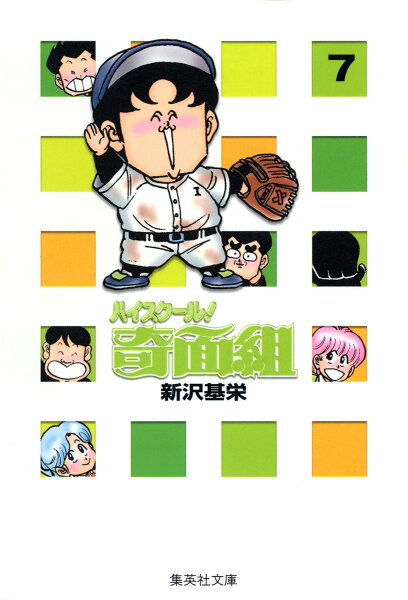
High School! Kimengumi
High School! Kimengumi follows five boys who turn their strange faces into a way of life, building one of the loudest, weirdest gag manga of 1980s Shonen Jump.
Slice of Life / Comedy
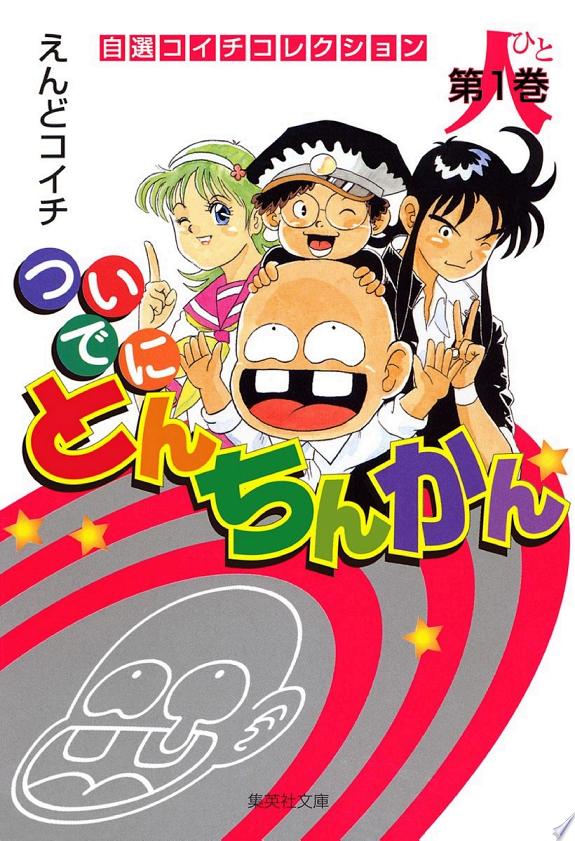
Tondemo-kun
Tondemo-kun follows a trio of delinquent students whose plans to cause trouble consistently backfire in ways that are so spectacularly wrong they accidentally create good outcomes — a comedy built entirely on the gap between intention and result.
Comedy / Slice of Life
Macaroni Houren-sou
Macaroni Houren-sou follows three high school students living together in a boarding house — Toshio Shingami, the energetic straight man; Kinoshita, the eccentric wildcard; and Trapp, the cool foreigner — in a surreal comedy that uses the school-life setting as a launching pad for increasingly unhinged humor.
Slice of Life / Comedy
Yugami-kun ni wa Tomodachi ga Inai
Yugami-kun ni wa Tomodachi ga Inai (Yugami Has No Friends) follows Yugami Yuuichirou, a high schooler who has chosen — actively, deliberately — not to have friends, and Chihiro Otsuka, the transfer student determined to understand why. A 17-volume Sunday comedy about friendship's value examined through its absence.
Written by
Yu
Manga Enthusiast from Japan
I grew up in Japan and manga literally saved me during a tough time in elementary school. My English isn't perfect, but my love for manga is real — and I want to share it with you.
Disclosure: This post contains affiliate links. As an Amazon Associate, I earn from qualifying purchases at no extra cost to you.