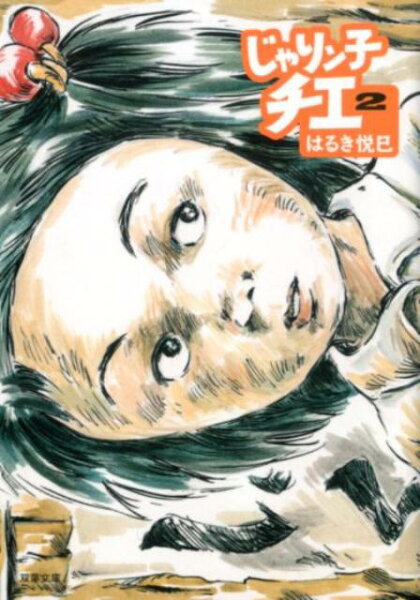
Jarinko Chie Review: The Osaka Kid Raising Her Own Father
by Etsumi Haruki
Read the first volume. If it doesn't hook you, put it down. It'll hook you.
Buy Jarinko Chie on Amazon →*Affiliate link — I earn a small commission at no extra cost to you.
When I was small, I was the kid who learned to read a room before I learned to read books. I noticed when adults were lying. I noticed who was about to lose their temper. Being alone teaches you that — you watch, because watching is all you have.
So the first time I met Chie Takemoto, I felt something click. She is a fifth-grader, she runs a grilled-offal restaurant by herself, and she has completely given up on the idea that the grown-ups around her will ever act like grown-ups. Her catchphrase is "I'm the unluckiest girl in Japan." She says it the way you say something you've made peace with. I knew that feeling before I had words for it, and seeing it drawn — in broad Osaka dialect, with a cat fight in the background — was like being seen back.
Quick Take
- One of the great Osaka manga — Etsumi Haruki writes the whole thing in Kansai dialect, and the working-class texture of the city is the real co-star
- Chie is one of manga's most memorable child leads: sharp, unsentimental, funny, and quietly worn down in a way real kids actually are
- Warm comedy with a hard premise underneath — rated T (Teen) for gambling, brawling, and a father who's a loving disaster
Story Overview
Chie Takemoto is a fifth-grader, and she's the responsible one.
The family business is a horumon-yaki shop — grilled tripe and offal, cheap food for working people — in the fictional, very-Osaka district of Tonma-ku Nishi-Hagi. Somebody has to open it, cook, and keep the till from being raided. That somebody is Chie, because her father Tetsu won't. Tetsu is thirty-seven, doesn't work, and spends his days gambling and getting into fights. He's not a yakuza — he's the guy who shakes down yakuza, operating on his own private code that makes sense to no one but him. Chie's mother Yoshie has moved out and lives apart, worn out by Tetsu, and that absence sits under the whole series.
So the shape of the story is this: Chie keeps the shop and the household running while the adults orbit her like weather. Her grandparents worry. Tetsu's old schoolteacher, Hanai, worries. Tetsu tries to swipe the shop's stocking money and gets a geta (wooden clog) to the head for it. Around them lives a whole neighborhood — fellow shopkeepers, the Carmela brothers, classmates, and a cast of cats with their own grudges. The manga runs on the gap between how the world expects a fifth-grade girl to be and how Chie actually is, and on the slow, never-resolved question of whether Tetsu and Yoshie find their way back to each other. The final chapters land on the Carmela brothers' wives giving birth at the same time, Tetsu turning the due dates into a betting pool, and everyone gathered for a commemorative photo — which is exactly the right note for this series to end on.
Characters
Chie Takemoto — The unluckiest girl in Japan, by her own account. She runs the shop, manages the money, and manages her father, and she does it without any of the cloying cuteness child characters usually get saddled with. She's strong at P.E., bad at studying, quick with a clog, and clear-eyed about every adult around her. She understands the people in her life better than they understand themselves, and the series never treats that as a superpower — it treats it as the cost of her situation.
Tetsu — Chie's father, and the engine of every disaster. Thirty-seven, work-shy, devoted to gambling and fighting, and somehow impossible to fully hate. He knows his daughter is better than him; it doesn't make him change. The relationship between Tetsu and Chie is the heart of the whole thing — exasperation and real love tangled together, neither one able to fix the other.
Yoshie — Chie's mother, living apart from the family. Gentle and steady where Tetsu is chaos, but perfectly capable of standing firm against him. A former track star once nicknamed the "Witch of the Track." Her separation from Tetsu is the quiet ache the comedy keeps circling.
Kotetsu — Chie's cat, and a legend in his own right. A former alley brawler known by underworld nicknames, he understands human speech and carries himself like a retired yakuza. He gets his own spin-off and one of the series' most morally interesting arcs (see below). His rivalry with the Antonio cats is as famous as anything in the manga.
What I Love About It
I love that the series treats Chie's competence as completely ordinary.
A lot of stories about unusually capable kids are about how special the kid is — the exceptionalism is the point, the thing that earns the spotlight. Jarinko Chie refuses that. Chie is capable because somebody has to be and she's the one standing closest. The situation made the skill, not the other way around. There's a line in how the series frames her — "the unluckiest girl in Japan," said flatly, almost cheerfully — that tells you everything. She's not bitter. She's just done expecting better, and she's gotten on with it.
That honesty is rare. Most comfortable fiction wants the capable child to be a marvel. Haruki finds the comedy and the warmth in the harder truth: sometimes a kid is capable because nobody else will be, and the warmth has to coexist with the fact that this isn't really fair. The series never pretends the situation is fine, and it never stops being funny about it. That balance — clear eyes and a soft heart at once — is the thing I keep coming back for.
Memorable Scene ⚠️ Spoiler Warning
The arc I can't shake belongs to the cat.
Kotetsu's signature finishing move is the "Tama-tsubushi" — a ball-crusher — and in an early fight he uses it on a rival cat named Antonio. The move doesn't just win the fight; it ruins Antonio, who weakens afterward and is eventually killed by a dog. Later, Antonio's son, Antonio Jr., turns up on the anniversary of his father's death. He looks just like his father but hits even harder, and he's come to avenge him.
Here's the part that floors me: Kotetsu, knowing that his own move is what set his old rival on the path to death, refuses to fight back. He stands there and takes the beating from the son, completely without resistance, because he understands what he did. A cat — a former alley thug with mob nicknames — chooses to absorb a revenge he believes he has coming rather than win another fight. It's played within the comedy of the series, but the moral weight is real, and it's the clearest statement of what Jarinko Chie actually is: a comedy where even the brawlers, human and feline, are quietly keeping their own private accounts of right and wrong.
Pros & Cons
Pros
- One of manga's truly great child protagonists, written without sentimentality
- An exceptional, loving portrait of working-class Osaka and its dialect
- Complete at 67 volumes — an enormous, consistent body of work
- Warm comedy with genuine emotional weight under the laughs
Cons
- No official English release
- The thick Osaka dialect is central to the humor and would be brutal to translate
- 67 volumes is a serious time commitment, and the slice-of-life rhythm is loose by design — that's either a flaw or the whole point depending on you
Is Jarinko Chie Worth Reading?
If you can read Japanese — yes, without hesitation. It's a landmark slice-of-life comedy with one of the medium's best kid leads and a portrait of Osaka that locals still treasure. The catch is purely practical: there's no English edition, and the dialect that makes it sing is also what's kept it out of translation.
Cultural Context
Jarinko Chie is written almost entirely in Osaka dialect, which makes it one of the primary manga documents of the city's personality — louder, blunter, and funnier than Tokyo, with its own rhythm of talking and relating. The setting, Tonma-ku Nishi-Hagi, is invented, but it reads as pure working-class Osaka.
The series also reached far beyond the page through Isao Takahata's 1981 film adaptation (yes — that Takahata, of Studio Ghibli). For a lot of Japanese people, Chie's voice in Osaka dialect is as instantly recognizable as any famous anime role. If you can't read the manga, the Takahata film is the doorway most foreign viewers find first.
Where to Buy
There's no licensed English edition — the Japanese print and digital release is the only legitimate way to read it. If you read Japanese, this is one worth tracking down.
This post contains affiliate links. If you purchase through these links, I may earn a small commission at no extra cost to you. As an Amazon Associate, I earn from qualifying purchases.
*Affiliate link — I earn a small commission at no extra cost to you.
More Manga You Might Like
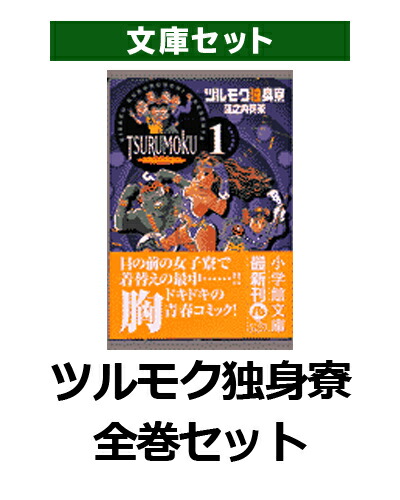
Slice of Life / Romance
Tsurumoku Dokusin-ryo
Tsurumoku Dokusin-ryo follows young workers living in their company's bachelor dormitory — a comedy of closeness, romantic complications, and the specific texture of young adult working life in Japan when everyone you know also lives where you work.
Slice of Life / Comedy
Tensai Bakabon
Tensai Bakabon is Fujio Akatsuka's landmark gag manga about the Bakabon family — a household where the father's complete detachment from logic is presented as wisdom, and the world's attempts to impose reason are the actual problem.
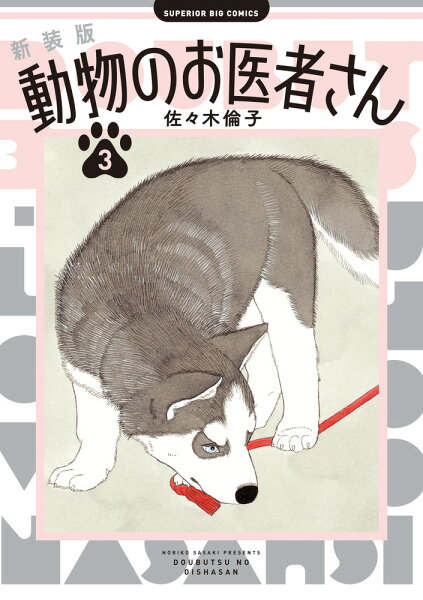
Slice of Life / Comedy
Doubutsu no Oisha-san
Doubutsu no Oisha-san follows Hamutaro, a quiet veterinary student in Hokkaido, his deadpan husky Chobi, and the warm chaos of vet-school life — a 12-volume Hana to Yume comedy so popular it set off a real Siberian Husky boom across Japan.
Slice of Life / Comedy
Hozuki's Coolheadedness
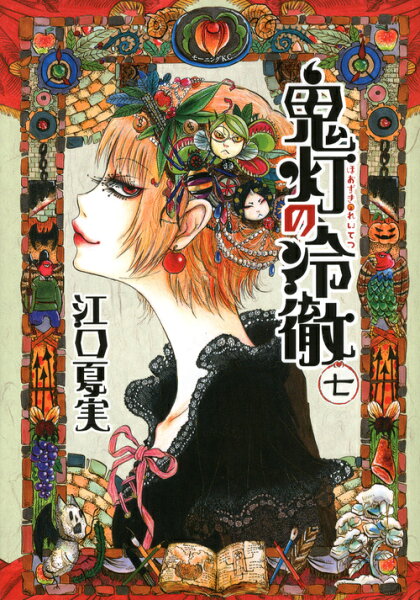
Hozuki is the deadpan, sadistic chief aide to King Enma of the Japanese Hell — and the only person keeping the afterlife's enormous bureaucracy from collapsing. This is his workplace comedy.
Slice of Life / Comedy
Hinamatsuri
Yu's review of Hinamatsuri — a metal pod drops a deadpan telekinetic girl named Hina onto a yakuza man's head, and the deadpan comedy slowly turns into one of the most quietly moving found-family manga I've ever read.
Slice of Life / Comedy
Genshiken
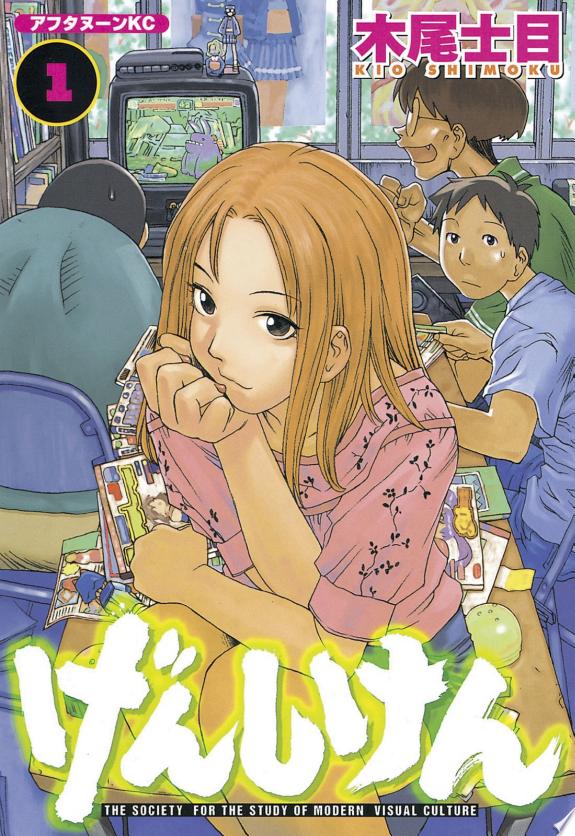
Yu's review of Genshiken — the Society for the Study of Modern Visual Culture is a university otaku club, and across nine volumes Shimoku Kio follows Sasahara, Madarame, Saki, Ohno, Tanaka and Ogiue as they graduate, fall in love, make a doujinshi, and figure out what being a fan costs and gives you.
Written by
Yu
Manga Enthusiast from Japan
I grew up in Japan and manga literally saved me during a tough time in elementary school. My English isn't perfect, but my love for manga is real — and I want to share it with you.