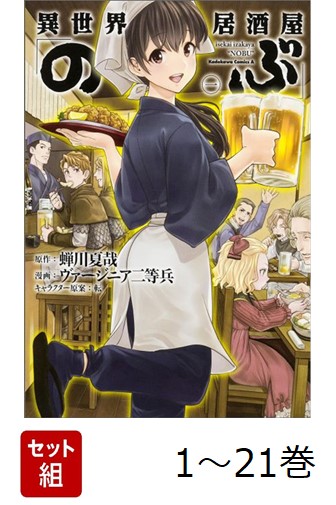
Otherworldly Izakaya Nobu Review: The Isekai Where Nobody Fights and Everybody Eats
by Virginia Nitouhei (art), Natsuya Semikawa (story), Kururi (character design)
Read the first volume. If it doesn't hook you, put it down. It'll hook you.
Buy Otherworldly Izakaya Nobu on Amazon →*Affiliate link — I earn a small commission at no extra cost to you.
I have a small izakaya near my apartment that I go to alone. Counter seat, a cold "toriaezu nama" — the "I'll just have a draft to start" beer — and a plate of karaage. I am not good at talking to people. I never have been. But there's something about an izakaya counter where you don't have to talk. The master nods, the food comes, and for an hour the loneliness I carry around just sets itself down on the stool next to me and waits quietly.
So when I found a manga about an izakaya whose back door opens onto a fantasy world, I expected a gimmick. What I got instead was the exact feeling of my own counter seat, handed to strangers from another world who needed it just as badly as I did.
Quick Take
- An iyashikei (healing) food manga wearing an isekai costume — the fantasy world is the customer, not the battlefield
- Each chapter, someone from a medieval European city walks in and tastes Japanese pub food for the first time
- Warm, low-stakes, and dangerously appetizing; rated T (Teen) mainly for casual drinking and beer culture
Who Is This Manga For?
- Food manga fans who want gentleness and specificity over drama
- Readers who love the iyashikei tradition of manga as comfort
- Anyone tired of isekai that's all combat and power levels
- People who already love a good izakaya and want a manga that understands why
Story Overview
In a back alley of Eiteriach — a medieval European-style city in a slowly declining empire — there is a wooden sliding door that does not belong. Behind it is "Nobu," a Japanese izakaya run by a chef called Taishou (the master) and a young waitress named Shinobu. Nobody in Eiteriach knows how a Japanese pub ended up wedged into their world. They only know the food is unlike anything they've eaten.
The series is almost entirely episodic. It starts small: a couple of off-duty palace guards stumble in, order the freezing-cold draft beer ("toriaezu nama"), and lose their minds over it. Word spreads through the guard barracks, then to merchants, tax collectors, nobles, clergy, and eventually half the interesting people in the city. Each chapter, someone new sits down, orders a dish — oden, karaage, napolitan, tonjiru, eel kabayaki — and walks out changed in some small way.
There is no demon lord. The "turning point" of the series isn't a plot twist; it's the slow accumulation of regulars. By the later volumes, Nobu has become a fixture of Eiteriach's social life — a neutral ground where soldiers, bureaucrats, and the people they'd normally be at odds with all share a counter.
Characters
Nobuyuki / "Taishou" — The chef and owner. A trained Kyoto cook in his early thirties who left a traditional restaurant called Yukitsuna to open his own place. He's quiet and unflappable, and his entire character is expressed through how seriously he takes the food. When a customer arrives with a problem, his answer is never a speech — it's a plate.
Shinobu / Senke Shinobu — The waitress and the public face of Nobu. She also came from Yukitsuna; in her backstory she fled an arranged marriage to start over. She's the warmth of the series — she reads customers, remembers their lives, and her cooking (the napolitan especially) carries the emotional weight Taishou's stoicism leaves room for.
Berthold — A guard captain once feared and nicknamed "the Oni" (the demon) for his ferocity. His arc is one of the funniest in the series: this terrifying man's one weakness is squid. When he's set up in an arranged meeting with the daughter of a squid fisherman, Nobu launches a full campaign to cure his squid phobia.
Hans & Nikolaus — The two off-duty guards who become the gateway to the whole story. Nikolaus brings Hans in early on; Hans falls so hard for the place that he eventually quits the guard to apprentice under Taishou, dreaming of opening his own branch one day.
Gernot — A stern tax collector who walks in expecting nothing and is undone by a plate of Shinobu's napolitan that reminds him of who he used to be before the job hardened him.
What I Love About It
The detail that won me over is the beer. The guards' first order is "toriaezu nama" — and the manga treats that throwaway phrase, the most ordinary thing a salaryman says, as a miracle. In Eiteriach, lager this cold and clean is essentially impossible; the locals can't conceive of beer that isn't warm and flat. So when these two rough guards get a frosted mug of golden draft and the foam is still standing, the reaction Virginia Nitouhei draws is pure religious revelation. It's a joke, but it's also completely sincere. The thing I order without thinking, the thing that means "the workday is over," is genuinely magical to someone who's never had it.
That's the trick the whole series pulls, over and over: it takes the food I'm numb to — fried chicken, oden, a draft beer — and shows it to me through eyes that have never seen it, so I taste it new again. I read this manga and then went to my counter seat and actually tasted the beer for the first time in years.
Memorable Scene ⚠️ Spoiler Warning
The squid arc with Berthold is the one I keep coming back to. The fearsome captain has to marry into a family of squid fishermen, which means a lifetime of squid on the dinner table — and he is secretly, mortally afraid of it, thanks to a horror story his great-grandfather told him about monstrous sea creatures.
So Nobu mounts a rescue operation. Shinobu's strategy is sly: she doesn't force it on him. She has Eva eat ika-sōmen (squid sliced thin as noodles) right in front of him, looking blissful, and lets the envy do the work. Taishou brings out squid every which way — ika-sōmen, simmered in ginger, fried into rings and dumplings. Berthold finally cracks and bites an ika-ring, narrating his own doom ("the curse is spreading…") before admitting it's crunchy and chewy and delicious. He learns the truth: real squid are small, harmless things; his great-grandfather's monster was a story. He leaves cured and happy.
The punchline lands later: at the actual marriage meeting, his future father-in-law proudly hauls in his latest catch — an enormous kraken. A genuine monster. The manga lets the warmth and the gag coexist perfectly, which is exactly its register.
Art Style
Nitouhei draws food the way food manga must be drawn — steam, grease-sheen on karaage, the translucent gleam of fresh squid. But the real strength is the faces. The whole series lives or dies on the expression of someone tasting something for the first time, and these reactions are rendered with comic exaggeration that never tips into ugliness. Eiteriach itself is solid and lived-in: cobblestones, torchlight, guards' armor, a believable medieval city for the impossible door to hide in.
Cultural Context
An izakaya isn't a bar and isn't a restaurant. It's a casual place built around small dishes and drinking together, defined by an anti-formal warmth — the master behind the counter, the regulars who don't need to talk. The manga uses Eiteriach's astonishment to spotlight what makes the izakaya specifically Japanese: not just the food, but the communal ease around it. The iyashikei ("healing") genre exists to make you feel calmer and warmer, and Nobu is squarely in that tradition. The point is comfort, not conflict.
What English-Speaking Fans Say
English readers in the food-manga and iyashikei communities have warmly received Udon's release, often shelving it alongside Restaurant to Another World and Delicious in Dungeon as fantasy-world food stories — while noting Nobu is gentler and more episodic than either. The cross-cultural "food melts your troubles away" theme is the most consistently praised element. The most common complaint is simply that the English release trails the Japanese run.
Similar Manga
| Title | Its Approach | How Otherworldly Izakaya Nobu Differs |
|---|---|---|
| Delicious in Dungeon | Fantasy-world cooking inside a dungeon-crawl adventure | Nobu has no quest or stakes — it's pure episodic warmth |
| Restaurant to Another World | A restaurant whose door opens to another world, one customer per chapter | Nearly identical premise; Nobu leans harder into izakaya drinking culture and recurring regulars |
| Ristorante Paradiso | A restaurant as an emotional safe space | Similar warm register; Ristorante is romance-driven, Nobu is food-and-found-family |
Reading Order / Where to Start
Volume 1, straight through. Chapters are largely self-contained, so you can also drop into almost any volume and feel the warmth — but Volume 1 introduces the guards and the toriaezu nama gag that sets the tone.
Official English Translation Status
Udon Entertainment publishes the series in English as Otherworldly Izakaya Nobu, with 10 volumes out so far. (Note: the anime uses the title "Isekai Izakaya: Japanese Food From Another World," which is why the series is often searched under that name.) The Japanese manga by Virginia Nitouhei is ongoing at 21 volumes.
Pros & Cons
Pros
- Genuinely warming iyashikei food manga
- Food and reaction-faces are the art's strongest weapons
- Episodic structure makes any chapter a fine starting or stopping point
- The cross-cultural "tasting it new" theme is specific and sincere
Cons
- The English release trails the ongoing Japanese run
- No narrative stakes whatsoever — if you need a plot engine, this isn't it
- The episodic format limits long-term character development
- It's so gentle that a slow stretch can feel like nothing is happening — that's either a flaw or the whole point depending on what you want from a manga.
Is Otherworldly Izakaya Nobu Worth Reading?
For food-manga and iyashikei readers, absolutely yes. It's one of the most comforting isekai you can read in English — a manga that hands you a counter seat and a cold draft and asks nothing of you but to taste it.
Format Comparison
| Format | Pros | Cons |
|---|---|---|
| Physical | Food art rewards full-page viewing | English release behind the Japanese run |
| Digital | More accessible, easy to sample | — |
| Omnibus | — | No omnibus edition available |
Where to Buy
Read the first volume. If it doesn't hook you, put it down. It'll hook you.
This post contains affiliate links. If you purchase through these links, I may earn a small commission at no extra cost to you. As an Amazon Associate, I earn from qualifying purchases.
*Affiliate link — I earn a small commission at no extra cost to you.
More Manga You Might Like
Slice of Life / Comedy
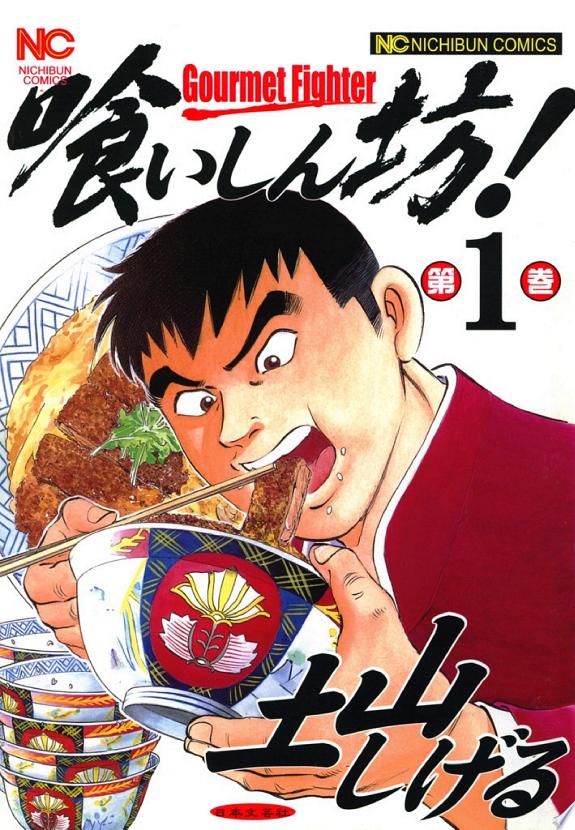
Kuishinbo!
Kuishinbo! is Shigeru Tsuchiyama's 24-volume competitive-eating manga about Mantaro Ohara, a salaryman who is pulled into Japan's pro food-fighting world and rises from a 5-katsudon challenge to the international Kuirin Cup.
Slice of Life / Fantasy
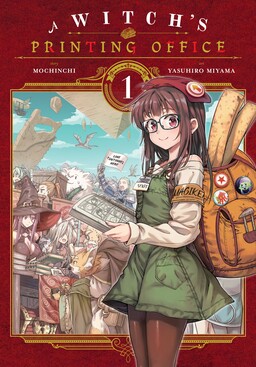
A Witch's Printing Office
Yu's review of A Witch's Printing Office — Mika is a modern Japanese woman who worked at Comiket (the giant doujinshi convention) and wakes up in a fantasy world where magical festivals share printed pamphlets; using her knowledge of convention organization and printing logistics, she builds a business that transforms how the fantasy world shares information.
Slice of Life
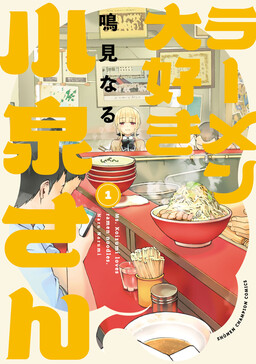
Ms. Koizumi Loves Ramen Noodles
Yu's review of Ms. Koizumi Loves Ramen Noodles — Koizumi is beautiful, cold, and unapproachable; she also has a complete and total dedication to ramen; she knows every shop, every regional style, every topping combination; Naru Narumi's food manga about a woman whose single passion is executed with absolute seriousness.
Slice of Life
The Demon Girl Next Door (Machikado Mazoku)
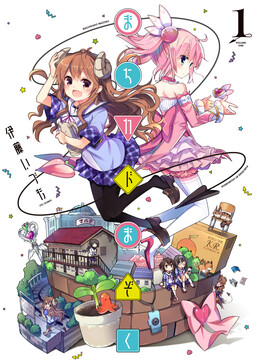
Yu's review of The Demon Girl Next Door — Yuko Yoshida wakes up one day with horns and a tail, awakened as a descendant of a demon clan; her clan's curse can only be lifted by defeating a magical girl; she confronts her school's magical girl, Momo Chiyoda; the magical girl turns out to be friendly, competent, and far stronger; Izumo Ito's comedy manga about the most gentle rivalry.

Slice of Life / Comedy
Hidamari Sketch
Yu's review of Hidamari Sketch — Yuno moves into the Hidamari Apartments across from her art high school and finds a found family in Miyako, Hiro, and Sae. A four-panel slice-of-life about ordinary days that quietly turn out to matter.

Slice of Life / Comedy
Dagashi Kashi
Yu's review of Dagashi Kashi by Kotoyama — Kokonotsu Shikada wants to draw manga, but his father runs a rural dagashi (cheap candy) shop and wants him to inherit it. Then Hotaru Shidare, the candy-obsessed heiress of a confectionery company, shows up to recruit his father and turns each cheap snack into a passionate lecture. A slice-of-life comedy about Japanese childhood candy culture.
Written by
Yu
Manga Enthusiast from Japan
I grew up in Japan and manga literally saved me during a tough time in elementary school. My English isn't perfect, but my love for manga is real — and I want to share it with you.
Disclosure: This post contains affiliate links. As an Amazon Associate, I earn from qualifying purchases at no extra cost to you.