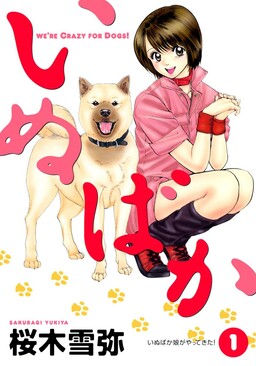
Inubaka: Crazy for Dogs Review: The Dog Manga Viz Gave Up On Before the Best Part
by Yukiya Sakuragi
Read the first volume. If it doesn't hook you, put it down. It'll hook you.
Buy Inubaka: Crazy for Dogs on Amazon →*Affiliate link — I earn a small commission at no extra cost to you.
I grew up without a dog. My parents said our apartment was too small, and I think the real reason was that they didn't trust a lonely kid who already cried too much to also be responsible for a living thing. So I borrowed dogs. There was a shiba two doors down who would let me sit with him on the concrete step outside his owner's door, and on the worst days — the days I didn't want to go home, didn't want to go to school, didn't want to be anywhere — that dog was the only one who never asked me what was wrong. He just leaned his weight against my leg.
I read Inubaka much later, as an adult, and it found that exact part of me. This is a manga about a girl who is not good at being a person but is extraordinary at being with dogs, and I understood her instantly. I also have to be honest with you about something up front, because the English-language situation here is a small tragedy: Viz Media translated and printed 17 volumes and then quietly stopped. The Japanese series runs to 22. So this is a recommendation with an asterisk, and I'll explain the asterisk before you spend money.
Quick Take
- The most breed-accurate, genuinely dog-literate manga I've read — Sakuragi clearly worked with real dog people, and it shows in every panel
- Suguri's gift isn't magic, exactly: she just reads dogs the way most of us read faces, and the series builds its whole heart around that
- Seinen comedy with real fanservice and crude humor mixed into the warmth — rated T+ (Older Teen), and that mix won't suit everyone
Story Overview
Suguri Miyauchi is eighteen and leaving home for Tokyo, the way you leave home at eighteen when you've never quite fit anywhere. She brings her mixed-breed mutt, Lupin — named for the gentleman thief because he's charming and a little bit of a troublemaker. At a highway rest stop on the way into the city, Lupin slips his leash and gets very friendly with a black Labrador named Noa. Noa belongs to Teppei Iida, who runs a pet shop and had big plans to breed Noa with a champion. Those plans are now, shall we say, complicated.
To make amends for the unplanned litter, Suguri takes a job at Teppei's shop, Woofles. And almost immediately it becomes clear she isn't a clumsy country girl who happens to like animals — she can tell a dog's breed at a glance, calm dogs nobody else can handle, and somehow even predict when a puppy needs to go outside. Teppei, who runs his shop putting animal welfare ahead of profit, recognizes that he's hired something rare.
From there the structure is episodic: dogs come through Woofles, and each one — a breed, a temperament, a health problem, a frightened owner — anchors an arc. But the through-line is Suguri growing from enthusiastic amateur into someone who actually understands what she's doing, and underneath that runs a slow, strange thread about her own past. Lupin's family tree, it turns out, leads back to the man who once tried to kidnap her as a small child. The dog collar Suguri wears isn't an affectation; it's tied to that childhood trauma, to the grandfather dog who saved her. The series keeps the comedy front and center, but it never fully forgets that this girl came from somewhere dark.
Characters
Suguri Miyauchi — The heart of the book, and its most divisive element. She is written as almost painfully naive — some readers find her simplicity uncomfortable — but her arc is real: she arrives unable to function without Lupin at her side and slowly becomes a competent, trusted professional who other people rely on. Her gift with dogs is treated not as a superpower but as the one language she's truly fluent in.
Teppei Iida — Twenty-six, runs Woofles, and built his whole philosophy around childhood time spent at animal shelters. He consistently chooses the dogs' wellbeing over money, which in a story about a pet shop is the moral spine of the series. His slow-burning relationship with Suguri develops at a glacial, gentle pace.
Kentaro Osada — A street musician and old high-school friend of Teppei's who ends up at Woofles. He starts out actively disliking dogs and is eventually won over (Lupin gets to him first). His running flaw is a pachinko gambling addiction, which the series uses for comedy but doesn't entirely let off the hook.
Momoko Takeuchi — A licensed groomer who was bullied about her weight as a kid and is climbing out of a manipulative relationship. Her arc is one of the quieter, better ones: she opens up and steadies herself through her work and her own Toy Poodle, Mel. She's proof the series cares about its damaged humans, not just its dogs.
What I Love About It
The dogs are correct. I cannot overstate how rare that is. Most manga dogs are round, generic cuteness with a tail. Sakuragi draws breeds you can identify on sight — Noa reads unmistakably as a black Lab, Zidane is a real French Bulldog with a French Bulldog's specific squashed dignity, the Chihuahua with the heart condition moves like a fragile little Chihuahua. More than the looks, it's the behavior: the body language, the way a nervous dog holds itself versus a confident one, the breed-specific temperaments. Reading this series taught me things about actual dogs.
And that accuracy is what makes the emotional content land instead of curdle into sentiment. When Suguri understands something about a dog that its owner has completely missed, the moment works because the manga has already earned my trust on how dogs actually are. It's not "the magic girl talks to animals." It's "this person pays closer attention than anyone else in the room, and attention is a form of love." That's the thesis of the whole book, and as someone whose only childhood comfort was a neighbor's dog leaning against my leg, it wrecked me a little.
Memorable Scene ⚠️ Spoiler Warning
The setup that launches the entire series is the one that stuck with me, because of how much weight it eventually carries. Lupin getting loose at the rest stop and getting Teppei's prize Labrador Noa pregnant plays at first as pure slapstick — a runaway mutt, a horrified breeder, an unplanned litter, a girl bowing in apology. It's a comedy beat. You'd never guess it's load-bearing.
But that single accident is the hinge the whole story swings on. It's why Suguri works at Woofles, why she meets Teppei, why she finds the one place where her strange gift becomes a job instead of an oddity. And the manga slowly reveals that Lupin's bloodline — the very thing that caused the "accident" — threads back into Suguri's own buried past, to the kidnapping she survived as a four-year-old and the dog who saved her. A throwaway gag at a highway rest stop turns out to be the moment a damaged girl's whole life quietly reorganizes itself around dogs. I love that the series hides something that heavy inside something that goofy.
The English Situation: Read This Before You Buy
Here's the asterisk. Viz Media licensed Inubaka and released 17 English volumes between 2007 and 2010, then cancelled the line. Volume 18 was solicited and then pulled; volumes 18–22 were never published in English. So the Japanese run finishes the story at 22 volumes, but the official English edition stops five volumes short of the ending.
What that means for you: the 17 translated volumes are a complete, satisfying experience — episodic structure means you're not left on a cliffhanger — but you will not get the final arc in English unless you read Japanese. The English volumes are also out of print, so you'll be buying used copies or hunting digital availability. I think it's still worth it. Just go in knowing the bookshelf will end before the story does.
Pros & Cons
Pros
- The most breed-accurate dog manga in English — genuinely educational about real dogs
- Warm without being saccharine; attention treated as love
- Strong supporting cast with real wounds (Momoko, Kentaro)
- Comedy and heart balanced well across a long run
Cons
- Suguri's extreme naivety plus fanservice on her character is a genuinely uncomfortable combination for many readers
- Crude bathroom humor is frequent
- English edition was cancelled at volume 17 of 22 and is out of print
- The pacing is slow and episodic — that's either a flaw or a feature depending on what you want from a dog manga
Is Inubaka: Crazy for Dogs Worth Reading?
If you love dogs and want a manga that respects them as real animals rather than props, yes — the breed accuracy and warmth are close to unmatched. Go in knowing two things: the English edition stops five volumes short of the ending, and the seinen fanservice clashes with how childlike Suguri is written. If neither of those is a dealbreaker, it's a comforting, big-hearted, genuinely educational read.
Similar Manga
| Title | Its Approach | How Inubaka Differs |
|---|---|---|
| Chi's Sweet Home | Gentle all-ages cat slice-of-life from the cat's POV | Inubaka is seinen, human-POV, and far more technically detailed about real animal care |
| Silver Spoon | Agricultural school, livestock, the ethics of animals as work | Inubaka narrows to companion dogs and breed-specific behavior rather than farming |
| A Man and His Cat | Adult finds emotional healing through a pet | Inubaka centers a young woman whose gift with animals is her identity, not a late-life rescue |
Where to Buy
Read the first volume. If it doesn't hook you, put it down. It'll hook you.
A heads-up: Viz's English edition was cancelled at volume 17, so later volumes are out of print — expect to buy used copies for the back half.
This post contains affiliate links. If you purchase through these links, I may earn a small commission at no extra cost to you. As an Amazon Associate, I earn from qualifying purchases.
*Affiliate link — I earn a small commission at no extra cost to you.
More Manga You Might Like
Comedy / Slice of Life
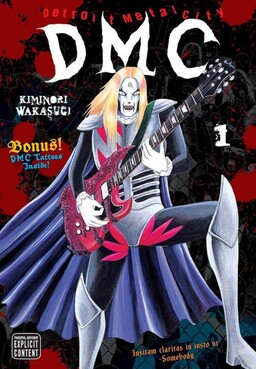
Detroit Metal City
Yu's review of Detroit Metal City — Soichi Negishi moved to Tokyo to write gentle acoustic pop about kisses and raspberries, and ended up as Johannes Krauser II, the demonic frontman of a death metal band the fans believe murdered his own parents. He hates it. He is incredibly good at it. That gap is the whole joke, and it never stops being funny.
Slice of Life / Comedy
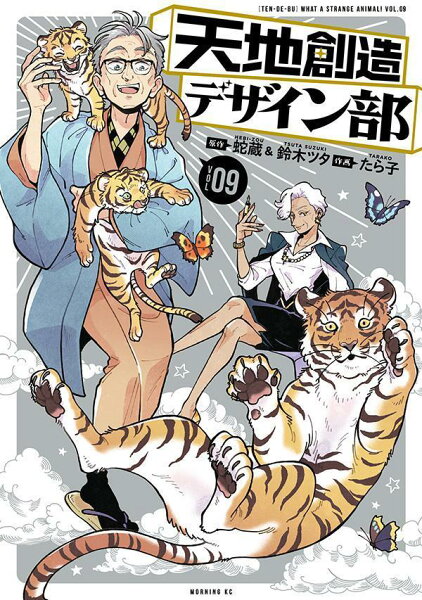
Heaven's Design Team
Heaven's Design Team imagines that God outsourced the creation of Earth's animals to a design firm of demigods. Each chapter is a new brief — 'I want a creature that does X' — and the team argues, prototypes, and engineers its way to an animal that actually exists, with real biology notes at the end.
Slice of Life
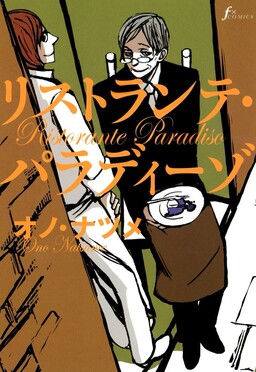
Ristorante Paradiso
Yu's review of Ristorante Paradiso — Nicoletta travels from her hometown to Rome to confront her mother, who left her as a child; her mother's husband doesn't know she exists; the restaurant Casetta dell'Orso, staffed entirely by older bespectacled gentlemen, becomes the setting for Nicoletta's unexpected new life.
Slice of Life / Comedy
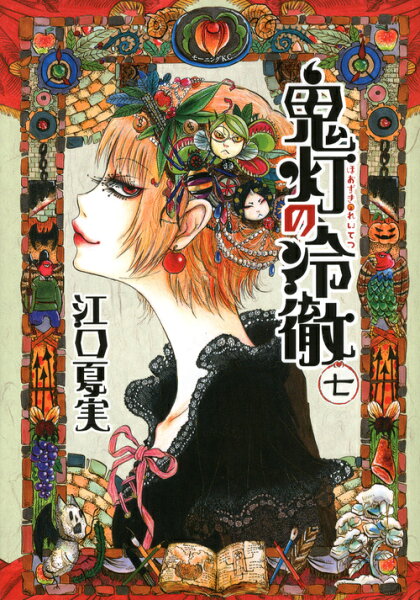
Hozuki's Coolheadedness
Hozuki is the deadpan, sadistic chief aide to King Enma of the Japanese Hell — and the only person keeping the afterlife's enormous bureaucracy from collapsing. This is his workplace comedy.

Slice of Life
House of Five Leaves
Yu's review of House of Five Leaves — Masanosuke Akitsu is a master swordsman too timid to keep a job, until the charismatic Yaichi hires him as bodyguard for the Five Leaves, an Edo kidnapping gang whose leader is hiding a brutal past.
Slice of Life / Comedy
Hinamatsuri
Yu's review of Hinamatsuri — a metal pod drops a deadpan telekinetic girl named Hina onto a yakuza man's head, and the deadpan comedy slowly turns into one of the most quietly moving found-family manga I've ever read.
Written by
Yu
Manga Enthusiast from Japan
I grew up in Japan and manga literally saved me during a tough time in elementary school. My English isn't perfect, but my love for manga is real — and I want to share it with you.
Disclosure: This post contains affiliate links. As an Amazon Associate, I earn from qualifying purchases at no extra cost to you.