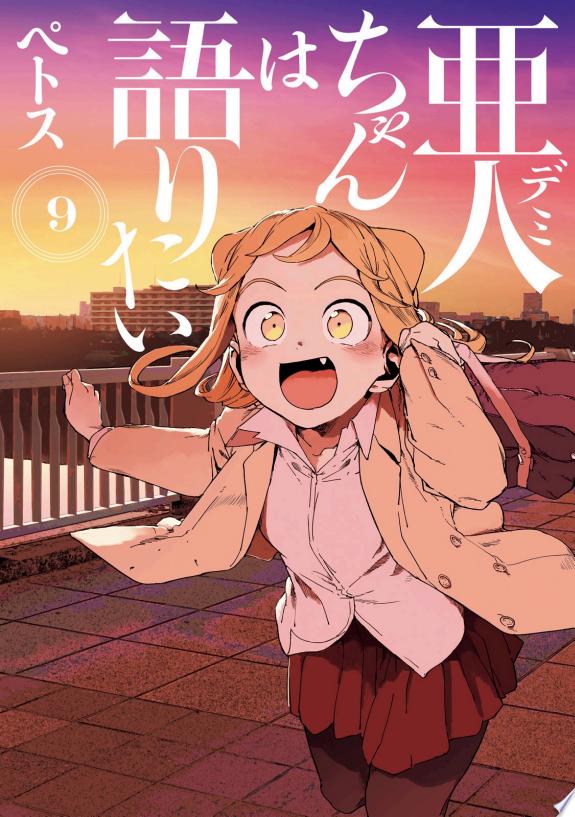
Interviews With Monster Girls Review: The Monster-Girl Manga That Forgets to Be Fanservice
by Petos
Read the first volume. If it doesn't hook you, put it down. It'll hook you.
Buy Interviews With Monster Girls on Amazon →*Affiliate link — I earn a small commission at no extra cost to you.
When I first heard the title "Interviews With Monster Girls," I almost skipped it. I assumed it was the kind of manga that puts "monster girl" on the cover and means something else entirely. I have been burned by that promise before. The genre has a reputation, and most of the time the reputation is earned.
I am glad I gave it one volume anyway. Because the thing the title does not tell you is that the most important word is "interviews." This is a manga about a man who sits down across from people who are different, and asks them, sincerely, what their life is actually like — and then listens. For a kid like me, who grew up feeling like the strange one in every room, that simple act of being asked instead of stared at hit harder than I expected.
Quick Take
- A biology teacher genuinely interested in demi-humans ends up with four of them in his life — a vampire student, a dullahan student, a snow-woman student, and a succubus colleague — and the comedy comes from how ordinary their "monster" problems turn out to be
- The premise looks like fanservice bait but plays as something closer to a gentle story about difference, accommodation, and being seen as a person rather than a curiosity
- Complete at 11 volumes; rated T (Teen) — there's some mild succubus-flavored comedy, but it's restrained and the focus stays on character
Story Overview
The world of Interviews With Monster Girls is one where "demi-humans" — demis, beings descended from the creatures of myth — have always existed, but only recently became common enough to live ordinary lives. They go to school. They hold jobs. They are no longer hunted or hidden; they are simply rare.
Tetsuo Takahashi is a high-school biology teacher who has been fascinated by demis since university but had never actually met one. Then, in a single year, four of them enter his life. Three are his students: Hikari Takanashi, a vampire; Kyoko Machi, a dullahan; and Yuki Kusakabe, a snow woman. The fourth, Sakie Sato, is a new math teacher at his school — a succubus.
Takahashi's instinct is the one that gives the manga its title and its shape: he interviews them. He asks Hikari what it's actually like to need blood. He asks Yuki whether the old "snow woman freezes people to death" legends frighten her. He takes notes, runs small informal experiments, and tries to turn what he learns into something that genuinely helps them get through an ordinary day. The series is largely episodic — a sequence of these conversations and the small daily problems they uncover — but across 11 volumes it builds real warmth between everyone involved, including a slow, careful current of romance around Takahashi and Sakie.
Characters
Tetsuo Takahashi — The biology teacher whose curiosity is the engine of the whole series. What makes him work is that his scientific interest never curdles into treating the demis as specimens. The students nickname him "Iron Man" (a pun on his build and his name), but his real defining trait is that he asks first and assumes nothing. When a problem comes up, his move isn't sympathy — it's a question and then a plan.
Hikari Takanashi — The vampire, and the manga's loudest, most cheerful presence. The joke is how little of the mythology applies: she loves garlic, drinks from blood packs instead of biting anyone, and is mostly just bothered by heat and bright light. She also constantly latches onto Yuki because the snow woman is pleasantly cold. Hikari is the one who decides demis should support each other, and she's the social glue that pulls the group together.
Kyoko Machi — The dullahan, one of only three in the world. Her head is fully detached from her body, with a blue flame where her neck should be. A medical exam proves she does have a neck — it just exists in "another space," a kind of wormhole connecting head and body. She's shy and gentle, and she develops quiet feelings for Takahashi. Her detached head is the manga's most visually distinctive recurring image: carried under her arm, set on a desk, held by a friend.
Yuki Kusakabe — The snow woman, timid and self-conscious. She's afraid of the old legends — that snow women freeze people — and worried she might accidentally hurt someone. One of Takahashi's experiments gently disproves it: the only things she can actually freeze are her own tears and sweat. Her cold radiates when she's upset, which makes her even more anxious about being around others, so the reassurance lands as genuine relief.
Sakie Sato — The succubus math teacher, and the most emotionally adult thread in the book. Her body produces an involuntary aphrodisiac effect on men, so she has built her entire life around containment: she wears a baggy tracksuit, takes the very first and very last trains to avoid crowds, and lives far outside the city so she won't give the men in her building dreams about her. The cruelty of her situation is quiet and specific — she can never be sure whether someone's attraction is real or just her nature talking, so she has given up on romance for herself entirely. That's what makes her feelings for the careful, considerate Takahashi ache.
What I Love About It
Sakie's chapters are why I'd recommend this manga to people who roll their eyes at the genre. Her premise could be the lowest, laziest kind of joke — "the teacher is a succubus" — and instead Petos uses it to draw a painfully precise portrait of someone who has organized her whole existence around not affecting other people.
It's in the small logistics. The first and last trains. The tracksuit instead of anything she might want to wear. The apartment chosen for its distance from anyone she could trouble. None of it is presented as tragic on the surface — it's all matter-of-fact, just the routine of a working adult — and that restraint is exactly what makes it land. You realize, reading it, that the real cost isn't the inconvenience. It's that she can't trust attraction. She literally cannot tell whether a man likes her or is just under her effect, so she's quietly decided she doesn't get to find out. For a manga this light, that's a genuinely lonely thing to put on the page, and it's handled with more honesty than the comedy register would lead you to expect.
Memorable Scene ⚠️ Spoiler Warning
The pub conversation between Sakie and Takahashi is the one that stuck with me. The two teachers end up talking over drinks about how they each ended up where they are — how Takahashi decided to become a teacher, and how Sakie was discovered to be a succubus. It's the most relaxed Sakie ever gets to be: a normal evening, a normal conversation, with a man who treats her like a colleague instead of a hazard.
Then she gets a little drunk, her guard drops, and Takahashi quietly panics — not because anything happens, but because he's suddenly aware of how careful he needs to be for her sake, so that nothing about the night could be mistaken for her effect doing the work. That tension — two people who like each other genuinely, both of them hyper-aware that her nature could contaminate the whole moment — is the series in miniature. It's romantic and a little sad at the same time, and it never once tips into the cheap version of itself.
What English-Speaking Fans Say
This is consistently the title English-speaking readers reach for when they want to hand the monster-girl genre to someone who's been put off by its fanservice reputation. The recurring praise is that it treats its cast as people with problems rather than as objects, and that the interview format feels genuinely different from the dating-sim energy of its peers. The complete 11-volume length is usually mentioned as a positive — long enough to grow attached, short enough to never overstay.
Similar Manga
| Title | Its Approach | How Interviews With Monster Girls Differs |
|---|---|---|
| A Centaur's Life | Monster girls in a fully demi-normalized school world | Interviews stays small and personal, centered on one teacher's conversations rather than world-building |
| Miss Kobayashi's Dragon Maid | Fantasy beings living in a human household, warm comedy | Interviews keeps a school setting and a quieter, more observational tone |
| Flying Witch | Magic treated as mundane daily life | Interviews uses its "magic" to talk specifically about difference and accommodation |
Pros & Cons
Pros
- Complete at 11 volumes — a satisfying, finite arc
- The interview framing is genuinely distinctive and keeps the demis as people, not props
- Sakie's storyline gives the series real emotional weight
- Treats every character with consistent respect
Cons
- Episodic and light on plot momentum — it accumulates rather than escalates
- The romance threads are slow and stay understated
- Readers hoping for heavy fantasy world-building won't find much of it
The gentle, low-stakes pace is either the whole appeal or a dealbreaker — that one's on you.
Is Interviews With Monster Girls Worth Reading?
Yes, if you want a warm, complete slice-of-life that uses a fantasy premise to talk honestly about being different. It's distinctive, kind, and quietly smarter than its cover suggests. If you need plot momentum or expansive world-building, this isn't that — but as a gentle character piece, it's one of the genre's best.
Format Comparison
| Format | Notes |
|---|---|
| Individual Volumes | Kodansha USA; all 11 volumes available |
| Digital | Available in full |
Where to Buy
Read the first volume. If it doesn't hook you, put it down. It'll hook you.
This post contains affiliate links. If you purchase through these links, I may earn a small commission at no extra cost to you. As an Amazon Associate, I earn from qualifying purchases.
*Affiliate link — I earn a small commission at no extra cost to you.
More Manga You Might Like

Slice of Life / Comedy
Nichijou: My Ordinary Life
Yu's review of Nichijou — a high school slice-of-life where ordinary situations escalate to catastrophic absurdity, a robot girl tries to hide what she is, and the Professor is an eight-year-old genius who made her.
Slice of Life / Comedy
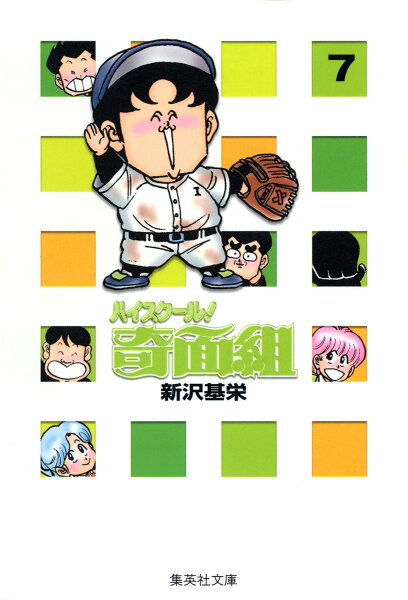
High School! Kimengumi
High School! Kimengumi follows five boys who turn their strange faces into a way of life, building one of the loudest, weirdest gag manga of 1980s Shonen Jump.
Slice of Life / Comedy
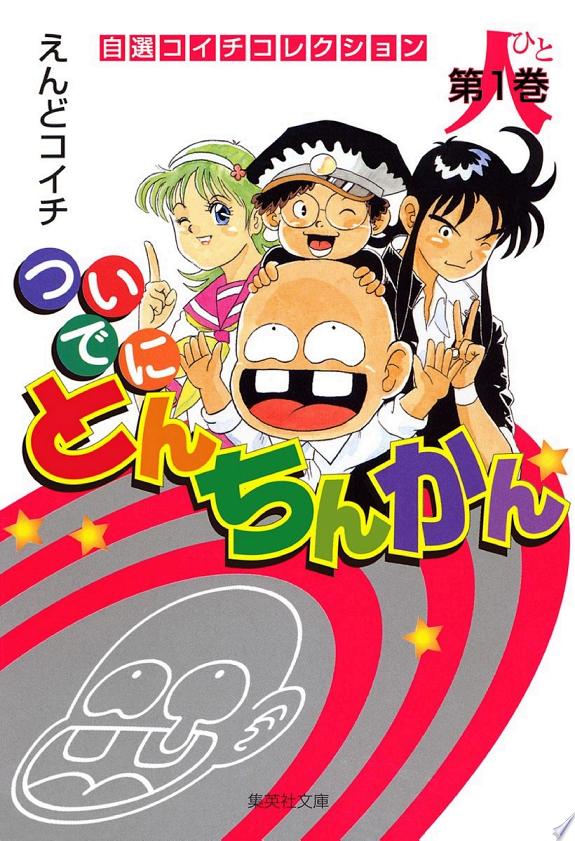
Tondemo-kun
Tondemo-kun follows a trio of delinquent students whose plans to cause trouble consistently backfire in ways that are so spectacularly wrong they accidentally create good outcomes — a comedy built entirely on the gap between intention and result.
Comedy / Slice of Life
Macaroni Houren-sou
Macaroni Houren-sou follows three high school students living together in a boarding house — Toshio Shingami, the energetic straight man; Kinoshita, the eccentric wildcard; and Trapp, the cool foreigner — in a surreal comedy that uses the school-life setting as a launching pad for increasingly unhinged humor.
Slice of Life / Comedy
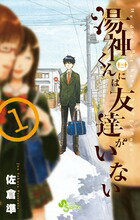
Yugami-kun ni wa Tomodachi ga Inai
Yugami-kun ni wa Tomodachi ga Inai (Yugami Has No Friends) follows Yugami Yuuichirou, a high schooler who has chosen — actively, deliberately — not to have friends, and Chihiro Otsuka, the transfer student determined to understand why. A 17-volume Sunday comedy about friendship's value examined through its absence.
Slice of Life / Fantasy
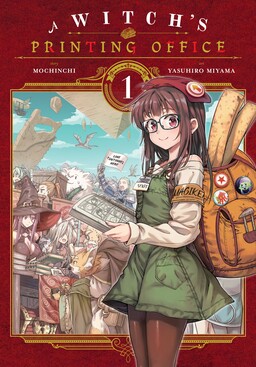
A Witch's Printing Office
Yu's review of A Witch's Printing Office — Mika is a modern Japanese woman who worked at Comiket (the giant doujinshi convention) and wakes up in a fantasy world where magical festivals share printed pamphlets; using her knowledge of convention organization and printing logistics, she builds a business that transforms how the fantasy world shares information.
Written by
Yu
Manga Enthusiast from Japan
I grew up in Japan and manga literally saved me during a tough time in elementary school. My English isn't perfect, but my love for manga is real — and I want to share it with you.
Disclosure: This post contains affiliate links. As an Amazon Associate, I earn from qualifying purchases at no extra cost to you.