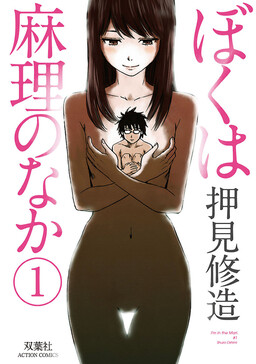
Inside Mari Review: The Body-Swap That Was Never a Body-Swap
by Shuzo Oshimi
Read the first volume. If it doesn't hook you, put it down. It'll hook you.
Buy Inside Mari on Amazon →*Affiliate link — I earn a small commission at no extra cost to you.
There was a stretch in my early twenties when I barely left my apartment. I'd watch people through the window — the same office worker buying the same canned coffee every morning, a high school kid waiting for the same bus — and I built whole lives for them in my head. None of it was real. I never spoke to a single one of them. They were just shapes I projected onto, because projecting onto strangers was easier than facing the empty room behind me.
I tell you this because Shuzo Oshimi's Inside Mari (ぼくは麻理のなか) opens exactly there — a shut-in man watching a girl from a window — and then it does the cruelest, smartest thing. It takes that fantasy of "knowing" someone you've only watched, and it turns it completely inside out. I went in expecting a weird body-swap story. I came out shaken, because the book had quietly been about me, and about everyone who has ever mistaken obsession for understanding.
Quick Take
- Oshimi uses the body-swap premise as bait — what looks like genre fiction is actually a study of dissociation, identity, and who gets to decide who you are
- The truth of what happened to Komori and Mari is not revealed until late, and it recontextualizes everything before it
- 9 volumes, complete in English from Denpa; M (Mature) — this is psychologically heavy, uncomfortable adult material, not a quirky gender-swap comedy
Content Warnings & Age Rating
This is an M (Mature) title. The protagonist is introduced as a man who has been stalking a teenage girl, and the manga deals frankly with dissociative identity disorder, psychological collapse, voyeurism, and sexual discomfort.
Age Rating: M (Mature) Content Warnings: Stalking, dissociative identity disorder, psychological breakdown, voyeurism, gender identity themes, sexual content, self-harm ideation
Oshimi does not flatter the reader and does not let the premise off the hook. If "a shut-in man wakes up in a schoolgirl's body" sounds like a setup for fanservice, this is the opposite of that.
Story Overview
Isao Komori is a college dropout and hikikomori. He doesn't work, barely speaks to his family, and structures his days around one ritual: walking to a convenience store to watch Mari Yoshizaki, a beautiful, popular high school girl, from a distance. She is the one bright thing in a life he's let rot.
Then one morning he wakes up — and he's inside Mari's body. He's in her bedroom, in her uniform, with her face in the mirror. Worse, when he calls his own apartment, a "Komori" answers in his old body. Mari herself seems to be gone. So Komori, trapped as the girl he used to spy on, has to fake being her: attend her school, perform her friendships, survive her family. His only ally is Yori Kakiguchi, a quiet, intense classmate who immediately senses that "Mari" is not acting like herself.
For a long stretch the book runs as a mystery — where is the real Mari, how did this happen, can it be undone. But Oshimi is setting a trap. The turning point is the slow, devastating realization that there was no swap at all. "Isao Komori" is not a man trapped in a girl's body. He is a personality — an alter — that Mari herself constructed. The shut-in she "watched from the window" was a real boy named Komori she had been quietly stalking, envying his freedom to drop out of life. Under the crushing weight of being Mari, she fractured, and built a self out of him.
Characters
Isao Komori — Begins as the narrator and apparent protagonist: a self-loathing recluse who is convinced he's been magically pushed into Mari's life. His whole arc is the dismantling of that conviction. The horror isn't that he's in the wrong body — it's the dawning evidence that "he" was never a separate man at all, and that his memories of watching Mari are Mari's memories of watching someone else. He is, in the end, the part of a frightened girl that wanted to disappear.
Mari Yoshizaki — The "perfect" girl everyone admires and no one knows. Her real name was Fumiko, given by her paternal grandmother; after the grandmother died, her controlling mother erased it and renamed her Mari, the name she'd wanted all along. "Mari" is an identity forced onto her. Her arc is the agonizing work of surfacing from beneath the Komori personality and learning whether there is a self left to reclaim that is actually hers.
Yori Kakiguchi — The classmate who notices "Mari" is wrong and attaches herself to the mystery. She helps Komori navigate Mari's social world — makeup, friendships, the performance of being a popular girl. But Oshimi turns her too: Yori was in love with Mari's flawless mask, not the broken person underneath. When the facade is gone, so is her devotion. She's the book's sharpest comment on being loved for a surface.
What I Love About It
What I love is how precisely Oshimi weaponizes the window. The whole story begins with a man watching a girl and feeling like he knows her — and then the manga spends nine volumes proving that watching is the opposite of knowing. The cruelest reveal is structural: the obsessive observer and the observed turn out to be the same shattered person. The man at the window was never looking at Mari; he was Mari, looking for a way out of being Mari. That's not a gimmick twist. It's a thesis about how we flatten people into the version of them we can stand to look at.
I also love that Oshimi refuses the comfortable ending. He could have given us a clean reintegration — Mari "cured," the real boy and girl meeting cute, the personalities resolved like a math problem. Instead the finale shows Mari at her graduation, technically whole again but quietly alone, having rebuilt a self while losing the people who only loved the mask. It sits in your chest. The body-swap framing was a lie the book told to get you to care, and once you care, it tells you the truth: identity isn't something you swap into. It's something other people impose on you until you can't find where you stopped and the performance started. As someone who once built fake lives for strangers through a window, that landed harder than I wanted it to.
Memorable Scene ⚠️ Spoiler Warning
The scene that won't leave me is the revelation of the name. For most of the series, "Mari" is the locked center of the mystery. Then we learn the truth: she was born Fumiko, named by her grandmother — and her mother, who'd always wanted "Mari," waited until the grandmother died to overwrite the name without ever asking her daughter. The whole girl, the "perfect Mari" everyone worships, is a label her mother stapled onto a child.
And here's the gut-punch Oshimi buries in it: when the Komori personality takes over, it erases every trace of Fumiko. The alter doesn't just hide the original girl — it deletes the one true name she ever had. The body-swap that looked supernatural was, all along, a child trying to escape a self she never chose. Reading that, the convenience-store stalking, the watching from the window, the longing for a stranger's freedom — all of it reorganizes into one unbearable picture. It's the kind of reveal that makes you want to start the whole series over, because every panel meant something other than what you thought.
Pros & Cons
Pros
- A genuinely earned twist that recontextualizes the entire series rather than just shocking you
- Oshimi's art renders interiority and bodily wrongness better than almost anyone working
- Complete at 9 volumes, fully available in English
- Treats dissociation and identity with seriousness instead of spectacle
Cons
- The early stalking framing is deliberately uncomfortable and will repel some readers
- The mystery sags slightly in the middle volumes before the payoff
- The ambiguous, melancholy ending offers catharsis but not tidy resolution
- This is bleak, clinical psychological drama — if you came for a fun gender-swap comedy, this won't work for you at all.
Is Inside Mari Worth Reading?
Yes — if you want a psychological drama that uses a genre hook as a Trojan horse for something much sadder and smarter. Oshimi takes the body-swap setup and reveals it as a story about dissociation, imposed identity, and the violence of being loved only as a surface. Skip it if uncomfortable premises or unresolved endings are dealbreakers; embrace it if you want a manga that earns every bit of its discomfort.
Similar Manga
| Title | Its Approach | How Inside Mari Differs |
|---|---|---|
| The Flowers of Evil | Oshimi on adolescent obsession and the cruelty under "normal" school life | Inside Mari turns the obsession inward — the stalker and the stalked are one fractured self |
| Blood on the Tracks | Oshimi dissecting a suffocating mother and the identity she warps | Inside Mari adds the dissociation reveal, making the imposed self literal |
| Wandering Son | Gender and selfhood handled with quiet seriousness | Inside Mari frames identity as horror and mystery rather than tender coming-of-age |
Official English Translation Status
Denpa licensed Inside Mari and released all 9 volumes in English (print and digital) between 2019 and 2022. The series is complete and translated in full.
Where to Buy
Read the first volume. If it doesn't hook you, put it down. It'll hook you.
This post contains affiliate links. If you purchase through these links, I may earn a small commission at no extra cost to you. As an Amazon Associate, I earn from qualifying purchases.
*Affiliate link — I earn a small commission at no extra cost to you.
More Manga You Might Like
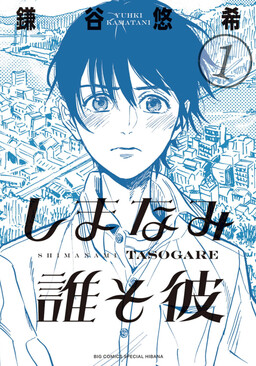
Slice of Life / Drama
Our Dreams at Dusk: Shimanami Tasogare
Yu's review of Our Dreams at Dusk — Tasuku Kaname is outed to his classmates; he goes to a building to jump; a woman in white tells him to come to a drop-in center; the center is a community of people across the LGBTQ spectrum who have found a way to be in the world; Tasuku begins to find his own way through them.
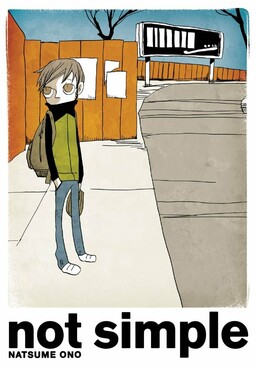
Slice of Life
not simple
Yu's review of not simple — Ian is an English young man whose life has been defined by loss, abuse, neglect, and a desperate search for his sister; the manga tells his story in non-linear fragments, assembled by a journalist writing a novel about Ian's life, asking what it means to witness someone's suffering and what fiction can do with it.
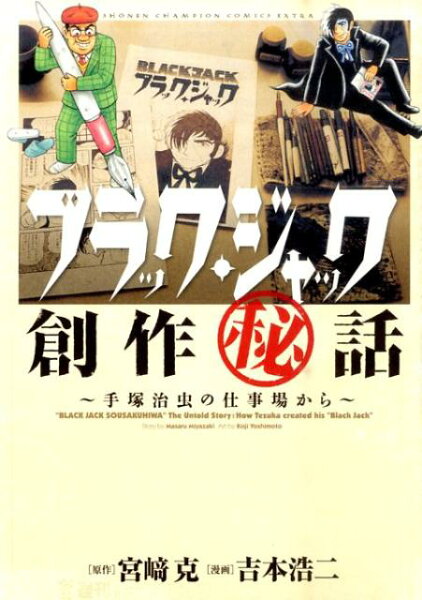
Slice of Life / Drama
Black Jack Sousaku Hiwa
Black Jack Sousaku Hiwa is a documentary manga about how Osamu Tezuka created Black Jack — told through the editors and assistants who worked beside him, capturing both the genius and the human cost of his impossible work ethic.
Slice of Life / Drama
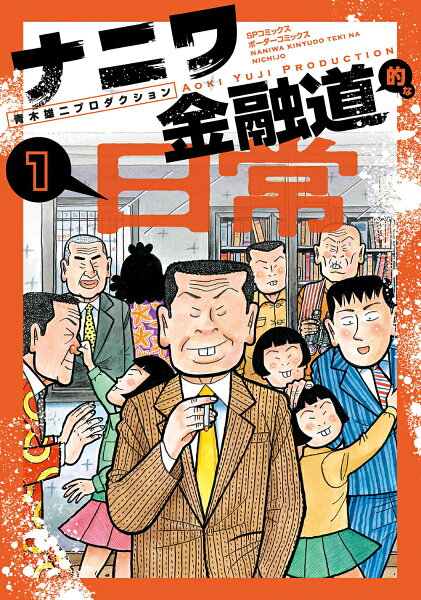
Naniwa Kinyuudo
Naniwa Kinyuudo follows new employee Ginji Mita at a small-loan finance company in Osaka — a manga that uses the world of moneylending and debt collection to create one of manga's most honest portraits of Japanese economic life.

Drama / Thriller
Ningen Konchuki
Ningen Konchuki (The Book of Human Insects) follows Toshiko Tomura, a beautiful and ruthless woman who absorbs the talents of creative people around her — becoming a novelist, then a designer, then an architect — by living with them, learning from them, and discarding them when she's taken everything they have.
Slice of Life / Drama
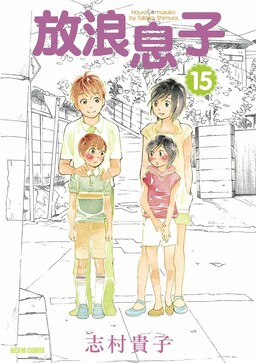
Wandering Son
Yu's review of Wandering Son — Shuichi Nitori is a boy who wants to be a girl; his new friend Yoshino Takatsuki is a girl who wants to be a boy; the manga follows both of them from elementary school through adolescence as they navigate gender identity, friendship, and growing up; a gentle, serious work about transgender experience.
Written by
Yu
Manga Enthusiast from Japan
I grew up in Japan and manga literally saved me during a tough time in elementary school. My English isn't perfect, but my love for manga is real — and I want to share it with you.
Disclosure: This post contains affiliate links. As an Amazon Associate, I earn from qualifying purchases at no extra cost to you.