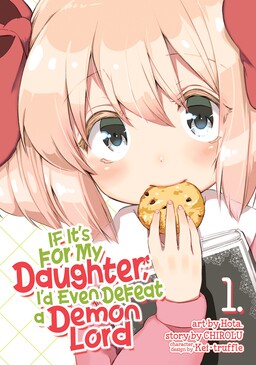
If It's for My Daughter, I'd Even Defeat a Demon Lord Review: The Parent Is the One Who Gets Saved
by CHIROLU (original), Hota (art), Truffle / Kei (character design)
Read the first volume. If it doesn't hook you, put it down. It'll hook you.
Buy If It's for My Daughter, I'd Even Defeat a Demon Lord on Amazon →*Affiliate link — I earn a small commission at no extra cost to you.
When I was small and friendless, the thing I wanted most wasn't a friend my own age. It was for one adult to look at me and decide, without me having to earn it, that I was worth the trouble. That's a strange thing to admit. But I think a lot of kids who grow up lonely carry it: the quiet wish that someone older and capable would simply choose them.
That's the exact wish If It's for My Daughter, I'd Even Defeat a Demon Lord grants — and then it does something I didn't expect. It tells the story from the adult's side. Dale chooses Latina, yes. But the manga is honest enough to show that he isn't rescuing her so much as she is giving his oversized, aimless life a center of gravity. I came for the warm parent-child stuff. I stayed because the title is a lie in the best way: the demon lord never matters. The dinner table does.
Quick Take
- A found-family fantasy slice-of-life where the emotional engine isn't the rescued child but the adult who didn't know he needed her — Dale's quiet transformation is the real arc
- The fantasy setting (adventurers, devils, a broken horn that means exile) is texture; the heart of the book is a tavern, a meal, and a kid learning she's allowed to stay
- 6 volumes, complete in English via Seven Seas; T (Teen) rated, though later volumes lean into romance implications that some readers will want to know about going in
Story Overview
Dale is an eighteen-year-old adventurer — genuinely strong, blessed by the gods, the kind of person the title promises could go fight a demon lord. While clearing poisonous frogs out of a forest, he finds something else: a small demon girl, maybe seven, alone beside the body of an adult demon. One of her horns is broken.
Dale is experienced enough to read what that means. In demon society, a broken horn marks exile — she's been cast out, branded a criminal. She can barely speak his language. He brings her back to the city anyway, to the Dancing Ocelot, the tavern where he lodges, and names her Latina after the word stitched into her clothing.
The early volumes are deliberately small. Latina learns human words. She helps wait tables. She discovers that food can be delicious and that no one is going to take it away. Dale, who has never organized his life around anyone, starts turning down long jobs because he can't stand being away from her. The turning point — and the moment the series shows its teeth — comes when Latina starts school. A newly arrived priestess sees her horn and unloads a xenophobic tirade on her. Latina comes home and, in shame, breaks off her remaining horn and tries to hurt herself. That single sequence is where the "slice of life" stops being only sweet, and where Dale stops being only doting and becomes something closer to a father who will burn the world down quietly and through proper channels.
Characters
Dale — The "I'd defeat a demon lord" of the title. On paper he's an elite hero; in practice the manga is the story of him becoming a parent and finding out it suits him better than heroism ever did. His arc is restraint, not power — choosing the boring stable life over adventure because Latina needs the boring stable life. Later volumes complicate him: as Latina grows, the series moves toward her developing romantic feelings for him, and eventually toward marriage and him becoming her kin to share her lifespan. It's the part of the book most worth knowing about before you start.
Latina — A devil girl carried out of her homeland by a prophecy that she would become a demon lord, then orphaned on the road. Her primary arc is learning that safety is real — that she won't be abandoned again. The broken-horn material makes her shame physical and specific rather than abstract. Watching her go from flinching to genuinely happy, eyes sparkling over a good meal, is the book's whole reason for existing.
Kenneth and Rita — The couple who run the Dancing Ocelot. Kenneth is the tavern owner and a big-brother figure to Dale; Rita is his wife and the inn's matron. They form the family-around-the-family, the second set of adults quietly ensuring Latina is fed, watched, and welcome.
Sylvia and Chloe — Latina's friends from school, the proof that her world is widening beyond the tavern, that she can have a normal childhood despite the horn.
What I Love About It
The thing that gets me is how the manga frames the rescue backwards. Most found-family stories are about the child being saved. Hota's art keeps quietly insisting that Dale is the one being saved. There's a recurring visual beat where the page isn't drawn from Latina's point of view at all — it's drawn from Dale's, looking down at her, and his whole face has gone soft in a way an eighteen-year-old sword-for-hire has no business looking. The composition tells you who changed.
What I love is that the series understands that parental love, rendered honestly, is mostly small and undramatic. It's organizing your schedule around a kid's school. It's turning down money. It's the tavern setting — the Dancing Ocelot — doing the heavy lifting, because a home is a place, and the manga commits to that place: the tables, the kitchen, the regulars who learn the kid's name. The reviewers who call it "mostly sugar" aren't wrong, but they undersell how precise the sugar is. When Latina's eyes spark over a sweet, you feel exactly what Dale feels: the urge to give this kid everything, immediately, forever.
Memorable Scene ⚠️ Spoiler Warning
The school sequence is the one I can't shake. Latina, who has finally started to believe she's safe, walks into a classroom where a newly arrived priestess takes one look at her horn and erupts — a public, religious, xenophobic tirade aimed at a small child. Latina absorbs it the way abused kids do: she decides the problem is her. She goes home and breaks off her own remaining horn, the last physical sign of who she is, and tries to hurt herself with magic.
It works because of everything the early volumes built. We've watched this kid learn, slowly, that she's allowed to exist — and then one adult with authority unmakes it in a single afternoon. Dale's response is the other half of the scene, and it's why I trust this series: he doesn't go berserk. He uses his standing with the church to have the priestess actually punished, instead of quietly reassigned to ruin another town the way she'd been before. It's the most adult thing in the book — protection that finishes the job through the system, not just rage. That contrast, a child's self-harm answered by an adult's deliberate, complete protection, is the scene that turns a cute manga into one I'd actually defend.
Pros & Cons
Pros
- Inverts the found-family formula: the adult is the one transformed, and the art knows it
- The Dancing Ocelot setting makes "home" a concrete place, not a vibe
- The broken-horn material gives Latina's arc real stakes instead of generic cuteness
- Genuinely gentle in the early volumes — proper comfort reading
Cons
- Hota's art leans hard on screentones, sometimes to the point of distraction
- Dale stays fairly one-note as a personality outside of his parenting
- The series moves toward romantic feelings between Latina and Dale as she ages, ending in marriage — for some readers that recontextualizes the early warmth uncomfortably
- The manga is on indefinite hiatus in Japan at 6 volumes, so the adaptation doesn't cover the novels' full arc
That last point matters: this is comfort manga with a romance turn baked into its premise, and whether that's sweet or off-putting depends entirely on you.
Is If It's for My Daughter, I'd Even Defeat a Demon Lord Worth Reading?
Yes — if you want the rarer kind of found-family story, the one told from the parent's side, where a directionless young adult discovers that a child gives his life its first real shape. Go in knowing the later romance direction, treat the early volumes as the main course, and it's some of the warmest fantasy slice-of-life on the shelf. If the age-gap romance premise is a dealbreaker for you, this one isn't worth forcing.
Similar Manga
| Title | Its Approach | How If It's for My Daughter Differs |
|---|---|---|
| Sweetness & Lightning | A widowed father and daughter bond over cooking real meals | Replaces grief with rescue, and a real-world kitchen with a fantasy tavern |
| Bunny Drop | A single man unexpectedly raises a young relative | Adds a fantasy frame and, controversially, a romance turn the other handles very differently |
| Yotsuba&! | Pure child's-eye daily-life wonder, no plot engine | Keeps the daily warmth but centers the adult's transformation, not the child's |
Where to Buy
Read the first volume. If it doesn't hook you, put it down. It'll hook you.
This post contains affiliate links. If you purchase through these links, I may earn a small commission at no extra cost to you. As an Amazon Associate, I earn from qualifying purchases.
*Affiliate link — I earn a small commission at no extra cost to you.
More Manga You Might Like
Slice of Life
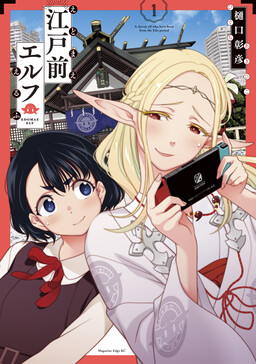
Otaku Elf (Edomae Elf)
Yu's review of Otaku Elf — Elda is a 600-year-old elf summoned to Japan by Tokugawa Ieyasu and enshrined as a goddess at Tokyo's Takamimi Shrine, but she's become a video-game-loving shut-in. Sixteen-year-old miko Koito Koganei tries to coax her out of her shell. Akihiko Higuchi's cozy comedy from Kodansha, in English from Seven Seas.

Slice of Life / Memoir
My Lesbian Experience with Loneliness
Yu's review of My Lesbian Experience with Loneliness — Nagata Kabi's autobiographical manga about her experiences with depression, an eating disorder, her difficult relationship with her parents, and her gradual understanding of her own sexuality and loneliness; one of the most honest mental health memoirs in manga form.

Slice of Life / Fantasy
Konohana Kitan
Yu's review of Konohana Kitan — Yuzu is a young fox girl who begins working at Konohanatei, a hot spring inn that welcomes both humans and gods. Staffed entirely by fox-girl attendants, the inn becomes the setting for gentle, self-contained stories about hospitality, connection, and letting go.
Slice of Life / Drama
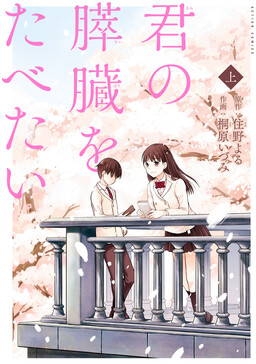
I Want to Eat Your Pancreas
Yu's review of the I Want to Eat Your Pancreas manga — Idumi Kirihara's adaptation of Yoru Sumino's novel. A withdrawn boy finds classmate Sakura Yamauchi's secret diary and learns she's dying of a pancreatic illness. She chooses him precisely because he won't treat her like a dying girl. Seven Seas collected the two Japanese volumes into one English omnibus.

Slice of Life / Music
Blue Giant
Yu's review of Blue Giant — Dai Miyamoto, a Sendai high schooler with no talent and no friends in jazz, decides he will become the greatest jazz saxophonist in the world, moves to Tokyo, and forms the trio JASS with a cocky pianist and a total drumming beginner.
Slice of Life / Memoir
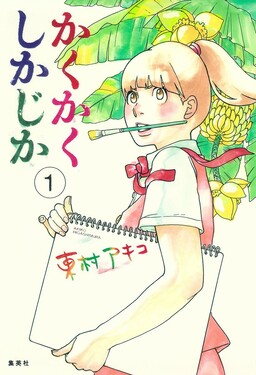
Blank Canvas: My So-Called Artist's Journey
Yu's review of Blank Canvas (Kakukaku Shikajika) — Akiko Higashimura's autobiographical manga about Hidaka-sensei, the bamboo-sword-wielding art teacher in rural Miyazaki who screamed 'Draw!' until she became the artist she is. A memoir, a comedy, and a eulogy all at once.
Written by
Yu
Manga Enthusiast from Japan
I grew up in Japan and manga literally saved me during a tough time in elementary school. My English isn't perfect, but my love for manga is real — and I want to share it with you.
Disclosure: This post contains affiliate links. As an Amazon Associate, I earn from qualifying purchases at no extra cost to you.