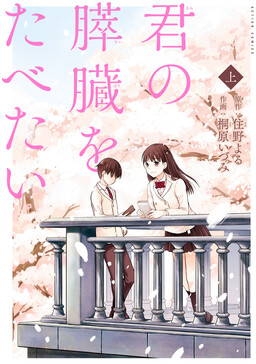
I Want to Eat Your Pancreas Review: A Dying Girl Picks the One Classmate Who Won't Pity Her
by Yoru Sumino (original story) / Idumi Kirihara (art)
Read the first volume. If it doesn't hook you, put it down. It'll hook you.
Buy I Want to Eat Your Pancreas on Amazon →*Affiliate link — I earn a small commission at no extra cost to you.
I read this one on a train, which was a mistake. I told myself it was just a sad-girl story, the kind I'd put down halfway. By the last forty pages I was holding the book up close to my face so the person across from me wouldn't see I was crying. I'm not proud of how badly it got me. But I think you should know that going in.
What stayed with me isn't the illness. It's the boy. A kid who decided, somewhere along the way, that the safest thing was to need no one — and a girl who walks straight into that and refuses to let him keep it.
Quick Take
- This is the manga adaptation by Idumi Kirihara of Yoru Sumino's novel — not the novel, not the films. Seven Seas collected both Japanese volumes into a single complete English book.
- The hook is a folk superstition (eat a sick person's organ and you take their illness, or you live on inside them) that the title turns into something tender instead of grotesque.
- Age rating: T (Teen). Terminal illness and a sudden violent death are central, but nothing is drawn graphically.
Story Overview
A quiet, withdrawn high schooler is killing time in a hospital waiting room when he finds a worn paperback on the floor. It's a diary titled Living with Dying. It belongs to Sakura Yamauchi — a bright, popular girl in his class — and it lays out a secret she's told no one outside her family: she has a pancreatic disease, and she doesn't have long.
She catches him reading it. And then she does the thing the whole story turns on: instead of swearing him to silence and pushing him away, she pulls him closer. Precisely because he doesn't gasp, doesn't pity her, doesn't soften his blunt edges — she decides she wants to spend her remaining time with him.
What follows is a string of ordinary, slightly reckless days. They eat together, travel out to Fukuoka, visit shrines, dare each other, argue. She drags him into the world; he, almost despite himself, becomes someone she can be honest with. The turn comes near the end, and it's not the one the premise sets you up for. Sakura is killed — stabbed by a random attacker — before the illness ever takes her. The book's final stretch is the boy learning her real name for him, and what to do with the silence she left.
Characters
Haruki Shiga (the protagonist) — For most of the book he's just "Boku" (me); his name is held back on purpose until the end. He's organized his whole life around needing nobody, and he reads that as peace. Sakura's pull on him isn't a sudden personality swap — it's a slow, grudging admission that he wants to be chosen, and that he's terrified of it. His arc lands in the final pages, when he finally has a name to give.
Sakura Yamauchi — The crucial thing Kirihara protects is that Sakura is not a saintly dying angel. She's loud, pushy, sometimes cruel, often scared. Her cheerfulness is partly armor. Her reasons for picking Haruki aren't selfless either — she's curious about a person who treats her like a person and not a diagnosis. She's a full character, not a lesson.
Kyoko — Sakura's best friend, fiercely protective, who can't understand why Sakura keeps drifting toward this gloomy nobody. She doesn't know about the illness. Her role pays off after the ending, when Haruki seeks her out — the two people who loved Sakura most, finally able to grieve together.
What I Love About It
There's a running joke that's also the emotional spine of the book: nicknames. Sakura refuses to call Haruki anything normal, cycling through dismissive labels for him, and he answers in kind. It reads as banter. But what Kirihara is quietly building is that these two have decided, without ever saying so, that the ordinary words — friend, girlfriend, boyfriend — are too small and too cliché for whatever this is. They invent their own language instead.
That's why the title hits the way it does. "I want to eat your pancreas" starts as the morbid folk belief Sakura jokes about — but by the end it's been re-pointed into the most direct confession either of them is capable of. It means I want to take part of you into me. I want to keep living because of you. Watching a phrase that gross become the tenderest thing in the book is the trick the whole adaptation is built to pull off, and Kirihara's art — soft, unshowy, strongest in the quiet panels of them just sitting together — sells it without ever getting sentimental. The restraint is the point. Two kids who can't say the real words, so they say the strangest one instead.
Memorable Scene ⚠️ Spoiler Warning
Sakura is released from a long hospital stay and they agree to meet at a café. Haruki, finally ready to stop hiding behind the joke, texts her the four words that have become their private vow: I want to eat your pancreas. She doesn't reply. She doesn't show up.
She never read it in time. On her way to him, she was stabbed to death by a random attacker in the street — nothing to do with the pancreas, nothing earned, nothing the story warned you about. That refusal is the book's bravest and most divisive move: the illness gave them borrowed time, and then time was stolen a second way entirely.
The part that wrecked me comes after. Haruki can't bring himself to the funeral, but eventually goes to Sakura's house and her mother gives him the diary, as Sakura had asked. Inside is her will — and the line that she'd thought she loved him but wouldn't cheapen it with words like "girlfriend," that he was the first person she ever truly chose. She ends it the same way he texted her: I want to eat your pancreas. They'd both arrived at the same sentence, alone, and missed each other by a day. Then he finally tells her mother his name — Haruki, "spring trees," next to Sakura, "cherry blossom" — and you realize their names were quietly paired the whole time.
Pros & Cons
Pros
- The central dynamic — a girl who's dying, a boy who refuses to perform grief — is more honest than most stories with this setup
- Sakura is written as a whole, contradictory person, not a tragic symbol
- The nickname motif and the title's double meaning pay off beautifully
- Self-contained: one complete English book, no commitment to a long series
Cons
- Some readers find the random-murder ending a cheap gut-punch rather than an earned one
- As a 442-page adaptation it moves fast; the novel breathes more
- It's a story built to make you cry about a dying teenager — that won't work for everyone, and that's fine
Is I Want to Eat Your Pancreas Worth Reading?
Yes — if you want a short, complete, emotionally exact story about two teenagers and the words they can't say. It's honest where most terminal-illness fiction is manipulative, and its boldest choice (a death that has nothing to do with the illness) is also the thing that splits readers down the middle. Go in knowing it intends to break your heart, and let it.
Content Warnings & Age Rating
Age Rating: T (Teen) Content Warnings: Terminal illness as the premise; a sudden violent death (stabbing); grief and loss throughout
The T rating fits. It's emotionally heavy but never graphic.
Similar Manga
| Title | Its Approach | How I Want to Eat Your Pancreas Differs |
|---|---|---|
| A Silent Voice | Guilt and repair built around disability and communication | Pancreas is shorter and centers a dying-but-defiant girl rather than a bully's redemption |
| Your Lie in April | Music and slow-revealed terminal illness, lushly drawn | Pancreas is plainer, blunter, and refuses the "illness takes her" ending you expect |
| Orange | Letters from the future try to prevent a classmate's death | Pancreas has no fix and no do-over; it's about accepting what can't be changed |
Where to Buy
Read the first volume. If it doesn't hook you, put it down. It'll hook you.
This post contains affiliate links. If you purchase through these links, I may earn a small commission at no extra cost to you. As an Amazon Associate, I earn from qualifying purchases.
*Affiliate link — I earn a small commission at no extra cost to you.
More Manga You Might Like

Slice of Life
Maria Watches Over Us (Marimite)
Yu's review of Maria Watches Over Us — Yumi is a first-year student at the Lillian Girls' Academy, a Catholic school with a tradition of 'soeur' relationships between older and younger students; she is noticed by the beautiful third-year Sachiko; Nagasawa's adaptation of Konno's beloved light novel about ritual, belonging, and the specific intensity of all-girls school friendships.
Slice of Life / Drama
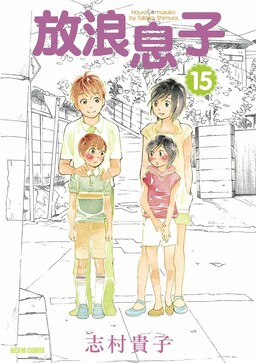
Wandering Son
Yu's review of Wandering Son — Shuichi Nitori is a boy who wants to be a girl; his new friend Yoshino Takatsuki is a girl who wants to be a boy; the manga follows both of them from elementary school through adolescence as they navigate gender identity, friendship, and growing up; a gentle, serious work about transgender experience.

Slice of Life
Sunny
Yu's review of Sunny — at a group home for children whose families cannot take care of them, a broken-down old car called Sunny becomes a private space where the children go to be alone; Taiyo Matsumoto's meditation on childhood longing, on what it means to be left, and on how children find ways to survive what adults do to them.
Slice of Life
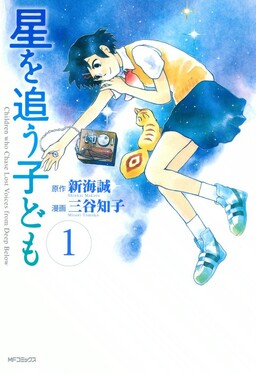
Stargazing Dog
Yu's review of Stargazing Dog — Daddy adopts a puppy named Happie; the manga follows Happie's life with Daddy through family happiness, family collapse, and the road journey that is their final chapter together; narrated from Happie's perspective, the story is exactly as emotionally devastating as its premise suggests.
Slice of Life / Memoir
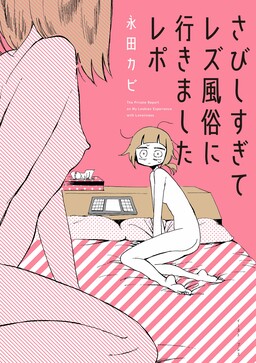
My Lesbian Experience with Loneliness
Yu's review of My Lesbian Experience with Loneliness — Nagata Kabi's autobiographical manga about her experiences with depression, an eating disorder, her difficult relationship with her parents, and her gradual understanding of her own sexuality and loneliness; one of the most honest mental health memoirs in manga form.
Slice of Life / Drama
Kids on the Slope
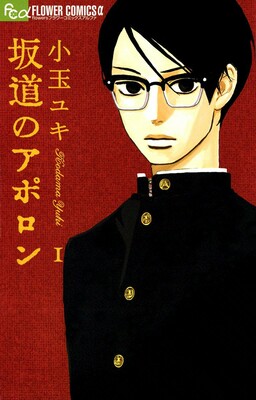
Yu's review of Kids on the Slope (Sakamichi no Apollon) — 1966 Sasebo, Kyushu. Kaoru is a lonely classical pianist; Sentaro is a half-American delinquent who plays jazz drums in the basement of a record shop. Their friendship grows through music, the school festival, and a reunion years later at a church.
Written by
Yu
Manga Enthusiast from Japan
I grew up in Japan and manga literally saved me during a tough time in elementary school. My English isn't perfect, but my love for manga is real — and I want to share it with you.
Disclosure: This post contains affiliate links. As an Amazon Associate, I earn from qualifying purchases at no extra cost to you.