Hyouka Review: An Energy-Conserving Boy Solves Mysteries That Carry No Crime, Only the Weight of Why
by Honobu Yonezawa (original novels) / Task Ohna (manga art)
Read the first volume. If it doesn't hook you, put it down. It'll hook you.
Buy Hyouka on Amazon →*Affiliate link — I earn a small commission at no extra cost to you.
I was the kind of kid who would walk the long way around the school just to avoid passing a group of people. Conserving energy, I told myself. Really I was just tired — tired of being noticed, tired of being asked things I didn't want to answer. So when I first met Hotaro Oreki, a boy whose entire personality is "if I don't have to do it, I won't; if I do have to do it, make it quick," I felt like the manga had reached into a part of me I'd never said out loud.
And then Eru Chitanda happened to him. She happens to him the way weather happens. She leans in, her eyes go wide, and she says, "I'm curious!" — and suddenly this boy who has organized his whole life around not caring finds that he cares, just a little, just enough. I read Task Ohna's manga adaptation of Honobu Yonezawa's novels and I kept thinking: this is the gentlest argument I've ever seen for the idea that the people around you can change what you're willing to spend yourself on.
Quick Take
- One of the best "small mystery" manga out there — Hotaro's sharp mind aimed at completely harmless problems creates a pleasure that crime thrillers can't reach
- The slow, careful relationship between Hotaro and Eru never forces anything, and that restraint is the whole point
- Rated T (Teen) — no violence, no real danger, safe for any reader
Story Overview
Hotaro Oreki is pressured by his older sister into joining the nearly-dead Classic Literature Club so it won't be abolished. He expects to do nothing there. Instead he finds Eru Chitanda already in the clubroom, and Eru has a question she can't let go of: years ago her uncle, Jun Sekitani, said something to her about this very club that made her cry — and she has completely forgotten what it was.
That question becomes the first arc. The club discovers that decades earlier the students put out an anthology of essays called Hyouka, and the title is a riddle. Hotaro reconstructs what really happened back then: a student-led protest against the school shortening its cultural festival, and how Jun Sekitani was forced to become the scapegoat and was expelled for it. The truth is decades cold, but for Eru it is the most personal thing in the world.
From there the mysteries keep coming, all of them small. A misread reputation. A locked clubroom. A homemade festival movie whose ending was never written because its writer fell ill. No one dies. No one is in danger. The answers matter because someone wants them, and because Hotaro slowly discovers that spending energy on a problem that's "worth it" isn't a betrayal of his philosophy — it's the loophole in it.
Characters
Hotaro Oreki — The energy-conserving protagonist, and one of the most precisely written quiet boys in manga. His "rose-colored vs. gray" framing of high school life is genuine, not a pose, and watching it crack under Eru's curiosity is the spine of the whole series.
Eru Chitanda — The daughter of a wealthy old farming family, and the engine of every mystery. Her "I'm curious!" (気になります) is never played as dumb; she is genuinely, helplessly fascinated by the world, and her connection to her vanished uncle Jun Sekitani gives the first arc its emotional weight.
Satoshi Fukube — Hotaro's cheerful best friend, a self-described "database" who collects trivia but refuses to draw conclusions from it. His insistence that he is not a detective — only a storehouse of facts — hides a real ache about never being the one who solves things.
Mayaka Ibara — Sharp-tongued, hardworking, and quietly in love with Satoshi, who keeps her at arm's length. Her arc in the manga-club subplot, where she defends a comic she loves against people who dismiss it, is one of the series' most personal threads.
What I Love About It
The thing I love most is that Hyouka respects how small a mystery can be and still matter. In the first arc, the puzzle is just a word — why is the club anthology called Hyouka? There's no crime to solve. And yet when Hotaro finally lands on the answer, it knocked the air out of me. Hyouka read aloud sounds like the English words "ice cream," and "ice cream" sounds like "I scream." That was Jun Sekitani's message, smuggled into a title decades earlier: a man who was silenced, screaming where no one could hear him.
What gets me is what this does to Eru. She has spent her life half-remembering that her uncle once told her something that made her cry, and now she finally understands what it was — that he was made into a sacrifice and could do nothing about it. Hotaro, who does everything in his power to feel as little as possible, is the one who has to watch her absorb it. He didn't want to care. He spent the whole book not wanting to care. And then he's standing there having handed someone the saddest fact of her family's history, because she asked and he couldn't say no. The manga never raises its voice during this. It just lets the weight settle, and it taught me that "low stakes" and "low feeling" are not the same thing at all.
Memorable Scene ⚠️ Spoiler Warning
The festival film arc is the one that stays with me. Class 2-F is making a homemade mystery movie for the Kanya Festival, but the student who wrote the script, Hongou, has fallen ill and can't finish it — so no one knows how the locked-room murder in the film was supposed to be solved. The Classic Literature Club is asked to deduce the intended ending.
What makes it unforgettable is that Hotaro gets it wrong. He produces a clever, satisfying solution, and it's praised — and then it's quietly taken apart, because his answer served the people who asked rather than the truth of what the original writer actually meant. The reveal that the screenwriter's real intent was something gentler and sadder than any of the "clever" theories reframes the whole arc. It's a mystery about humility: about how the smartest reading of the clues can still betray the person who left them. I closed that volume and sat with it for a long time.
Pros & Cons
Pros
- Hotaro and Eru's chemistry is exceptional and never rushed
- Small, bloodless mysteries that hit harder than thriller stakes
- The "Hyouka = I scream" reveal is one of the best title payoffs in manga
- Task Ohna's art captures the quiet clubroom and festival crowds beautifully
Cons
- Readers who need danger or high stakes may bounce off it
- The pacing is deliberately slow and uneventful by design
- It's a low-key, talky, deduction-driven series — that won't work for everyone
Is Hyouka Worth Reading?
Yes — if you want intelligence and warmth instead of action. Hyouka is a series where nobody is in danger and everything still matters, where a boy who refuses to care learns the exact shape of the gap in his own philosophy. If slow, gentle, emotionally precise mysteries sound like your thing, it's essential. If you need stakes and speed, look elsewhere.
Content Warnings & Age Rating
Age Rating: T (Teen) Content Warnings: School slice-of-life; no violence; gentle, slow-burn romance; mysteries with personal rather than criminal stakes.
Entirely safe. Nothing graphic, nothing frightening.
Similar Manga
| Title | Its Approach | How Hyouka Differs |
|---|---|---|
| The Kindaichi Case Files | Classic locked-room murders with real corpses | Hyouka has no crimes — the stakes are emotional and everyday |
| Tanaka-kun Is Always Listless | A low-energy boy drifting through school | Hyouka turns that low energy into actual deduction and growth |
| March Comes in Like a Lion | Quiet, interior slice-of-life about a withdrawn boy | Hyouka frames its emotion through mystery-solving rather than competition |
Where to Buy
No English release yet. That just means you find it before everyone else does.
There's no licensed English edition of the Hyouka manga generally available — the only English printing was a now-sold-out Malaysian release. The Japanese print and digital editions from Kadokawa are the way to read it.
Find the Japanese edition on Amazon.co.jp →
This post contains affiliate links. If you purchase through these links, I may earn a small commission at no extra cost to you. As an Amazon Associate, I earn from qualifying purchases.
*Affiliate link — I earn a small commission at no extra cost to you.
More Manga You Might Like
Slice of Life
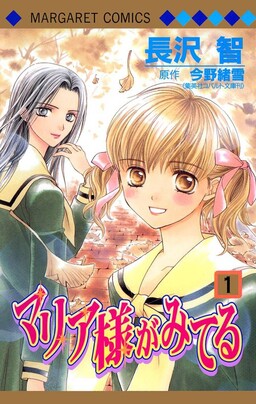
Maria Watches Over Us (Marimite)
Yu's review of Maria Watches Over Us — Yumi is a first-year student at the Lillian Girls' Academy, a Catholic school with a tradition of 'soeur' relationships between older and younger students; she is noticed by the beautiful third-year Sachiko; Nagasawa's adaptation of Konno's beloved light novel about ritual, belonging, and the specific intensity of all-girls school friendships.
Slice of Life
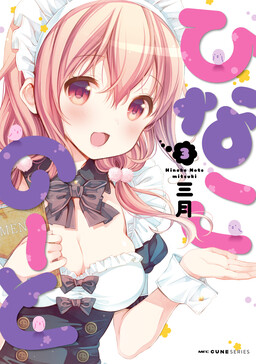
Hinako Note
Yu's review of Hinako Note — Hinako Sakuragi is so shy she freezes into a scarecrow pose and attracts birds, so she moves to Tokyo to join a theater club and learn to speak. Mitsuki's four-panel slice-of-life from Comic Cune. No official English edition yet.
Slice of Life / Romance
Teasing Master Takagi-san
Yu's review of Teasing Master Takagi-san — Takagi teases her desk neighbor Nishikata every single day; he keeps making plans to get back at her; she always wins; the series is about two middle school students who are clearly in love with each other before either of them knows how to say it.
Slice of Life / Romance
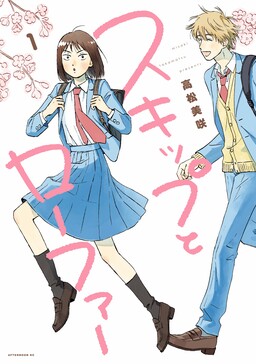
Skip and Loafer
A comprehensive review of Skip and Loafer — plot, characters, art style, and whether it's worth reading.
Slice of Life / Drama
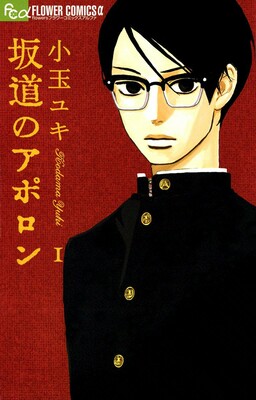
Kids on the Slope
Yu's review of Kids on the Slope (Sakamichi no Apollon) — 1966 Sasebo, Kyushu. Kaoru is a lonely classical pianist; Sentaro is a half-American delinquent who plays jazz drums in the basement of a record shop. Their friendship grows through music, the school festival, and a reunion years later at a church.
Slice of Life / Drama
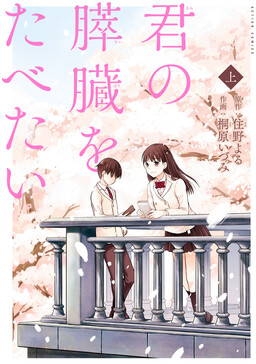
I Want to Eat Your Pancreas
Yu's review of the I Want to Eat Your Pancreas manga — Idumi Kirihara's adaptation of Yoru Sumino's novel. A withdrawn boy finds classmate Sakura Yamauchi's secret diary and learns she's dying of a pancreatic illness. She chooses him precisely because he won't treat her like a dying girl. Seven Seas collected the two Japanese volumes into one English omnibus.
Written by
Yu
Manga Enthusiast from Japan
I grew up in Japan and manga literally saved me during a tough time in elementary school. My English isn't perfect, but my love for manga is real — and I want to share it with you.
Disclosure: This post contains affiliate links. As an Amazon Associate, I earn from qualifying purchases at no extra cost to you.