How to Keep a Mummy Review: The Tiniest Mummy and the Biggest Feelings
by Kakeru Utsugi
Read the first volume. If it doesn't hook you, put it down. It'll hook you.
Buy How to Keep a Mummy on Amazon →*Affiliate link — I earn a small commission at no extra cost to you.
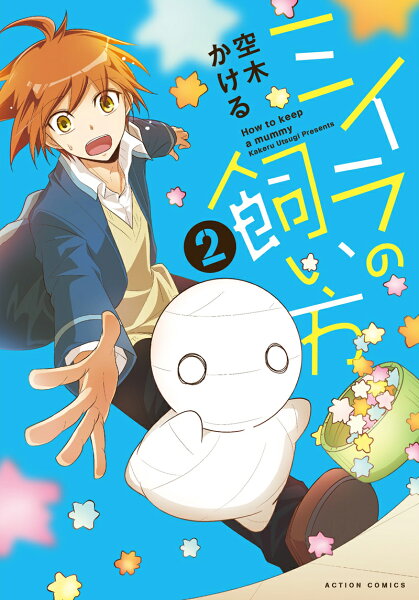
Sora Kashiwagi's father is a globe-trotting adventurer with a talent for terrible timing and an inability to predict what qualifies as an appropriate gift. This time he sends an enormous Egyptian sarcophagus. From it emerges a mummy. A tiny, palm-sized, incredibly cute mummy, so small it fits in a tea cup, with enormous eyes and a personality hovering between shy and absolutely desperate for affection.
I'm Yu. I read this manga on a hard day and it helped in ways I cannot entirely explain. That is what it is designed to do and it does it well.
Quick Take
- Kakeru Utsugi's How to Keep a Mummy (ミイラの飼い方) ran on Kadokawa's ComicWalker — collected in 14 tankōbon volumes.
- Seven Seas Entertainment published the complete 14-volume English edition.
- Rated All Ages — pure comfort reading, no content warnings.
Story Overview
Sora names the mummy Mii-kun. Despite his initial reluctance (he is a high school student living alone, and a mummy was not on his agenda), he finds himself completely devoted to his new tiny roommate.
As the series progresses, Sora's friends acquire their own mythical creature companions — an oni, a dragon, a tengu — and the group navigates the particular joys and challenges of caring for creatures who are small, easily startled, and deeply loving in their helpless way. The iyashi-kei (healing) genre is specifically Japanese: stories designed to provide comfort and emotional relief through gentle content. How to Keep a Mummy is a textbook example, and the low-stakes plotting is a feature rather than a bug.
Characters
Sora Kashiwagi — Responsible, a little tired, genuinely kind. His growing affection for Mii-kun is drawn with real warmth — the kind that builds through accumulated small moments rather than dramatic revelation.
Mii-kun — I cannot overstate how precisely Utsugi has drawn this creature's emotional expressiveness. Mii-kun communicates enormous feeling with minimal features — mostly just eyes and bandages — and every expression is readable and complete. When Mii-kun is happy, you feel it. When Mii-kun is scared or lonely, it is devastating in a way completely disproportionate to how small he is.
Kamoda and Connie — Sora's friends, each with their own mythical companion. Their dynamics provide variety and contrast to the central Sora-Mii-kun relationship.
What I Love About It
There is a chapter early in the series where Mii-kun has a bad dream. He wakes up frightened, and Sora — half-asleep, barely awake — reaches out and pats him back to sleep without fully realizing what he is doing. Just automatic, instinctive comfort for a small creature he has been responsible for long enough that it has become reflex.
I read that chapter on a hard day. I am not sure I can explain exactly what it was about watching a teenager comfort a tiny mummy in the middle of the night, but it helped.
How to Keep a Mummy does not pretend problems do not exist. The characters have difficult moments — loneliness, failure, worry. But it insists that small good things — warmth, presence, something small that trusts you — are real and worth having. That is not naive. That is true.
Memorable Scene ⚠️ Spoiler Warning
Late in the series, Mii-kun becomes temporarily separated from Sora and must navigate on his own. The chapters are surprisingly tense — not because anything terrible happens, but because Mii-kun is small and frightened and determined. Watching a creature that tiny decide to be brave is disproportionately moving. When he finds his way back, the reunion is one of the series' emotional peaks.
Pros & Cons
Pros:
- Mii-kun is one of manga's great creature designs — the proportion of features is precisely calibrated for emotional expressiveness.
- Reliably comforting without being vapid; the series is honest about difficulty even as it insists on warmth.
- All-ages without talking down to adult readers.
- Complete at 14 volumes — satisfying and finite.
Cons:
- Low plot stakes by design — not for readers who need narrative tension.
- Secondary characters are less developed than Mii-kun; the formula becomes familiar after a few volumes.
Is How to Keep a Mummy Worth Reading?
Yes — if you want something gentle. This is what the iyashi-kei genre is for, and How to Keep a Mummy is an excellent example of it. If you need plot stakes to stay engaged, this is not the manga.
Who Is This Manga For?
- Anyone who needs something gentle after reading heavy or intense manga.
- Fans of Chi's Sweet Home or Yotsuba&! who want more in the small-creature-enormous-feelings register.
- Readers of any age — this is genuinely all-ages without being childish.
- Anyone who wants complete comfort manga with a payoff.
Official English Translation Status
Seven Seas Entertainment published all 14 volumes in English. Complete and available in print and digital.
Where to Buy
Seven Seas's complete 14-volume English edition.
Browse How to Keep a Mummy on Amazon →
This post contains affiliate links. If you purchase through these links, I may earn a small commission at no extra cost to you. As an Amazon Associate, I earn from qualifying purchases.
*Affiliate link — I earn a small commission at no extra cost to you.
More Manga You Might Like
Slice of Life
Wakaba*Girl
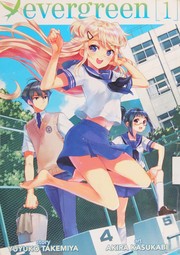
Yu's review of Wakaba*Girl — Wakaba Kohashi is from a wealthy family and has attended elite schools her whole life; entering a regular high school, she wants desperately to experience the normal gyaru life she's seen in magazines; Yui Hara's gentle four-panel comedy about friendship and what 'normal' means.
Slice of Life / Memoir
My Lesbian Experience with Loneliness
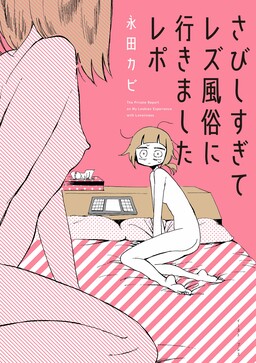
Yu's review of My Lesbian Experience with Loneliness — Nagata Kabi's autobiographical manga about her experiences with depression, an eating disorder, her difficult relationship with her parents, and her gradual understanding of her own sexuality and loneliness; one of the most honest mental health memoirs in manga form.
Slice of Life / Fantasy
Mushishi
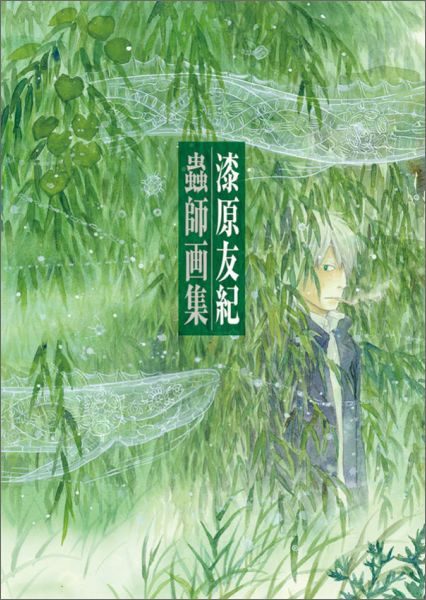
Yu's review of Mushishi — Ginko travels through a Japan that exists before modernity, investigating and treating afflictions caused by Mushi — ancient lifeforms that exist at the edge of perception and disturb the boundary between the living and something else.
Slice of Life / Drama
I Want to Eat Your Pancreas
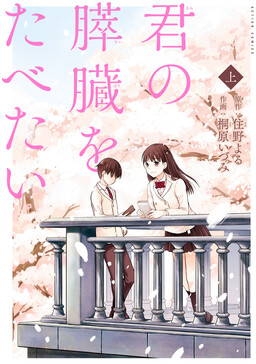
Yu's review of the I Want to Eat Your Pancreas manga — Idumi Kirihara's adaptation of Yoru Sumino's novel. A withdrawn boy finds classmate Sakura Yamauchi's secret diary and learns she's dying of a pancreatic illness. She chooses him precisely because he won't treat her like a dying girl. Seven Seas collected the two Japanese volumes into one English omnibus.
Slice of Life / Music
Blue Giant
Yu's review of Blue Giant — Dai Miyamoto, a Sendai high schooler with no talent and no friends in jazz, decides he will become the greatest jazz saxophonist in the world, moves to Tokyo, and forms the trio JASS with a cocky pianist and a total drumming beginner.
Slice of Life / Memoir
Blank Canvas: My So-Called Artist's Journey
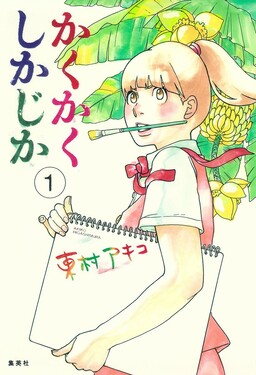
Yu's review of Blank Canvas (Kakukaku Shikajika) — Akiko Higashimura's autobiographical manga about Hidaka-sensei, the bamboo-sword-wielding art teacher in rural Miyazaki who screamed 'Draw!' until she became the artist she is. A memoir, a comedy, and a eulogy all at once.
Written by
Yu
Manga Enthusiast from Japan
I grew up in Japan and manga literally saved me during a tough time in elementary school. My English isn't perfect, but my love for manga is real — and I want to share it with you.
Disclosure: This post contains affiliate links. As an Amazon Associate, I earn from qualifying purchases at no extra cost to you.