
House of Five Leaves Review: The Edo Crime Manga Where the Bodyguard Is the Shyest Man in the Room
by Natsume Ono
Read the first volume. If it doesn't hook you, put it down. It'll hook you.
Buy House of Five Leaves on Amazon →*Affiliate link — I earn a small commission at no extra cost to you.
I have always been the quiet one in the room. When I was a kid, if a teacher asked me a question, my voice would shrink to nothing even when I knew the answer. So when I first met Masanosuke Akitsu — a samurai who can outfight almost anyone but cannot hold a single job because he can't look people in the eye — something in my chest went tight. I knew him. I knew that exact feeling of being good at something and still being passed over because you can't perform the confidence other people want.
That recognition is what pulled me into House of Five Leaves. I came for a quiet, beautiful Edo-period story and stayed because it understood shy people better than almost anything I've read.
Quick Take
- Natsume Ono turns a crime story into a character study — the "gang" is the loudest thing in the premise and the quietest thing on the page
- Yaichi, the gang's leader, is one of the most genuinely mysterious characters in manga, and the slow uncovering of his past is the engine of all eight volumes
- 8 volumes, complete in English from Viz; rated T+ (Older Teen) for crime, ransom kidnapping, and themes of childhood trauma
Who Is This Manga For?
- Readers who love slow-burn, character-first historical fiction over action
- Anyone drawn to morally grey stories where no one is simply a villain
- Fans of Natsume Ono's loose, European-influenced art (not simple, Ristorante Paradiso)
- People who, like me, see themselves in a protagonist who's quietly competent and socially terrified
Story Overview
Set in Edo-period Japan, the story follows Masanosuke Akitsu, a rōnin and genuinely skilled swordsman who keeps losing bodyguard work because his timid, withdrawn manner unnerves the people who hire him. Broke and adrift, he's approached on the street by Yaichi, a strange, magnetic man who offers him a one-day job as a bodyguard.
Masa takes it — and slowly realizes Yaichi leads the Five Leaves, a small group that kidnaps the children and relatives of wealthy merchant houses and returns them for ransom. Yaichi even arranges legitimate work for Masa at a rice wholesaler called Ohmi-ya, only for that very household to become the gang's next target. Masa understands what these people do. He stays anyway.
The series isn't structured as a heist thriller. Each job peels back another layer of the people running it, and the central question becomes: who is Yaichi, really? The back half of the series answers that, and the answer reframes everything — the gentle brothel-dwelling charmer turns out to be carrying a childhood horror that explains exactly why he built the life he did.
Characters
Masanosuke Akitsu — The eldest son of a respectable provincial family, now a rōnin in the capital. His timidity isn't a flaw to be "cured"; it's who he is, and the series lets him grow more confident without ever pretending he becomes a different man. He's the moral center precisely because he's honest about how out of place he feels.
Yaichi — The Five Leaves' leader. He lives in a brothel called Katsura-ya, protects and flirts with the women there, and deflects every question about his own history. His past is the spine of the whole story: he was born Seinoshin, a child adopted into a prominent house and rejected by his foster mother. She had a bandit named Jin kidnap him so her own newborn son could inherit. Jin couldn't kill the boy, so he let him choose — return and likely die, or vanish. Seinoshin vanished, growing up among bandits as "Sei the Drifter."
Matsukichi — A former thief who works as the gang's information-gatherer and lockpick. His quiet, complicated history is one of the series' best supporting threads.
Umezō and Otake — Umezō runs a small eatery that serves as a hub for the group; Otake is a former brothel worker whom Yaichi bought out of her contract, and she's the one who gave the gang its name.
What I Love About It
What I love is how House of Five Leaves refuses to let Masa be a hero who "overcomes" his shyness in a montage. There's a scene early on where he's been hired to look intimidating and simply cannot do it — his whole body folds inward, his eyes drop, and you can feel how much he hates that he can't fake what's expected of him. I have stood in that exact spot. Reading it, I didn't feel pitied; I felt seen. Natsume Ono draws hesitation better than almost anyone. The pauses between people, the half-finished sentences, the way Masa hovers at the edge of a group — all of it is on the page in the negative space.
And the art does so much of the emotional work. Ono's line is loose, sketchy, almost European, with elongated faces that look nothing like typical manga handsomeness. At first it threw me. By volume three I understood: those faces hold ambiguity. Yaichi can look kind and menacing in the same panel, and that's the whole point of him. The Edo setting — the lantern-lit alleys, the brothel, the small eatery where the gang gathers — is rendered with a hush that makes the kidnapping plot feel less like crime and more like a group of lonely people who found each other. That tension between what they do and who they are is the thing I keep turning over.
Memorable Scene ⚠️ Spoiler Warning
The scene that wrecked me is near the very end, when Yaichi's past finally closes. He breaks down at the grave of the man whose name he took. The traumatic story Jin told him as a child — that a particular servant had helped arrange his kidnapping and attempted murder — was the wound he organized his entire adult life around. And then he learns that man almost certainly had nothing to do with it.
What makes it devastating isn't a twist for its own sake. It's that Yaichi built everything — the new name, the gang, the careful distance from his own history — on top of a lie he was told when he was a terrified child. Watching this composed, untouchable man finally crack open at a gravestone, realizing the foundation of his whole identity was a misunderstanding, is one of the quietest gut-punches I've experienced in manga. Ono doesn't underline it. She just lets him break.
Pros & Cons
Pros
- A crime premise delivered as a tender, patient character study
- Yaichi is a genuinely great enigmatic character with a payoff that earns the slow build
- A protagonist whose social anxiety is treated with rare honesty
- Distinctive art perfectly matched to the mood and the moral ambiguity
- Complete in 8 volumes, fully available in English
Cons
- The pace is slow and deliberate; plot is secondary to mood
- Ono's unconventional art is divisive — those long faces take adjusting to
- It's a quiet, melancholy, morally grey story with no clean heroes, and that simply won't work for everyone
Is House of Five Leaves Worth Reading?
Yes — if you want a historical manga that values atmosphere and character over action. It's a slow, beautiful, melancholy book about lonely people on the wrong side of the law, anchored by a shy swordsman and a charming gang leader hiding a brutal childhood. If you need momentum and clear heroes, look elsewhere. If you want to be quietly devastated, this is essential Natsume Ono.
Similar Manga
| Title | Its Approach | How House of Five Leaves Differs |
|---|---|---|
| not simple | Ono's other key work — fractured, melancholy character drama in a modern setting | Trades the modern despair for an Edo crime story with a warmer found-family core |
| Blade of the Immortal | Edo-era story driven by violence, revenge, and stylized action | Almost actionless; the swordsman barely draws his blade, and mood replaces combat |
| Lone Wolf and Cub | Edo wandering and moral weight told through ritual bloodshed | Swaps the epic body count for intimate, conversational character work |
Where to Buy
Read the first volume. If it doesn't hook you, put it down. It'll hook you.
This post contains affiliate links. If you purchase through these links, I may earn a small commission at no extra cost to you. As an Amazon Associate, I earn from qualifying purchases.
*Affiliate link — I earn a small commission at no extra cost to you.
More Manga You Might Like
Slice of Life
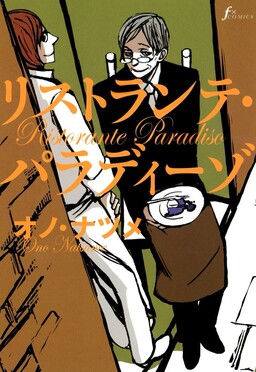
Ristorante Paradiso
Yu's review of Ristorante Paradiso — Nicoletta travels from her hometown to Rome to confront her mother, who left her as a child; her mother's husband doesn't know she exists; the restaurant Casetta dell'Orso, staffed entirely by older bespectacled gentlemen, becomes the setting for Nicoletta's unexpected new life.

Slice of Life
What a Wonderful World!
Yu's review of What a Wonderful World! — Inio Asano's short story collection, loosely connected stories about ordinary people in contemporary Japan finding their way through ordinary circumstances; Asano in his most accessible register, before the extended darkness of Goodnight Punpun.
Slice of Life / Drama
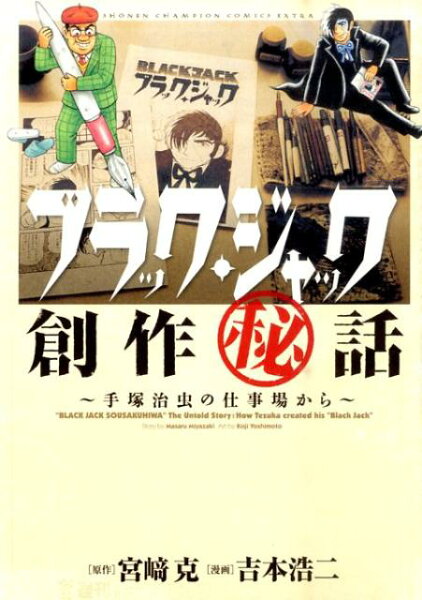
Black Jack Sousaku Hiwa
Black Jack Sousaku Hiwa is a documentary manga about how Osamu Tezuka created Black Jack — told through the editors and assistants who worked beside him, capturing both the genius and the human cost of his impossible work ethic.

Slice of Life
Three Days of Happiness
Yu's review of Three Days of Happiness — in a world where you can sell your remaining lifespan for money, Kusunoki sells most of his and discovers he has only three months left; manga adaptation of Sugaru Miaki's novel about what matters when time is finite.

Slice of Life
Sunny
Yu's review of Sunny — at a group home for children whose families cannot take care of them, a broken-down old car called Sunny becomes a private space where the children go to be alone; Taiyo Matsumoto's meditation on childhood longing, on what it means to be left, and on how children find ways to survive what adults do to them.
Slice of Life
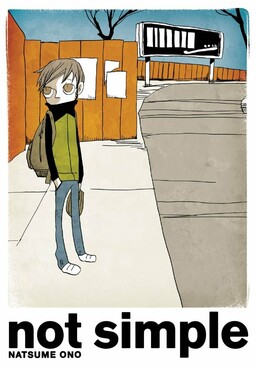
not simple
Yu's review of not simple — Ian is an English young man whose life has been defined by loss, abuse, neglect, and a desperate search for his sister; the manga tells his story in non-linear fragments, assembled by a journalist writing a novel about Ian's life, asking what it means to witness someone's suffering and what fiction can do with it.
Written by
Yu
Manga Enthusiast from Japan
I grew up in Japan and manga literally saved me during a tough time in elementary school. My English isn't perfect, but my love for manga is real — and I want to share it with you.
Disclosure: This post contains affiliate links. As an Amazon Associate, I earn from qualifying purchases at no extra cost to you.