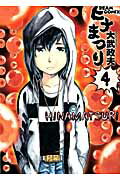
Hinamatsuri Review: A Yakuza Picks Up a Telekinetic Girl, and Somehow It Becomes One of the Warmest Manga I Know
by Masao Ohtake
Read the first volume. If it doesn't hook you, put it down. It'll hook you.
Buy Hinamatsuri on Amazon →*Affiliate link — I earn a small commission at no extra cost to you.
I started Hinamatsuri expecting a dumb comedy, and I will be honest with you, that is exactly what the first chapter is. A glowing metal egg falls out of nowhere and lands on a yakuza man's head while he is admiring his expensive vases. A blank-faced girl crawls out. She has psychic powers. He has no idea what to do with her. I laughed, I shrugged, I thought "okay, one-joke manga." I was so wrong, and I am glad I was. By the time I finished all 19 volumes, this dumb comedy had made me tear up over a homeless camp and a bowl of ramen. That is the magic of it, and I want to tell you about it.
Quick Take
- A deadpan telekinetic girl gets dropped into a yakuza man's apartment, and a series that looks like a one-joke gag comedy quietly becomes a real story about found family
- Masao Ohtake juggles three or four storylines at once — Nitta and Hina, Anzu the homeless girl, Hitomi the accidental bartender — and lands both the comedy and the heart
- Age rating: T (Teen) — yakuza setting and some rough situations, but the tone is comedic, not graphic
Story Overview
A capsule from the future drops a girl named Hina onto Yoshifumi Nitta, a mid-level yakuza who lives alone in a nice apartment and cares a lot about his collection of expensive vases. Hina has powerful telekinetic abilities, and if she does not release that power, it builds up and she loses control. So Nitta, very much against his will, ends up housing her, feeding her, and sending her to school.
That is the setup, but the series does not stay there. Ohtake keeps introducing new people pulled into Hina's orbit. Anzu, another girl from the future, arrives to take Hina down, loses, and gets stranded with no way home — and her story takes a completely different, much harder direction. Hitomi, Hina's level-headed classmate, gets roped into bartending at a bar Hina frequents and cannot escape the adult world she accidentally falls into.
The manga ran in Enterbrain's magazine Harta (formerly Fellows!) from 2010 to 2020, finished at 19 volumes, and closes with a time-skip that checks in on everyone a few years later. It does not just stop being funny — it earns a real ending for people you started out laughing at.
Characters
Yoshifumi Nitta — The yakuza who never asked for any of this. He is grumpy, money-minded, and weirdly competent at being a reluctant dad. The series never has him say out loud that he loves Hina; it just shows him doing the work, year after year, and at one point even wishing the responsible Anzu were his kid instead of the lazy one he got. That unspoken affection is the spine of the whole thing.
Hina — The telekinetic girl. Deadpan, lazy, motivated almost entirely by food and comfort, and completely oblivious to how much she has reshaped Nitta's life. Her flatness is the engine of most of the comedy, and the gap between her not-caring and Nitta actually-caring is the long joke the series keeps paying off.
Anzu — The other girl from the future. She comes to defeat Hina, loses, and gets stuck with no capsule home. A homeless man takes her in at an encampment and teaches her to live honestly through hard work. She grows the most of anyone in the cast, eventually gets taken in by the Hayashi family who run a Chinese restaurant, and later runs her own mobile ramen stand. Her arc is the emotional heart of the manga.
Hitomi — Hina's calm, capable classmate, cursed with an inability to say no. Left alone at a bar, she gets mistaken for an adult bartender, turns out to be brilliant at it, and gets blackmailed into the job. From there she keeps accidentally climbing the adult world — businesses, politics, eventually company president — while still trying and failing to just be a normal middle schooler. Pure escalating absurdist comedy.
What I Love About It
What I love is how Ohtake hides a real story inside a gag manga, and Anzu is where it lands hardest. She shows up as a villain — another future kid sent to deal with Hina — and after she loses, she is just a child alone in a country that is not hers, with no money and no way home. A homeless man finds her, brings her back to the encampment, and instead of pity, he gives her work and dignity. He teaches her to collect cans, to earn, to not steal, to live straight. I did not expect a comedy about a psychic girl to suddenly be the warmest portrait of a homeless community I had ever read in manga.
The reason it hit me is that the series never plays Anzu's poverty as a punchline. The camp becomes her family. These are people society wrote off, and they are the ones who raise her right. When I was a lonely, friendless kid, the manga I loved were the ones that said the people the world ignores can still be the ones who save you. Anzu's stretch of Hinamatsuri is exactly that feeling, dropped into the middle of a goofy comedy where you let your guard down — which is precisely why it cuts so deep when it arrives.
Memorable Scene ⚠️ Spoiler Warning
The scene I will never forget is when the homeless camp gets evicted from the park. Anzu, who has come to love these people as family, is full of fight — she wants to make signs and protest, save their home. But the older homeless people have lived this before. They know how it ends. So they quietly arrange for Anzu to be taken in by the Hayashis, the couple who run the restaurant, so at least the kid will have a roof.
And then they make her leave the only way they can. One of them shouts at her, harsh and cruel, telling her to get lost — crushing her, on purpose. Because gentle words would never get her to go. As Anzu walks away, the camera shows the homeless people, the ones who just yelled at her, all crying. They were cruel because it was the only way to make her leave without breaking, and they could not bear to watch her cry. That is the scene people point to as the best in the whole series, and they are right. A gag manga about a psychic girl made me sit there in silence.
Pros & Cons
Pros
- One of the best balances of comedy and genuine emotion I have read — the jokes never undercut the heart
- Anzu's arc alone is worth the entire series
- Hitomi's runaway-career gag is one of the funniest sustained jokes in manga
- 19 volumes, complete, fully available in English from One Peace Books
Cons
- 19 volumes is a real commitment if you only came for the gags
- The tone swings hard between absurd comedy and quiet drama, which can feel uneven
- It is a slow-build, low-plot, vignette-style comedy — that rhythm won't work for everyone
Is Hinamatsuri Worth Reading?
Yes. It looks like a throwaway gag manga and turns into one of the most quietly moving found-family stories I know, without ever losing its sense of humor. If you want comedy that can sneak up and move you — and you do not mind a long, meandering ride to get there — Hinamatsuri is absolutely worth it.
Similar Manga
| Title | Its Approach | How Hinamatsuri Differs |
|---|---|---|
| Gintama | Gag comedy that pivots into serious emotional arcs | Hinamatsuri is quieter and more grounded, no battle shonen scale |
| The Way of the Househusband | A reformed yakuza in absurd domestic comedy | Hinamatsuri adds real drama and a found-family heart under the gags |
| Mob Psycho 100 | A deadpan, powerful psychic kid played for comedy and warmth | Hinamatsuri centers on the adults around the kid, not the kid's growth |
Where to Buy
Read the first volume. If it doesn't hook you, put it down. It'll hook you.
This post contains affiliate links. If you purchase through these links, I may earn a small commission at no extra cost to you. As an Amazon Associate, I earn from qualifying purchases.
*Affiliate link — I earn a small commission at no extra cost to you.
More Manga You Might Like

Slice of Life / Comedy
The Way of the Househusband
Yu's review of The Way of the Househusband — Tatsu, once the most feared yakuza boss in Japan, has retired to become a stay-at-home husband for his career-focused wife Miku; he applies the intensity, dedication, and specific vocabulary of organized crime to grocery shopping, cooking, and housework.
Slice of Life / Comedy
Genshiken
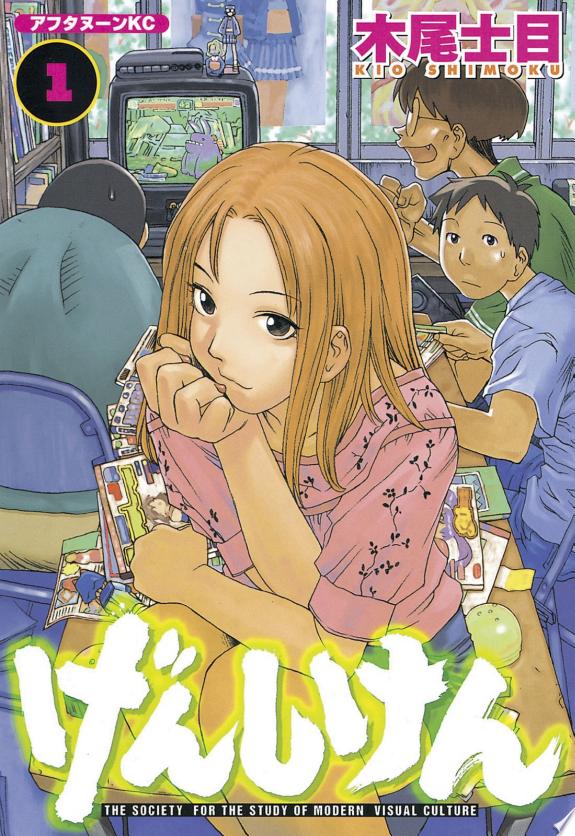
Yu's review of Genshiken — the Society for the Study of Modern Visual Culture is a university otaku club, and across nine volumes Shimoku Kio follows Sasahara, Madarame, Saki, Ohno, Tanaka and Ogiue as they graduate, fall in love, make a doujinshi, and figure out what being a fan costs and gives you.
Slice of Life / Romance
Dasei 67%
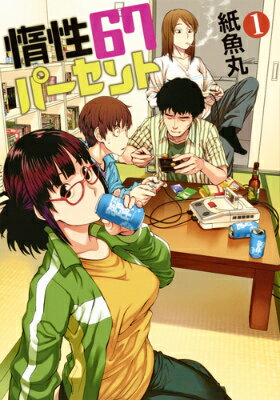
Dasei 67% follows art-school student Minami Yoshizawa and the three friends who never leave her tiny apartment, drifting through a college life that runs on about 67% effort and 100% dumb, lovable inertia.
Slice of Life / Comedy
Wagnaria!! (Working!!)
Yu's review of Wagnaria!! — Souta Takanashi starts working at a family restaurant because a tiny girl asked him to; his coworkers include a woman with androphobia, a katana-carrying floor chief, an invisible manager, and a girl who thinks she might be in love with him; chaos is the default state.
Slice of Life / Comedy
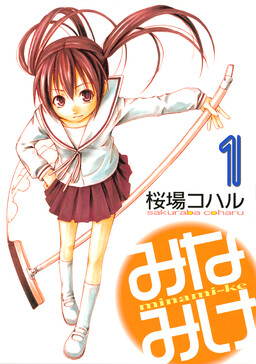
Minami-ke
Yu's review of Minami-ke — three sisters at different schools (eldest Haruka in high school, middle Kana in middle school, youngest Chiaki in elementary) share an apartment and their daily life generates endless comedy from their completely different personalities and the rotating cast of friends, admirers, and chaos that follows them home.
Slice of Life / Comedy
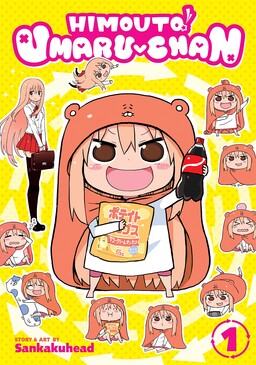
Himouto! Umaru-chan
Yu's review of Himouto! Umaru-chan — Umaru Doma is the school's flawless honor student, but the moment she's home she shrinks into a chibi gremlin in a hamster hoodie demanding chips, cola, and games from her tired brother Taihei. Twelve complete volumes from Seven Seas, and the warmth under the gags is what kept me reading.
Written by
Yu
Manga Enthusiast from Japan
I grew up in Japan and manga literally saved me during a tough time in elementary school. My English isn't perfect, but my love for manga is real — and I want to share it with you.
Disclosure: This post contains affiliate links. As an Amazon Associate, I earn from qualifying purchases at no extra cost to you.