
Hinako Note Review: The Shy Girl Who Freezes Into a Scarecrow and Lets Birds Feed Her Lines
by Mitsuki
Read the first volume. If it doesn't hook you, put it down. It'll hook you.
Buy Hinako Note on Amazon →*Affiliate link — I earn a small commission at no extra cost to you.
I was the kid who could not raise his hand in class. I knew the answer. My mouth just would not open. The teacher would wait, the room would go quiet, and I would freeze — staring at my desk until she moved on to someone else. So when I read about a girl whose body literally locks up when she gets nervous, and the joke is that birds land on her because she's standing so still, I did not laugh first. I felt seen first. Then I laughed.
That girl is Hinako Sakuragi, and Hinako Note (ひなこのーと) is her four-panel comedy by the artist Mitsuki. It ran in Comic Cune and finished at seven volumes. It is small and soft and silly. But it is built on something I understand in my bones: wanting to be heard, and not having the voice for it.
Quick Take
- A featherweight four-panel comedy with one perfect gag — Hinako freezes like a scarecrow and birds use her as a perch
- The theater-club premise gives the cuteness an actual goal: a kid who can't talk learning to perform on a stage
- Age rating: T (Teen) — clean comedy with some light moe fan service, fine for most readers
Story Overview
Hinako grew up in the countryside, so shy that when she got flustered her whole body would seize up into a pose like a scarecrow. Animals adored her for it. She was so good at standing still that her family actually put her to work as a real scarecrow in the fields. The birds never left.
She decides the cure for a voice that won't work is the scariest thing she can imagine: standing on a stage and speaking on purpose. So she moves to Tokyo and enrolls at Fujiyama High School, dreaming of joining the drama club. The catch — and the engine of the whole series — is that the school's drama club is on hiatus when she arrives. There is no club to join.
Instead, she ends up boarding at Hitotose, a secondhand bookstore-slash-coffee-shop run by an odd little family of girls. Rather than wait for the school to reopen its club, they form their own theater troupe out of the Hitotose residents. The seven volumes follow that troupe — rehearsals, stage fright, tiny performances — and Hinako inching, line by line, toward being able to say her part out loud.
Characters
Hinako Sakuragi — The shy heroine whose body betrays her by freezing into a scarecrow stance. Her arc is the whole point: she can understand what animals are thinking but can barely talk to people, and acting is the impossible thing she chose precisely because it's impossible. Watching her get even one line out without locking up is the reward the series keeps paying off.
Kuina Natsukawa — Works the Hitotose bookstore floor, and her running gag is that she eats the pages out of the books. It sounds like a one-line joke, but it's the series' most distinctive bit — a girl who literally consumes literature, in a store full of it.
Mayuki Hiiragi — Staffs the coffee shop in maid attire and is, despite being older than she looks, the most childish member of the house. She's the bratty-little-sister energy of the group, even though she's not the youngest.
Chiaki Hagino — A second-year and the landlady of the boarding house, the steadier presence who anchors the troupe. Ruriko Kuroyanagi rounds them out as a nine-year-old professional child actress who serves as the troupe's advisor — the only one with real stage experience, in the body of a grade-schooler.
What I Love About It
It's the birds. Not as a cute decoration — as a mechanic. Because Hinako has been around animals her whole life, small birds nest in her hair, and when she forgets her lines on stage, the birds hidden in her hair whisper them back to her. The thing that marks her as a hopeless social case — that she's more comfortable with animals than people — is the exact thing that rescues her when the pressure is highest.
I love that because it's the opposite of how most "shy girl gets better" stories work. Usually the message is change who you are. Here, the weird, isolating part of Hinako — the part that made people treat her like furniture, like an actual scarecrow — is not erased. It becomes her superpower. The birds that landed on her because she stood so still and alone are the same birds that feed her courage when she finally stands on a stage and tries to speak. For a kid who spent years feeling like the quietest thing in the room, that reframing landed harder than any speech about confidence could.
The four-panel format keeps everything light and quick, so the series never gets heavy about it. But the foundation is real: this is a story about a person whose silence was a wound, slowly turning that silence into a performance.
Memorable Scene ⚠️ Spoiler Warning
The image I can't shake is Hinako on stage, frozen, the words gone — and the tiny birds tucked in her hair leaning in to prompt her, feeding her the forgotten line. The "scarecrow heroine" gag the whole series is named for stops being a joke in that moment and becomes the thing that saves her. She doesn't beat her shyness by becoming someone else. She gets through the scene because the animals that always loved her are still there, helping her find her voice one word at a time. It's a small panel in a small comedy, and it's the one I think about.
Pros & Cons
Pros
- One genuinely original gag — the scarecrow-and-birds mechanic — that doubles as the emotional core
- The theater-troupe goal gives the slice-of-life cuteness real forward motion
- Complete and self-contained at seven volumes
- Hitotose's residents are distinct and easy to love
Cons
- It's four-panel and featherlight; the stakes never get bigger than a school stage
- Some light moe fan service that won't be to everyone's taste
- Pure comfort food — if you want plot and tension, this is the wrong shelf, and that softness won't work for everyone
Is Hinako Note Worth Reading?
If you want a gentle, complete comedy with one inspired idea at its center — a shy girl whose animal friends literally help her find her voice — yes. It's small on purpose, low on stakes by design, and quietly kind in a way I didn't expect. Go in for comfort, not for drama.
Where to Buy
No English release yet. That just means you find it before everyone else does.
The Japanese print and digital volumes are the only legitimate way to read it for now.
Find Hinako Note on Amazon.co.jp →
This post contains affiliate links. If you purchase through these links, I may earn a small commission at no extra cost to you. As an Amazon Associate, I earn from qualifying purchases.
*Affiliate link — I earn a small commission at no extra cost to you.
More Manga You Might Like

Slice of Life / Comedy
Slow Start
Yu's review of Slow Start — Hana Ichinose started high school a year late due to illness, making her a year older than her classmates; the series follows her trying to fit in with her new friends while carrying the secret that she is different, in Tokumi Yuiko's characteristic warm and gentle 4-koma style.
Slice of Life / Comedy
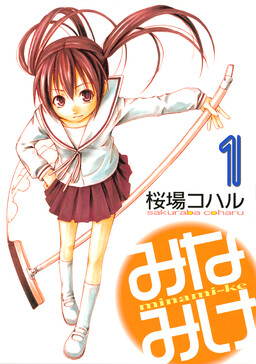
Minami-ke
Yu's review of Minami-ke — three sisters at different schools (eldest Haruka in high school, middle Kana in middle school, youngest Chiaki in elementary) share an apartment and their daily life generates endless comedy from their completely different personalities and the rotating cast of friends, admirers, and chaos that follows them home.
Slice of Life / Music
K-On!
Yu's review of K-On! — four high school girls join the light music club, drink tea, eat Mugi's cake, barely practice, and accidentally build a place worth crying over when it's time to leave.
Slice of Life
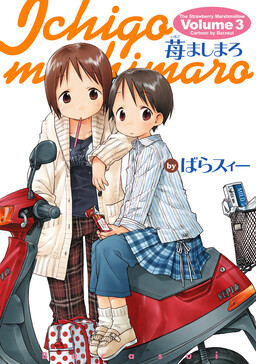
Ichigo Mashimaro
Yu's review of Ichigo Mashimaro — Nobue Itoh and the four grade-schoolers around her (her sister Chika, the chaotic Miu, the timid Matsuri, and British transplant Ana Coppola) drift through ordinary days in suburban Hamamatsu. Barasui's long-running deadpan comedy is built on Miu's relentless schemes and the cruel running joke of Ana forgetting her own English.
Comedy / Slice of Life
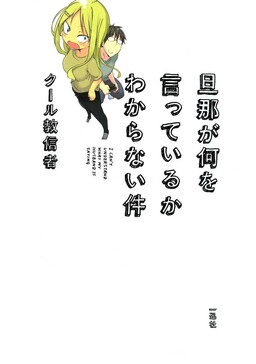
I Can't Understand What My Husband Is Saying
Yu's review of I Can't Understand What My Husband Is Saying (旦那が何を言っているかわからない件) — a 5-volume 4-koma comedy by Coolkyousinnjya about Kaoru, an ordinary office worker, and Hajime, her shut-in otaku-blogger husband. Their marriage works precisely because she doesn't always get the reference.

Slice of Life / Comedy
Dagashi Kashi
Yu's review of Dagashi Kashi by Kotoyama — Kokonotsu Shikada wants to draw manga, but his father runs a rural dagashi (cheap candy) shop and wants him to inherit it. Then Hotaru Shidare, the candy-obsessed heiress of a confectionery company, shows up to recruit his father and turns each cheap snack into a passionate lecture. A slice-of-life comedy about Japanese childhood candy culture.
Written by
Yu
Manga Enthusiast from Japan
I grew up in Japan and manga literally saved me during a tough time in elementary school. My English isn't perfect, but my love for manga is real — and I want to share it with you.
Disclosure: This post contains affiliate links. As an Amazon Associate, I earn from qualifying purchases at no extra cost to you.