
Hidamari Sketch Review: The Quietest Apartment Building I Never Wanted to Leave
by Ume Aoki
Read the first volume. If it doesn't hook you, put it down. It'll hook you.
Buy Hidamari Sketch on Amazon →*Affiliate link — I earn a small commission at no extra cost to you.
When I was a kid with no friends, the thing I wanted most wasn't adventure. It was a place where a few people knew my name and would notice if I didn't show up. I read a lot of loud manga back then — ninjas, pirates, people screaming their dreams at the sky. But the manga that I keep going back to as an adult are the quiet ones. Hidamari Sketch is the quietest of all of them, and somehow it's the one I miss when I close it.
It's a four-panel comic about four girls who live in a small apartment building and go to art school across the street. Nothing explodes. Nobody saves the world. And I have read it more times than almost anything else I own.
Quick Take
- A yonkoma (four-panel) slice-of-life by Ume Aoki about art students sharing the Hidamari Apartments — gentle, funny, and built entirely out of ordinary days
- More famous as Shaft's anime, but the manga has its own unhurried rhythm; each four-panel strip is one small, complete beat
- Age rating: All Ages — completely safe, nothing graphic, just warmth
Story Overview
Yuno passes the entrance exam for Yamabuki Art High School and moves into the Hidamari Apartments directly across from campus, into room 201. She's small, easily flustered, and not at all sure she belongs at an art school — but she can actually draw and paint, which is the thing she keeps forgetting to give herself credit for.
Right away she falls in with three other residents: Miyako, her loud, broke, endlessly creative classmate in room 202; and two second-years, Hiro and Sae, who live downstairs. Hiro is the cook of the building, left-handed, and perpetually anxious about her weight; Sae is tall and dry-humored and secretly publishes fiction under a pen name. The four of them eat together, go to school together, and survive critiques and festivals together.
There's no plot in the usual sense — the series moves through the calendar instead. New students arrive in later years (Nazuna and Nori), Hiro and Sae's graduation looms over the upperclassmen, and by Volume 10 Yuno has become a senior herself, with entrance exams pressing in and the awareness, finally, that these are the last festivals and the last summer with this exact group of people. The Japanese serialization is still technically ongoing (released irregularly in Manga Time Kirara Carat), so the story doesn't have a hard ending yet — it just keeps turning the seasons.
Characters
Yuno — The anchor. She wears the black X-shaped hairpins that became the series' signature, lives in room 201, and spends most of the early volumes underestimating herself. Her arc is small and real: a kid who left home for the first time slowly realizing she's good at the thing she loves, and that the people around her already believe it before she does.
Miyako — Yuno's best friend next door in 202. Blonde, spontaneous, from a large poor family, and bottomlessly creative — she'll turn garbage into an art project and a cheap meal into an event. She eats everything in sight and is the warmest engine of the whole series.
Hiro and Sae — The two second-years downstairs, and the heart of the building. Hiro became a genuinely good cook to look after everyone, and worries constantly about her figure; Sae writes fiction under a pseudonym and gets visibly uncomfortable whenever romance comes up. Their friendship — two people who clearly take care of each other — is the most emotionally complete relationship in the series, and their eventual graduation is the closest thing Hidamari Sketch has to a heartbreak.
Nazuna and Nori — The first-years who move in later. Nazuna enrolls as a general-course (non-art) student and quietly nurses an inferiority complex; Nori is the level-headed one, a computer-graphics specialist who speaks in Kansai dialect. They keep the building full as the older girls move toward graduation.
What I Love About It
The meals. Almost every chapter has someone cooking or the four of them crowded around a table, and these aren't fancy meals — they're what art students on no money actually eat, stretched and shared and made into an occasion because Hiro decided to make it one. The series puts the same care into a hot-pot night that other manga put into a final battle, and over ten volumes that care accumulates into something that feels less like reading and more like being let into someone's kitchen.
What gets me is the structure itself. The anime made it a running motif and the manga's rhythm lives the same way: Yuno wakes up, the day happens, and it ends with her in the bath, soaking and turning the day over. That little frame — morning, ordinary day, bath, sleep — repeated across years, is the whole argument of the series. It says: this is a life. Not the dramatic parts of a life, the actual texture of one. The first time I noticed that the days were quietly stacking into years — that Yuno had become a senior without any single big moment marking it — I had to put the book down. That's exactly how my own good years passed, too, and I never noticed until they were behind me.
Memorable Scene ⚠️ Spoiler Warning
Volume 10 is Yuno's senior year, and the official framing is brutal in the gentlest possible way: "the final summer vacation, the final sports festival, the final cultural festival." Exams are bearing down, the future is genuinely uncertain — and instead of treating that as a crisis, Yuno makes a deliberate decision not to waste the last months with her Hidamari friends. Sushi outings, a pool party, stargazing.
What makes it land is everything that came before it. You've watched these girls do the ordinary version of all these things for nine volumes. Now the same activities arrive wearing the word "final," and Yuno — the kid who spent Volume 1 unsure she even belonged — is the one choosing to be present for all of it. There's no big speech. It's just a small person deciding to pay attention while she still can, and after a thousand pages of soft comedy that quiet resolve hit me harder than any dramatic farewell could have.
Pros & Cons
Pros
- Warm without ever turning saccharine — the kindness feels earned, not manufactured
- The relationships, especially Hiro and Sae's, accumulate real weight over ten volumes
- Each four-panel strip is a tidy, complete little joke or beat — easy to dip into
- Genuinely calming; perfect for when the world is too loud
Cons
- No overarching plot — if you need narrative momentum, this isn't it
- The Japanese series is still technically unfinished and updates rarely, so don't expect a tidy final volume
- The yonkoma rhythm is an acquired taste, and pure slice-of-life with no stakes simply won't work for everyone
Is Hidamari Sketch Worth Reading?
If you want a story that builds and pays off, no. If you want to spend ten volumes inside a small, warm building with four people who like each other, eating cheap good food and slowly growing up — yes, completely. It's one of Manga Time Kirara's gentlest entries, and it does the quiet thing better than almost anything I've read.
Similar Manga
| Title | Its Approach | How Hidamari Sketch Differs |
|---|---|---|
| ARIA | Slow iyashikei beauty in a fantastical Venice | Trades the fantasy setting for a tiny real-world apartment and art school |
| K-On! | School-club found family built on music | Swaps the band for an art school and the shared building of the Hidamari Apartments |
| GA: Geijutsuka Art Design Class | Comedy set in an art high school | Focuses on home life and found family more than on art lessons themselves |
Where to Buy
Read the first volume. If it doesn't hook you, put it down. It'll hook you.
(Note: Yen Press publishes it in English under the title Sunshine Sketch — same series, same girls.)
This post contains affiliate links. If you purchase through these links, I may earn a small commission at no extra cost to you. As an Amazon Associate, I earn from qualifying purchases.
*Affiliate link — I earn a small commission at no extra cost to you.
More Manga You Might Like

Slice of Life / Comedy
GA: Geijutsuka Art Design Class
Yu's review of GA: Geijutsuka Art Design Class — a four-panel comedy about five girls in a high-school art and design course, where color theory and a freeze-tag game become the punchline.

Slice of Life / Comedy
Slow Start
Yu's review of Slow Start — Hana Ichinose started high school a year late due to illness, making her a year older than her classmates; the series follows her trying to fit in with her new friends while carrying the secret that she is different, in Tokumi Yuiko's characteristic warm and gentle 4-koma style.

Slice of Life / Comedy
Lucky Star
Yu's review of Lucky Star — Konata Izumi, an anime-obsessed high schooler, and her friends Kagami, Tsukasa, and Miyuki talk their way through school life in Kagami Yoshimizu's 4-koma comedy. It starts with a debate about how to eat a chocolate cornet and somehow never needs more plot than that.
Slice of Life / Comedy
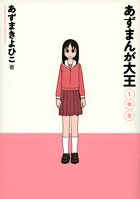
Azumanga Daioh
Yu's review of Azumanga Daioh — Kiyohiko Azuma's four-panel comedy that follows six high school girls across three years of ordinary school life, from Chiyo the child prodigy to Osaka the daydreamer.

Slice of Life
Kill Me Baby
A review of Kaduho's Kill Me Baby — ongoing in Manga Time Kirara Carat since July 2008, 16+ volumes in Japan. Sonya is a trained assassin; Yasuna is her completely unfazed school friend. Yen Press publishes the English edition.

Slice of Life / Comedy
Keep Your Hands Off Eizouken!
A review of Keep Your Hands Off Eizouken! by Sumito Oowara — three high school girls form an anime-making club, and the manga keeps stepping inside their imaginations to show you what making something actually feels like.
Written by
Yu
Manga Enthusiast from Japan
I grew up in Japan and manga literally saved me during a tough time in elementary school. My English isn't perfect, but my love for manga is real — and I want to share it with you.
Disclosure: This post contains affiliate links. As an Amazon Associate, I earn from qualifying purchases at no extra cost to you.