
Hi Score Girl Review: A Boy Who Only Cares About Arcade Games Meets a Girl Who Beats Him at Every One
by Rensuke Oshikiri
Read the first volume. If it doesn't hook you, put it down. It'll hook you.
Buy Hi Score Girl on Amazon →*Affiliate link — I earn a small commission at no extra cost to you.
When I was a kid, the arcade near the station was the one place nobody asked me why I had no friends. You put your coin on the cabinet, you waited your turn, and the machine did not care who you were. I was not good. But I loved sitting close enough to watch the people who were good, the ones whose hands moved like they were not even thinking. So when I finally read Hi Score Girl, I felt found out. Rensuke Oshikiri wrote a whole manga about that exact feeling — the kid who only matters when he is in front of a screen — and then he gave that kid the one thing I never had: a girl who sat down next to him and beat him so badly that he had to keep coming back.
Quick Take
- The best manga I have read about 1990s arcade culture — and it earns its romance through one of the strangest, most touching relationships in the medium
- Akira Ono never speaks a single word, and somehow she is the loudest character in the book
- 10 volumes, complete in English; rated T (Teen) — mild fighting-game violence and one very famous slap
Story Overview
It is 1991. Haruo Yaguchi is twelve, a loner, a bad student, and the best Street Fighter II player at his elementary school — which, in his head, is the only ranking that counts. The arcade is his whole world.
Then he meets Akira Ono. She is the top student in his grade, beautiful, and from the Ono zaibatsu, one of those impossibly wealthy families. She is also, it turns out, slumming it in the same grimy arcade Haruo treats as a temple — and she beats him at Street Fighter II thirty times in a row, without changing her expression once. Akira does not speak. Not to Haruo, not to anyone. Everything she communicates, she communicates through her face, her posture, and the characters she picks on the select screen.
Haruo cannot stand losing to her, so he keeps coming back, and somewhere in the endless rematches a friendship forms that neither of them has the words for — literally, in her case. The manga follows them from age twelve to around seventeen, through the years when Akira's family ships her abroad, when a second girl named Koharu Hidaka enters the picture, and when the arcades themselves start slowly dying as home consoles take over. It is a coming-of-age story measured in console generations.
Characters
Haruo Yaguchi — The loud one. Haruo says everything out loud, often the wrong thing, usually about games. His whole arc is learning that the feelings he has about Akira are not the same as the feelings he has about winning, and that he is far too dense to tell the difference at first. Watching him slowly grow a heart over ten volumes is the spine of the book.
Akira Ono — The silent prodigy. She never speaks, yet she is never blank. Oshikiri makes her readable entirely through art: a tilt of the head, a flicker of the eyes, the way she body-slams Haruo when she is happy. Her family has a future planned for her that has nothing to do with arcades or with a boy like Haruo, and the tension between what she wants and what she is allowed is the engine of the whole story.
Koharu Hidaka — A classmate who is shy and ordinary at the start, and who falls for Haruo after he teaches her games. She becomes genuinely skilled, and genuinely heartbroken, and the manga refuses to treat her as a disposable love-triangle obstacle. Her feelings are real and they cost her.
Kotaro Miyao — Haruo's friend from junior high, more casual about the arcade scene than Haruo is. He plays the role of the guy standing slightly outside the romance, watching these two idiots fail to understand each other, which is also how the reader feels.
What I Love About It
What I love is that Oshikiri made a romance where the female lead never speaks, and instead of treating it as a gimmick, he treats it as a craft problem and solves it page after page. Akira's whole inner life has to land through drawing alone. So when Haruo says something stupid, you watch her eyebrows move a millimeter, and you know exactly how angry she is. When she is happy, she does not smile politely — she tackles him to the ground. The manga teaches you her language the same way Haruo learns it, slowly, by paying attention, and by the third volume I realized I was reading her face faster than I read the dialogue balloons.
The other thing is the games. Oshikiri does not use "arcade" as set dressing. He draws the actual cabinets, the actual fighting-game match-ups, the specific feeling of the early '90s when being good at Street Fighter II was real social currency among kids who had nothing else. As someone who grew up haunting those places, I kept getting ambushed by recognition — the sticky buttons, the crowd watching over your shoulder, the way a thirty-loss streak feels like the end of the world when you are twelve. It made me believe these characters, because their world was rendered with a love I personally understood.
Memorable Scene ⚠️ Spoiler Warning
Two scenes own me. The first is small: early on, desperate to finally beat Akira at Street Fighter II, Haruo resorts to cheap, underhanded tactics — and the silent girl, without a word, slaps him across the face. It is the first time she touches him and the first time he understands she has standards he just violated. That slap launches the entire relationship.
The second is the one I think about for days. Akira's family sends her abroad, and Haruo — who has spent the whole time pretending he does not care — shows up cold and distant at the airport, holding a cheap plastic ring he won out of an arcade machine. And Akira, the girl who never reacts, fights her way past the family minders escorting her, runs back, grabs him, and cries openly. The girl who has spent volumes saying nothing finally says everything, and she does it without a single word. I had to put the book down.
Pros & Cons
Pros
- A wordless heroine who is somehow the most expressive character in the manga
- Period arcade detail that is accurate, specific, and rendered with obvious love
- A love triangle (Koharu) that is given real weight instead of being a punchline
- Complete at 10 volumes, with a real ending — no eternal hiatus
Cons
- If you have zero nostalgia or curiosity for '90s arcade fighting games, some of the texture will pass you by
- The early volumes are comedy-forward; the deeper emotion takes a while to build
- A romance carried by facial expression instead of dialogue asks for patience — that's either the whole appeal or a dealbreaker, and it won't work for everyone
Is Hi Score Girl Worth Reading?
Yes. It is funny, it is specific, it is complete, and it pulls off the hardest trick in romance manga: making you fall for a character who never speaks. If you ever loved an arcade, or ever loved someone you could not find the words for, this one is for you.
Similar Manga
| Title | Its Approach | How Hi Score Girl Differs |
|---|---|---|
| Wotakoi: Love Is Hard for Otaku | Adult gamers and otaku navigating romance through shared hobbies | Hi Score Girl is a coming-of-age set in childhood, with one lead who literally cannot speak |
| Kaguya-sama: Love Is War | Two prideful geniuses who refuse to confess first | Hi Score Girl's silence is genuine, not strategic — Akira simply does not talk |
| Yotsuba&! | Slice-of-life charm built almost entirely on expressive cartooning | Hi Score Girl aims that expressive art at a years-long teenage romance |
Where to Buy
Read the first volume. If it doesn't hook you, put it down. It'll hook you.
This post contains affiliate links. If you purchase through these links, I may earn a small commission at no extra cost to you. As an Amazon Associate, I earn from qualifying purchases.
*Affiliate link — I earn a small commission at no extra cost to you.
More Manga You Might Like
Slice of Life / Drama
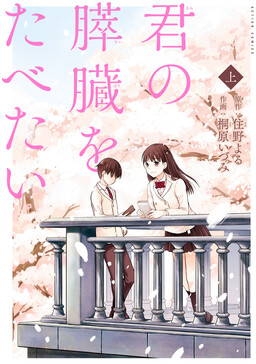
I Want to Eat Your Pancreas
Yu's review of the I Want to Eat Your Pancreas manga — Idumi Kirihara's adaptation of Yoru Sumino's novel. A withdrawn boy finds classmate Sakura Yamauchi's secret diary and learns she's dying of a pancreatic illness. She chooses him precisely because he won't treat her like a dying girl. Seven Seas collected the two Japanese volumes into one English omnibus.

Slice of Life / Romance
Tsurezure Children
Yu's review of Tsurezure Children — a romantic anthology following multiple high school couples in short-form episodes; each chapter follows a different couple in a different stage of confession or early relationship; a warm comedy anthology about the specific awkwardness of telling someone you love them.
Slice of Life
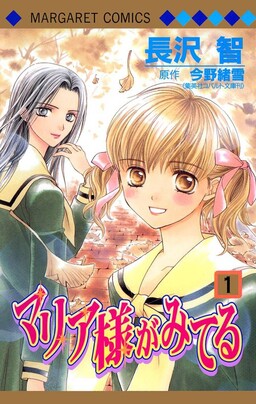
Maria Watches Over Us (Marimite)
Yu's review of Maria Watches Over Us — Yumi is a first-year student at the Lillian Girls' Academy, a Catholic school with a tradition of 'soeur' relationships between older and younger students; she is noticed by the beautiful third-year Sachiko; Nagasawa's adaptation of Konno's beloved light novel about ritual, belonging, and the specific intensity of all-girls school friendships.
Slice of Life
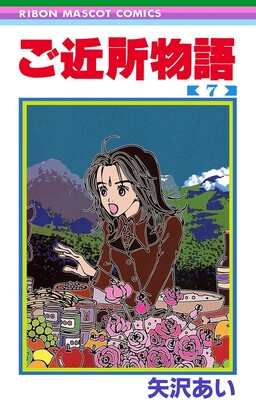
Gokinjo Monogatari
Yu's review of Gokinjo Monogatari (Neighborhood Story) — Ai Yazawa's 1995 Ribon manga about Mikako Kouda, a fashion student building her Happy Berry brand, and her childhood-friend neighbor Tsutomu. The early-Yazawa series that sits one universe over from Paradise Kiss, finally complete in English from VIZ.
Slice of Life / Romance
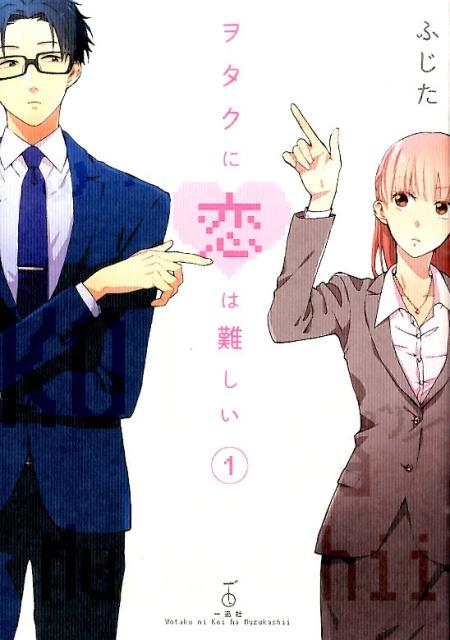
Wotakoi: Love Is Hard for Otaku
Yu's review of Wotakoi — Narumi hides her fujoshi hobby at every job she has ever had; at her new job she discovers her childhood friend Hirotaka is there, and he knows all her secrets; they start dating, and navigate being adult otaku in a relationship together.
Slice of Life / Drama
Wandering Son
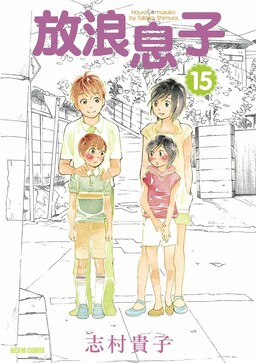
Yu's review of Wandering Son — Shuichi Nitori is a boy who wants to be a girl; his new friend Yoshino Takatsuki is a girl who wants to be a boy; the manga follows both of them from elementary school through adolescence as they navigate gender identity, friendship, and growing up; a gentle, serious work about transgender experience.
Written by
Yu
Manga Enthusiast from Japan
I grew up in Japan and manga literally saved me during a tough time in elementary school. My English isn't perfect, but my love for manga is real — and I want to share it with you.
Disclosure: This post contains affiliate links. As an Amazon Associate, I earn from qualifying purchases at no extra cost to you.