
Hayate the Combat Butler Review: A Gag Manga That Learned to Mean It
by Kenjiro Hata
Read the first volume. If it doesn't hook you, put it down. It'll hook you.
Buy Hayate the Combat Butler on Amazon →*Affiliate link — I earn a small commission at no extra cost to you.
I read a lot of manga to escape when I was a kid, and most of the funny ones I loved as a teenager don't survive a reread. The jokes age. The references stop meaning anything. Hayate the Combat Butler is the strange exception for me. I picked it up expecting a dumb harem gag comedy, and that's exactly what it is for a long time — and then somewhere in the middle it quietly started to matter to me, and I didn't notice it happening until it already had.
This is the kind of manga that disarms you on purpose. It spends so long being silly that you stop guarding yourself, and then it lands something real.
Quick Take
- A long-running gag comedy by Kenjiro Hata that slowly grows a sincere romantic core under all the parody
- The engine is Hayate himself — a genuinely good person buried in inherited debt and bad luck who just refuses to stop trying
- Age rating: T (Teen) — slapstick violence, mild fanservice, and harem conventions, nothing graphic
Story Overview
Hayate Ayasaki has worked to support himself since he was nine, because his parents are gamblers who spend everything he earns. On Christmas Eve they vanish, leaving him a 156 million yen debt sold off to loan sharks. Cornered, sixteen-year-old Hayate decides the only way out is to kidnap someone wealthy for ransom.
He picks Nagi Sanzenin — a thirteen-year-old heiress of one of Japan's richest families. When he tries to take her, the words come out clumsily, and Nagi hears them as a love confession. She falls for him on the spot. Instead of being kidnapped, she hires him as her butler and pays off his debt.
From there the series runs on misunderstanding. Nagi is in love with Hayate; Hayate is devoted to Nagi as her butler but doesn't return her feelings romantically; and an expanding cast of girls fall for Hayate one by one. The Japanese serialization ran in Weekly Shonen Sunday from 2004 to 2017, finishing at 52 volumes. The ending pays off the central thread: Nagi eventually gives up her status as heir, sets Hayate free, and the two reunite years later at the place they first met.
Characters
Hayate Ayasaki — The reason the whole thing works. His superhuman competence is a running joke, but his goodness is real. He's been carrying other people's debts since childhood and somehow came out kind instead of bitter. His arc is the slow discovery of his own past, including his connection to his first love, Athena.
Nagi Sanzenin — A spoiled, otaku heiress who starts out unable to do anything for herself and unable to understand other people. Her growth — falling for Hayate, then choosing to sacrifice her inheritance to save him, then learning to let him go — is the emotional spine of the series, and it's more earned than the comedy packaging suggests.
Hinagiku Katsura — Hakuo Academy's student council president, a kendo ace who's secretly carrying her own abandonment story (adopted by the Katsura family after her birth parents left her with a debt). She also has a severe fear of heights. She realizes she loves Hayate on her sixteenth birthday, and she's the fan favorite for a reason.
Maria — The Sanzenin household's brilliant young maid, the one person who actually understands the true nature of Hayate and Nagi's relationship. She has her own quiet feelings for Hayate but consistently puts Nagi first.
What I Love About It
What surprised me about Hayate is that the comedy never undercuts the sincerity — it protects it. The series spends pages on absurd parody and fourth-wall jokes, and that lowers your guard so completely that when Hata wants to land something genuine, it hits harder than it has any right to.
The clearest example for me is Hinagiku. For most of the series she's the cool, capable student council president who can beat anyone at anything — except she's hiding a serious fear of heights. It's played for jokes at first. But the payoff is that Hayate takes her by the hands at the top of the school clock tower and makes her look out at the view. She's terrified, she keeps her eyes shut, and then she opens them and actually sees it. That small moment — a girl letting someone she's started to trust walk her through the thing that scares her most — is the whole manga in miniature. The gag setup becomes a tender, human beat without ever announcing the shift. That's the craft I keep coming back for.
Memorable Scene ⚠️ Spoiler Warning
The marathon arc is the one that stuck with me. During the school's freestyle marathon, Hayate needs to slow down Hinagiku — who's winning everything — so he lures her onto a suspension bridge, knowing about her acrophobia. The moment she becomes aware of where she is, she freezes completely, paralyzed by the height, while Hayate slips away.
It's cruel and funny in the moment, but it's also the seed of something. That unfinished confrontation is what makes Hinagiku start examining her own feelings — she keeps circling back to the fact that things with Hayate were left unsettled. A cheap comedy bit on a rope bridge becomes the first crack in her certainty about herself. That's the trick this series pulls over and over: the joke now, the feeling later, and you don't see the connection until it's already paid off.
Pros & Cons
Pros
- Hayate is a genuinely likeable lead whose decency carries the whole long run
- The comedy disarms you so the sincere beats land harder
- Strong, distinct supporting cast, especially Hinagiku and Nagi
- Clean, consistent, expressive art across a thirteen-year serialization
Cons
- The English release from Viz is still incomplete — the back volumes aren't all out
- Early volumes are dense with dated 2000s otaku references
- It's a long, slow-building series, and harem comedy genuinely won't work for everyone
Is Hayate the Combat Butler Worth Reading?
Yes, if you're patient. It starts as a disposable gag comedy and quietly becomes a sincere story about a good kid, the people who love him, and the debts — literal and emotional — they all carry. The humor is the delivery system; the heart is what stays. Just know going in that Viz hasn't finished publishing the English edition yet.
Where to Buy
Read the first volume. If it doesn't hook you, put it down. It'll hook you.
This post contains affiliate links. If you purchase through these links, I may earn a small commission at no extra cost to you. As an Amazon Associate, I earn from qualifying purchases.
*Affiliate link — I earn a small commission at no extra cost to you.
More Manga You Might Like

Slice of Life
Haiyore! Nyaruko-san
Yu's review of Haiyore! Nyaruko-san — Kei Okazaki's manga of Manta Aisora's light novel, where Nyarlathotep the Crawling Chaos shows up as a cheerful silver-haired alien girl, moves into an ordinary boy's house, and mostly wants to talk about anime and games while he fends her off with a fork.

Slice of Life / Romance
Teasing Master Takagi-san
Yu's review of Teasing Master Takagi-san — Takagi teases her desk neighbor Nishikata every single day; he keeps making plans to get back at her; she always wins; the series is about two middle school students who are clearly in love with each other before either of them knows how to say it.
Slice of Life / Comedy
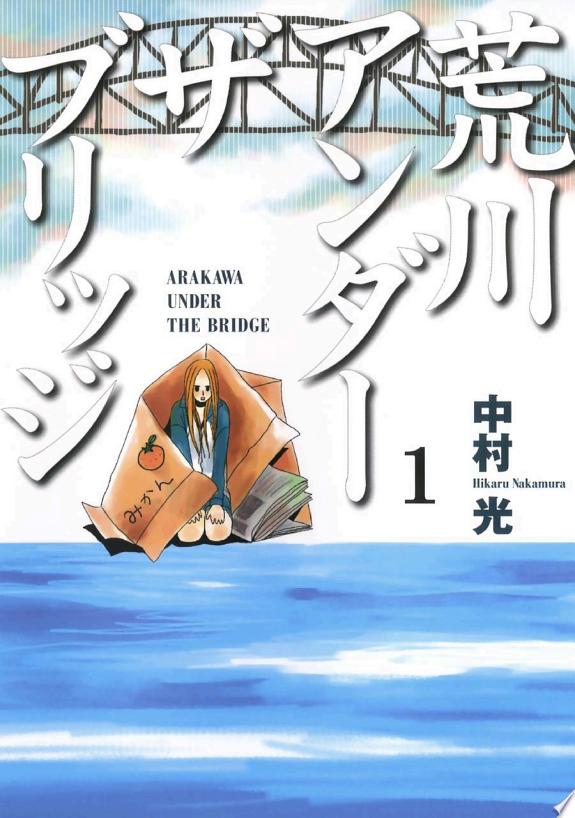
Arakawa Under the Bridge
Yu's review of Arakawa Under the Bridge — an absurdist comedy in which a self-made elite young man, saved from drowning by a woman who lives under a bridge and believes she's from Venus, must repay the debt by becoming her boyfriend and joining the strange community by the river.

Comedy
Kochira Katsushika-ku Kameari Kouenmae Hashutsujo
Osamu Akimoto's *Kochira Katsushika-ku Kameari Kouenmae Hashutsujo* (mercifully shortened to *Kochikame*) ran in Weekly Shonen Jump from 1976 to 2016 — 40 years, 200 volumes (plus a standalone 201st in 2021), making it Jump's longest-running serialized work. Ryotsu Kankichi is the cop. Gambling and money-making schemes are his main interests. Police work is somewhere distant. Unlicensed in English.
Slice of Life / Comedy
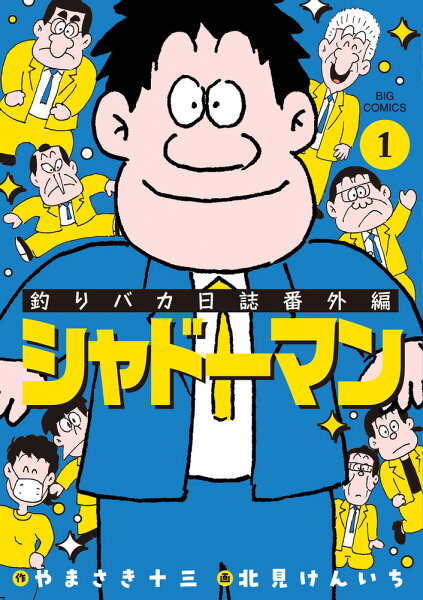
Tsuribaka Nisshi
Tsuribaka Nisshi follows Densuke 'Hama-chan' Hamasaki — a dead-average salaryman obsessed with fishing — who unknowingly befriends Ichinosuke 'Su-san' Suzuki, the president of the construction company he works for, after the two meet over a leftover grilled fish.

Slice of Life / Romance
Dasei 67%
Dasei 67% follows art-school student Minami Yoshizawa and the three friends who never leave her tiny apartment, drifting through a college life that runs on about 67% effort and 100% dumb, lovable inertia.
Written by
Yu
Manga Enthusiast from Japan
I grew up in Japan and manga literally saved me during a tough time in elementary school. My English isn't perfect, but my love for manga is real — and I want to share it with you.
Disclosure: This post contains affiliate links. As an Amazon Associate, I earn from qualifying purchases at no extra cost to you.