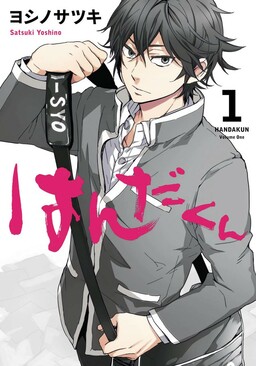
Handa-kun Review: The Most Loved Kid in School Thinks He's the Most Hated
by Satsuki Yoshino
Read the first volume. If it doesn't hook you, put it down. It'll hook you.
Buy Handa-kun on Amazon →*Affiliate link — I earn a small commission at no extra cost to you.
When I first read Barakamon, I fell in love with the grown-up Handa — the prickly calligrapher who punches a critic and gets exiled to a tiny island. So when I learned there was a prequel about his high school years, I expected something serious. A backstory. How does a person end up that wound-up and lonely? I opened Handa-kun expecting sadness.
Instead I laughed so hard I had to put the book down. Because the joke is this: in high school, Sei Handa was not lonely at all. He was the most adored boy in the entire school. He just had absolutely no idea, and was 100% convinced everyone hated him. As a kid who actually was friendless, I expected this to sting. It didn't. It's one of the kindest comedies I've ever read about a person who can't see how much people care about him.
Quick Take
- A school comedy built on one perfect engine: everyone worships Handa, and Handa is certain everyone despises him — and both sides keep misreading each other
- A prequel to Barakamon by the same author, Satsuki Yoshino, but it reads completely on its own
- 7 volumes, complete in English from Yen Press; rated T (Teen) — comedic violence and social-anxiety humor, nothing graphic
Story Overview
Sei Handa is a second-year high schooler, already famous for his calligraphy and for being the son of a renowned calligrapher. By every external measure, he is the king of the school. People line up to be near him. They project deep meaning onto his smallest gestures.
The origin of the whole mess is one cruel little joke. A popular older girl sent Handa a love letter through his only real friend, Kawafuji. Kawafuji, being a teenage boy, joked that she'd actually written to mock his handwriting. He told Handa it was a prank — but it was too late. That one comment calcified into a permanent belief: people don't admire me, they hold me in contempt. From then on, Handa reads every crowd as a mob and every compliment as sarcasm.
The series moves chapter by chapter as different students enter Handa's orbit — a reformed delinquent, a jealous pretty boy, a man-hating student council president — and each encounter ends the same way: they walk away worshipping him, and he walks away more certain than ever that he's hated. By the end, he has accumulated an entire devoted following without ever once noticing it exists.
Characters
Sei Handa — The prodigy at the center. His self-image and reality are completely severed: he interprets adoration as persecution, kindness as bullying, and his own accidental coolness as proof people are messing with him. The comedy is that he's not stupid — he's just locked inside one bad assumption he can't escape.
Kawafuji — Handa's one genuine friend and the only person who sees him as he actually is, flaws and all. He's also, accidentally, the cause of everything: his offhand love-letter joke is the seed of Handa's whole complex. In Barakamon he's the adult Handa's art dealer, so this is where their friendship begins.
Akane Tsutsui — A delinquent with one of the best arcs in the book. Half a year before the story he was a weak, androgynous kid who got picked on, shut himself in his room blaming himself, then trained obsessively until he became the toughest guy in the neighborhood. When Handa is sent to deliver his absence notes, Tsutsui misreads it as a challenge — then, after thugs flee at the sight of Handa, decides Handa rescued him. He returns to school purely to serve as Handa's self-appointed bodyguard.
The Handa Force — The unofficial fan club / "bodyguard" squad: class rep Junichi Aizawa, the pretty-boy Reo, Tsutsui, and Kondo. Each joined through a misunderstanding, and none of them realizes their constant "protecting" is exactly what makes Handa think he's surrounded by dangerous stalkers. Kondo is the sensible one, forever ignored by the others.
What I Love About It
What I love is how perfectly symmetrical the comedy is. It's not just that Handa misreads everyone — everyone misreads him right back, in the opposite direction, with equal conviction. He thinks his fans are a mob coming to hurt him; his fans think his terrified attempts to escape are displays of godlike composure. Two completely wrong readings happening at the exact same moment, and the reader is the only one standing in the middle who can see both. That's a hard trick to keep funny for seven volumes, and Yoshino lands it.
And underneath the slapstick there's something I find genuinely moving. As someone who grew up believing nobody liked me, I know how unshakable that belief gets — how you can be handed evidence to the contrary and still bend it back into proof of being unwanted. Handa does that on every page. The difference is that the manga isn't cruel about it. The whole school really does love him. The reader knows he's safe and cherished even when he can't feel it. There's something weirdly comforting in watching a story where the lonely person is wrong about being alone — where the affection was there the whole time, he just couldn't let himself see it.
Memorable Scene ⚠️ Spoiler Warning
The arc that stuck with me most is the amnesia storyline in volume 3. A man-hating student council president, Sawako Tennouji, sets out to destroy Handa's reputation through slander — and instead accidentally causes him to lose his memory. With the persecution complex wiped clean, Handa wakes up as a completely different person: cheerful, warm, openly happy to be around people.
And here's the brilliant twist — the school rejects this version. They decide the pleasant, friendly Handa must be a fake, an impostor, because the "real" Handa they worship is the brooding, untouchable one. The one piece of him that was actually making him miserable is the exact thing his fans had fallen in love with. It's hilarious and a little sad at once: even when Handa is finally free of the lie in his own head, everyone else insists on putting the mask back on him. That's the chapter that told me this comedy was smarter than it looked.
Pros & Cons
Pros
- A single comic engine executed with real precision across all 7 volumes
- The double-misunderstanding structure stays inventive instead of repetitive
- Tsutsui's and the amnesia arcs give it surprising emotional texture
- Complete in English, and works without having read Barakamon
Cons
- It's built on one premise — if the joke doesn't land for you early, it never will
- Character growth is intentionally frozen; Handa cannot learn, by design
- The relentless misunderstanding format is the whole show, and that single-note comedy won't work for everyone
Is Handa-kun Worth Reading?
Yes — if a perfectly engineered running gag sounds like a good time. It's a tight, complete, genuinely clever comedy about a boy too convinced of his own unpopularity to notice he's the most loved person in the building. It's lighter than Barakamon, but the symmetry of its misunderstandings and a couple of surprisingly tender arcs make it more than a throwaway spinoff. The only readers it won't suit are those who need their characters to grow and change — Handa, gloriously, never does.
Who Is This Manga For?
- Barakamon fans who want to see where Handa and Kawafuji's friendship started
- Readers who love misunderstanding-driven comedy where the audience is in on every joke
- Anyone who likes oblivious-protagonist humor (think Nozaki-kun)
- People who want a complete, low-commitment school comedy at 7 volumes
Similar Manga
| Title | Its Approach | How Handa-kun Differs |
|---|---|---|
| Barakamon | The sincere main series about adult Handa finding himself on a rural island | Handa-kun is pure comedy and runs on misunderstanding rather than growth |
| Monthly Girls' Nozaki-kun | School comedy driven by an oblivious lead who misreads romance | Handa-kun's lead misreads adoration as hatred, not love |
| Sakamoto Days / Haven't You Heard? I'm Sakamoto | An impossibly cool figure whose mundane actions are read as legendary | In Handa-kun the "cool" guy is secretly terrified and thinks he's despised |
Where to Buy
Read the first volume. If it doesn't hook you, put it down. It'll hook you.
This post contains affiliate links. If you purchase through these links, I may earn a small commission at no extra cost to you. As an Amazon Associate, I earn from qualifying purchases.
*Affiliate link — I earn a small commission at no extra cost to you.
More Manga You Might Like
Slice of Life / Fantasy
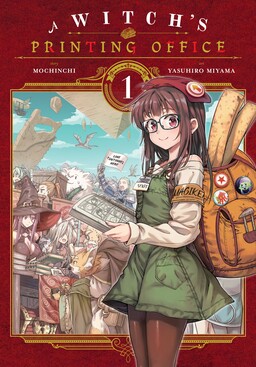
A Witch's Printing Office
Yu's review of A Witch's Printing Office — Mika is a modern Japanese woman who worked at Comiket (the giant doujinshi convention) and wakes up in a fantasy world where magical festivals share printed pamphlets; using her knowledge of convention organization and printing logistics, she builds a business that transforms how the fantasy world shares information.
Slice of Life / Comedy
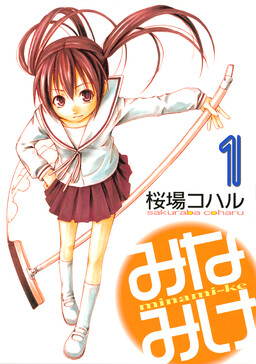
Minami-ke
Yu's review of Minami-ke — three sisters at different schools (eldest Haruka in high school, middle Kana in middle school, youngest Chiaki in elementary) share an apartment and their daily life generates endless comedy from their completely different personalities and the rotating cast of friends, admirers, and chaos that follows them home.

Slice of Life
Wakakozake
Yu's review of Wakakozake — Murasaki Wakako, a young office worker, spends her evenings alone at izakayas, carefully selecting food and sake pairings; each short chapter follows one evening, one food, one drink, and her quiet appreciation; the series is a celebration of eating alone as a specific pleasure.

Slice of Life / Comedy
Slow Start
Yu's review of Slow Start — Hana Ichinose started high school a year late due to illness, making her a year older than her classmates; the series follows her trying to fit in with her new friends while carrying the secret that she is different, in Tokumi Yuiko's characteristic warm and gentle 4-koma style.

Slice of Life / Comedy
Phantom of the Idol
Yu's review of Phantom of the Idol — Yuuya Niyodo is an idol who hates performing and tries to be fired; Asahi Mogami is the ghost of an idol who died before she could reach her dreams; when she possesses Yuuya during a performance, they strike a deal — she performs through his body, he reaps the rewards.

Slice of Life
Not Love But Delicious Foods Make Me So Happy!
Yu's review of Not Love But Delicious Foods Make Me So Happy! — the protagonist is a manga artist who won't date but will eat anything; she navigates Tokyo restaurants with friends, colleagues, and editors; Fumi Yoshinaga's semi-autobiographical restaurant guide manga that doubles as character comedy about a woman who prioritizes food over romance.
Written by
Yu
Manga Enthusiast from Japan
I grew up in Japan and manga literally saved me during a tough time in elementary school. My English isn't perfect, but my love for manga is real — and I want to share it with you.
Disclosure: This post contains affiliate links. As an Amazon Associate, I earn from qualifying purchases at no extra cost to you.