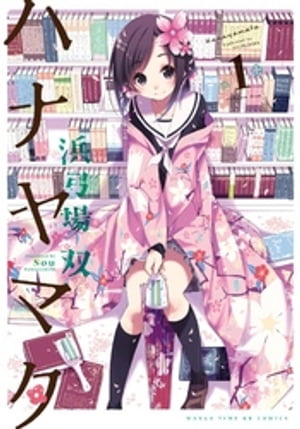
Hanayamata Review: The Girl Who Asked a Fairy to Take Her Somewhere Better
by Sō Hamayumiba
Read the first volume. If it doesn't hook you, put it down. It'll hook you.
Buy Hanayamata on Amazon →*Affiliate link — I earn a small commission at no extra cost to you.
When I was a kid I used to walk home the long way, past a little shrine, just so I wouldn't have to pass the houses where the other kids lived. I told myself I liked being alone. I didn't. I just didn't know how to ask anyone to let me in. So when I read the opening of Hanayamata — a quiet girl walking home at night, stopping cold because she sees someone dancing under the moon and blurts out, "Are you a fairy? Take me somewhere else" — I felt something tighten in my chest. That was me. That was the exact wish I never said out loud.
Hanayamata (ハナヤマタ) is Sō Hamayumiba's four-panel-rooted slice-of-life about yosakoi, a modern Japanese festival dance. It ran in Houbunsha's Manga Time Kirara Forward from 2011 to 2018 and finished at ten volumes. It is gentle on the surface and surprisingly sharp underneath, and I want to tell you why it stayed with me.
Quick Take
- Yosakoi — colorful festival dance with naruko clappers and modern music — gives this club manga a subject I'd never seen done with this much care.
- Each of the five girls joins (or resists joining) for a real, specific reason, so the friendships feel earned instead of automatic.
- Age rating: All Ages. There's nothing here a kid couldn't read, and a lot here an adult will feel.
Story Overview
Naru Sekiya is fourteen and convinced she is ordinary. She loves fairy tales but believes she's a side character in her own life, the girl who watches the heroines from a distance. Walking home one night, she sees a blonde girl dancing alone at a shrine and mistakes her for a fairy. That girl is Hana N. Fountainstand, an American transfer student who has come to Japan specifically because she fell in love with yosakoi, and she wants Naru to dance with her.
Naru panics and runs. But Hana doesn't give up, and slowly the two of them start trying to build a yosakoi club from nothing — no members, no school approval, no idea what they're doing. The middle of the series is the recruitment: Naru's sharp-tongued best friend Yaya, the proper student-council vice-president Tami, and the stiff, suspicious council president Machi each get pulled in, and each one has a knot they need to work loose before they can dance. The back half builds toward the girls performing yosakoi at the Hanairo festival, complicated by the threat that Hana — who lives in Japan apart from her mother — might have to go back to America. It's a story about an ordinary girl deciding to stop watching, told one small step at a time.
Characters
Naru Sekiya is the heart of it. She's not bullied exactly, just invisible, and she's made peace with invisibility in a way that's quietly sad. Her arc is the whole point of the series: the slow, terrifying journey from the girl who watches to the girl who stands in front of a crowd and dances. Hamayumiba refuses to fast-forward any of it.
Hana N. Fountainstand is the engine. An American girl who learned about yosakoi and decided that was her dream, full stop. She reads as pure sunshine, but the book is honest that her cheerfulness is partly a wall — she's a kid living far from her mother, holding her own homesickness behind a smile.
Yaya Sasame is Naru's best friend, sharp and protective, in a band with older students. Her arc is the one that surprised me most: when her band falls apart and she watches Naru build a new world with Hana, jealousy and fear of being left behind come pouring out. She has always seen herself as the one who looks after Naru, and she doesn't know who she is when Naru starts walking on her own.
Tami Nishimikado has spent her whole life — ballet, piano, tea ceremony, flower arranging — performing the perfect young lady to earn her father's approval. Yosakoi is the first thing she chooses for herself, and learning to want something for her own sake is her quiet rebellion.
Machi Tokiwa is the student-council president, rigid and hostile at first, and the reason is her older sister Sally, whom she idolized as a child until Sally left home. Machi's softening — once she understands why her sister really left — is one of the warmest turns in the book.
What I Love About It
The thing I love most is how seriously Hanayamata takes the smallness of Naru's growth. There's no magic switch where the shy girl becomes brave. Instead there's a hundred tiny dares: raising her hand, saying a sentence she rehearsed, holding the naruko clappers without dropping them. Hamayumiba draws the fear honestly — the hunched shoulders, the eyes sliding away — and then draws the exact moment it cracks open. Because I was that kid, every one of those small victories landed on me like a big one. I know how heavy a raised hand can be when you've spent years keeping it down.
And I love that the book lets being ordinary be the actual subject, not a phase to get past. Naru never becomes special. She doesn't have a hidden talent that blooms; she's a beginner the whole way through, and she's clumsy, and yosakoi is hard for her. What changes isn't her ability, it's her willingness to be seen trying. That's a far braver story than "secretly gifted girl discovers her gift," and it's the reason I'd hand this to anyone who ever felt like the side character in their own life. The manga believes that deciding to participate — fully, visibly, badly at first — is its own kind of heroism. I needed to read that. Maybe you do too.
Memorable Scene ⚠️ Spoiler Warning
The scene I can't shake is the very first one, and the series keeps paying it back. Naru, walking home at night, sees Hana dancing alone at the shrine in the moonlight, lit up and moving with a kind of ease Naru has never felt in her own body. She's so far outside her ordinary world that the only word she has for it is fairy — and she actually asks this stranger to take her somewhere else, somewhere better than the small careful life she's hiding inside. Then she gets scared and bolts, accidentally carrying off one of Hana's naruko clappers, a literal piece of that other world she can't quite let go of.
What gets me is how the whole ten volumes answer that one wish. Naru asked a fairy to carry her away. The series' quiet, stubborn reply is: no one's going to carry you — but you can learn to dance there yourself. The "somewhere else" she begged for turns out to be the same town, the same shrine, the same body, just with her finally standing in the middle of it instead of watching from the dark. By the time the festival arrives, the fairy-tale framing isn't a fantasy anymore. It's a girl who walked there on her own feet.
Pros & Cons
Pros:
- Naru's growth is drawn step by tiny step, so the emotional payoff is genuinely earned.
- Yosakoi is treated as a real art form, with attention to the dance, the costumes, and the naruko, not just as flavor.
- Five distinct girls, five real reasons to be there — the ensemble never feels like filler.
Cons:
- The early chapters are slow; the club takes a while to come together before the story finds its shape.
- It's a gentle, low-stakes story — no villains, no big drama — and that softness won't work for everyone.
Is Hanayamata Worth Reading?
Yes, if you want a patient, warm-hearted club manga that treats one ordinary girl's decision to be seen as a real journey. The yosakoi subject is lovingly done, the five-girl cast each carry a true arc, and the fairy-tale opening pays off beautifully. Skip it only if you need plot momentum and high stakes — this one moves at the speed of a shy heart learning to dance.
Where to Buy
No English release yet. That just means you find it before everyone else does. The Japanese print and digital editions from Houbunsha are the only legitimate way to read the manga right now.
Find Hanayamata on Amazon.co.jp →
This post contains affiliate links. If you purchase through these links, I may earn a small commission at no extra cost to you. As an Amazon Associate, I earn from qualifying purchases.
*Affiliate link — I earn a small commission at no extra cost to you.
More Manga You Might Like
Slice of Life / Comedy
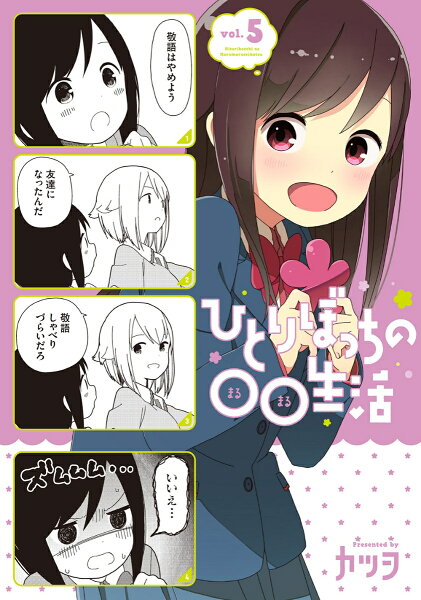
Hitoribocchi no Marumaru Seikatsu
A review of Katsuwo's Hitoribocchi no Marumaru Seikatsu — 9 volumes in Monthly Comic Alive. Bocchi Hitori starts middle school with a mission to make friends with everyone in her class; she is so socially anxious that she faints, vomits, and freezes up at the slightest interpersonal challenge. Yen Press's English edition is complete.
Slice of Life / Comedy
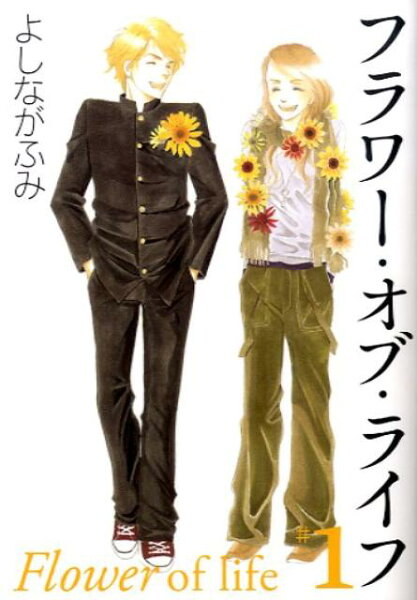
Flower of Life
A review of Flower of Life, Fumi Yoshinaga's warm and funny slice-of-life manga about a boy who returns to high school after surviving leukemia and the chaotic, manga-obsessed class he falls into.
Slice of Life
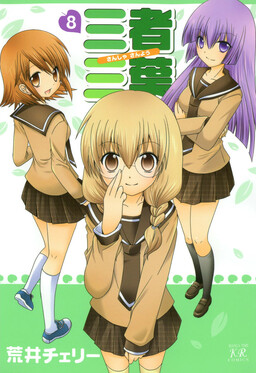
Sansha Sanyou
Yu's review of Sansha Sanyou — Youko Nishikawa (formerly wealthy), Futaba Odagiri (enthusiastic eater), and Teru Hayama (smiling sadist) are three incompatible high school girls who end up eating lunch together and become friends; Cherry Arai's gentle comedy about the friendships that form despite personality differences.

Slice of Life / Comedy
Keep Your Hands Off Eizouken!
A review of Keep Your Hands Off Eizouken! by Sumito Oowara — three high school girls form an anime-making club, and the manga keeps stepping inside their imaginations to show you what making something actually feels like.
Slice of Life / Romance
Teasing Master Takagi-san
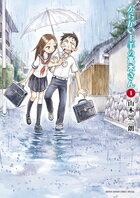
Yu's review of Teasing Master Takagi-san — Takagi teases her desk neighbor Nishikata every single day; he keeps making plans to get back at her; she always wins; the series is about two middle school students who are clearly in love with each other before either of them knows how to say it.
Slice of Life / Drama
Silver Spoon
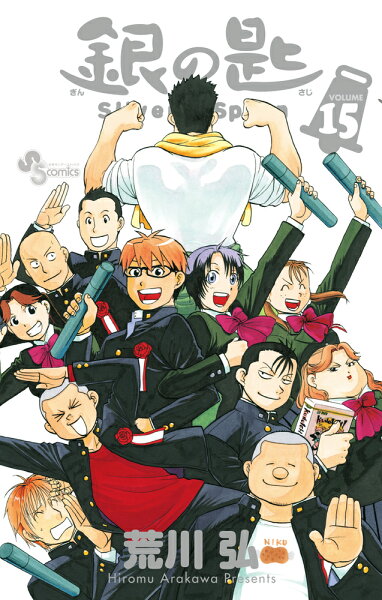
Yu's review of Silver Spoon — a city kid escapes to an agricultural high school to avoid his family, and discovers that farming, animal husbandry, and the people who feed the country have lessons no classroom ever taught him.
Written by
Yu
Manga Enthusiast from Japan
I grew up in Japan and manga literally saved me during a tough time in elementary school. My English isn't perfect, but my love for manga is real — and I want to share it with you.
Disclosure: This post contains affiliate links. As an Amazon Associate, I earn from qualifying purchases at no extra cost to you.