Guardians of the Louvre Review: A Feverish Japanese Artist Is Guided Through the Museum by Its Ghosts
by Jiro Taniguchi
Read the first volume. If it doesn't hook you, put it down. It'll hook you.
Buy Guardians of the Louvre on Amazon →*Affiliate link — I earn a small commission at no extra cost to you.
I have never been to the Louvre. I probably never will. When I was a kid, museums felt like places for other people — people with families who took trips, people who belonged somewhere. I belonged in my room with a stack of manga. So I want to be honest: I came to Guardians of the Louvre not as someone who knows Western art, but as someone who knows what it feels like to be alone in a foreign place, sick, far from anyone who loves you.
That is exactly where this book starts. And Jiro Taniguchi — who drew quiet, lonely men better than almost anyone — turns that feeling into something I did not expect.
Quick Take
- Taniguchi's commissioned work for the Louvre's comics program, drawn after he spent a month inside the actual museum
- A fever-dream walk through art history, guided by the ghost of a 2,000-year-old statue — beautiful, slow, and unlike most manga you have read
- Single volume, complete; rated All Ages, gentle enough for any reader
Story Overview
A Japanese manga artist travels to Europe for a comics convention in Barcelona. Afterward he stops in Paris, but a sudden, severe illness flattens him. Feverish and alone in a hotel near the Louvre, he drags himself to the museum anyway — and inside, dizziness tips him out of ordinary time.
The Winged Victory of Samothrace, the great headless statue at the top of the Louvre's staircase, appears to him restored and whole, speaking as a "Guardian of the Louvre." She tells him the museum is a labyrinth and becomes his guide through what she calls the space-time of his reveries. Over the following days he slips between centuries. Jean-Baptiste-Camille Corot meets him inside his own landscapes. He encounters the Japanese painter Asai Chū and the writer Natsume Sōseki in a gallery. Vincent van Gogh opens the door of his rooms at Auvers and shows him the work of his final months.
Then the dream turns to history. The narrator witnesses 1939 Paris, as the Louvre's staff race to evacuate and hide the collection — the Mona Lisa among them — before the Nazis arrive. On his last day, at the Tomb of Philippe Pot, the journey turns personal, and he meets his late wife, Keiko. The fever breaks, but the museum has given him something to carry home.
Characters
The Narrator — A Japanese manga artist, clearly a stand-in for Taniguchi himself. He is exhausted, ill, and a little lost. His outsider position — a Japanese man wandering through the cathedral of European art — is exactly what makes him the right guide for readers like me, who do not arrive already fluent in this history.
The Winged Victory of Samothrace — The ancient Greek statue, appearing restored and animated as a Guardian of the Louvre. She is gentle, almost maternal, and she leads him through the museum's layered time rather than its rooms.
Vincent van Gogh — Met at Auvers-sur-Oise, near the end of his life. Taniguchi connects him to Japanese art directly, drawing out how the painters of two countries influenced one another.
Keiko — The narrator's deceased wife. Her appearance late in the book turns the whole reverie from an art tour into a story about grief, and about what we are really looking for when we look at old paintings.
What I Love About It
The thing that stayed with me is not a single dramatic panel. It is the way Taniguchi treats the museum as a place where the dead are still working. The Winged Victory does not just point at exhibits — she carries the narrator into the lives behind them. When Corot appears inside his own paintings, or when Van Gogh opens his door at Auvers, the book quietly argues that art is not a thing on a wall. It is a person reaching across time, still trying to be understood.
What makes that land, for me, is the illness. The narrator is feverish and weak, scraped thin. I know that state — that hollowed-out feeling where you are too sick to defend yourself and everything gets through to you. Taniguchi uses it honestly. The reveries are not the fantasies of a happy tourist; they are what surfaces in a tired, grieving man when his guard is down. That is why the book builds toward Keiko instead of toward some grand statement about Western painting. All of this looking — at Corot, at Van Gogh, at the saved Louvre — turns out to have been about the one person he can no longer see. For a book commissioned by a museum, that is a surprisingly intimate place to end up, and it is the part of the book I keep returning to.
Memorable Scene ⚠️ Spoiler Warning
The section that hit hardest is the World War II chapter. The dream pulls the narrator back to 1939, into the desperate, methodical operation to empty the Louvre before the Nazis can reach Paris. The staff crate up centuries of art — the Mona Lisa among the treasures — and spirit it out of the city to be hidden in the countryside.
I did not expect a quiet art book to make my chest tight, but this did. There is something almost unbearable about watching people risk everything not to win a battle but to protect paintings — to make sure that something fragile and irreplaceable survives a war it has nothing to do with. Many readers say this is the chapter where the book finally grabs them, and I agree. It reframes everything around it. The ghosts the narrator met earlier only still exist because, at one terrible moment, living people decided they were worth saving.
Pros & Cons
Pros
- The actual Louvre and its artworks, rendered with Taniguchi's extraordinary draftsmanship (the color edition is stunning)
- A genuinely moving turn from art history into personal grief
- The WWII evacuation chapter is unforgettable
- All ages, nothing disturbing — anyone can read it
Cons
- The plot is deliberately minimal; this is a mood piece, not a story with a strong engine
- The fever-dream structure drifts, and the early chapters can feel aimless before the WWII section lands
- It is slow and contemplative — that pace is the whole point, so it simply won't work for everyone
Is Guardians of the Louvre Worth Reading?
Yes — if you come for atmosphere and feeling rather than plot. It is one of the most beautiful entries in the Louvre's comics collection, and its turn from art history into grief is real and earned. If you need a driving narrative, the slow, drifting first half may lose you. But if you let it carry you, the WWII chapter and the final reunion are worth the wait.
Similar Manga
| Title | Its Approach | How Guardians of the Louvre Differs |
|---|---|---|
| A Distant Neighborhood | Taniguchi at his most emotionally sustained — a man revisiting his own past | Trades a single life story for a wander through art history and one museum |
| The Walking Man | Taniguchi's quiet attention to place, no supernatural element | Adds ghosts, art, and a feverish dream logic to the contemplative pace |
| The Cats of the Louvre | Taiyō Matsumoto's very different Louvre commission, told through cats | A grounded, grieving artist rather than a fantasia of the museum's strays |
Where to Buy
Read the first volume. If it doesn't hook you, put it down. It'll hook you.
This post contains affiliate links. If you purchase through these links, I may earn a small commission at no extra cost to you. As an Amazon Associate, I earn from qualifying purchases.
*Affiliate link — I earn a small commission at no extra cost to you.
More Manga You Might Like
Slice of Life
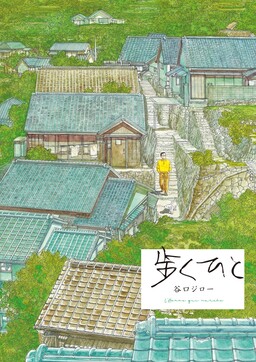
The Walking Man
Yu's review of The Walking Man — a man takes walks through his neighborhood and surrounding areas; Jiro Taniguchi's single-volume manga about the specific quality of attention paid to ordinary things, rendered with exceptional visual detail; perhaps the most peaceful manga in existence.
Slice of Life / Supernatural
Pita-Ten
Yu's review of Pita-Ten — Kotaro Higuchi, a quiet boy trying to live simply after his mother's death, finds Misha next door — an angel-in-training of incandescent cheerfulness who has decided to make him happy; also involved is Shia, a polite demon who cannot quite bring herself to be evil.
Slice of Life / Comedy
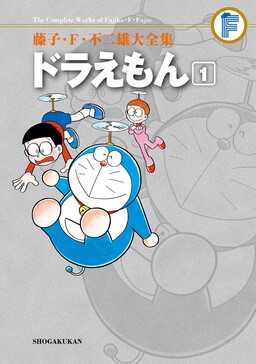
Doraemon
Yu's review of Doraemon — a robot cat from the 22nd century, sent back to help a hopeless boy named Nobita with gadgets from his four-dimensional pocket. Fujiko F. Fujio's most beloved work, and the manga every Japanese kid grows up inside.
Slice of Life / Memoir
Blank Canvas: My So-Called Artist's Journey
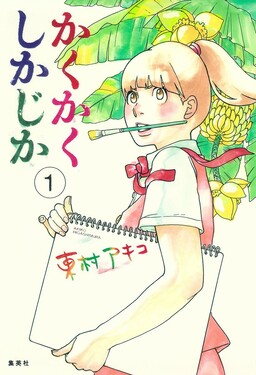
Yu's review of Blank Canvas (Kakukaku Shikajika) — Akiko Higashimura's autobiographical manga about Hidaka-sensei, the bamboo-sword-wielding art teacher in rural Miyazaki who screamed 'Draw!' until she became the artist she is. A memoir, a comedy, and a eulogy all at once.
Slice of Life / Comedy
Barakamon
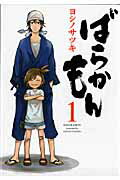
Yu's review of Barakamon — a young calligrapher punches a critic, gets exiled to the Goto Islands, and a seven-year-old girl named Naru slowly dismantles everything he thought made him good.

Slice of Life / Comedy
Squid Girl
Yu's review of Squid Girl — Ika Musume (Squid Girl) emerges from the sea to conquer humanity as revenge for ocean pollution; she is immediately defeated by the Aizawa sisters who run a beach house and ends up working there to pay for property damage; world conquest is repeatedly delayed.
Written by
Yu
Manga Enthusiast from Japan
I grew up in Japan and manga literally saved me during a tough time in elementary school. My English isn't perfect, but my love for manga is real — and I want to share it with you.
Disclosure: This post contains affiliate links. As an Amazon Associate, I earn from qualifying purchases at no extra cost to you.