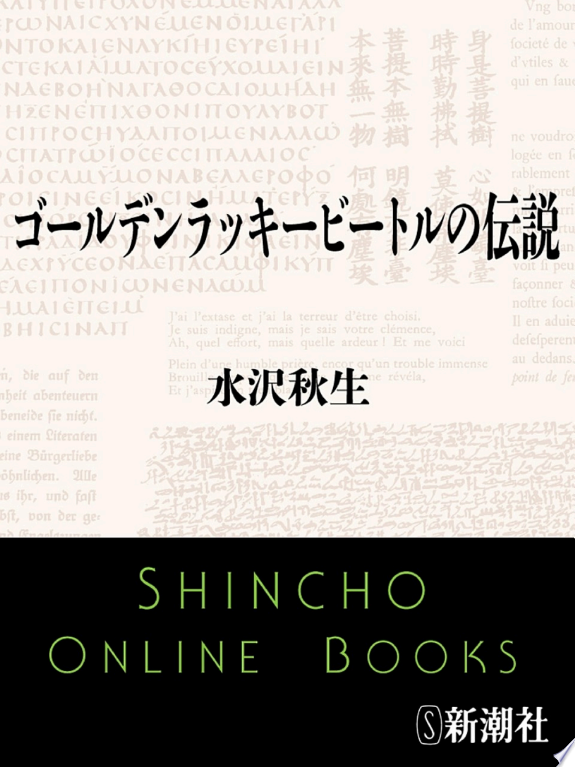
Golden Lucky Review: The 4-Panel Gag Manga That Survived by Always Finishing Last
by Shunji Enomoto
Read the first volume. If it doesn't hook you, put it down. It'll hook you.
Buy Golden Lucky on Amazon →*Affiliate link — I earn a small commission at no extra cost to you.
I have a soft spot for things that should not have survived. As a kid who spent lunch breaks alone, I understood instinctively what it meant to be the thing everyone skips over. So when I learned the story behind Golden Lucky — a 4-panel manga that ran dead last in Morning's reader polls for years, and whose editor reportedly told the author it would be cancelled the moment it stopped being last — I knew I had to read it. A manga that was protected by its own unpopularity. That is the most Golden Lucky thing imaginable, and you understand the whole series once you hear it.
Quick Take
- Shunji Enomoto's debut serialized work and signature piece — a surreal, ero-guro 4-panel gag manga with no plot and no mercy
- Built from recurring "series" of bizarre characters rather than a story; Enomoto himself shows up to kill people and end worlds
- Age rating: M (Mature) — crude sexual gags, grotesque cartoon violence, and a generally unhinged sensibility
Story Overview
There is no story. I want to be honest with you about that up front, because Golden Lucky is not a narrative you follow — it is a collection of disconnected 4-panel strips that Enomoto serialized in Kodansha's Morning from 1990 (issues 4·5) to 1996 (issue 20).
What gives it shape instead are recurring "series" — sets of strips built around a single fixed gag. A character or premise gets introduced, and then Enomoto returns to it again and again, mutating it, escalating it, occasionally torturing it. The humor is described in Japan as ero-guro nansensu — erotic, grotesque, and nonsensical — with rule-breaking cartoon violence used purely for comic shock. Strips do not build toward anything. They detonate and reset.
The closest thing to an overarching presence is Enomoto himself, who appears inside his own manga as a character — frequently to kill off the cast or destroy the world they live in. The "ending," after six years, is less a conclusion than the author simply deciding to stop. For an absurdist gag manga, that is the only honest way to end.
Recurring Series and Gags
Because there is no fixed cast in the usual sense, here are the recurring bits the strips revolve around — all documented across the Japanese Wikipedia and Mangapedia entries:
Kamakura (かまくら) series: A middle-aged salaryman runs around with an actual snow kamakura (a small igloo) sitting on his head, screaming "I am kamakura!" When the snow dome comes off, he reverts to an ordinary suited office worker. That is the entire joke, and it is perfect.
Jacob (ジェイコブ) series: A barefoot, near-naked evangelist figure who hates evil — a Christ-like saint in nothing but underwear — who falls into homelessness and corruption before clawing his way back.
Toyama (遠山) series: A salaryman who says nothing but reacts to everything with wildly oversized physical gestures, fleeing awkward situations.
Plushie series: Adults who are pathologically obsessed with the stuffed animals they carry everywhere.
What I Love About It
I love that the kamakura man is, structurally, a tragedy disguised as the dumbest joke you have ever seen.
Look at what the gag actually contains. A man puts a dome of snow on his head and instantly becomes someone else — loud, free, certain of exactly who he is: "I am kamakura!" The moment the snow falls off, he collapses back into the gray salaryman the rest of us would recognize on any morning train. Enomoto never explains it, never moralizes, never slows down to make you feel anything. He just shows you a man whose entire identity, dignity, and joy depend on a melting pile of snow staying balanced on his skull. It is hysterical. It is also, if you sit with it for one extra second, unbearably sad — which Enomoto absolutely knows and refuses to acknowledge, and that refusal is the comedy.
That is the trick that runs through the whole book. The strips look like garbage thrown at the page, but the good ones are precision-built little machines where the absurdity rests on a real human nerve. The kamakura gag is about how thin the membrane is between the self we perform and the self we slump back into. Enomoto delivers that in four panels and a snow hat, and then moves on like it was nothing.
Memorable Scene ⚠️ Spoiler Warning
The kamakura strip is the one that lodged in my head and would not leave.
A man is sprinting down a street with a literal snow igloo perched on top of his head, bellowing "I am kamakura! I am kamakura!" with total, blazing conviction. The panels are loud and ridiculous. Then the kamakura slips off — and in the final beat, the noise stops. Standing there is just a tired man in a suit, the snow melting at his feet, the shouting over. No punchline tag, no comment. The drop from manic joy to mundane silence happens in the white space between two panels.
I keep coming back to it because it is the cleanest demonstration of how Golden Lucky works: it hands you a joke so stupid you laugh on reflex, and only later do you notice it quietly broke your heart on the way through.
Pros & Cons
Pros
- A landmark of Japanese absurdist gag manga from a major name in the genre
- Complete and self-contained at 10 volumes (or 3 in the complete edition)
- The best strips are genuinely brilliant — dumb on the surface, precise underneath
- Easy to dip in and out of; no reading order required
Cons
- No official English release — you need Japanese to read it
- The ero-guro and shock-violence streak will be off-putting to some
- There is no cumulative story, so it never "builds" to anything
- Pure absurdist 4-panel comedy is a taste — this one won't work for everyone
Is Golden Lucky Worth Reading?
If you love absurdist, no-rules gag manga and can read Japanese (or are learning), yes — it is a foundational piece of the form, and the strongest strips are small masterpieces of timing. If you need a plot, characters to follow, or comedy that stays polite, this is not your book. It is gloriously, deliberately, last-place strange.
Similar Manga
| Title | Its Approach | How Golden Lucky Differs |
|---|---|---|
| Cromartie High School | Deadpan school absurdism with a steady cast | Golden Lucky has no fixed story and leans into ero-guro shock |
| Bobobo-bo Bo-bobo | Loud, chaotic battle-parody nonsense | Golden Lucky is colder and more 4-panel-precise in its gags |
| Densha de D / gag 4-koma | Joke-per-strip 4-panel structure | Golden Lucky pushes further into grotesque, rule-breaking surrealism |
Where to Buy
No English release yet. That just means you find it before everyone else does.
There's no licensed English edition — the Japanese print and digital releases (including the 3-volume Ota Publishing complete edition) are the only legitimate way to read it.
Find Golden Lucky on Amazon.co.jp →
This post contains affiliate links. If you purchase through these links, I may earn a small commission at no extra cost to you. As an Amazon Associate, I earn from qualifying purchases.
*Affiliate link — I earn a small commission at no extra cost to you.
More Manga You Might Like
Slice of Life / Comedy
Nichijou: My Ordinary Life
Yu's review of Nichijou — a high school slice-of-life where ordinary situations escalate to catastrophic absurdity, a robot girl tries to hide what she is, and the Professor is an eight-year-old genius who made her.
Slice of Life / Comedy
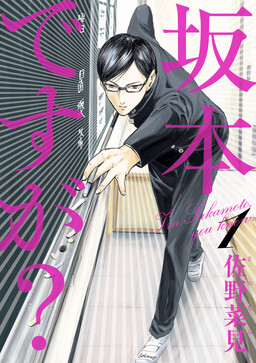
Haven't You Heard? I'm Sakamoto
Yu's review of Haven't You Heard? I'm Sakamoto — Sakamoto is the coolest student at his high school; every situation, challenge, or attempt to embarrass him resolves in the coolest possible way; the manga is a pure comedic statement about the concept of cool.
Slice of Life / Comedy
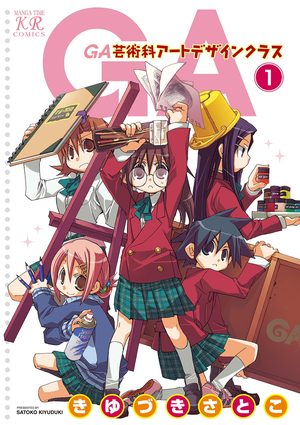
GA: Geijutsuka Art Design Class
Yu's review of GA: Geijutsuka Art Design Class — a four-panel comedy about five girls in a high-school art and design course, where color theory and a freeze-tag game become the punchline.
Slice of Life / Comedy
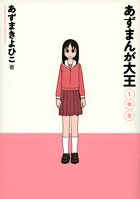
Azumanga Daioh
Yu's review of Azumanga Daioh — Kiyohiko Azuma's four-panel comedy that follows six high school girls across three years of ordinary school life, from Chiyo the child prodigy to Osaka the daydreamer.
Slice of Life / Comedy
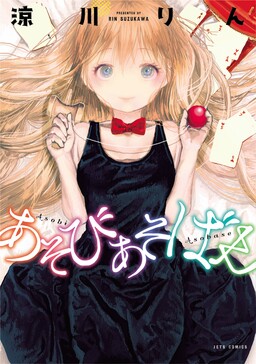
Asobi Asobase
Yu's review of Asobi Asobase by Rin Suzukawa — three middle-school girls, Hanako Honda, Olivia, and Kasumi Nomura, run the unofficial Pastimers Club, where ordinary games collapse into grotesque facial expressions and slapstick chaos. A gag comedy that weaponizes the gap between its adorable character designs and what those faces actually do.
Slice of Life
Seitokai Yakuindomo
Yu's review of Seitokai Yakuindomo — Takatoshi Tsuda joins his recently co-ed high school's student council, which is entirely female; the comedy is built on the gap between Tsuda's straight-man responses and his three female council-mates' constant adult-humor commentary.
Written by
Yu
Manga Enthusiast from Japan
I grew up in Japan and manga literally saved me during a tough time in elementary school. My English isn't perfect, but my love for manga is real — and I want to share it with you.