
Golden Boy Review: The Wandering Student Who Treats Every Lousy Job Like a Lesson
by Tatsuya Egawa
Read the first volume. If it doesn't hook you, put it down. It'll hook you.
Buy Golden Boy on Amazon →*Affiliate link — I earn a small commission at no extra cost to you.
When I was a kid with no friends, school felt like a list of things I was failing at. Studying was the thing I was supposed to love, and I hated it, because it always came with someone judging me. So the first time I read about Kintaro Oe — a guy who chose to study everything, scrubbing toilets and writing notes about it like he was the happiest man alive — something in me went quiet. He turned learning back into the thing it was supposed to be before the world made it shameful. That's a strange thing to take from an ecchi comedy. But that's what I took.
I want to be honest up front, because this site is built on honesty: Golden Boy is crude. It's an ecchi seinen comedy from the 90s, and it earns its mature rating. But under the gags is one of the most sincere ideas I've ever found in a manga.
Quick Take
- Kintaro's total, unironic devotion to learning from every menial job is the engine of the whole series — and it never stops being funny or moving.
- It's episodic: each arc is a new town, a new job, a new woman whose life he changes before bicycling off.
- Age rating: M (Mature). This is genuine ecchi with nudity and crude sexual humor — not for younger readers.
Story Overview
Kintaro Oe is 25. He attended Tokyo University's law program and completed every requirement — then walked away without ever filing to graduate. Now he travels Japan by bicycle with a notebook strapped to his belt, taking whatever menial job each town offers. Janitor, kitchen help, errand boy. To everyone around him he looks like a clumsy, perverted drifter. What they don't see is that he treats every single task as study. He writes down what each job teaches him — about programming, about cooking, about people — alongside cruder observations that make the notebook a running joke.
The structure is purely episodic. There's no overarching plot, no destination. Each arc drops Kintaro into a new workplace, usually run by or centered on a strong-willed woman who can't stand him at first. By the end of the arc he's saved the day with the very skill he was quietly absorbing — and then he gets back on his bike and leaves before anyone can thank him properly. The series ran in Shueisha's Super Jump from 1992 to 1997 and was collected into ten volumes.
Characters
Kintaro Oe is the heart of it. He's drawn as a fool — wide-eyed, grinning, often caught in some humiliating situation — but he is never actually the fool. His clumsiness is real, but so is his discipline. The gag is that the man everyone dismisses as a pervert is the hardest worker and the fastest learner in the room.
Madame President of T.N. Software runs an all-woman software company and drives a Ferrari she nearly kills Kintaro with. She's the dominatrix-tempered boss of the first major arc, and she treats the new janitor with total contempt — until he proves he's the only one who can save her company.
The women across the other arcs each get their own self-contained story: Naoko, the daughter Kintaro tutors during a political campaign; Noriko, the udon-shop owner's daughter; Ayuko Hayami, the Olympic-level swimmer who reluctantly coaches him; Reiko Terayama, the wealthy, motorcycle-loving daughter he serves as a houseboy; and Chie, the cel-painter at the animation studio. None of them stay with him. That's the bittersweet rhythm of the whole series — he changes a life, then disappears.
What I Love About It
The notebook is the thing I keep coming back to. Kintaro keeps it strapped to his belt and writes in it constantly. Half of what's in there is exactly the crude nonsense you'd expect from an ecchi comedy — sketches of the women he meets, absurd "rules" he's invented. But the other half is genuine: what he learned about a piece of software, how a kitchen actually runs, how a person he met was hurting. Egawa plays the dirty entries for laughs and the sincere ones completely straight, in the same notebook, and that combination is the whole soul of the manga. It says learning isn't a noble separate activity — it's just paying attention, and you do it everywhere, even in the gutter, even when you're a clown.
What gets me is that Kintaro never frames any of it as suffering. Cleaning a toilet, getting screamed at by a boss who despises him, failing in front of someone he admires — he writes it all down as study. As a kid who'd been taught that learning was a thing you got punished with, that reframe hit me harder than I expected from a comic this filthy. He took the shame out of it. He made it an adventure. I think a lot of people who feel like they wasted their education, or never got the one they wanted, would feel something reading this guy who decided the whole world was his school and he was thrilled to be enrolled.
Memorable Scene ⚠️ Spoiler Warning
The software company arc is the one that sold me. Kintaro gets hired as the janitor at T.N. Software, an all-woman firm run by the imperious Madame President — the same woman who'd nearly run him over with her Ferrari and thrown money at him like he was an inconvenience. Everyone treats him as the lowest thing in the building.
Then he accidentally wipes their critical data. It's catastrophic — the kind of mistake that should get him thrown out and the company ruined. And instead of running, the janitor sits down and, over a brutal stretch of work, doesn't just restore what was lost — he writes a better program than the one they had. The reveal lands because the manga spent the whole arc letting you, and Madame President, underestimate him. The toilet-scrubbing drifter turns out to be the most capable mind in a building full of professionals. Watching her contempt collapse into stunned respect is the exact emotional beat the series runs over and over, and the first time it hits, it's genuinely satisfying. Then, of course, he leaves.
Pros & Cons
Pros:
- A genuinely original premise — comedy built on the dignity of learning and labor
- Completely standalone arcs; you can read it in any order, any amount at a time
- The "underestimated fool is secretly brilliant" payoff is reliably satisfying
Cons:
- The ecchi is frequent and the later volumes get far more explicit than the first
- The 90s art and humor feel dated in places
- It's crude, episodic, and has no overarching story — if you want depth or plot, this won't work for everyone.
Is Golden Boy Worth Reading?
If you can take an ecchi seinen comedy on its own terms, yes — because underneath the crude gags is a sincere, genuinely uplifting idea about turning every menial job into a lesson and refusing to be ashamed of learning. If frequent sexual humor or a complete lack of overarching plot is a dealbreaker for you, skip it. It's a specific taste, and it knows exactly what it is.
Content Warnings & Age Rating
Age Rating: M (Mature) Content Warnings: ecchi / sexual humor, nudity, crude comedy
This is a mature seinen title. The first volume is comparatively tame, but later volumes get considerably more explicit. Read accordingly.
Yu's Rating
| Category | Score |
|---|---|
| Story Depth | ★★★☆☆ |
| Art Style | ★★★★☆ |
| Character Concept | ★★★★★ |
| Accessibility for Non-Japanese Readers | ★★★☆☆ |
| Reread Value | ★★★★☆ |
Overall: 4/5 — Crude, dated, and far more sincere about the joy of learning than it has any right to be.
Similar Manga
| Title | Its Approach | How Golden Boy Differs |
|---|---|---|
| Be Free! | Egawa's own earlier comedy about an unconventional drifter shaking up those around him | Golden Boy is more episodic and built around the "study" gimmick |
| Gintama | Episodic comedy with sudden emotional depth | Golden Boy is seinen ecchi, focused on work and self-improvement rather than action |
| Hataraki Man | Adult, work-focused stories about finding meaning in labor | Golden Boy plays the same theme as broad ecchi comedy, not drama |
Where to Buy
No English release yet. That just means you find it before everyone else does.
Golden Boy was never officially licensed in English — the OVA was, but the manga wasn't, most likely because of how explicit the later volumes get. The Japanese print and digital editions are the only legitimate way to read it.
Find the Japanese edition on Amazon.co.jp →
This post contains affiliate links. If you purchase through these links, I may earn a small commission at no extra cost to you. As an Amazon Associate, I earn from qualifying purchases.
*Affiliate link — I earn a small commission at no extra cost to you.
More Manga You Might Like
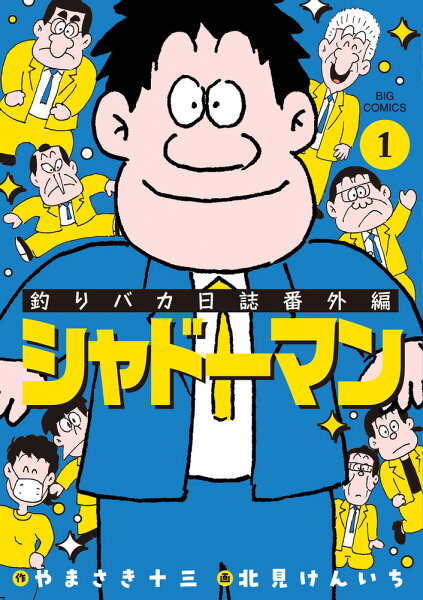
Slice of Life / Comedy
Tsuribaka Nisshi
Tsuribaka Nisshi follows Densuke 'Hama-chan' Hamasaki — a dead-average salaryman obsessed with fishing — who unknowingly befriends Ichinosuke 'Su-san' Suzuki, the president of the construction company he works for, after the two meet over a leftover grilled fish.
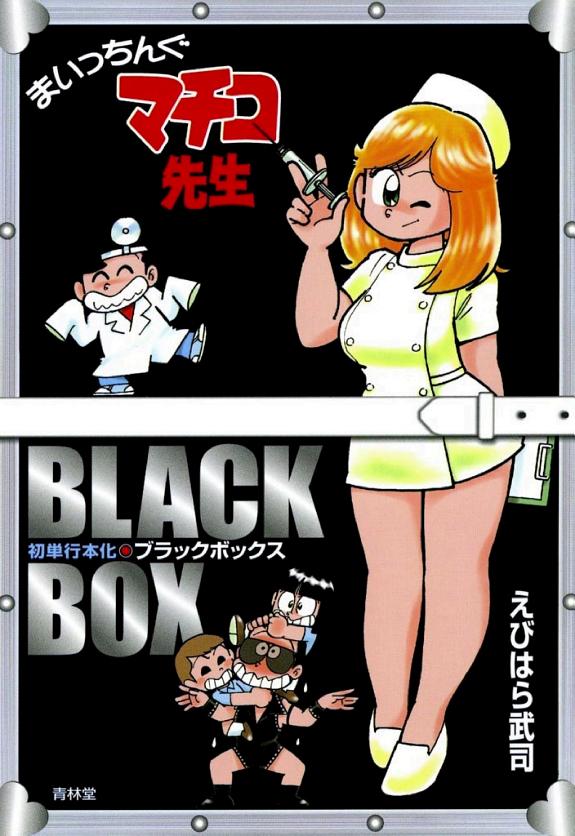
Comedy
Maicchingu Machiko-sensei
Takeshi Ebihara's 1980 comedy manga about a young elementary school teacher whose male students try various schemes to embarrass her. The manga was 8 volumes; the 1981–1983 Studio Pierrot anime adaptation (95 episodes, TV Tokyo) became one of the defining ecchi anime of the early 1980s. The catchphrase 'maicching!' entered Japanese vocabulary. Unlicensed in English; content is significantly dated.
Slice of Life / Comedy
Tensai Bakabon
Tensai Bakabon is Fujio Akatsuka's landmark gag manga about the Bakabon family — a household where the father's complete detachment from logic is presented as wisdom, and the world's attempts to impose reason are the actual problem.
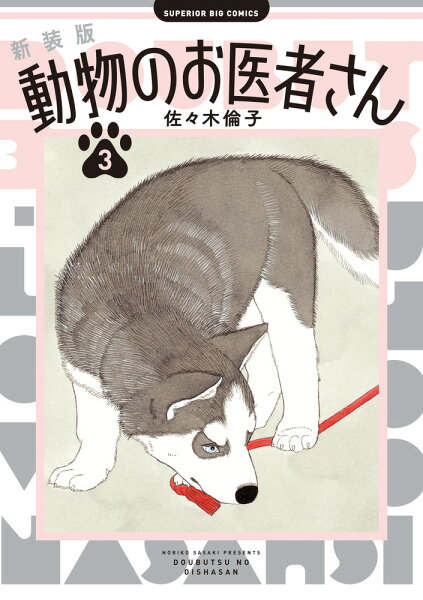
Slice of Life / Comedy
Doubutsu no Oisha-san
Doubutsu no Oisha-san follows Hamutaro, a quiet veterinary student in Hokkaido, his deadpan husky Chobi, and the warm chaos of vet-school life — a 12-volume Hana to Yume comedy so popular it set off a real Siberian Husky boom across Japan.
Slice of Life / Comedy
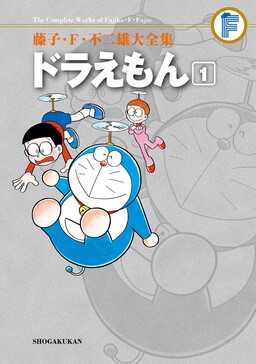
Doraemon
Yu's review of Doraemon — a robot cat from the 22nd century, sent back to help a hopeless boy named Nobita with gadgets from his four-dimensional pocket. Fujiko F. Fujio's most beloved work, and the manga every Japanese kid grows up inside.
Slice of Life / Comedy
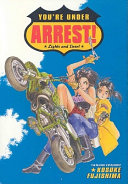
You're Under Arrest!
A review of You're Under Arrest! by Kosuke Fujishima — a slice-of-life police comedy about two traffic cops whose friendship, professionalism, and occasional high-speed bicycle chases make them the heart of their precinct.
Written by
Yu
Manga Enthusiast from Japan
I grew up in Japan and manga literally saved me during a tough time in elementary school. My English isn't perfect, but my love for manga is real — and I want to share it with you.
Disclosure: This post contains affiliate links. As an Amazon Associate, I earn from qualifying purchases at no extra cost to you.