
Gokinjo Monogatari Review: The Yazawa Manga Where a Girl Picks the Boy Next Door Over London
by Ai Yazawa
Read the first volume. If it doesn't hook you, put it down. It'll hook you.
Buy Gokinjo Monogatari on Amazon →*Affiliate link — I earn a small commission at no extra cost to you.
When I was a kid hiding from the people who made school unbearable, what I wanted most wasn't a hero. It was a person who already knew me — someone I didn't have to explain myself to. I never had that growing up. So when I finally read Gokinjo Monogatari and watched Mikako Kouda try to figure out what to do with the boy who has literally always lived next door, something in my chest went tight. This is a manga about the strange terror of looking at the person you've known your whole life and suddenly not knowing what they are to you.
I came to it the way most people do now: backwards, from Paradise Kiss and Nana. Ai Yazawa wrote this one first, in 1995, and you can feel her becoming the artist she'd become. It took until 2023 for VIZ to finally put the whole thing in English, and I'm so glad they did.
Quick Take
- Early Ai Yazawa, but her whole sensibility — fashion as identity, romance as a creative problem — is already here
- The childhood-friends dynamic is the engine; it's warm without ever being lazy about it
- Age rating: T (Teen) — light romance and a few mild sexual references, nothing graphic
Story Overview
Mikako Kouda has wanted to be a fashion designer since she was small, and she's not waiting for permission. She enters Yazawa Arts Academy in Tokyo and starts building her own clothing label, Happy Berry, while she's still a student. Her drive is the loud, conspicuous kind — it gets her admiration and detention from her strict teacher, Ms. Hamada, in equal measure.
Living right next door, the way he always has, is Tsutomu Yamaguchi. He makes odd, abstract art out of found objects, seems vague about his own future, and has been Mikako's "strictly platonic" childhood friend for as long as either of them can remember. The thing that breaks that platonic frame is almost stupidly small: Tsutomu happens to look like the pop singer Ken Nakagawa, and overnight he gets popular at school. Girls notice him. He starts dating Mariko Nakasu, the gorgeous, much-pursued girl everyone calls "Body Ko." And Mikako, watching the boy next door belong to someone else, is forced to reassess feelings she'd never bothered to name.
From there the series follows her art-school years — the friend group, the Akindo street-market club they start together, the rivalries and inspiration of the fashion track — all of it braided through the slow, confusing question of what Tsutomu actually is to her. It builds to a real fork in the road: a prize that could take her abroad, and a choice about whether ambition or this one person comes first.
Characters
Mikako Kouda — The heart of it. Her fashion isn't set dressing; her opinions about clothes are her personality, and Happy Berry is a genuine creative goal, not a hobby. Her arc is learning that loving her work and loving Tsutomu aren't actually a competition — though it takes the whole series and a plane ticket to London to get her there.
Tsutomu Yamaguchi — The boy next door, an art student who builds pieces out of junk and acts like he has no plan. His sudden Ken-Nakagawa popularity is the inciting incident, but his steadiness is the point — under the vagueness he consistently shows up for Mikako, long before she figures out she needs him to.
Mariko Nakasu ("Body Ko") — Far more than the pretty rival. She dates Tsutomu, then pursues Yusuke, and at one point admits she's exhausted by men who only want her for her body. Yazawa lets her be a person, and she eventually marries her own childhood friend.
Risa Kanzaki — Mikako's best friend, from Hokkaido, who wants to design children's clothes and lives with her guitarist boyfriend. She's the one whose refusal to leave that boyfriend behind quietly frames Mikako's own choice about leaving.
What I Love About It
What I love is that Yazawa never treats fashion as a backdrop for the romance — she treats it as a rival to the romance. Mikako's designs matter to her as much as Tsutomu does, and the manga refuses to pretend that's an easy thing to hold at once. So many shojo series would just let the girl drift toward the boy. This one makes her actually weigh him against the thing she's wanted since childhood, and it respects both sides of the scale.
That's why the Happy Berry stuff lands the way it does. When Mikako wins first place for her individual work at the school's fashion show, it's not a throwaway plot beat — it's the series telling you, clearly, that this girl is the real thing, that her talent isn't a cute accessory to a love story. And it's exactly because the manga has spent volumes convincing me her ambition is genuine that the next turn hurts. The prize for winning is a chance to study abroad in London. Suddenly the dream she's chased her whole life is sitting right in front of her — and so is the boy next door. Yazawa built both of those things so carefully that I genuinely didn't know which way Mikako should go. That tension is the whole reason the ending works.
Memorable Scene ⚠️ Spoiler Warning
The moment I keep coming back to is the subway platform. After the London offer, Mikako is wrecked — she has no idea what to do, and the indecision is eating her. On the way there, on the platform, she finally says it out loud to Tsutomu: that he is the most important thing in her life, and that's why she doesn't want to go abroad. It's not a swooning confession. It's almost an accusation, like she resents how much he matters, because his mattering is the thing complicating the future she planned. That's so much truer to how this actually feels than a fireworks-and-tears scene would be.
What makes it stick is how Yazawa pays it off. The series ends years later: Mikako and Tsutomu have married and have a daughter named Alice — and in the very last chapter, Mamirin turns up in the background while Mikako is in London. So she chose the boy next door and eventually got the dream too. The platform wasn't a girl giving up her ambition for a man. It was a girl admitting that some things have to come first, trusting that the rest will still be there later. Reading that, I thought about every version of myself that believed I had to pick between being safe and being seen. Yazawa's answer is gentle: you don't always have to choose forever. Sometimes you just choose right now.
Pros & Cons
Pros
- Fashion treated as a serious creative practice, not wallpaper
- The childhood-friends dynamic is warm and specifically drawn
- Mariko and the supporting cast get real interior lives
- Complete at 7 volumes, with a satisfying long-view ending
- The Paradise Kiss connection is a gift if you read both
Cons
- It's early Yazawa — the art and the '90s fashion read a little dated next to Nana
- The street-market club subplots can meander
- A leisurely shojo pace that lingers on feelings — that's either the appeal or the dealbreaker, and it won't work for everyone
Is Gokinjo Monogatari Worth Reading?
Yes — especially if you already love Yazawa. It's warmer and lighter than Nana, with the same gift for making fashion and feeling inseparable. Come for the early-Yazawa craft, stay for a childhood-friends romance that actually respects the girl's ambition instead of dissolving it.
Cultural Context
Gokinjo Monogatari ran in Shueisha's shojo magazine Ribon from 1995 to 1997, and it's the seed of everything Yazawa did next. It shares its universe with Paradise Kiss, which is set several years later — Ms. Hamada, Mikako's strict teacher here, reappears there, and Mikako herself shows up in Paradise Kiss as an established designer. Reading this first makes Para Kiss hit differently.
Similar Manga
| Title | Its Approach | How Gokinjo Monogatari Differs |
|---|---|---|
| Paradise Kiss | Yazawa's later, darker fashion romance in the same universe | Gokinjo is warmer, lighter, and follows a girl who already knows what she wants |
| Nana | Yazawa's sprawling adult masterwork about two women named Nana | Gokinjo is a tighter teen story with a hopeful, settled ending |
| Princess Jellyfish | Fashion and creative obsession played for comedy and transformation | Gokinjo keeps fashion as straight ambition, not makeover gag |
Where to Buy
Read the first volume. If it doesn't hook you, put it down. It'll hook you.
This post contains affiliate links. If you purchase through these links, I may earn a small commission at no extra cost to you. As an Amazon Associate, I earn from qualifying purchases.
*Affiliate link — I earn a small commission at no extra cost to you.
More Manga You Might Like
Slice of Life / Drama
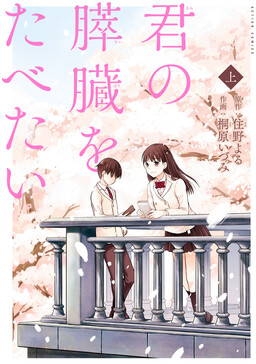
I Want to Eat Your Pancreas
Yu's review of the I Want to Eat Your Pancreas manga — Idumi Kirihara's adaptation of Yoru Sumino's novel. A withdrawn boy finds classmate Sakura Yamauchi's secret diary and learns she's dying of a pancreatic illness. She chooses him precisely because he won't treat her like a dying girl. Seven Seas collected the two Japanese volumes into one English omnibus.

Slice of Life
Hi Score Girl
Yu's review of Hi Score Girl — Haruo Yaguchi lives for 1990s arcade fighting games, until silent rich-girl prodigy Akira Ono beats him 30 times in a row at Street Fighter II. Ten volumes, complete in English, and the most quietly devastating love story I know that never needs its heroine to say a word.

Slice of Life / Romance
Tsurezure Children
Yu's review of Tsurezure Children — a romantic anthology following multiple high school couples in short-form episodes; each chapter follows a different couple in a different stage of confession or early relationship; a warm comedy anthology about the specific awkwardness of telling someone you love them.

Slice of Life
Smile Down the Runway
Yu's review of Smile Down the Runway — Chiyuki Fujito dreams of being a Paris Collection runway model but is told she's too short at 158cm; Ikuto Tsumura dreams of being a fashion designer but can't afford design school; they push each other toward impossible goals; Kotoba Inoya's fashion manga about the gap between dreams and physical reality.

Slice of Life
Maria Watches Over Us (Marimite)
Yu's review of Maria Watches Over Us — Yumi is a first-year student at the Lillian Girls' Academy, a Catholic school with a tradition of 'soeur' relationships between older and younger students; she is noticed by the beautiful third-year Sachiko; Nagasawa's adaptation of Konno's beloved light novel about ritual, belonging, and the specific intensity of all-girls school friendships.
Slice of Life / Drama
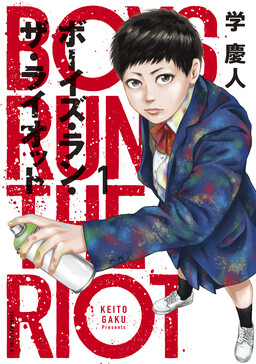
Boys Run the Riot
Yu's review of Boys Run the Riot — Ryo Watari is a transgender high schooler who can't tell anyone who he is, until he meets Jin, a loud transfer student who pulls him into starting a streetwear brand. A four-volume manga, drawn by a trans creator, about fashion as the language you use when words won't come.
Written by
Yu
Manga Enthusiast from Japan
I grew up in Japan and manga literally saved me during a tough time in elementary school. My English isn't perfect, but my love for manga is real — and I want to share it with you.
Disclosure: This post contains affiliate links. As an Amazon Associate, I earn from qualifying purchases at no extra cost to you.