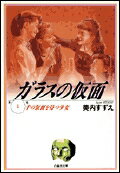
Glass Mask Review: The 50-Year Manga With No Ending
by Suzue Miuchi
Read the first volume. If it doesn't hook you, put it down. It'll hook you.
Buy Glass Mask on Amazon →*Affiliate link — I earn a small commission at no extra cost to you.
I started reading Glass Mask (ガラスの仮面) knowing one cruel thing about it: it has no ending. Suzue Miuchi began it in 1976. I was not born. My parents were children. And as I write this, it is still not finished — stuck on hiatus since 2012, frozen mid-story after 49 volumes. I almost didn't pick it up because of that. A manga you can't finish feels like a trap.
I was wrong to hesitate. Glass Mask gripped me harder than most things I've actually read to the end. It is about a plain, poor girl named Maya who discovers she can become anyone on a stage — and about the terrifying, lonely cost of being that talented. I grew up as the kid nobody picked for anything. Watching Maya get picked, again and again, by people who saw something in her that the world refused to see, did something to me that I'm still trying to explain.
Quick Take
- Running since 1976 and still unfinished — one of the most famous never-ending manga in history, on hiatus since 2012.
- Maya Kitajima vs. Ayumi Himekawa is the rivalry every later manga rivalry is measured against.
- Age rating: T (Teen) — intense emotional drama and fierce rivalry, but nothing graphic.
Story Overview
Maya Kitajima is thirteen, working in a Chinese restaurant alongside her tired mother, with no money, no training, and no future anyone can see. What she has is a strange gift: she can lose herself completely in a role, becoming someone else so fully that she forgets she is Maya at all.
That gift is spotted by Chigusa Tsukikage — a former great actress, her face scarred in an onstage accident, now running a hard little acting school. Tsukikage holds the rights to a legendary play called The Crimson Goddess (紅天女, Kurenai Tennyo); the playwright left the rights to her alone in his will. Her life's mission is to find and train the one actress worthy of performing it. She believes Maya could be that actress.
Standing opposite Maya is Ayumi Himekawa — beautiful, rich, the daughter of a famous director and actress, technically flawless, and consumed by the fact that Maya has something she cannot buy or train into herself. Their competition to earn the role of the Crimson Goddess is the spine the whole series hangs on. The two of them claw upward through audition after audition, play after play, getting better by trying to destroy each other. Because the manga is unfinished, no one has yet definitively claimed the role — which is both the great frustration and, somehow, the great theme of the work.
Characters
Maya Kitajima starts as nobody — a poor waitress whose own mother tells her acting is a waste. Her arc is the slow, painful realization that the one thing the world mocked her for (vanishing into other people) is the rarest gift in the room. She succeeds not because she's polished but because she's fearless.
Ayumi Himekawa is the rival, and Miuchi refuses to make her a villain. Ayumi is genuinely brilliant and genuinely respects Maya — which is exactly why Maya drives her insane. She works herself to the bone, cuts her hair for roles, sacrifices everything, and still can't stop measuring herself against a restaurant girl with no training. She's one of the great "antagonists who are right to be jealous" in manga.
Chigusa Tsukikage is the scarred mentor who holds the rights to the Crimson Goddess. She is brutal to Maya, withholding praise, pushing her past the point of cruelty — because she's not raising a student, she's forging a successor for the one role that defined her own life.
Masumi Hayami is the president of Daito Art Production and, secretly, the "Purple Rose Person" — the anonymous admirer who sends Maya bouquets of purple roses at her lowest moments. He's cold and ruthless in public, professionally entangled with the people trying to ruin Tsukikage's school, yet privately devoted to Maya in a way he can barely admit to himself. The purple roses are the most famous image in the whole series.
What I Love About It
The scene that sold me forever is the Helen Keller audition. Maya and Ayumi are competing, along with other girls, for the role of Helen in The Miracle Worker. The final test is deceptively simple: the candidates are told to sit in a room and wait as Helen Keller — a blind, deaf girl. While they wait, an alarm suddenly blares. Every other girl flinches and turns toward the sound. Only Maya and Ayumi don't react at all — because Helen could neither see nor hear it.
What I love is the razor-thin difference between the two who pass. Ayumi hears the alarm and consciously chooses to stay in character, holding her discipline like a professional. Maya doesn't hear it — because in that moment she is not pretending to be Helen, she has forgotten she is Maya Kitajima. Same result, two completely opposite roads to it. Miuchi uses one buzzer to dramatize the entire central question of the manga: is great acting iron control, or total self-erasure? I have never seen a story make the philosophy of acting that concrete, that visual, that gripping. The judges, unable to choose, cast both girls and have them alternate the role — and the war between them only escalates from there.
That single audition taught me more about what acting actually is than any film class could. And it did it with two teenagers and a fire alarm.
Memorable Scene ⚠️ Spoiler Warning
The purple roses wreck me every time. Whenever Maya is at her absolute lowest — humiliated, broke, abandoned — a bouquet of purple roses arrives, with no name. She clings to the idea of this unknown person who believes in her when no one else does. The reader is let in on the secret long before she is: the sender is Masumi Hayami, the cold company president who is, on the business side, tangled up with the very people working to crush Tsukikage's school and Maya's dream.
The agony of it is that Maya has no idea the hand that lifts her up belongs to a man on the opposite side of her war. Miuchi stretches this irony across volumes and volumes. It's the kind of slow, aching romance that only a manga running for decades could earn — and it's a big part of why fans have waited so faithfully for an ending that may never come.
Pros & Cons
Pros:
- The Maya–Ayumi rivalry is the gold standard — two people made better by hating how good the other is.
- Miuchi turns the abstract craft of acting into concrete, breathtaking drama (the Helen Keller audition alone is worth it).
- Decades of emotional buildup give the purple-rose romance a weight almost nothing else can match.
Cons:
- It is unfinished and may stay that way — on hiatus since 2012, frozen mid-story.
- There is no official licensed English edition, so getting hold of it legally in English isn't straightforward.
- A 49-volume melodrama from the 1970s with an open ending won't work for everyone — if you need closure, this will hurt.
Is Glass Mask Worth Reading?
Yes — with eyes open. Glass Mask is one of the most important and most loved shoujo manga ever made, and the Helen Keller audition and the purple roses are the kind of scenes that stay with you for years. Just know going in that you are starting a story that, after almost fifty years, still has no final page. For me, the journey was worth not knowing the destination.
Similar Manga
| Title | Its Approach | How Glass Mask Differs |
|---|---|---|
| Skip Beat! | A girl enters show business to get revenge, then falls for the craft | Glass Mask is older, heavier, and obsessed with the philosophy of acting itself, not comedy |
| Nana | Two young women chase artistic dreams in the music world | Glass Mask centers a single all-consuming rivalry over one legendary role, not a friendship |
| Kakukaku Shikajika | An autobiographical story of mentorship and brutal artistic discipline | Glass Mask is pure fiction and melodrama, but shares that ruthless mentor-student core |
Where to Buy
No English release yet. That just means you find it before everyone else does. There's no licensed English edition — the Japanese print and digital release is the only legitimate way to read it.
This post contains affiliate links. If you purchase through these links, I may earn a small commission at no extra cost to you. As an Amazon Associate, I earn from qualifying purchases.
*Affiliate link — I earn a small commission at no extra cost to you.
More Manga You Might Like
Slice of Life / Drama
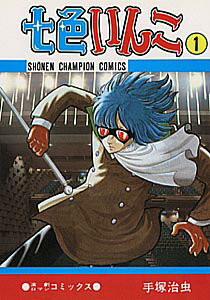
Nanairo Inko
Nanairo Inko (Rainbow Parakeet) follows a master of theatrical impersonation who steals identities to perform stage roles others have abandoned — Osamu Tezuka's late-career meditation on performance, identity, and the moral economy of art.
Slice of Life
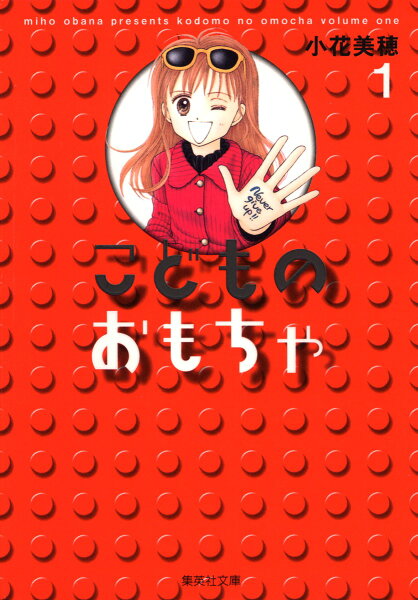
Kodocha
A review of Kodocha — the 1990s Ribon classic about hyperactive child actress Sana Kurata, and how her noise becomes the only thing that can reach a boy his own family has given up on.
Slice of Life / Historical Drama
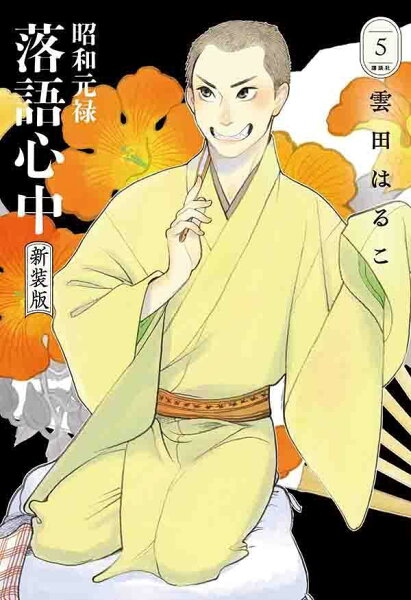
Shouwa Genroku Rakugo Shinjuu
Shouwa Genroku Rakugo Shinjuu follows the world of rakugo — traditional Japanese comic storytelling — through two performers across two generations: the transcendent and self-destructive Yakumo, and the student Yotaro who inherits what Yakumo cannot save.
Slice of Life / Drama
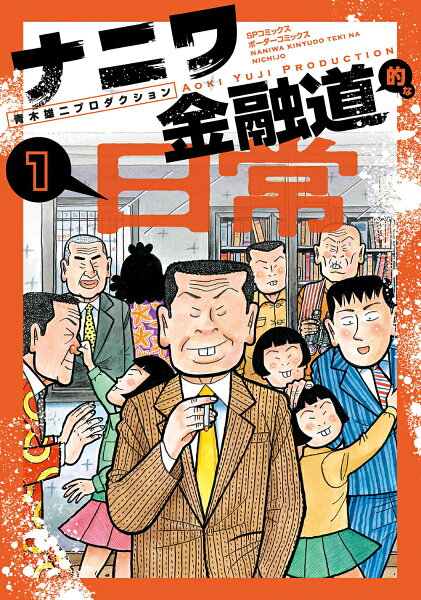
Naniwa Kinyuudo
Naniwa Kinyuudo follows new employee Ginji Mita at a small-loan finance company in Osaka — a manga that uses the world of moneylending and debt collection to create one of manga's most honest portraits of Japanese economic life.

Drama / Thriller
Ningen Konchuki
Ningen Konchuki (The Book of Human Insects) follows Toshiko Tomura, a beautiful and ruthless woman who absorbs the talents of creative people around her — becoming a novelist, then a designer, then an architect — by living with them, learning from them, and discarding them when she's taken everything they have.

Slice of Life / Drama
Kageki Shojo!!
Yu's review of Kageki Shojo!! — Sarasa Watanabe, a tall girl pushed out of kabuki as a child, enters the Kouka School of Musical and Theatrical Arts dreaming of playing Oscar from The Rose of Versailles. Her roommate is Ai Narata, a former JPX48 idol who fled an abusive past into all-female spaces. A Takarazuka-inspired drama about what performance costs the people who carry damage onto the stage.
Written by
Yu
Manga Enthusiast from Japan
I grew up in Japan and manga literally saved me during a tough time in elementary school. My English isn't perfect, but my love for manga is real — and I want to share it with you.
Disclosure: This post contains affiliate links. As an Amazon Associate, I earn from qualifying purchases at no extra cost to you.