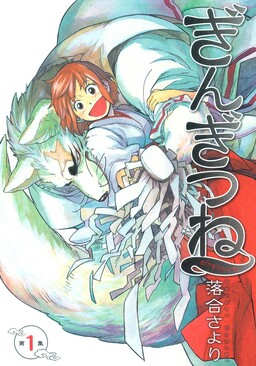
Gingitsune Review: The Shrine Fox Who Pretends He Doesn't Care
by Sayori Ochiai
Read the first volume. If it doesn't hook you, put it down. It'll hook you.
Buy Gingitsune on Amazon →*Affiliate link — I earn a small commission at no extra cost to you.
When I was a kid and the school felt too loud and too cruel, I used to walk to the little shrine near my grandmother's house. Nobody was ever there. I'd stand under the torii gate and just breathe. I didn't believe a god was listening. I just liked that the place felt older than my problems, like it had seen worse than me and kept standing anyway. Gingitsune is the first manga I ever read that understood that feeling — and then put a giant, grumpy fox spirit right in the middle of it.
I didn't expect to love this one. I picked it up thinking it would be cute and forgettable. Instead it became the comfort read I come back to when the world is too much.
Quick Take
- A quiet, deeply Japanese slice-of-life about a shrine girl who can see the fox spirit guarding her family's grounds — small in scale, huge in warmth.
- Gintaro, the herald fox who insists he doesn't care, is one of the most lovable "he absolutely cares" characters I've read.
- Age rating: T (Teen) — gentle throughout, but it carries real grief underneath, including a dead parent in the backstory.
Story Overview
Makoto Saeki is the daughter of the priest at a small Inari shrine in modern Japan, dedicated to the god Ukanomitama. She is the fifteenth-generation heir of the family — and she can see what almost no one else can: the shrine's herald, a huge fox spirit named Gintaro who has served the grounds for generations.
Makoto gained this ability, "the Sight," after her mother died when she was young. That loss sits quietly under the whole series. The herald is supposed to be an intermediary between the god and the people who come to pray, and so Makoto and Gintaro end up doing exactly that — helping the visitors who show up at the shrine with their small, very human problems. A lost item. A confession that won't come out. A worry too embarrassing to say out loud.
The cast widens partway through with Satoru Kamio, a boy who is the successor to a different shrine and also has the Sight. Orphaned and raised by relatives who mistreated him, isolated and guarded, Satoru eventually comes to live at the Saeki shrine — bringing with him Haru, an eighty-year-old fox herald devoted to him. The series moves through the seasons and festivals at an unhurried pace, and over its eighteen volumes it's less about a plot and more about a found family slowly forming around an old shrine. It ran in Ultra Jump from 2009 to 2022 and is complete.
Characters
Makoto Saeki — A bright, ordinary middle-schooler carrying something that isn't ordinary at all. She inherited the Sight through her mother's death, and that quiet grief shapes her: she's gentle with the people who come to the shrine because she knows what it is to need comfort. Her arc is growing into a role she never asked for, and choosing it anyway.
Gintaro — The white herald fox, lazy and blunt and forever insisting that nothing bothers him. He's served the shrine for fifteen generations and has clearly watched the Saeki family across lifetimes. The whole joke — and the whole heart — of the series is that his "I don't care" is the loudest lie in the manga.
Satoru Kamio — The successor to the Kamio shrine, who inherited the Sight after his grandfather's death. Raised by relatives who treated him badly and left him isolated, he arrives guarded and prickly. His arc is the slow thaw of someone learning that a household can be safe, that he's allowed to belong.
Haru — The eighty-year-old fox herald who follows Satoru. Small, fierce, and protective of him to the point of jealousy, she's the comic and emotional counterweight to Gintaro's grumpy stillness.
What I Love About It
What I love is that Gintaro is built almost entirely on a single, beautiful contradiction. He tells Makoto, over and over, that the things she does don't bother him — and the manga keeps showing us, panel after panel, that they do, deeply. He's lived through fourteen generations of this family before her. He has, in his way, loved and lost a long line of Saekis. And his defense against caring too much again is to pretend he doesn't care at all.
That hits me harder than I expected. I spent a lot of my childhood doing the exact same thing — acting like the loneliness didn't matter so it couldn't hurt me. Gintaro is a centuries-old fox spirit and somehow he's the character who understood me. Ochiai never spells it out, never gives him a tearful monologue about it. She just lets his actions quietly betray his words, and trusts you to notice. The restraint is the whole reason it lands. A lesser manga would have the fox cry and explain himself. This one lets him grumble and look away while doing something unmistakably kind, and that's so much more true to how people — and apparently foxes — actually love each other.
Memorable Scene ⚠️ Spoiler Warning
The moment that stays with me is the argument between Makoto and Gintaro, the one where the contradiction finally breaks open. They bicker constantly throughout the series, but this fight goes too far, and Gintaro leaves — he runs off. And the thing the manga is brave enough to show is that both of them are miserable about it. Not dramatically. Just two beings who have spent every day together suddenly realizing how much emptier the shrine feels without the other.
When it resolves, Makoto says it plainly: she tells him she loves him. After all the grumbling and the "you don't bother me" deflection, it's her — the kid — who just says the true thing out loud. And Gintaro admits the truth on his side too: that the things she does never bothered him the way he claimed. It's a small scene by the standards of most manga. No god descends, nobody is in danger. But it's the entire emotional engine of the series finally said in words, and I had to put the volume down for a minute. It's the moment the "I don't care" mask comes off for good.
Pros & Cons
Pros
- Gintaro is a genuinely special character — the grumpy-devoted spirit done with real restraint.
- Treats Shinto shrine life as lived daily reality, not exotic backdrop.
- Real grief sits under the warmth without ever turning heavy or maudlin.
- Satoru and Haru expand the found-family heart without diluting it.
Cons
- It's slow and low-stakes; whole volumes pass with no "plot."
- The episodic, slice-of-life structure means there's no big climax to build toward.
- Eighteen volumes of quiet shrine days won't work for everyone — if you need tension and momentum, this gentleness will read as nothing happening.
Is Gingitsune Worth Reading?
Yes — if you want comfort over spectacle. Gingitsune is a warm, patient series about a girl, a fox who refuses to admit he loves her, and the slow forming of a family around an old shrine. It carries real grief lightly and never rushes. If you need plot and stakes, look elsewhere; if you want a manga that feels like standing under a torii gate and breathing, this is it.
Who Is This For?
- Fans of gentle supernatural slice-of-life like Natsume's Book of Friends.
- Readers curious about Shinto shrine life shown from the inside.
- Anyone who loves a "tsundere" non-human character who clearly cares.
- People who want comfort reading with quiet emotional depth.
Similar Manga
| Title | Its Approach | How Gingitsune Differs |
|---|---|---|
| Natsume's Book of Friends | A lonely boy who sees spirits, returning their names | Gingitsune stays rooted at one shrine and one family rather than wandering encounters |
| Mushishi | Wandering expert meets supernatural phenomena, melancholic | Gingitsune is warmer, smaller-scale, and built on one central relationship |
| Flying Witch | Gentle contemporary supernatural daily life | Gingitsune is grounded specifically in Shinto shrine practice and grief |
Content Warnings & Age Rating
Age Rating: T (Teen) Content Warnings: Parental death in the backstory; themes of grief, loneliness, and childhood mistreatment; supernatural elements.
Nothing graphic. The hard feelings are handled gently, but they are real.
Where to Buy
No English release yet. That just means you find it before everyone else does.
There's no licensed English edition of the Gingitsune manga — only the anime got an English release. The Japanese print and digital volumes are the only legitimate way to read the manga right now.
This post contains affiliate links. If you purchase through these links, I may earn a small commission at no extra cost to you. As an Amazon Associate, I earn from qualifying purchases.
*Affiliate link — I earn a small commission at no extra cost to you.
More Manga You Might Like
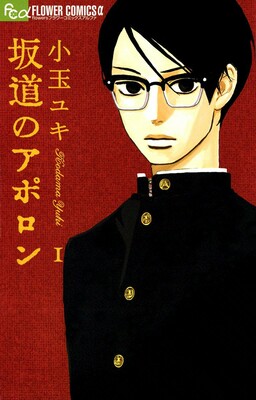
Slice of Life / Drama
Kids on the Slope
Yu's review of Kids on the Slope (Sakamichi no Apollon) — 1966 Sasebo, Kyushu. Kaoru is a lonely classical pianist; Sentaro is a half-American delinquent who plays jazz drums in the basement of a record shop. Their friendship grows through music, the school festival, and a reunion years later at a church.
Slice of Life / Mystery
Hyouka
Yu's review of the Hyouka manga — Hotaro Oreki lives by the motto 'if I don't have to do it, I won't; if I do have to do it, make it quick,' but Eru Chitanda's 'I'm curious!' keeps dragging him into the small mysteries of the Classic Literature Club. Adapted by Task Ohna from Honobu Yonezawa's novels.

Slice of Life
Blue Giant Supreme
Yu's review of Blue Giant Supreme — Dai Miyamoto leaves Japan with his tenor sax, lands alone in Munich, and builds a band across Europe. The Europe arc of Shinichi Ishizuka's jazz manga. No English release yet, but the Japanese volumes are out there.

Slice of Life
Blue Giant Explorer
Yu's review of Blue Giant Explorer — Dai Miyamoto lands in Seattle with a tenor sax and a thousand dollars, buys a used Honda, and drives across America building a band from strangers. The third chapter of the Blue Giant saga, complete in 9 volumes, only in Japanese.
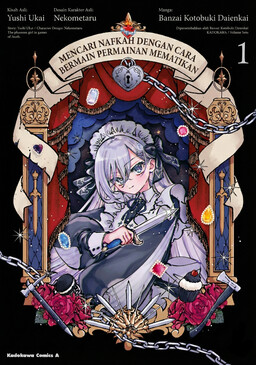
Slice of Life / Comedy
Phantom of the Idol
Yu's review of Phantom of the Idol — Yuuya Niyodo is an idol who hates performing and tries to be fired; Asahi Mogami is the ghost of an idol who died before she could reach her dreams; when she possesses Yuuya during a performance, they strike a deal — she performs through his body, he reaps the rewards.
Slice of Life / Romance
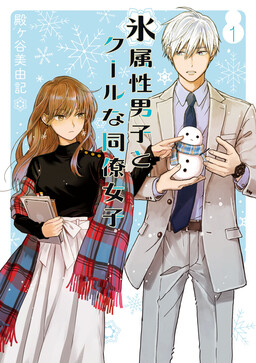
The Ice Guy and His Cool Female Colleague
Yu's review of The Ice Guy and His Cool Female Colleague (Kōri Zokusei Danshi to Cool na Dōryō Joshi) — Himuro-kun, a descendant of the yuki-onna snow spirit, sprouts snowmen and miniature blizzards whenever he feels something, which makes hiding his crush on his quiet coworker Fuyutsuki-san completely impossible.
Written by
Yu
Manga Enthusiast from Japan
I grew up in Japan and manga literally saved me during a tough time in elementary school. My English isn't perfect, but my love for manga is real — and I want to share it with you.
Disclosure: This post contains affiliate links. As an Amazon Associate, I earn from qualifying purchases at no extra cost to you.