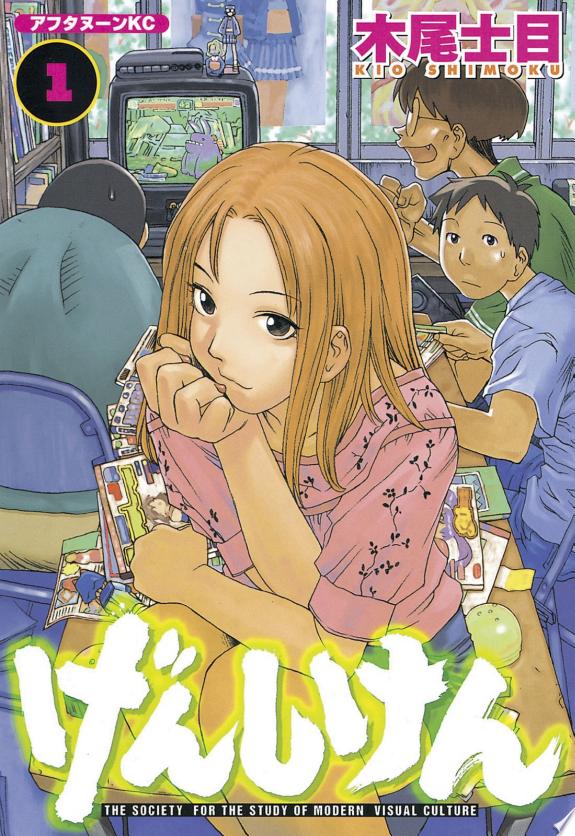
Genshiken Review: The Manga That Sat Me Down in the Club Room I Never Joined
by Shimoku Kio
Read the first volume. If it doesn't hook you, put it down. It'll hook you.
Buy Genshiken on Amazon →*Affiliate link — I earn a small commission at no extra cost to you.
When I was a kid with no friends, I used to imagine a room. A room where the people inside already liked the things I liked, so I wouldn't have to explain myself or apologize for it. I never found that room in real life. Genshiken is the closest thing I have ever read to it — a manga about a university club where being into anime, manga, games, and figures is just the normal air everyone breathes.
I picked it up expecting a comedy about nerds. What I got instead was nine volumes that watched a group of people grow up without ever once making fun of them for what they loved. I finished it on a train and I just sat there. I had wanted that room my whole life, and a manga gave it to me.
Quick Take
- The most honest manga I know about otaku life — it follows a real university club, the Society for the Study of Modern Visual Culture, through years of membership, graduations, and a genuinely hard one-sided crush
- Shimoku Kio never mocks his characters and never sanctifies them either; he just lets them be people who happen to love this stuff
- 9 volumes (original series), complete; rated T (Teen) — frank about adult doujinshi culture but never graphic
Story Overview
Kanji Sasahara starts university quietly denying he's an otaku, even though he obviously is. On his first day he wanders into the Genshiken — the Society for the Study of Modern Visual Culture — and slowly stops pretending. That's the whole engine of the series: people who finally stop pretending.
Across nine volumes the club lives an ordinary student life that turns out to be anything but small. Saki Kasukabe, the fashionable non-otaku girlfriend of the impossibly handsome Kousaka, keeps trying to drag him out of the club and instead gets pulled in herself. The members build and sell a doujinshi. Madarame quietly, hopelessly falls for Saki. Ohno's cosplay reshapes what the club even does. And in the later volumes Chika Ogiue joins — a girl who hates otaku precisely because she is one — and her arrival forces everyone to confront what shame and fandom have to do with each other.
By the end, Sasahara has become club president and then a working manga editor, the older members graduate into adult jobs, and the club is handed down to a new generation. Nothing explodes. People just grow up, and Kio makes that quietly devastating.
Characters
Kanji Sasahara — The doorway into the series. He begins denying he belongs and ends up accepting himself completely, becoming club president and then a professional manga editor. His tentative relationship with Ogiue is one of the series' warmest threads.
Saki Kasukabe — Fashionable, blunt, and quick to anger, she enters as the outsider girlfriend who finds the whole club baffling. She never becomes an otaku, but she becomes a real friend — saving Genshiken from being shut down on two separate occasions. Her outsider eye is how Kio explains this world to us.
Harunobu Madarame — The hardcore former president, and the series' aching heart. He develops a crush on Saki that he never confesses, choosing to protect the friendship over chasing the feeling. It's the most honestly written one-sided love I've read in a slice-of-life manga.
Kanako Ohno — Raised in America, she joins as a cosplayer and gradually reorients the club around cosplay. She dates Tanaka and later becomes president herself. Her enthusiasm is the engine that pulls quieter members into actually doing things.
Souichirou Tanaka — The craftsman: a costume-maker who finds in Ohno both the perfect model for his work and his girlfriend, and who turns his hobby into a real direction in life.
Chika Ogiue — A self-hating otaku carrying shame from a past where a boy discovered her yaoi doujinshi. She joins after being rejected elsewhere, and her slow healing — and her path to professional publication — is the emotional spine of the back half.
What I Love About It
It's the way Genshiken refuses to flinch from how much being a fan can hurt, and still decides it's worth it. Madarame is the clearest example. He is the loudest, most confident otaku in the room about everything except the one thing that matters — Saki. He falls for her over the slow accumulation of dumb little moments: the infamous "nose hair incident," her cosplay at the school festival, all the times they argued and somehow ended up comfortable around each other. And he says nothing. He decides that keeping her as a friend is worth more than the risk of losing her, and he carries that decision quietly for years.
What kills me is that Kio never frames this as pathetic. There's no narration telling you Madarame is a loser. The manga just lets you sit next to a person who has chosen the smaller, sadder, kinder option, and it trusts you to feel the weight of it. I've made that exact choice in my own life — staying near someone and saying nothing — and reading it on the page, drawn so plainly, made me feel less alone about it than I expected a comedy manga to. That's the whole trick of Genshiken: it's funny on the surface and then it quietly opens a door under you.
Memorable Scene ⚠️ Spoiler Warning
Late in the original run there's a chapter where Saki finally makes good on a long-dreaded promise to do a joint cosplay photoshoot with Ohno. What makes it unforgettable is the craft: the entire chapter is told with almost no dialogue and no sound effects. Ohno tries to sneak some of the resulting photos of Saki to Madarame — a small mercy for the boy who'll never say anything — and gets clocked for the effort. The only word balloon in the whole sequence is a single, perfect "!?"
It works because by this point you know all of these people too well to need words. You watch Saki be embarrassed, Ohno be sweetly conspiratorial, and Madarame's unspoken feelings get quietly, wordlessly acknowledged by his friends. A manga about people who talk endlessly about anime says its most tender thing by going completely silent. I had to put the book down.
Pros & Cons
Pros
- 9 volumes, complete, with every major character given a real arc
- The most honest, least condescending depiction of otaku life I've read
- Madarame's unrequited love and Ogiue's shame arc both land with real weight
- Saki Kasukabe is one of the best outsider-POV characters in any slice-of-life manga
Cons
- Some early-2000s otaku references (Comiket, doujinshi culture, specific parody gags) need context for newer readers
- The pacing is deliberately slow — this is years of ordinary club life, not a plot machine
- It's a quiet, talky character piece about a niche subculture — that won't work for everyone
Is Genshiken Worth Reading?
Yes — if you have ever loved something enough to feel a little embarrassed about it, this is essential. It's a complete nine-volume character study that's funny, warm, and quietly heartbreaking, with the best unrequited-love subplot I've found in slice-of-life. If you only want fast plot or you have no interest in fandom itself, it may feel slow. Everyone else: this is the club room you've been looking for.
Similar Manga
| Title | Its Approach | How Genshiken Differs |
|---|---|---|
| Wotakoi: Love Is Hard for Otaku | Adult otaku dating in a workplace, light romantic comedy | Genshiken is a slower coming-of-age across university years, with more melancholy |
| Bakuman | Two teens chasing professional manga serialization | Genshiken is about being a fan, not a creator — consuming and belonging, not making it |
| Welcome to the NHK | Fandom as avoidance and a darker spiral of withdrawal | Genshiken treats fandom as a place of belonging, not a symptom |
Where to Buy
Read the first volume. If it doesn't hook you, put it down. It'll hook you.
This post contains affiliate links. If you purchase through these links, I may earn a small commission at no extra cost to you. As an Amazon Associate, I earn from qualifying purchases.
*Affiliate link — I earn a small commission at no extra cost to you.
More Manga You Might Like
Slice of Life / Comedy
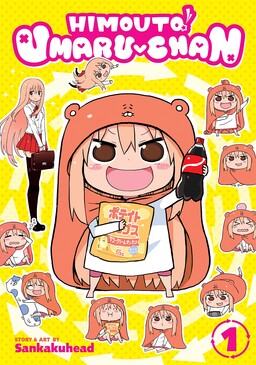
Himouto! Umaru-chan
Yu's review of Himouto! Umaru-chan — Umaru Doma is the school's flawless honor student, but the moment she's home she shrinks into a chibi gremlin in a hamster hoodie demanding chips, cola, and games from her tired brother Taihei. Twelve complete volumes from Seven Seas, and the warmth under the gags is what kept me reading.

Slice of Life / Comedy
Princess Jellyfish
Yu's review of Princess Jellyfish — Tsukimi Kurashita is a jellyfish-obsessed otaku girl living in an all-female apartment building full of passionate nerds; when she meets Kuranosuke, a cross-dressing son of a politician who barges into her world, her quiet otaku life starts to change.
Slice of Life / Comedy
Hinamatsuri
Yu's review of Hinamatsuri — a metal pod drops a deadpan telekinetic girl named Hina onto a yakuza man's head, and the deadpan comedy slowly turns into one of the most quietly moving found-family manga I've ever read.
Slice of Life / Romance
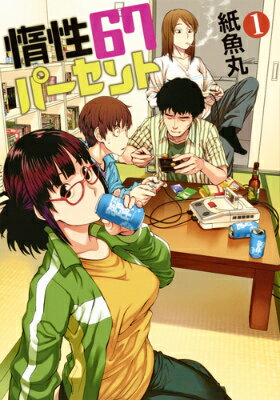
Dasei 67%
Dasei 67% follows art-school student Minami Yoshizawa and the three friends who never leave her tiny apartment, drifting through a college life that runs on about 67% effort and 100% dumb, lovable inertia.

Slice of Life / Comedy
Wagnaria!! (Working!!)
Yu's review of Wagnaria!! — Souta Takanashi starts working at a family restaurant because a tiny girl asked him to; his coworkers include a woman with androphobia, a katana-carrying floor chief, an invisible manager, and a girl who thinks she might be in love with him; chaos is the default state.
Slice of Life / Comedy
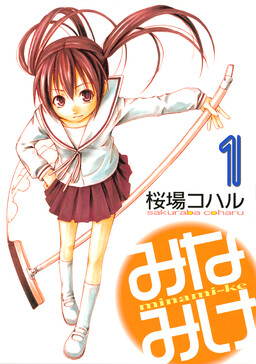
Minami-ke
Yu's review of Minami-ke — three sisters at different schools (eldest Haruka in high school, middle Kana in middle school, youngest Chiaki in elementary) share an apartment and their daily life generates endless comedy from their completely different personalities and the rotating cast of friends, admirers, and chaos that follows them home.
Written by
Yu
Manga Enthusiast from Japan
I grew up in Japan and manga literally saved me during a tough time in elementary school. My English isn't perfect, but my love for manga is real — and I want to share it with you.
Disclosure: This post contains affiliate links. As an Amazon Associate, I earn from qualifying purchases at no extra cost to you.